

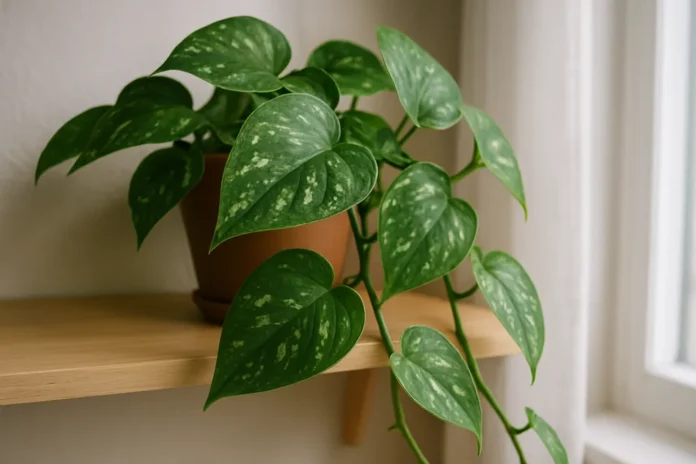
White spots on pothos leaves are usually caused by pest damage, mineral residue, sunscald, fungal problems, or the plant’s natural variegation. The right explanation depends on whether the spots look dusty, bleached, raised, or built into the leaf pattern.
Seeing pothos leaves with white spots can be confusing because the same symptom shows up for several very different reasons. Sometimes the issue is harmless, like natural variegation on a marble or pearl-and-jade type pothos. Other times it points to spider mites, mealybugs, mineral buildup, sun damage, or a leaf disease that needs quick attention.
When I troubleshoot a spotted pothos, I do not start by guessing. I look at the shape, texture, and location of the spots first. White marks that wipe off usually mean residue or pests, while bleached patches that stay embedded in the tissue often suggest light damage or old stress. That simple distinction saves a lot of time and prevents unnecessary treatments.
The good news is that most pothos problems are fixable once you know what you are looking at. Below, I will walk through the most common causes, how to tell them apart, and what to do so new leaves come in clean and healthy.
What the White Spots Are Telling You
White spots are not a diagnosis by themselves. On pothos, they can appear as chalky dots, faded patches, fuzzy growth, tiny pinpricks, silvery scarring, or creamy sections built into the leaf. The exact look matters because each cause affects the leaf in a different way.
- If the spots wipe off, think residue, mildew, or pests.
- If the spots look bleached into the leaf, think sunscald or chemical burn.
- If the spots are tiny and widespread with webbing or stippling, think spider mites.
- If the spots are cottony or raised, think mealybugs or scale.
- If the white areas are symmetrical and attractive, especially on a variegated cultivar, they may be completely normal.
When I am unsure, I compare the newest leaf, an older leaf, and the undersides of both. If only older leaves are marked, I lean toward past stress or residue. If tender new growth is already speckled, I start suspecting pests first.
Natural Variegation Can Look Like a Problem
Some pothos varieties naturally produce white or cream markings. Marble Queen, Pearls and Jade, N'Joy, and Snow Queen are famous for this. In those plants, white sections are part of the leaf pattern rather than a sign of damage. They are usually smooth, stable in color, and repeated from leaf to leaf in a way that looks intentional.
Normal variegation does not feel rough or fuzzy. It does not smear when touched, and it usually follows the veins or broader sections of the leaf rather than appearing as random specks. If your pothos has always had mixed green and white leaves, and the plant otherwise looks healthy, white areas may be exactly what you want.
- The white areas are flat and part of the leaf tissue
- Multiple leaves show a similar pattern
- There is no yellow halo, mushiness, webbing, or sticky residue
- The plant is growing normally with firm stems and healthy roots
Spider Mites Often Cause Pale Stippling and Dusty-looking Spots
Spider mites are one of the most common reasons pothos leaves develop tiny white specks. These pests pierce the leaf and suck out cell contents, leaving behind fine stippling that can make the foliage look faded, dusty, or sandblasted. Heavy infestations may also leave faint webbing, especially near leaf joints and the undersides of leaves.
Because the dots are so small, gardeners often miss mites at first and assume the plant is just dry or dusty. A badly affected leaf may turn silvery, lose shine, or develop a washed-out look before it starts yellowing.
- Very small pale specks scattered across the leaf surface
- More damage on the undersides of leaves
- Fine webbing between stems or where leaves meet vines
- Leaves that look dull, dry, or slightly bronzed over time
If spider mites are the cause, isolate the pothos from other houseplants. Rinse the foliage thoroughly, especially the undersides, then treat with insecticidal soap or neem-based products labeled for houseplants. Repeat treatments are important because one spray rarely gets every life stage.
I like to wipe a suspicious leaf with a damp white paper towel. If you see faint rusty or gray smears after wiping the underside, that is often a strong clue that mites are active even before webbing is obvious.
Mealybugs and Scale Leave White Bumps or Cottony Patches
If the white spots look raised rather than flat, check closely for mealybugs or scale. Mealybugs show up as soft, cottony white clusters tucked along stems, leaf nodes, and undersides. Scale can sometimes appear as pale, waxy bumps attached tightly to the plant. Both pests feed on sap and can weaken pothos over time.
These insects often come with other clues, including sticky honeydew, shiny residue, or sooty mold growing on that residue. Leaves may curl, yellow, or stop growing well if the infestation gets ahead of you.
- Cottony white fluff in leaf joints or along stems
- Small immobile bumps that do not look like part of the leaf
- Sticky surfaces or nearby black sooty mold
- Distorted new leaves or stalled growth
Remove visible pests with cotton swabs dipped in rubbing alcohol, then follow up with repeated pest treatment. Light infestations are manageable, but established mealybugs can hide deep in dense vines, so consistency matters more than a single heavy application.
Hard Water and Fertilizer Residue Can Leave Chalky White Marks
Not every white spot is a disease or pest. Pothos leaves often collect mineral residue from hard tap water, guttation droplets, or fertilizer splash. These spots usually look chalky, crusty, or water-spotted rather than like tissue damage. They may sit on top of the leaf and often wipe away with a damp cloth.
This is especially common if you mist plants with hard water or water from above so droplets dry on the leaves. Fertilizer can do something similar if a concentrated splash lands on the foliage and dries there.
- Spots are mostly on the upper leaf surface
- Marks feel dusty or crusty
- The plant otherwise looks healthy
- The spots lessen or disappear when gently cleaned
To fix it, wipe the leaves with a soft damp cloth. If your water is very hard, switch to filtered, distilled, or rainwater for leaf cleaning and avoid letting fertilizer solution sit on foliage. Flush the potting mix occasionally too, since the same minerals can build up in the soil and contribute to general stress.
Sunscald Can Bleach Pothos Leaves White or Tan
Pothos likes bright indirect light, but intense direct sun can scorch the leaves. Sunscald often starts as pale patches that look washed out or bleached. Later, those spots may turn tan, papery, or crisp. This is especially common when a plant is moved suddenly from lower light into a hot south- or west-facing window.
The damaged areas are usually broad and irregular rather than tiny pinpoints. They tend to show up on the side of the plant facing the light source and on exposed leaves rather than those shaded inside the plant.
- Large faded or whitish patches on sun-facing leaves
- Dry, thin, or crispy texture in the pale area
- Damage appears after a location change or summer heat spike
- Newest exposed leaves are affected more than shaded leaves
Move the pothos back to bright but filtered light. Damaged tissue will not turn green again, but the plant can recover well if new leaves are protected from harsh direct sun.
Powdery Mildew and Other Fungal Issues Are Less Common but Possible
Indoor pothos does not get fungal leaf issues as often as some outdoor plants, but it can happen in stagnant, humid conditions. Powdery mildew looks like a thin white film or powder on the leaf surface. Other fungal spotting problems may begin as pale lesions that later turn brown, yellow-edged, or soft.
Unlike mineral residue, fungal growth often spreads over time and may return after wiping. Leaves packed too tightly together, poor air movement, and consistently wet foliage all increase the odds.
- A white dusty coating that seems to grow or spread
- Leaf spots that develop halos, browning, or soft tissue
- Trouble after overhead watering or poor airflow
- Multiple nearby plants showing similar symptoms
Remove badly affected leaves, improve air circulation, and keep water off the foliage. If the problem continues, use a houseplant-safe fungicidal treatment labeled for the disease. Avoid crowding plants together while the infection is active.
Chemical Burn, Cold Damage, and Physical Injury Can Leave Pale Scars
Sometimes white spots are really scars from stress rather than an ongoing problem. Leaf shine products, overly strong sprays, cold drafts, and rough handling can all leave pale or silvery marks. Chemical burn is especially likely if the spots appeared soon after using a foliar product or homemade treatment.
Cold injury can create faded, water-soaked-looking patches that later dry out pale or tan. This is common when a pothos leaf presses against a cold window in winter or sits near an air conditioner vent.
- Spots appeared suddenly after spraying or cleaning leaves
- Marks follow drip lines or where droplets sat
- Leaves near windows or vents show the worst damage
- The problem is not spreading from leaf to leaf in a living pattern
I am cautious with homemade sprays on pothos because leaf tissue can mark easily, especially on variegated types. If damage shows up in perfect droplet shapes or only on the leaves you sprayed, I think chemical burn long before I think disease.
How to Figure Out the Cause Before You Treat
A quick inspection can usually narrow the problem down fast. Start by looking at whether the white area is on the surface or inside the leaf tissue. Then check both the top and underside of several leaves, not just the worst one.
- Wipe one spotted leaf with a damp cloth to see if the mark lifts off.
- Inspect the undersides of leaves and stem joints for webbing, cottony clusters, or bumps.
- Think about recent changes such as stronger sun, new sprays, fertilizer splashes, or a move near a vent.
- Compare new growth to older leaves to see whether the issue is active now or just old damage.
- Check whether the white areas match the plant's variety and natural variegation pattern.
Try not to stack treatments before you know the likely cause. Spraying fungicide, insecticide, and leaf cleaner all at once can stress the plant and muddy the diagnosis.
What to Do Next for a Healthy Pothos
Once you identify the likely cause, focus on giving the plant stable care so fresh growth can come in clean. Pothos recovers best when it has moderate watering, a loose potting mix, bright indirect light, and good airflow around the foliage.
- Trim off badly damaged leaves if they bother you visually or are infected
- Water when the top inch or two of soil feels dry, not on a rigid calendar
- Keep the plant in bright indirect light rather than harsh direct sun
- Clean leaves occasionally so pests and residue are easier to spot early
- Quarantine pest-affected plants until you are sure the issue is under control
Do not judge recovery by old leaves. Those white spots usually stay where they are. The real sign of success is healthy new growth with normal color, size, and texture over the next several weeks.
FAQ
Can White Spots on Pothos Leaves Go Away on Their Own?
Surface residue can be wiped away, but damage inside the leaf usually stays. What you want to watch for is whether new leaves emerge healthy after you correct the cause.
Are White Spots on Pothos Always a Sign of Pests?
No. Pests are a common cause, but white spots can also come from hard water residue, sunscald, fungal issues, chemical burn, or normal variegation.
How Do I Know if the White on My Pothos Is Variegation or Damage?
Variegation looks smooth, stable, and patterned as part of the leaf. Damage is usually more random and may come with rough texture, crisp edges, fuzz, webbing, or sticky residue.
Should I Cut Off Leaves with White Spots?
You can remove heavily damaged or diseased leaves, but it is not always necessary for minor cosmetic spotting. Keep enough healthy foliage so the plant can keep growing strongly.
Will Neem Oil Fix White Spots on Pothos?
Neem can help if the spots are related to certain pests or some mild fungal issues, but it will not fix sunburn, mineral residue, or natural variegation. It is only useful when matched to the right problem.
Can Misting Cause White Spots on Pothos Leaves?
Yes. Misting with hard water can leave mineral spots, and frequent wet foliage can sometimes encourage mildew in stale air. If you mist, use cleaner water and make sure the leaves dry quickly.
Do White Spots Mean My Pothos Is Dying?
Usually not. Most white spotting problems on pothos are manageable, especially when caught early, and the plant often rebounds well once conditions improve.
Want a healthier, cleaner-looking pothos? Check out our guide to the best houseplant pest treatments and leaf care products so you can choose the right fix fast.
