

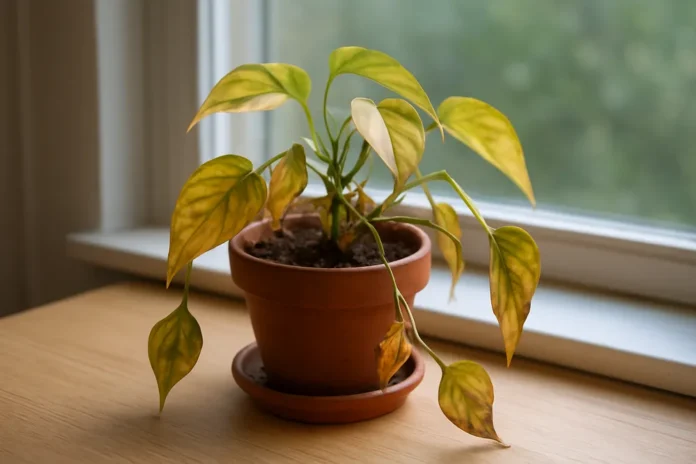
A pothos usually starts dying because of overwatering, poor drainage, low light, root damage, or sudden environmental stress. Pests, cold drafts, and severe underwatering can also cause rapid decline.
If your pothos looks limp, yellow, brown, or bare, it is usually reacting to stress in its roots or environment rather than simply reaching the end of its life. A pothos is a tough houseplant, but even easy plants can decline quickly when watering, light, and drainage are out of balance.
When a pothos seems dying, the most common causes are overwatering, underwatering, poor light, root rot, pest pressure, or temperature shock. The good news is that pothos often recovers well once you identify the main problem and correct it before too much of the stem or root system is lost.
This guide will help you match the symptoms you see with the most likely cause, understand what is happening inside the plant, and decide which fix gives your pothos the best chance to bounce back.
What a Dying Pothos Usually Looks Like
Pothos decline rarely shows up as just one symptom. A stressed plant may develop yellow leaves, brown crispy edges, black mushy stems, limp vines, slow growth, leaf drop, or a generally sparse appearance. The pattern matters because each symptom points toward a different kind of stress.
- Yellow leaves often point to overwatering, poor drainage, or low light.
- Brown crispy leaves or edges are more common with underwatering, dry air, heat, or too much direct sun.
- Soft black stems or a sour-smelling pot strongly suggest root rot.
- Drooping leaves with dry soil usually mean the plant is thirsty.
- Drooping leaves with wet soil often mean roots are suffocating from excess moisture.
- Small leaves and long bare vines usually indicate not enough light.
Because pothos is so adaptable, it can tolerate poor conditions for a while before it crashes. That delay is why many gardeners feel like the plant declined suddenly, even though the real problem has likely been building for weeks.
Overwatering Is the Most Common Cause
If you are asking why your pothos is dying, overwatering should be your first suspect. Pothos likes evenly moist soil during active growth, but it does not want to sit in soggy potting mix. Roots need both moisture and oxygen. When soil stays wet too long, the roots cannot breathe, and fungal rot organisms can take over.
Signs of Overwatering
- Several yellow leaves at once, especially older leaves
- Drooping even though the soil feels wet
- Mushy stems near the soil line
- A heavy pot that stays wet for many days
- Blackened roots or a foul smell when you remove the plant from the pot
Many pothos owners overwater without realizing it because they water on a schedule instead of checking the soil. Watering every Sunday sounds consistent, but the plant's needs change with season, light level, pot size, and indoor temperature. A plant in winter or low light may use water much more slowly than the same plant in summer.
How to Fix It
Let the top 1 to 2 inches of soil dry before watering again. If the pot has no drainage hole, repot the plant into one that does. If the roots smell rotten or feel mushy, trim away damaged roots with clean scissors and repot into fresh, airy mix. Water thoroughly after repotting, then wait until the upper soil dries before the next watering.
Underwatering Can Make Pothos Collapse Fast
Pothos is more forgiving of drought than many houseplants, but chronic dryness still weakens it. When the soil stays bone dry for too long, the plant loses turgor pressure, leaves wilt, and roots can die back. Repeated drought also causes browning, curling, and leaf drop.
Signs Your Pothos Is Too Dry
- Leaves droop dramatically but feel thin rather than soft and mushy
- Dry, crispy brown edges or tips
- Potting mix pulls away from the sides of the pot
- Very light pot weight
- Soil that resists water because it has become compacted or hydrophobic
A very dry pothos may perk back up within a day after watering, but repeated drought can leave lasting damage. Leaves that have gone fully brown will not turn green again. Severely dried roots may also absorb water poorly at first, so one quick splash is not always enough.
To fix underwatering, water deeply until excess drains from the bottom. If the soil is extremely dry and shedding water, soak the pot in a shallow container for 15 to 20 minutes, then let it drain well. After that, shift to checking soil moisture regularly instead of waiting until the plant collapses.
Poor Drainage and Root Rot Can Kill a Pothos
Sometimes the issue is not how often you water but where that water goes. A pothos planted in dense soil or a decorative pot without drainage can stay wet long after the surface looks fine. That trapped moisture encourages root rot, which is one of the most serious causes of pothos decline.
Why Root Rot Is so Damaging
Healthy roots are firm and light colored. Rotting roots turn brown or black, feel mushy, and stop moving water to the leaves. That creates a confusing symptom: the plant droops as if thirsty even though the soil is wet. Gardeners often respond by watering again, which makes the problem worse.
Best Recovery Steps
- Remove the pothos from its pot and inspect the roots.
- Trim away all soft, black, or foul-smelling roots.
- Cut back any mushy stem sections to healthy tissue.
- Repot into fresh, well-draining indoor potting mix with perlite or bark mixed in.
- Use a container with a drainage hole and empty any saucer after watering.
If root rot is advanced and only a few healthy stems remain, take cuttings from green, firm vines and propagate them in water or fresh mix. That can save the plant even if the original root ball is beyond recovery.
Low Light Slowly Weakens the Plant
Pothos is famous for tolerating low light, but tolerance is not the same as thriving. In a room that is too dark, the plant cannot photosynthesize enough to support strong growth. Over time it becomes leggy, loses variegation, develops smaller leaves, and may drop older foliage.
Low light also increases the risk of overwatering because the soil dries more slowly. That means a pothos tucked into a dim corner may show both weak growth and yellowing from excess moisture.
How to Tell Light Is the Problem
- Long stretches of stem between leaves
- Pale or faded variegation
- Stalled growth during spring and summer
- Soil staying wet for a long time
- Leaning strongly toward a window
Move the plant to bright, indirect light near an east-facing window or a few feet back from a bright south or west window. Avoid harsh afternoon sun on a stressed plant, especially if it has been growing in shade. The adjustment should be gradual to prevent leaf scorch.
Too Much Direct Sun Can Scorch Leaves
Although pothos needs decent light, intense direct sun can damage the leaves, especially on hot windowsills or outdoors in summer. Sunscald causes dry, bleached, tan, or crispy patches that do not recover.
Sun stress is most likely if you recently moved the plant from lower light to a sunny window, placed it outside, or left it where afternoon rays hit the foliage for hours. A damaged pothos may look like it is dying, but the issue is often isolated to the exposed leaves.
Trim badly scorched leaves if they bother you, then move the plant to bright but filtered light. New growth should emerge normally once conditions improve.
Temperature Shock and Drafts Cause Sudden Decline
Pothos is a tropical plant, so it prefers stable indoor temperatures. Cold drafts from windows, blasts from air conditioning, heaters, or sudden moves between indoor and outdoor conditions can stress the leaves and roots. Chilling injury may cause drooping, blackened patches, yellowing, or leaf drop.
- Ideal temperatures are generally between 65 and 85 degrees Fahrenheit.
- Growth slows noticeably below 60 degrees Fahrenheit.
- Cold damage becomes more likely with prolonged exposure to temperatures in the 50s or lower.
If your pothos started declining right after a cold night near a window or a move from the store to your home in winter, temperature stress may be the trigger. Keep it away from vents, radiators, and drafty glass, and give it time in a stable room to recover.
Pests Can Drain the Life Out of Pothos
Spider mites, mealybugs, scale, and thrips can all damage pothos. These pests feed on plant juices, weakening the leaves and stems over time. On a healthy pothos, a small pest issue may go unnoticed for a while. On a stressed plant, pests can push it into rapid decline.
Common Pest Clues
- Fine webbing, stippled leaves, or dusty-looking foliage from spider mites
- White cottony clusters from mealybugs
- Brown shell-like bumps on stems from scale
- Silvery scarring or distorted growth from thrips
Pests often gather under leaves, near leaf joints, or along stems. Heavy infestations lead to yellowing, slowed growth, wilting, and leaf drop. Because pothos leaves are broad and glossy, residue and damage may be easier to spot in bright natural light.
Treat by isolating the plant, wiping leaves clean, and using insecticidal soap or neem according to label directions. Repeat treatments are usually necessary because eggs and hidden insects can survive the first round.
Nutrient Issues and Poor Potting Mix Can Contribute
Pothos is not a heavy feeder, but it still needs some nutrition to keep producing healthy foliage. If it has been in the same potting mix for years, nutrients may be depleted and the soil structure may have broken down. Old mix can become compacted, shed water unevenly, or hold too much moisture around the roots.
Nutrient deficiency alone rarely makes a pothos look like it is dying overnight. More often, it causes pale leaves, weak growth, and a plant that fails to rebound after normal watering. Overfertilizing can also cause problems by burning roots and leaf tips.
- Repot every 1 to 2 years if the mix has become dense or tired.
- Feed lightly during spring and summer with a balanced houseplant fertilizer.
- Avoid heavy fertilizer on a stressed or recently repotted plant.
- Flush the pot with water if you suspect fertilizer salt buildup.
How to Tell if Your Pothos Can Still Be Saved
A pothos can look rough and still recover if there is healthy stem tissue and some viable roots left. Green stems, firm nodes, and even a few sound roots are good signs. Complete mushiness, widespread black rot, and stems that collapse from base to tip are much more serious.
Good Signs
- Firm green vines
- White or tan roots that are not slimy
- New buds or small fresh leaves
- Leaves that perk up after correcting watering
Warning Signs
- A fully black, mushy base
- Rot traveling far up the stems
- No healthy roots left in the pot
- A foul smell from soil and stems
If the root ball is in bad shape but the vines still have healthy nodes, propagation is often the best rescue method. Cut below a node on firm green stems, root the cuttings in water or moist potting mix, and start fresh.
Simple Care Habits That Prevent Future Decline
Once your pothos recovers, the goal is consistency. Most pothos problems come from a mismatch between watering, light, and drainage rather than from anything mysterious. A few basic habits dramatically reduce the chances of another decline.
- Water based on soil dryness, not the calendar.
- Use a pot with a drainage hole every time.
- Grow pothos in bright, indirect light for steadier growth.
- Keep it away from cold drafts and heating vents.
- Check leaves and stems regularly for pests.
- Refresh potting mix when it becomes dense or compacted.
Pothos is resilient, so small corrections often make a big difference. When you give the roots airflow, keep moisture balanced, and provide enough light, this plant usually responds with stronger vines and healthier foliage.
FAQ
Can a Pothos Come Back After All the Leaves Fall Off?
Sometimes. If the stems and roots are still healthy, a pothos can push new growth from its nodes. If the stems are also mushy, black, or completely dried out, recovery is less likely.
How Often Should I Water a Pothos?
There is no fixed schedule that works in every home. Water when the top 1 to 2 inches of soil feels dry, then water thoroughly and let excess drain away.
Should I Cut Off Yellow Leaves on a Dying Pothos?
Yes, you can remove fully yellow leaves because they will not turn green again. Taking them off also helps you track whether new damage is still happening after you correct the problem.
Is My Pothos Dying Because It Is Root Bound?
A root-bound pothos may dry out very quickly, stop growing, or wilt between waterings. Being root bound is usually stressful but not immediately fatal unless it leads to chronic drought or poor water uptake.
Can Low Humidity Kill a Pothos?
Low humidity alone usually does not kill pothos, but it can cause brown tips and extra stress, especially near heaters or in very dry rooms. Watering and root health are usually bigger factors.
Why Is My Pothos Drooping Even After I Watered It?
If the soil is wet and the plant still droops, the roots may be damaged from overwatering or rot. Drooping after watering can also happen if dense soil is keeping oxygen away from the roots.
Can I Save Pothos with Root Rot by Putting It in Water?
You can often save healthy stem cuttings by rooting them in water, but a rotting root ball does not heal just because it sits in water. Trim away diseased roots or take cuttings from firm green stems instead.
Need the right fix fast? Read our guide to the best potting mixes, pruning tools, and pest treatments for pothos so you can revive a struggling plant with confidence.
