

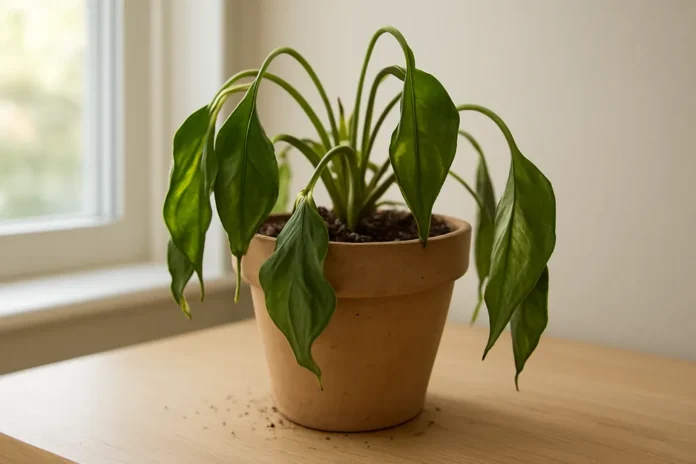
Pothos leaves usually wilt because the plant is either too dry, too wet, or stressed by root damage, heat, cold, or poor light. Wilting happens when the plant cannot move enough moisture through its stems and leaves.
Pothos is one of the easiest houseplants to grow, so it can be alarming when your pothos leaves suddenly look limp, soft, or droopy. Wilting is a general stress signal, not a single diagnosis, and it usually means the plant is struggling to take up or hold water the way it should.
In many cases, the cause is simple, like dry potting mix after you forgot to water. But pothos can also wilt when roots stay too wet, when the pot has poor drainage, or when temperature and light conditions push the plant out of balance. The good news is that pothos often recovers well once you match the fix to the real problem.
Below, you will learn the most common reasons pothos leaves wilt, how to tell one cause from another, and what to do so your plant can perk back up and keep growing.
What Wilting Usually Means in Pothos
Wilting means the leaf cells are losing internal pressure, also called turgor pressure. Healthy pothos leaves feel firm and hold their shape. When the plant cannot draw enough water from the soil, or cannot move that water through damaged roots and stems, the leaves droop and may curl or fold.
That is why both underwatering and overwatering can lead to the same symptom. A dry plant wilts because it has too little moisture available. An overwatered plant wilts because roots start to suffocate or rot, which stops normal water uptake even though the potting mix is wet.
- Leaves hanging limp instead of staying flat and firm
- Vines looking weak or floppy
- Leaf edges curling inward
- Soil that feels either bone dry or soggy
- Yellowing, browning, or mushy foliage along with drooping
Underwatering Is One of the Most Common Causes
How Dry Soil Makes Pothos Wilt
When the potting mix dries out too far, the roots cannot supply enough water to the leaves. Pothos often responds with soft, drooping foliage and limp vines. If the dryness continues, the leaves may turn crispy at the tips or edges, and older leaves may yellow and fall off.
Signs That Dryness Is the Problem
- Soil feels dry several inches down
- The pot feels much lighter than usual
- Leaves look dull, thin, or slightly curled
- Brown, crisp margins appear on older leaves first
- The plant perks up within a day after watering
How to Fix It
Water thoroughly until excess drains from the bottom of the pot. If the soil has become extremely dry and is pulling away from the edges, water slowly in stages or bottom water for 20 to 30 minutes so the mix can rehydrate evenly. After that, return to a consistent routine instead of waiting until the plant is severely limp each time.
Overwatering Can Cause the Same Droopy Look
Why Wet Roots Lead to Wilted Leaves
Pothos roots need oxygen as well as moisture. In constantly saturated potting mix, air spaces fill with water and roots begin to suffocate. Once roots are stressed, they cannot absorb water properly, so the leaves droop even though the pot is wet.
Clues That the Plant Is Too Wet
- Soil stays damp for many days after watering
- The pot feels heavy all the time
- Leaves wilt but also look yellow or pale
- Stems near the soil line feel soft
- There is a musty smell from the pot
What to Do Next
Let the top part of the potting mix dry before watering again. Make sure the container has drainage holes and never leaves the roots sitting in standing water inside a saucer or cachepot. If the soil is dense and slow to dry, repot into a lighter indoor mix with ingredients such as perlite, bark, or coco coir to improve airflow around the roots.
Root Rot Is a Serious Reason Pothos Leaves Wilt
If overwatering continues, root rot can develop. This is one of the most common reasons a pothos stays wilted even after watering. Damaged roots cannot support the vine, and the plant may continue to decline until the unhealthy tissue is removed.
How to Recognize Root Rot
- Persistent wilting in wet soil
- Yellow leaves mixed with drooping green leaves
- Black or brown mushy roots instead of firm white roots
- A sour or rotten smell when you unpot the plant
- Soft stems or collapsing vines
How to Recover the Plant
Slide the pothos out of its pot and inspect the root system. Trim away black, mushy, or foul-smelling roots with clean scissors. Repot the plant in fresh, airy potting mix and a clean pot with drainage holes. Water lightly after repotting, then let the top inch or two of mix dry before watering again. If root loss is severe, take healthy vine cuttings and propagate them as a backup.
Poor Drainage and Compacted Soil Make Wilting More Likely
Sometimes the watering schedule is not the real issue. The problem may be the pot or soil. A pothos in a container without drainage, or planted in heavy, compacted mix, stays wet too long and traps roots in stale conditions. Over time, this leads to drooping leaves, slow growth, and root decline.
- Use a pot with at least one open drainage hole
- Choose a loose houseplant mix instead of dense garden soil
- Add perlite or orchid bark if the mix stays soggy
- Repot old soil that has broken down and become muddy
- Empty decorative outer pots after watering so roots are not sitting in runoff
A well-draining setup helps you avoid both extremes. The roots get enough moisture, but they also get oxygen, which is critical for keeping leaves firm and healthy.
Heat, Cold, and Dry Indoor Air Can Trigger Drooping
Pothos prefers steady indoor conditions. Sudden heat from a sunny window, a nearby heater vent, or a hot room can cause the plant to lose moisture faster than the roots can replace it. Cold drafts from doors, air conditioners, or winter windows can also shock the plant and make leaves go limp.
Temperature Stress Symptoms
- Wilting soon after a heat wave or cold snap
- Drooping concentrated on the side facing a window or vent
- Leaf curling along with limp growth
- Brown patches after cold exposure
- Rapid drying of soil in unusually warm rooms
Keep pothos in temperatures roughly between 65 and 85 degrees Fahrenheit. Avoid placing it directly in front of heating vents, air conditioning blasts, or single-pane windows that swing sharply in temperature. While pothos tolerates average home humidity, extremely dry air can add stress if the plant is already thirsty or rootbound.
Too Much Direct Sun or Too Little Light Can Contribute
Light problems do not always cause immediate wilting by themselves, but they often set the stage for it. In strong direct sun, leaves can overheat and lose water quickly. In very low light, the plant uses water more slowly, which increases the chance of overwatering and root trouble.
Best Light for Pothos
Pothos grows best in bright, indirect light. It can tolerate medium and lower light, but growth slows and the soil stays wet longer. If you notice wilting along with bleached patches or scorched leaves, direct sun is likely part of the problem. If your pothos is in a dark corner and always droopy after watering, low light may be contributing to soggy roots.
- Move sun-stressed plants back from hot windows
- Filter strong afternoon light with a sheer curtain
- Shift low-light plants to a brighter room with indirect light
- Adjust watering after changing light levels because drying speed will change too
A Rootbound Pothos May Wilt Faster than Expected
Pothos can live slightly rootbound for a while, but once roots circle tightly around the pot, they leave less room for soil and moisture. That means the mix dries out faster, and the plant can wilt soon after watering intervals that used to work fine.
Signs Your Pothos Needs a Larger Pot
- Roots growing out of the drainage holes
- Water running straight through the pot
- The plant dries out very quickly after watering
- Growth has slowed even in spring and summer
- You see a dense root mass when you slide the plant out
Repot into a container just one size larger. A pot that is too large can hold excess moisture and create a new overwatering problem. Fresh mix gives the roots more room, improves water distribution, and often solves repeated wilting caused by crowding.
Transplant Shock and Recent Changes Can Cause Temporary Wilt
If your pothos started wilting right after repotting, moving to a new room, or being brought home from a store, it may simply be adjusting. Disturbed roots and changed light, humidity, and temperature can all trigger drooping for a short period.
Mild transplant shock usually improves within a week or two if the roots are healthy. Keep the soil lightly and evenly moist, avoid fertilizing right away, and place the plant in bright, indirect light. Do not keep watering extra in an attempt to force recovery. Too much water after root disturbance often makes things worse.
Pests and Disease Are Less Common but Still Possible
While watering and roots are the usual causes of wilt, heavy pest activity can weaken a pothos enough to make foliage droop. Spider mites, mealybugs, and scale all feed on plant sap. If the infestation is severe, leaves may wilt, yellow, or look tired even when soil moisture seems normal.
- Fine webbing or speckled leaves from spider mites
- White cottony clusters from mealybugs
- Brown shell-like bumps from scale
- Sticky residue on leaves or nearby surfaces
- Wilt accompanied by patchy yellowing or distorted growth
Treat small infestations by isolating the plant, wiping leaves, and using insecticidal soap or neem according to label directions. If you see blackened stems, foul odors, or widespread collapse, disease linked to root or stem rot is more likely than pests.
How to Tell Which Cause Is Most Likely
The fastest way to diagnose pothos wilting is to combine the leaf appearance with the condition of the soil, pot, roots, and growing spot. A droopy plant in dry mix usually needs water. A droopy plant in wet mix usually has a root or drainage problem.
- Feel the potting mix with your finger two inches down.
- Lift the pot to judge whether it feels unusually light or heavy.
- Look for yellow leaves, crisp edges, mushy stems, or burned patches.
- Check whether the plant sits near direct sun, a heater, an air vent, or a cold window.
- Inspect the roots if wilting continues despite proper watering.
Most pothos wilt cases become clear once you look at moisture level and root condition together. Try to avoid guessing based on drooping alone, because the same symptom can come from opposite causes.
How to Prevent Wilting in the Future
Once your pothos recovers, prevention is mostly about consistency. This plant likes moderate moisture, airy soil, good drainage, and stable indoor conditions. It does not need complicated care, but it does respond well to a routine that avoids major swings.
- Water when the top inch or two of soil feels dry rather than on a rigid calendar
- Use a pot with drainage holes every time
- Grow pothos in bright, indirect light
- Repot when roots become crowded or the soil breaks down
- Keep the plant away from hot vents, cold drafts, and harsh afternoon sun
- Check leaves and soil weekly so problems are caught early
Healthy pothos is forgiving, and most drooping episodes are reversible if you catch them before roots or stems are badly damaged.
FAQ
Will Wilted Pothos Leaves Become Firm Again?
Often, yes. If the cause is simple watering stress, healthy leaves may perk up within hours to a day after the problem is corrected. Leaves that turned yellow, mushy, or badly scorched usually will not fully recover.
How Often Should I Water a Wilting Pothos?
Do not water by the clock alone. Check the top inch or two of soil and water when that layer feels dry. Frequency changes with season, pot size, light, and indoor temperature.
Can Pothos Wilt From Too Much Sun?
Yes. Strong direct sun can overheat leaves and dry the potting mix too quickly, causing drooping and sometimes scorched patches. Bright, indirect light is the best balance for pothos.
Why Is My Pothos Droopy Even Though the Soil Is Wet?
Wet soil plus drooping usually points to overwatering, poor drainage, or root rot. The roots may be too damaged or oxygen-starved to take up water properly.
Should I Mist a Wilted Pothos?
Misting is not a real fix for wilting caused by root or watering problems. It may briefly raise surface moisture, but it will not solve dry roots, soggy roots, or rot.
When Should I Repot a Wilting Pothos?
Repot if the soil stays soggy too long, the roots are rotting, the plant is severely rootbound, or the mix has become compacted. Use fresh, well-draining houseplant soil and a pot with drainage holes.
Can Pothos Recover After Root Rot?
It can if the damage is caught early. Remove rotted roots, repot in fresh mix, and correct the watering and drainage issues. If the root system is badly damaged, propagate healthy cuttings as insurance.
Need the right fix fast? Read our guide to the best indoor plant watering tools and top-rated houseplant soils so you can stop pothos problems before they spread.
