

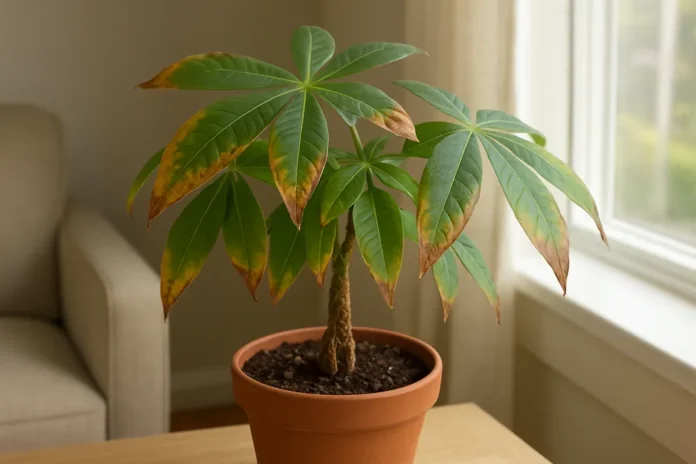
Money tree leaves usually turn brown because the plant is stressed by watering problems, dry indoor air, harsh sun, or root damage. Browning can also come from fertilizer salts, temperature stress, or pests.
A money tree with brown leaves can look like it is declining fast, but in my experience, this symptom is often the plant's way of showing stress, not necessarily a death sentence. Sometimes the edges crisp up first, sometimes whole leaflets go tan and dry, and sometimes the browning starts with yellowing before the leaf drops.
With money tree leaves turning brown, the pattern matters as much as the color. Browning from dry air looks different from browning caused by soggy roots, hot sun, or a buildup of fertilizer salts. Once you narrow down which kind of stress your plant is dealing with, the fix usually becomes much simpler.
What Brown Leaves Usually Mean On A Money Tree
Brown tissue is dead tissue, so the plant is reacting to something that has already gone wrong. That does not always mean the whole plant is in serious trouble. A few older leaves can brown and drop as part of normal adjustment after a move, a repotting, or a change in season. The bigger concern is when multiple leaves start browning at once, when new growth is affected, or when the trunk and soil also seem off.
- Crispy brown tips often point to dry air, inconsistent watering, or salt buildup.
- Large brown patches can suggest sun scorch, cold injury, or root stress.
- Soft brown leaves with yellowing often go with overwatering or poor drainage.
- Brown spots with stippling or webbing may indicate pest feeding.
When I diagnose a money tree, I look at several leaves instead of the worst one. One badly damaged leaf can be misleading, but a repeating pattern across older leaves, new leaves, and stem tips usually reveals whether the problem starts in the roots, the air, or the light.
Watering Problems Are The Most Common Cause
Underwatering And Drought Stress
If the potting mix gets too dry for too long, money tree leaves often develop crisp brown edges and tips. The leaves may curl slightly, feel papery, and drop sooner than usual. This is especially common in warm rooms, near heating vents, or in lightweight nursery pots that dry out quickly.
A severely dry root ball can also become hydrophobic, which means water runs around it instead of soaking in. In that case, you may think you watered well, but the roots stay dry in the center.
Overwatering And Root Stress
Overwatering causes browning too, but the texture usually differs. Instead of crisp edges, you may see limp leaves, brown blotches, yellowing, and eventual leaf drop. Constantly wet soil deprives roots of oxygen and can lead to root rot, which keeps the plant from taking up water properly even though the pot is wet.
- Underwatered plants often feel light when lifted, and the soil pulls away from the pot edge.
- Overwatered plants often sit in dense, damp soil for days and may smell musty.
- Both problems can cause brown leaves, so always judge the soil and roots, not the color alone.
If I suspect watering stress, I avoid jumping from one extreme to the other. A money tree that has been too dry does not need to be kept soaked, and a plant that has been too wet should not be watered on a fixed calendar until the mix actually starts drying at the top.
Low Humidity Can Crisp The Leaf Edges
Money trees tolerate average homes fairly well, but very dry indoor air can still lead to browning, especially in winter. The classic sign is crisp brown tips or margins while the rest of the leaf stays mostly green. This tends to show up more on leaves near forced-air heat, fireplaces, or sunny windows where warm air dries the plant faster.
Dry air rarely works alone. More often, low humidity combines with inconsistent watering, warm airflow, or a root system that is already stressed. That is why some plants in the same room stay fine while one money tree starts crisping up.
- Leaf tips turn brown first.
- Damaged tissue feels dry and brittle, not soft.
- Browning worsens during heating season.
- New growth may be smaller if stress continues.
Too Much Direct Sun Can Scorch Leaves
Money tree prefers bright, indirect light. A plant that is suddenly exposed to strong afternoon sun can develop tan, brown, or bleached patches on the leaves. These spots are often broad and irregular rather than limited to the tips. Sun scorch is especially common after moving a plant closer to a south- or west-facing window without a gradual transition.
Scorched areas do not turn green again, but the plant can recover if the light level is corrected. The main goal is to prevent new damage. Filtered light through a sheer curtain or a few feet back from intense glass usually suits money trees better.
Temperature Stress And Drafts Can Cause Sudden Browning
Money trees dislike abrupt temperature swings. Cold drafts from doors and windows, blasts from air conditioners, and hot dry air from vents can all damage leaf tissue. When this is the cause, browning may appear quickly after a weather change or after the plant is moved to a less stable spot.
Cold injury can cause dark brown or blackened patches that feel limp at first. Heat stress and vent exposure are more likely to produce dry, crispy browning on the side facing the airflow. If only one side of the plant is affected, look closely at what is happening in that exact location.
Fertilizer Salts And Tap Water Minerals Can Build Up
Money trees do not need heavy feeding, and they can react badly when fertilizer is too strong or applied too often. Excess salts in the soil can burn roots and show up as brown tips, scorched margins, or stalled growth. The same thing can happen gradually in areas with very hard tap water.
One clue is a crusty white residue on the soil surface or around the drainage holes. Another is a plant that keeps getting brown tips even though your watering routine seems reasonable. If the roots are otherwise healthy, salts are worth considering.
- Fertilizing in winter when the plant is barely growing can worsen burn.
- Applying fertilizer to bone-dry soil can damage roots faster.
- Heavy mineral water can leave salts behind over time, especially in small pots.
Root Problems And Poor Drainage Can Trigger Widespread Browning
If your money tree has many brown leaves, drooping stems, and soil that stays wet too long, root trouble should move high on the list. Plants sold in decorative containers are sometimes left in cachepots without drainage, or in peat-heavy soil that stays soggy in the center. Braided money trees can also be planted a bit too deep or wrapped tightly at the base, which adds more stress.
Healthy roots should be firm and light-colored. Mushy, dark, or foul-smelling roots point to rot. Once a significant portion of the root system is damaged, leaves may brown because the plant can no longer regulate moisture well.
I have seen many money trees decline because the inner nursery pot was sitting in water inside a decorative cover pot. From above, the soil looked merely moist, but the bottom inch stayed saturated for days. That hidden standing water causes more brown leaves than many gardeners realize.
Pests Sometimes Show Up As Brown Spots Or Drying Leaves
Spider mites, scale, and mealybugs can stress a money tree enough to cause browning, especially if the infestation has been building quietly. Spider mites are especially common in dry indoor air. Their feeding creates tiny pale speckles at first, then a dull, bronzed, or brown cast as the leaf weakens.
Scale and mealybugs often cluster on stems and leaf undersides, where they suck sap and leave the plant looking tired, sticky, or patchy. Pest damage alone may not create large crispy tips, but it often compounds watering and humidity stress.
- Check leaf undersides for webbing, dots, or cottony residue.
- Look along stems and at leaf joints for bumps or sticky film.
- Isolate an infested plant from other houseplants until the issue is controlled.
How To Tell Which Cause Fits Your Plant
The fastest way to narrow this down is to match the browning pattern with recent conditions. Think about whether the plant was moved, repotted, fertilized, exposed to stronger sun, or watered differently in the last few weeks. Brown leaves often reflect a change that happened earlier, not necessarily what is happening today.
- Feel the soil 2 inches down to judge whether the root zone is too dry or too wet.
- Lift the pot and check whether it feels unusually heavy or unusually light.
- Inspect the leaves for crisp edges, soft blotches, bleaching, or pest signs.
- Look at the plant's position relative to windows, vents, heaters, and cold drafts.
- Check the pot for drainage holes and any trapped water in saucers or cover pots.
- Consider whether you recently fertilized or switched to a brighter spot.
If the newest leaves look healthy while only a few older leaves are browning, the problem may have been temporary or mild. If fresh growth is browning too, or the trunk feels soft, the issue is more urgent and usually root-related.
What To Do To Help A Money Tree Recover
Start by correcting the underlying stress instead of removing every damaged leaf first. Browning will not reverse, but new growth can come in clean once the plant is back in better conditions. If the soil is soggy, let it dry appropriately and make sure excess water can drain freely. If the root ball is bone dry, water thoroughly until the whole mix is evenly moistened.
Move the plant into bright, indirect light if it is sitting in harsh sun or a dim corner. Keep it away from hot and cold drafts. If dry air is severe, grouping plants, using a humidifier, or choosing a less drafty room often works better than occasional misting.
Hold off on fertilizing until the plant is actively growing and showing signs of stability. If you suspect salt buildup, flushing the pot with plenty of water or repotting into a fresh, well-draining mix can help. Trim fully brown leaf tips or remove badly damaged leaves for appearance, but avoid stripping too much foliage at once.
Judge recovery by the next leaves, not the old damaged ones. I usually give a money tree a few weeks of steady conditions before deciding whether the changes worked, because plants recovering from root or humidity stress often respond gradually.
When Brown Leaves Are Not A Major Problem
A single brown leaf here and there is not unusual, especially on older growth near the interior of the plant. Money trees often shed a few leaves after being brought home, rotated to a new orientation, or adjusted to lower winter light. If the rest of the plant is firm, green, and producing healthy new growth, a little browning may simply be normal turnover.
The key is whether the problem is spreading. Isolated damage that stays isolated is much less worrying than active browning on multiple leaves every week.
How To Prevent Brown Leaves In The Future
Prevention comes down to consistency. Money trees do best when their roots can partly dry between waterings, their light stays bright but indirect, and their environment is reasonably stable. They are forgiving plants, but repeated swings between wet and dry, cold and hot, or dim and harsh light eventually show up on the leaves.
- Use a pot with drainage and a loose indoor potting mix.
- Water thoroughly, then wait until the top layer starts to dry before watering again.
- Keep the plant in bright, filtered light rather than strong direct afternoon sun.
- Avoid placing it beside heating vents, AC vents, or drafty doors.
- Fertilize lightly during active growth, not heavily year-round.
- Inspect leaves regularly so pests are caught early.
FAQ
Should I Cut the Brown Parts Off My Money Tree Leaves?
Yes, you can trim brown tips or edges for appearance, using clean scissors and following the natural leaf shape. Leave any green tissue you can, since it still helps the plant photosynthesize.
Can Brown Money Tree Leaves Turn Green Again?
No. Brown tissue is permanently damaged. Focus on fixing the cause and watching for healthy new growth instead of expecting old leaves to recover.
How Often Should I Water a Money Tree to Prevent Brown Leaves?
There is no perfect schedule because pot size, soil, season, and room conditions change drying speed. Water when the top part of the mix has dried some, rather than by the calendar alone.
Do Money Trees Need Humidity?
They do not need tropical greenhouse humidity, but they appreciate moderate indoor moisture. Very dry air can cause brown tips, especially in winter or near heating systems.
Can Too Much Sunlight Cause Brown Leaves on a Money Tree?
Yes. Strong direct sun can scorch the leaves and leave tan or brown patches. Bright, indirect light is usually the better choice.
Will Repotting Help a Money Tree with Brown Leaves?
Repotting can help if the current soil drains poorly, the pot has no drainage, or there is salt buildup. It is less helpful if the real problem is dry air, pests, or harsh sun.
Why Are Only the Tips of My Money Tree Leaves Turning Brown?
Brown tips usually point to dry air, inconsistent watering, or fertilizer and mineral salt buildup. When the rest of the leaf stays green, those causes are more likely than severe root rot.
Need the right fix fast? Read our guide to the best soil mixes, pots, and plant care products for money trees so you can stop leaf damage and get healthy growth again.
