

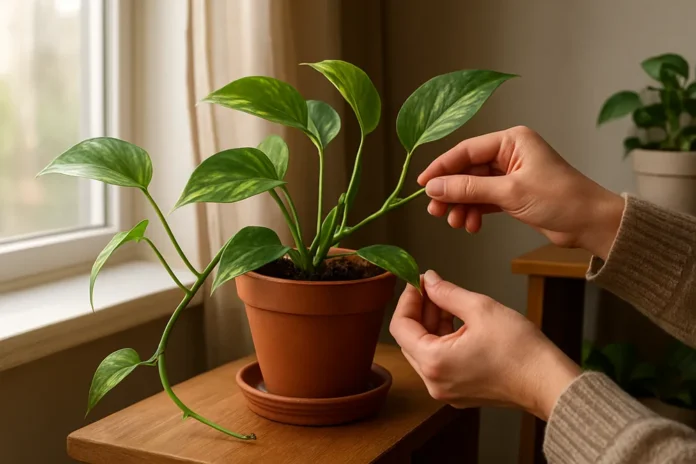
A pothos usually stops making new leaves because it is not getting enough light, its roots are stressed, or growing conditions have turned too cool or uneven. Slow growth can also be normal in winter or after a recent move, repotting, or pruning.
A healthy pothos is usually generous with growth. When mine are happy, they push out a steady stream of fresh leaves and longer vines with very little drama. So when pothos new growth suddenly stops, it is usually a sign that something in the plant's routine has changed.
The good news is that a pothos that is not growing new leaves is often fixable. In most cases, the plant is still alive and stable, but it is conserving energy instead of spending it on fresh growth. Light is the most common issue I see, but watering, cramped roots, low temperatures, poor nutrition, and normal seasonal slowdown can all play a part.
If your pothos looks green but stagnant, focus less on the last old leaf and more on the overall pattern. A plant that has stopped producing new leaves tells you more through its location, soil, roots, and vine tips than through one isolated symptom.
What Normal Pothos Growth Should Look Like
Pothos grow from the vine tips and nodes, so new leaves usually appear as small rolled spears that unfurl over time. In bright indoor conditions, active plants often produce new leaves regularly during spring and summer, and many keep growing slowly indoors through fall if temperatures and light stay decent.
A pause does not always mean something is wrong. Growth often slows in winter, after a move to a darker room, or right after repotting. If the leaves still look healthy and firm, the plant may simply be in a rest period rather than in serious decline.
- Active growth: longer vines, fresh leaf tips, and occasional larger leaves
- Slow but acceptable growth: no obvious damage, but weeks between new leaves
- Concerning stagnation: months without new leaves, weak vines, yellowing, droop, or compacted roots
Low Light Is the Most Common Reason New Leaves Stop
Pothos tolerate low light, but tolerance is not the same as thriving. In dim corners, they often hold onto existing leaves while stopping new leaf production or making tiny, widely spaced leaves. The plant is basically surviving, not growing.
This is especially common when a pothos used to sit near a bright window and then gets moved deeper into a room. Even if the plant still looks green, it may not have enough energy to build new tissue. Variegated pothos usually need even more light than solid green forms to keep producing strong growth.
When I diagnose a stalled pothos, light is the first thing I question. A plant can stay deceptively healthy-looking for quite a while in low light, but the missing clue is not leaf color. It is the lack of active vine tips and the long gap between leaves.
Signs Light Is Too Low
- Vines stretch longer between leaves
- New leaves, if any, are smaller than older ones
- Variegation fades on golden or marble types
- Growth points stay still for weeks or months
- The plant leans toward the nearest window
What Better Light Looks Like
Pothos grow best in bright, indirect light. A spot a few feet from an east or south-facing window is often ideal, or close to a bright west-facing window with some protection from harsh late afternoon sun. Direct midday sun can scorch leaves, but bright filtered light usually speeds up new growth noticeably.
Watering Problems Can Stall Growth Even Before Leaves Yellow
Pothos need a rhythm of moisture and oxygen around the roots. If the soil stays soggy too long, roots struggle to breathe and stop supporting fresh top growth. If the plant gets bone dry over and over, it may survive, but it often pauses leaf production to conserve resources.
Many gardeners expect a watering issue to show up as dramatic yellow leaves first, but pothos often stall before they collapse. A plant sitting in dense, wet soil may look almost unchanged above the surface while the root system quietly declines.
Clues You May Be Overwatering
- Soil stays wet for many days after watering
- The pot feels heavy most of the time
- Leaves look limp even though the mix is moist
- Older leaves yellow one by one
- There is a sour smell from the potting mix
Clues You May Be Underwatering
- Soil pulls away from the sides of the pot
- Leaves curl, droop, or feel thin
- Vine tips dry up before opening new leaves
- Growth restarts briefly after watering, then stalls again
I get the best growth when I water thoroughly, let excess drain away, and then wait until the top inch or two dries before watering again. That pattern gives pothos both moisture and air, which is what the roots actually need.
Root Stress and Pot Size Can Hold the Plant Back
A pothos that has filled its pot with roots may stop pushing new leaves because it is out of space, out of moisture buffering, or both. Rootbound plants dry out faster, absorb nutrients less evenly, and often redirect energy into survival instead of new foliage.
On the other hand, a pothos in an oversized pot can also slow down. Too much extra soil stays wet longer than the roots can use it, which increases the risk of root stress. The ideal pot is only slightly larger than the root ball and has reliable drainage.
Signs the Roots Need Attention
- Roots circle heavily around the inside of the pot
- Water runs straight through because the root mass is very dense
- The plant wilts quickly after watering because little mix is left to hold moisture
- Growth has stalled even during warm, bright months
- Roots are dark, mushy, or sparse from rot instead of firm and pale
If you slide the plant out and see a tight mass of healthy roots, move it up just one pot size. If the roots are mushy or smell bad, the issue is not lack of space but damage from staying too wet. In that case, trimming rot and repotting into fresh, airy mix matters more than sizing up.
Nutrients, Soil Quality, and Feeding Habits Matter
Pothos are not heavy feeders, but they cannot keep making leaves forever in tired potting mix. After a year or two, the soil may be depleted, compacted, or both. When that happens, new growth slows, leaf size shrinks, and the plant loses some of its usual momentum.
This problem often shows up in older houseplants that have not been repotted or fertilized in a long time. A light feeding schedule during active growth can help, especially if the plant is getting good light and proper watering. Fertilizer will not fix low light or root rot, but it can support growth once the basics are in place.
When Nutrition Is Likely Part of the Problem
- The pothos has been in the same soil for a long time
- New leaves are small and pale compared to older growth
- The plant is in bright light but still not actively growing
- You have never fertilized during spring or summer
Use a balanced houseplant fertilizer at a gentle rate during the growing season rather than a heavy dose all at once. If the potting mix is old and dense, refreshing the soil may do more good than feeding alone. Pothos prefer a loose, well-draining mix that does not stay packed and airless.
Temperature, Humidity, and Seasonal Slowdown Can Pause Growth
Pothos are tropical plants, so they grow most actively in warm indoor conditions. Cool rooms, cold drafts, and sudden temperature swings can all slow or stop leaf production. This is very common near winter windows, exterior doors, or air conditioning vents.
Humidity is less critical for pothos than for fussier tropical plants, but very dry indoor air can still affect tender new growth and vine tips. If the plant is alive but sitting still during late fall and winter, season may be part of the answer. Shorter days alone can reduce growth a lot.
I do not worry much about a pothos that pauses in winter if the leaves stay firm and the vines remain healthy. What matters more is whether growth returns when days get longer and the plant gets back into warmer, brighter conditions.
- Best growth usually happens around normal warm room temperatures
- Cold windowsills and drafty spots can stop active growth
- Winter slowdown is common, especially in northern homes
- Dry air alone rarely causes a full stall, but it can worsen other stress
Pruning, Pests, and Recent Changes Can Also Be the Cause
If you recently pruned the plant, divided it, propagated cuttings, or moved it to a new room, a temporary pause is normal. Pothos often need a little time to redirect energy and settle back into active growth. The same is true after repotting, especially if roots were disturbed.
Pests are another possibility, though they are usually easier to spot. Spider mites, mealybugs, and scale can drain energy from the plant and weaken tender growth points. Even a mild infestation can leave the plant looking static rather than visibly collapsing.
What to Inspect Closely
- Vine tips where new leaves should be emerging
- Undersides of leaves for stippling, webbing, or sticky residue
- Leaf joints and nodes for white cottony clusters or small brown bumps
- Any recently cut or damaged stems
If you see pests, treat that issue first before adjusting fertilizer or watering too much. A pothos under attack usually will not resume normal leaf production until the stress is removed.
How to Get Your Pothos Growing Again
The best fix is usually not complicated, but it helps to change the most likely cause first instead of trying everything at once. Pothos respond well when the environment becomes brighter, steadier, and more root-friendly.
- Move the plant into brighter indirect light.
- Check the soil moisture and correct any overwatering or severe drying cycle.
- Inspect the roots if the plant has been in the same pot a long time or the mix smells sour.
- Repot only if the roots are crowded or the soil has broken down.
- Feed lightly during active growth if the plant is otherwise healthy.
- Keep it away from cold drafts and be patient during winter.
After you improve conditions, judge success by new growth, not by old leaves. Existing damaged or undersized leaves usually stay that way. What you want to see is fresh vine extension, new leaf spears, and gradually stronger leaves over the next several weeks.
If nothing changes after a month or two of better care during the growing season, take the plant out of its pot and inspect the roots. In my experience, the real answer usually becomes obvious once you see whether the root system is healthy, crowded, or rotting.
FAQ
How Long Can a Pothos Go Without Growing New Leaves?
A pothos may pause for several weeks in winter or after a move, but months without new leaves during spring and summer usually point to a care issue. If it is warm and reasonably bright, I would expect at least some active growth.
Can a Pothos Have Healthy Leaves and Still Be Too Dark?
Yes. Pothos often stay green in low light for quite a while, but they stop producing new leaves or make very small ones. That is one reason low light gets overlooked so often.
Should I Fertilize a Pothos That Is Not Growing?
Only if the plant is otherwise in decent shape and getting enough light. Fertilizer helps support active growth, but it will not solve soggy roots, poor light, or cold stress.
Will Pruning Help a Pothos Make New Leaves?
Sometimes. Pruning can encourage branching from nodes below the cut, but it only works well when the plant has enough light and root health to support regrowth.
Does a Rootbound Pothos Always Need a Bigger Pot?
Not always, but many do benefit from one size up if the roots are tightly packed and healthy. If the roots are rotting, the fix is better drainage and fresh soil, not a larger container.
Why Is My Pothos Vine Growing but Not Making Many Leaves?
That stretched growth pattern usually means the plant is searching for more light. The spaces between leaves get longer, and the plant invests in reaching rather than building full, sturdy foliage.
Can Pothos Stop Growing After Repotting?
Yes. A short pause after repotting is common, especially if roots were disturbed. Most plants restart once they settle in, as long as the new mix drains well and the pot is not too large.
Want a faster fix for a stalled houseplant? Read our pothos care guide and see the best potting mixes, grow lights, and fertilizers for stronger leaf growth.
