

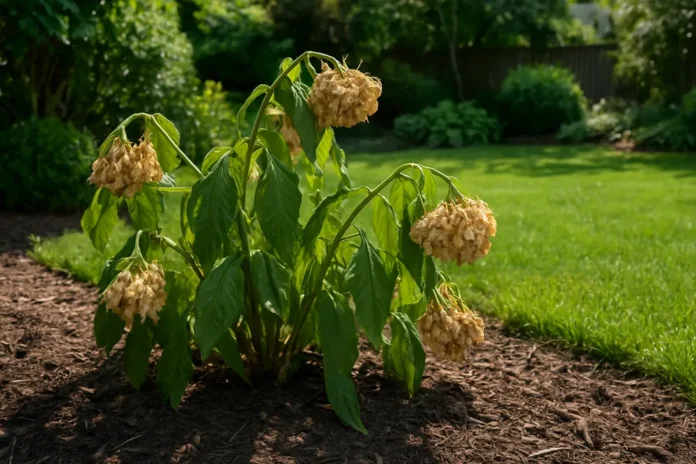
Hydrangeas usually wilt because they are losing water faster than their roots can replace it. Heat, dry soil, root stress, and sometimes too much water are the most common reasons.
A wilted hydrangea can look dramatic fast. One afternoon it may seem full and healthy, and by evening the leaves and blooms are hanging limp. The good news is that hydrangea wilting does not always mean the plant is dying. In many cases, it is reacting to heat or uneven moisture, which hydrangeas are famous for.
What matters most is when your hydrangea wilts and what the soil feels like at the same time. A plant that droops in hot sun but perks back up overnight points to a different problem than one that stays limp for days in wet soil. Once you read the pattern correctly, the fix becomes much clearer.
I treat wilting as a symptom, not a diagnosis. Hydrangeas can wilt from underwatering, overwatering, root damage, transplant stress, too much sun, or disease. Looking at the leaves, blooms, stems, and soil together will usually tell you which one you are dealing with.
What Hydrangea Wilting Usually Means
Wilting happens when the plant's leaves and stems lose turgor pressure, which is the internal water pressure that keeps tissues firm. In plain terms, your hydrangea is not moving enough water to the top growth to keep it upright. That can happen because the soil is too dry, because roots are struggling, or because the plant is under intense heat and evaporating moisture faster than it can replace it.
Hydrangeas are especially prone to visible wilting because they have broad leaves and big flower heads that lose moisture quickly. Bigleaf hydrangeas, in particular, can flop dramatically in afternoon heat even when the roots still have adequate moisture. That makes them a little deceptive. A dramatic wilt is not always an emergency, but a wilt that lingers into morning usually deserves attention.
When I am diagnosing a wilted hydrangea, I look at it early in the morning before the day heats up. If the plant is still limp at sunrise, I stop blaming the afternoon sun and start looking harder at soil moisture, roots, and drainage.
The Most Common Reasons Hydrangeas Wilt
Dry Soil and Underwatering
This is the most common cause, especially in summer. Hydrangeas like consistently moist soil, and their large leaves lose water quickly in warm weather. If the top few inches of soil are dry and the plant stays wilted through cooler parts of the day, it likely needs a deep watering. New shrubs, container hydrangeas, and plants growing under trees dry out even faster than established plants in open garden beds.
Afternoon Heat and Temporary Heat Stress
Hydrangeas often wilt during the hottest part of the day even when the soil is reasonably moist. This is especially common in full afternoon sun, reflected heat near walls or patios, and during hot, windy weather. If the leaves and flowers recover by evening or the next morning, the plant is likely experiencing temporary heat stress rather than a serious water shortage.
Too Much Water and Suffocating Roots
Overwatering can cause wilting too, which surprises many gardeners. Roots need oxygen as well as water. In soggy soil, they cannot function properly, so the top of the plant wilts as if it were dry. Leaves may also turn yellow, feel soft rather than crisp, or develop brown edges after prolonged root stress. This is common in heavy clay, low spots, and containers without good drainage.
Transplant Shock
A newly planted or recently moved hydrangea often wilts because its root system cannot yet support the top growth well. Planting in warm weather makes this worse. Even with good watering, a hydrangea may droop for days or weeks while it re-establishes roots. Large leaf and flower surfaces put extra demand on a root system that is still adjusting.
Root Damage or Restricted Roots
Roots can be damaged by digging, construction, lawn equipment, voles, or planting stress. Container hydrangeas may also become rootbound, which means the roots circle tightly and struggle to absorb water evenly. In both cases, the soil may seem wet or dry in patches, and the plant may wilt repeatedly even after watering.
Sun Exposure That Is Too Intense
Many hydrangeas prefer morning sun and afternoon shade, especially in warmer parts of the U.S. A plant growing in harsh afternoon sun may wilt frequently, scorch at the edges, and fade in flower color. Panicle hydrangeas tolerate more sun than bigleaf hydrangeas, but even they can droop in extreme heat if moisture is inconsistent.
Disease and Stem Problems
Less often, wilting comes from disease. Root rot, bacterial wilt, fungal stem issues, or cankers can interrupt water movement. If only one stem or one side of the shrub is wilting while the rest looks fine, a stem injury or disease problem becomes more likely. You may also notice dark lesions, mushy stems near the base, or a foul smell in badly rotted roots.
How to Tell Which Problem You Have
The simplest way to sort out wilting is to compare the plant's appearance with the soil moisture and the time of day. Hydrangeas usually give several clues at once. Do not rely on one sign alone.
- If the soil is dry several inches down and the whole plant looks limp, underwatering is likely.
- If the plant wilts in late afternoon but looks normal in the morning, heat stress is the likely cause.
- If the soil is wet, the leaves are yellowing, and the plant stays droopy, overwatering or root rot is more likely.
- If only a newly planted hydrangea is wilting, transplant shock may be the main issue.
- If one branch wilts while the rest of the shrub looks normal, look for stem damage, girdling, or disease.
- If the plant dries out again very quickly after watering, check for rootbound conditions or competing tree roots.
Push your finger into the soil, or better yet, use a trowel to check a few inches down. Surface dryness can be misleading. Mulch, shade, and potting mix texture all affect what the top inch feels like. A hydrangea in a container may need water far more often than one planted in the ground, even if they sit side by side.
If you are unsure whether the plant is too dry or too wet, do not keep adding a little water every day. I get better results by checking the root zone thoroughly and then watering deeply only when the soil actually needs it.
What to Do for a Wilted Hydrangea
If the Soil Is Dry
Water slowly and deeply so moisture reaches the root zone rather than just wetting the surface. A long soak is much better than a quick splash. For in-ground plants, let the hose run gently at the base until the soil is moist several inches down. For container plants, water until excess drains from the bottom, then empty any saucer that traps standing water.
After watering, add two to three inches of mulch around the root area to help hold soil moisture. Keep the mulch a few inches away from the stems. If the hydrangea is in strong afternoon sun, temporary shade during a heat wave can reduce stress while it recovers.
If the Soil Is Wet
Hold off on more water and let the root zone breathe. Check whether the plant is sitting in a low, soggy spot or in compacted clay. In containers, make sure drainage holes are open and the pot is not standing in water. If the problem is chronic, you may need to improve drainage, raise the planting area slightly, or move the shrub to a better site.
If the Plant Is Newly Planted
Keep the soil evenly moist, not saturated, while the hydrangea settles in. Do not fertilize heavily right away, because that can push top growth before the roots are ready. Remove badly collapsed flower heads if needed so the plant can direct energy into recovery. Some drooping is normal after planting, especially in summer.
If Heat Is the Trigger
The long-term fix is usually better siting and more even moisture, not constant emergency watering. Hydrangeas growing where they get gentle morning sun and protection from harsh afternoon heat tend to hold up better. A thicker mulch layer, less reflected heat, and protection from drying wind can make a noticeable difference.
If You Suspect Root Damage or Disease
Inspect the stems near the base for cracks, chew marks, rot, or cankers. If the plant is in a pot, slide it out carefully and look for brown, mushy roots or tightly circling roots. Trim only clearly dead or broken stems, and avoid heavy pruning until you know the cause. If root rot is advanced, recovery may be limited unless drainage improves quickly.
A stressed hydrangea often looks worst in the flowers before the leaves fully collapse. When the blooms suddenly hang like wet paper but the leaves are only starting to soften, I take that as an early warning that the root zone is not keeping up.
When Wilting Is Normal and when It Is Serious
Some wilting is temporary and not especially harmful. On hot summer days, many hydrangeas droop in late afternoon and recover overnight. That kind of daily cycle is common, especially for bigleaf types. It tells you the plant is sensitive to heat, but it does not automatically mean severe damage is happening.
Wilting becomes more serious when the plant does not recover by the next morning, when the soil remains soggy for long periods, or when you see additional symptoms like yellow leaves, blackened stems, leaf scorch, stem dieback, or a sour smell in the root zone. Those signs point away from simple heat stress and toward ongoing root trouble or disease.
- Usually less serious: drooping only in late afternoon, normal recovery by morning, healthy green leaves, and evenly moist soil.
- More serious: all-day wilting, repeated collapse despite proper watering, yellowing or browning leaves, mushy roots, or one-sided stem dieback.
- Urgent for potted plants: fast drying, crispy leaves, or a rootbound pot during hot weather.
- Urgent for newly planted shrubs: severe wilt paired with dry soil and recent transplanting in heat.
How to Prevent Hydrangeas From Wilting Again
Prevention mostly comes down to balancing moisture, drainage, and sun exposure. Hydrangeas like steady conditions. They struggle when the soil swings from bone dry to waterlogged, or when the plant is asked to handle harsh afternoon sun without enough root support.
- Water deeply and less often rather than lightly and frequently.
- Mulch the root zone to slow evaporation and moderate soil temperature.
- Give bigleaf hydrangeas afternoon shade in hot regions.
- Improve heavy clay soil with organic matter before planting when possible.
- Use containers with strong drainage and monitor potted hydrangeas closely in summer.
- Avoid planting too close to thirsty trees that compete for moisture.
- Do not overfertilize, which can push soft top growth that wilts faster in heat.
If you regularly fight wilting in the same spot, the site may simply be wrong for that variety. I have seen hydrangeas improve more from being moved to a better exposure than from any amount of careful watering in a harsh location. Matching the plant to the site solves a lot of repeat stress.
Special Cases by Hydrangea Type and Growing Situation
Bigleaf Hydrangeas
These are often the quickest to wilt in heat. Their large leaves and flower heads lose moisture fast, so they benefit the most from afternoon shade and consistent soil moisture. A bigleaf hydrangea drooping by late afternoon is very common in summer, but it should rebound once temperatures fall.
Panicle Hydrangeas
Panicle types tolerate more sun than bigleaf hydrangeas, but they can still wilt during heat waves or while newly planted. If a panicle hydrangea is staying wilted in moist soil, I would pay closer attention to drainage or root health rather than assuming sun is the only cause.
Smooth Hydrangeas
Smooth hydrangeas prefer even moisture and can wilt noticeably in dry periods. Their leaves often tell the story quickly. Dry soil and hot afternoon sun are the usual culprits.
Potted Hydrangeas
Container plants are more vulnerable to both drying out and overwatering. Pots heat up faster, root zones are smaller, and watering errors show up quickly. If your potted hydrangea wilts often, check whether it is rootbound, sitting in a dark plastic pot in full sun, or trapped in a decorative cachepot that holds water.
FAQ
Should I Water My Hydrangea Every Day if It Is Wilting?
Not automatically. Watering every day can make a soggy root problem worse. Check the soil first, then water deeply when the root zone is actually drying out.
Can Hydrangeas Wilt Even when the Soil Is Wet?
Yes. Wet soil can suffocate roots, which prevents them from moving water properly. That can make the plant droop even though moisture is present.
Why Does My Hydrangea Wilt in the Afternoon but Recover at Night?
That pattern usually points to heat stress. The plant is losing moisture faster than it can replace it during the hottest part of the day, then recovering when temperatures drop.
Will a Wilted Hydrangea Come Back?
Often, yes. Hydrangeas recover well from short-term dryness or temporary heat stress. Recovery is less certain if the roots have rotted or the stems are badly damaged.
Does Mulch Help Stop Hydrangea Wilting?
Yes. A layer of mulch helps the soil stay cooler and slows evaporation, which can reduce wilting between waterings.
Is It Normal for a Newly Planted Hydrangea to Wilt?
Yes, some wilting after planting is common, especially in warm weather. New roots need time to establish, so the shrub may droop more easily at first.
Can Too Much Sun Make My Hydrangea Wilt?
Absolutely. Many hydrangeas, especially bigleaf types, struggle in strong afternoon sun. Too much direct heat can lead to repeated drooping and leaf scorch.
Still troubleshooting a struggling shrub? Read our hydrangea care guides and product picks to find the best watering tools, mulch options, and soil fixes for faster recovery.
