

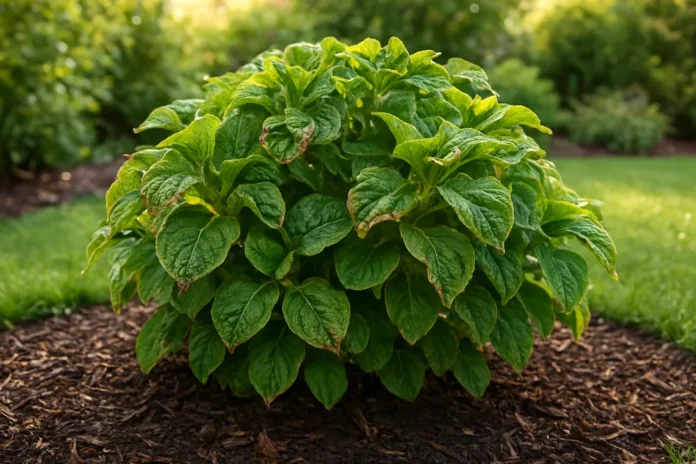
Hydrangea leaves usually curl because the plant is stressed by heat, uneven watering, pests, disease, or chemical exposure. Curling can also happen when roots are struggling in poor drainage or compacted soil.
When I see hydrangea leaves curling, I do not assume there is one universal cause. Hydrangeas react quickly to stress, and curled leaves can show up after a hot week, a watering mistake, insect feeding, root trouble, or even a light dose of herbicide drift from nearby lawn work.
The good news is that curled leaves are often one of the plant's earliest warning signs. If you catch the problem before leaves scorch, yellow heavily, or drop, there is usually time to correct the issue and keep your hydrangea growing well through the season.
What matters most is the pattern. Are the newest leaves twisted? Are older leaves rolling inward by afternoon? Do you see spots, sticky residue, or crispy edges? Those clues tell you far more than curling alone.
What Leaf Curling Usually Means on Hydrangeas
Leaf curling is a stress response. Hydrangea leaves can cup upward, roll under, twist, or pucker when the plant is trying to limit water loss, cope with damaged roots, or react to tissue injury. Sometimes the leaves stay green but curl. Other times curling arrives with browning, yellowing, black spots, or stunted growth.
Start by looking at which leaves are affected first. Curling on the newest growth often points to insects, herbicide exposure, or nutrient uptake problems. Curling on larger outer leaves during hot afternoons often points to water stress or heat. Curling with spots or mold leans more toward disease.
When I diagnose hydrangeas, I pay close attention to timing. If the plant looked normal last week and curled suddenly after extreme heat or a dry spell, I suspect environmental stress first. If the distortion is slow, patchy, and mostly on tender new leaves, I look much harder for insects or chemical injury.
Heat Stress and Too Much Afternoon Sun
One of the most common reasons hydrangea leaves curl is simple heat stress. Bigleaf hydrangeas in particular can wilt and curl when summer afternoons are intense, especially if they get reflected heat from siding, fences, driveways, or stone walls. The leaves may look limp by midafternoon, then partially recover by evening.
In this case, curling is the plant's way of reducing moisture loss. You may also notice crispy leaf margins, faded color, or sunscald patches that turn tan or brown. Plants in containers are even more vulnerable because the root zone heats up and dries out faster than garden soil.
- Leaves curl most during the hottest part of the day
- Outer or upper leaves are affected before shaded inner leaves
- Leaf edges may turn brown or papery
- The plant perks up somewhat after sunset or cooler weather
If this sounds like your plant, the fix is not usually more fertilizer. It is better moisture management and, when possible, protection from harsh afternoon sun. A 2 to 3 inch layer of mulch helps keep roots cooler and more evenly moist.
Underwatering and Inconsistent Moisture
Hydrangeas are thirsty shrubs, and when soil swings from dry to soaked to dry again, leaves often curl before they fully wilt. Underwatered plants may have leaves that fold inward, droop, feel thin, or develop brown edges. Flower buds can also dry out or fail to open well.
Newly planted hydrangeas are especially prone to this. Their roots have not spread far enough to buffer against hot weather, so even a few missed waterings can show up fast in the foliage. Container hydrangeas also need more frequent attention than in-ground plants.
- Soil feels dry several inches down
- Leaves curl and droop at the same time
- Lower leaves may brown and fall
- Buds and blooms may look weak or dehydrated
I would rather water deeply and less often than give a little splash every day. Shallow watering encourages shallow roots, and those roots dry out first when weather turns hot.
Aim for deep watering that moistens the entire root zone. Then let the upper surface dry slightly before watering again. That balance keeps roots supplied with oxygen while still giving the plant the moisture it needs.
Overwatering and Poor Drainage
It surprises many gardeners, but overwatering can also cause hydrangea leaves to curl. When soil stays saturated, roots cannot breathe properly. As roots weaken, the top growth starts acting as though it is drought stressed because the plant cannot move water efficiently.
In soggy conditions, curled leaves may be soft rather than crisp. The foliage can look dull, pale, or slightly yellow. Stems may grow weakly, and the plant may never quite recover between waterings. If root rot sets in, decline becomes more severe.
- Soil stays wet for days after rain or irrigation
- Leaves curl but the ground is clearly not dry
- Yellowing appears along with curling
- Growth seems stalled or generally unhealthy
Hydrangeas like moist soil, not waterlogged soil. If your shrub sits in a low spot, heavy clay, or an area where downspouts dump water, drainage may be the real issue. In containers, make sure excess water can drain freely and the potting mix is not compacted.
Pests That Distort New Growth
If the newest leaves are curling, puckering, or twisting, small sap-sucking pests are worth checking for. Aphids are a common culprit. They cluster on tender growth and feed by piercing plant tissue, which causes leaves to curl and distort as they expand.
Spider mites can also stress hydrangeas, especially in hot, dry weather. They are tiny and easy to miss, but they leave stippling, a dusty look, or fine webbing. Thrips may cause scarring or deformed leaves too, though they are less obvious to home gardeners.
- Curled growth is concentrated at stem tips
- Leaves may feel sticky from honeydew
- You may see ants visiting the plant
- Fine stippling or webbing suggests spider mites
- New leaves look misshapen rather than simply wilted
Turn leaves over and inspect stems closely. A strong spray of water can knock off light aphid infestations. If pressure remains high, insecticidal soap or horticultural oil can help when used according to label directions. Avoid spraying during the hottest part of the day, because stressed leaves can burn more easily.
Leaf Diseases and Fungal Stress
Disease is not always the first reason hydrangea leaves curl, but it can be part of the picture. Cercospora leaf spot, anthracnose, and other fungal issues often begin with spots or blotches, then leaves may curl, yellow, or drop as damage spreads. High humidity, poor airflow, and wet foliage increase the risk.
Powdery mildew can also distort leaves, especially if infection starts on tender growth. You may see a white or grayish coating on the leaf surface, along with curling or puckering. Severe disease pressure can weaken the plant and reduce flowering.
- Purple, brown, tan, or black spots appear before or alongside curling
- Leaf drop increases from the bottom of the plant upward
- A white powdery coating points to mildew
- Dense plants in humid areas are affected most
Remove heavily infected leaves that have fallen, water the soil instead of the foliage, and thin surrounding growth if airflow is poor. Fungicides may help prevent further spread in recurring cases, but they work best when paired with better spacing and watering habits.
Herbicide Drift and Chemical Injury
One cause gardeners often overlook is herbicide drift. Hydrangeas are sensitive to broadleaf weed killers used on lawns and driveways. Even light drift can cause leaves to curl, cup, twist, or grow in a narrow, distorted shape. New growth is often hit hardest.
This kind of damage may show up after a neighbor sprays on a breezy day, or after vapors move from a recently treated area. The plant may not have obvious chewing or spotting, just strange, uneven growth that looks almost crinkled.
Chemical injury often has a very particular look. The leaves are not just wilted. They are warped, straplike, or bent in unnatural ways, especially on fresh growth. When I see that pattern on multiple broadleaf plants in the same area at once, I think drift before I think disease.
Unfortunately, there is no direct cure for herbicide exposure. The best approach is supportive care: steady watering, no extra fertilizer unless the plant is clearly deficient, and patience while new growth emerges. Mild cases often improve over time if exposure stops.
Root Stress, Compacted Soil, and Transplant Shock
Hydrangea roots need oxygen, moisture, and room to spread. When soil is compacted, roots sit too deep, or a plant was recently transplanted, leaves may curl because the root system is not functioning at full strength. This is common after planting during warm weather or after digging too close to established shrubs.
Transplant shock usually comes with wilting, slowed growth, and general sulking. The leaves may curl even if you are watering regularly, because damaged roots cannot absorb water efficiently yet. Plants installed too deep may struggle for much longer.
- Curling begins soon after planting or moving the shrub
- The root flare may be buried too deeply
- Soil is hard and dense around the plant
- Foot traffic or heavy clay keeps roots from expanding
Keep the soil evenly moist, mulch lightly over the root zone, and avoid piling mulch against the stems. Do not overcorrect by drowning the plant. Root recovery takes time, and new healthy growth is the best sign that conditions are improving.
Nutrient Issues and pH Problems
Nutrient problems are usually not the first cause of curling by themselves, but they can contribute. Hydrangeas growing in highly alkaline or depleted soil may struggle to take up key nutrients, which leads to weak, stressed foliage. You are more likely to see yellowing, poor vigor, or small leaves along with curling rather than curling alone.
Iron chlorosis, for example, often causes yellow leaves with greener veins. Potassium issues can contribute to edge scorch and weak growth. Overfertilizing can also burn roots and create secondary leaf curl, especially with fast-release products used in hot weather.
If your hydrangea has repeated problems without a clear watering, heat, or pest explanation, a soil test is more useful than guessing. It can reveal pH issues and nutrient imbalances so you can correct the real problem instead of adding fertilizer blindly.
How to Figure Out the Cause Quickly
You can narrow down the cause of curled hydrangea leaves pretty fast by walking through a few simple observations. Look at when the curling happens, where on the plant it appears, and what other symptoms show up with it.
- Check soil moisture 3 to 4 inches down instead of judging by the dry surface alone.
- Compare older leaves with the newest leaves. Older leaf curl often points to heat or water stress, while twisted new growth suggests pests or chemicals.
- Look for spots, white coating, stippling, webbing, sticky residue, or insects on leaf undersides.
- Think back to recent events such as heat waves, heavy rain, transplanting, fertilizing, or weed killer use nearby.
- Inspect the planting site for drainage problems, reflected heat, or compacted soil.
Once you identify the likely stress, resist the urge to do five things at once. Most hydrangeas respond better when you correct the main issue and then watch the new growth. Old curled leaves may not flatten out completely, so judge progress by what happens next, not by the damaged leaves you already have.
How to Help Your Hydrangea Recover
Recovery depends on the cause, but the basic support plan is similar. Keep moisture even, reduce extra stress, and avoid aggressive feeding or pruning while the plant is struggling. A hydrangea can outgrow a lot of foliage damage if the roots and stems remain healthy.
- Water deeply when needed, but do not keep the soil constantly soggy
- Add mulch to regulate soil temperature and moisture
- Provide relief from intense late-day sun if possible
- Treat active pest infestations early before distortion spreads
- Remove badly diseased fallen leaves and improve airflow
- Avoid herbicide use near the shrub, especially on windy days
- Wait for fresh growth before deciding whether major pruning is necessary
If only a portion of the plant is affected and stems remain firm, chances are good. If you see severe stem dieback, blackened roots, or a plant that keeps declining despite proper watering, the issue may be deeper than simple surface stress.
FAQ
Will Curled Hydrangea Leaves Uncurl on Their Own?
Sometimes, especially if heat or temporary water stress caused the problem. But many damaged leaves stay somewhat curled, so the better sign is healthy new growth appearing after conditions improve.
Should I Cut Off Curled Hydrangea Leaves?
Not always. If leaves are still mostly green, leave them in place so they can keep helping the plant. Remove leaves that are badly diseased, fully brown, or clearly dead.
Can Too Much Sun Make Hydrangea Leaves Curl?
Yes. Strong afternoon sun and reflected heat commonly cause hydrangea leaves to curl, wilt, and develop brown edges, especially on bigleaf hydrangeas.
Do Aphids Cause Hydrangea Leaves to Curl?
Yes. Aphids feeding on tender new growth can distort and curl leaves as they develop. You may also notice sticky honeydew or ants on the plant.
Can Overwatering Look Like Underwatering on Hydrangeas?
Yes. Soggy soil damages roots, and once roots struggle, the leaves can curl and droop because the plant is no longer moving water properly.
Why Are Only the New Hydrangea Leaves Curling?
Curling that is concentrated on new growth often points to aphids, spider mites, herbicide drift, or another form of tissue distortion rather than simple drought stress.
Is Leaf Curl on Hydrangea Caused by Fertilizer Problems?
Sometimes, but less often than heat, water, pests, or disease. Overfertilizing can injure roots, while soil pH or nutrient issues usually cause curling along with yellowing or weak growth.
Need help choosing the right treatment fast? Read our hydrangea care and problem-solving guides to compare the best fungicides, insect controls, and watering tools for healthier shrubs.
