

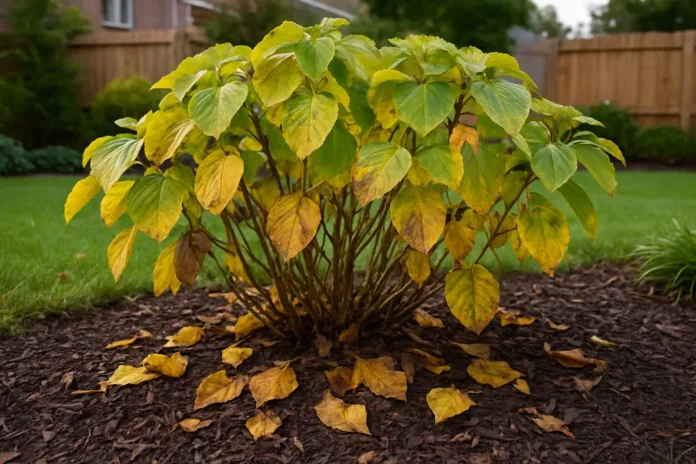
Hydrangea leaves usually fall off because the plant is stressed by watering problems, heat, root disturbance, pests, disease, or normal seasonal change. Sudden leaf drop often happens when several stresses overlap at once.
When a hydrangea starts dropping leaves, it can look alarming fast. One day the shrub seems full and healthy, and the next you find scattered leaves under the plant and bare stems showing through. In my garden, hydrangea leaf drop is usually a stress signal, not a mystery disease out of nowhere.
The tricky part is that several problems can cause the same symptom. Too much water, too little water, hot afternoon sun, root damage, fungal disease, insects, or even normal seasonal slowdown can all make hydrangea leaves fall. The best clue is not the fallen leaves alone, but what those leaves looked like before they dropped and how the rest of the plant is behaving.
If you look at leaf color, timing, weather, soil moisture, and whether the plant is newly planted or established, the cause usually becomes much clearer. Once you narrow it down, most hydrangeas recover well as long as the roots and stems are still in decent shape.
What Normal Leaf Drop Looks Like on Hydrangeas
Not every dropped leaf means trouble. Hydrangeas are deciduous shrubs in most of the U.S., so they naturally lose leaves in fall as temperatures cool and daylight shortens. Older interior leaves may also yellow and shed during the growing season if they are heavily shaded by newer outer growth.
- Fall leaf drop happens gradually and usually affects much of the plant at the same time.
- Older inner leaves may yellow first while stem tips and new growth stay healthy.
- A healthy seasonal drop does not usually come with black mushy spots, chewed edges, or collapsing stems.
- If flower buds and stems still look firm, the shrub may simply be transitioning into dormancy.
If your hydrangea is dropping leaves in spring or summer, or if the leaves are falling while still green, crisp, spotted, or badly wilted, that is more likely a care or health problem than a normal seasonal change.
Water Stress Is the Most Common Reason Leaves Fall
Underwatering and Dry Soil
Hydrangeas have large leaves that lose moisture quickly, especially in heat and wind. When soil gets too dry, the plant may wilt, crisp at the edges, yellow, and then drop leaves to reduce stress. Newly planted hydrangeas are especially prone to this because their roots have not spread far into surrounding soil.
- Leaves droop in daytime and may not recover by evening
- Leaf edges turn brown or papery
- Soil feels dry several inches down
- New growth may look smaller than usual
Overwatering and Soggy Roots
Too much water can cause just as much leaf drop as drought. When soil stays saturated, roots cannot get enough oxygen. That weakens the plant, causes yellowing, and can lead to leaves dropping while still soft. In heavy clay soil, this can happen even when you are watering what seems like a reasonable amount.
- Leaves turn pale yellow before falling
- Wilting happens even though the soil is wet
- The ground stays soggy a day or two after watering
- Lower leaves often drop first
When I diagnose hydrangea leaf drop, I never trust the soil surface alone. I dig a small test hole near the root zone or push my fingers several inches down, because the top inch can look dry while the root area is still saturated.
For established shrubs, deep watering less often is usually better than frequent shallow watering. The goal is evenly moist soil, not a constant wet sponge and not bone-dry soil that pulls away from the roots.
Heat and Sun Exposure Can Trigger Sudden Leaf Loss
Many hydrangeas like morning sun and afternoon shade, especially in hotter parts of the country. If your plant gets intense afternoon sun, reflected heat from a wall, or hot dry wind, leaves can scorch and drop quickly. This is especially common during heat waves or after a cool, wet spring suddenly shifts into strong summer heat.
- Leaves look limp by midday
- Brown patches appear between veins or along edges
- The side facing the sun is worse than the shaded side
- Flowers may fade or crisp at the same time
Sun scorch usually affects exposed leaves first rather than causing uniform yellowing throughout the plant. If the shrub is otherwise rooted well and watered properly, fresh new leaves often appear once temperatures moderate.
If a hydrangea is struggling in summer, judge recovery by the condition of new growth, not by damaged old leaves. Scorched leaves rarely improve much, but the plant can still rebound if the roots stay healthy.
Transplant Shock and Root Disturbance Are Major Causes
A hydrangea that was planted recently or moved from one spot to another often drops leaves because its roots cannot yet support the top growth. Even careful planting disturbs fine feeder roots, and those roots are what take up most of the water. Warm weather makes this worse because the leaves lose moisture faster than the damaged roots can replace it.
Container-grown hydrangeas can also have roots that are circling tightly inside the pot. If those roots were not loosened at planting, water may run around the root ball instead of soaking into it. The surrounding soil may seem moist while the center of the original root ball stays dry.
- Leaf drop begins soon after planting or moving the shrub
- Leaves wilt despite regular watering
- The plant seems stalled and does not put on much new growth
- The root ball may be dry in the center even when nearby soil is damp
Transplant shock often improves with consistent watering, mulch, and time. Avoid fertilizing heavily right away, because that can push tender top growth before the root system is ready.
Diseases That Cause Hydrangea Leaves to Yellow, Spot, and Drop
Leaf Spot Diseases
Fungal leaf spots are common on hydrangeas, especially in humid weather or where air circulation is poor. Spots may start purple, brown, or nearly black, then enlarge until the leaf yellows and falls. This often begins on lower or inner leaves where moisture lingers longer.
Root Rot
Root rot is more serious and usually tied to poorly drained soil. Affected plants may wilt, yellow, and drop leaves even though the soil is wet. Stems can look weak, and the whole shrub may decline instead of only one branch or one layer of foliage.
Powdery Mildew and Other Fungal Stress
Powdery mildew does not always cause immediate leaf drop, but a heavy infection weakens foliage over time. Leaves may curl, discolor, and eventually shed, especially late in the season when the plant is already stressed by heat or inconsistent watering.
- Remove and discard badly infected fallen leaves
- Avoid overhead watering late in the day
- Thin crowded nearby plants if airflow is poor
- Water at the base so foliage dries faster
- Improve drainage if root rot is suspected
If disease pressure is severe year after year, a labeled fungicide may help, but sanitation and better growing conditions usually matter more than spraying once the problem is well established.
Pests and Chewing Damage That Can Lead to Defoliation
Hydrangeas are not the most pest-prone shrubs, but insects can still cause enough stress to make leaves drop. Spider mites are a common hidden culprit during hot, dry weather. They feed on the undersides of leaves, causing stippling, fading, and early leaf loss. Aphids, scale, and beetles can also weaken foliage, though they are less often the sole cause of major leaf drop.
- Fine webbing suggests spider mites
- Tiny pale speckles can show feeding damage before leaves drop
- Chewed holes point more toward beetles or caterpillars
- Sticky residue may signal aphids or soft scale
Pest damage often overlaps with heat stress. A shrub already struggling in hot sun is much less tolerant of mites or sap-feeding insects than a well-sited, well-watered plant.
Nutrient Issues and Soil Problems to Consider
Nutrient deficiencies do not usually cause dramatic overnight leaf drop, but they can weaken the plant and contribute to yellowing and shed over time. Nitrogen deficiency often shows as general pale foliage and slower growth. Iron chlorosis can cause yellow leaves with greener veins, especially in alkaline soil where certain hydrangeas struggle to take up nutrients efficiently.
Compacted soil can create a similar problem by limiting root growth and drainage. In that case, the issue is less about missing fertilizer and more about roots being unable to access water, oxygen, and nutrients properly.
- Pale, small leaves across the plant suggest a feeding issue or root stress
- Yellow leaves with green veins can point to iron uptake problems
- Heavy fertilizer can burn roots and make leaf drop worse
- A soil test is more reliable than guessing with multiple products
I am cautious about blaming hydrangea leaf drop on fertilizer alone. In many yards, what looks like a nutrient shortage is really a drainage issue, root crowding, or a pH problem that fertilizer will not solve.
How to Tell Which Cause Is Most Likely
The pattern of damage usually tells the story better than any single symptom. Start with timing, then compare where the leaf drop is happening and what the leaves looked like before they fell.
- If the shrub was recently planted, transplant shock and uneven moisture jump to the top of the list.
- If the weather has been very hot or windy, heat stress and drought become more likely.
- If leaves are yellow and the soil is wet, think overwatering, poor drainage, or root rot.
- If leaves show dark spots before dropping, suspect fungal leaf spot or another disease issue.
- If only the sunny side is damaged, sun scorch is a strong possibility.
- If you see stippling, webbing, or insects under leaves, pests are contributing to the problem.
- If leaf drop is happening in autumn and the stems still look healthy, dormancy may be the main reason.
One important point is that hydrangeas often suffer from more than one problem at once. A newly planted shrub in strong afternoon sun with soggy clay soil may drop leaves from root stress, heat, and poor drainage together.
What to Do to Help a Hydrangea Recover
Once you identify the likely cause, keep the recovery plan simple. Hydrangeas respond best when you stabilize conditions rather than making several big changes at once.
- Water deeply when the root zone begins to dry, but do not keep the soil constantly soggy.
- Add 2 to 3 inches of mulch around the plant to hold moisture and moderate soil temperature, while keeping mulch a few inches away from the stems.
- Provide afternoon shade if the plant is exposed to intense summer sun.
- Remove badly diseased fallen leaves from around the base of the shrub.
- Check drainage if water pools or the soil stays wet for long periods.
- Delay strong fertilizer applications until the plant shows signs of active recovery.
- Inspect the undersides of leaves for mites or other pests during hot, dry weather.
If only some leaves have fallen and stems remain green and firm, the plant has a good chance of bouncing back. Scrape a small spot on a stem with your fingernail if you are unsure. Green tissue underneath usually means that part is still alive.
Avoid hard pruning unless you are removing clearly dead wood. Many hydrangeas set flower buds on old wood, so aggressive cutting after stress can cost you next season's blooms along with slowing recovery.
When Leaf Drop Means the Plant May Not Recover Easily
Sometimes leaf drop is the first stage of a more serious decline. If the shrub is dropping most of its leaves, stems are blackening, the crown feels mushy, or the roots smell rotten, the problem may be severe root damage or disease. A plant in that condition can be difficult to save, especially if it has been sitting in poorly drained soil for a long time.
Likewise, repeated yearly defoliation usually means the site is wrong for the plant. Chronic afternoon sun, constant soggy soil, or very poor airflow can keep stressing the hydrangea no matter how carefully you water.
- Most leaves drop within a short period
- Stems are brittle, blackened, or mushy
- There is no healthy new growth after favorable weather returns
- The same problem has happened for more than one season
In those cases, improving the site or replacing the plant with a hydrangea better suited to the conditions may be more practical than trying to nurse along a shrub that never really settles in.
FAQ
Will My Hydrangea Grow Leaves Back After Dropping Them?
Often, yes. If the stems and roots are still healthy, hydrangeas can push new leaves after temporary stress from heat, watering problems, or transplant shock. Recovery is less likely if root rot or severe disease has damaged the crown.
Should I Cut Off Bare Stems After Leaf Drop?
Not right away unless the wood is clearly dead. Scratch the stem lightly to check for green tissue under the bark. Many hydrangeas bloom on old wood, so premature pruning can remove future flowers.
Can Too Much Rain Make Hydrangea Leaves Fall Off?
Yes. Prolonged rain can keep roots waterlogged, reduce oxygen in the soil, and encourage fungal disease. That combination often leads to yellowing and early leaf drop.
Why Is My Newly Planted Hydrangea Dropping Green Leaves?
Green leaf drop on a new planting often points to transplant shock, uneven watering, or heat stress. The root system may still be too limited to support the top growth during warm weather.
Do Hydrangeas Drop Leaves From Too Much Sun?
They can, especially in hot climates or exposed afternoon sun. Leaves may scorch, wilt, and eventually fall if the plant loses water faster than its roots can replace it.
Can Fertilizer Stop Hydrangea Leaf Drop?
Only if a true nutrient deficiency is part of the problem. In many cases, leaf drop is caused by moisture stress, poor drainage, or heat, and extra fertilizer can make a stressed plant worse.
Is It Normal for Hydrangeas to Lose Leaves in Fall?
Yes. Most hydrangeas are deciduous and naturally shed their leaves as they enter dormancy. Gradual fall leaf drop is normal if stems remain healthy.
Need help choosing the right fix fast? Read our hydrangea care and treatment guides to compare watering tools, soil amendments, fungicides, and shade solutions that actually help stressed shrubs recover.
