

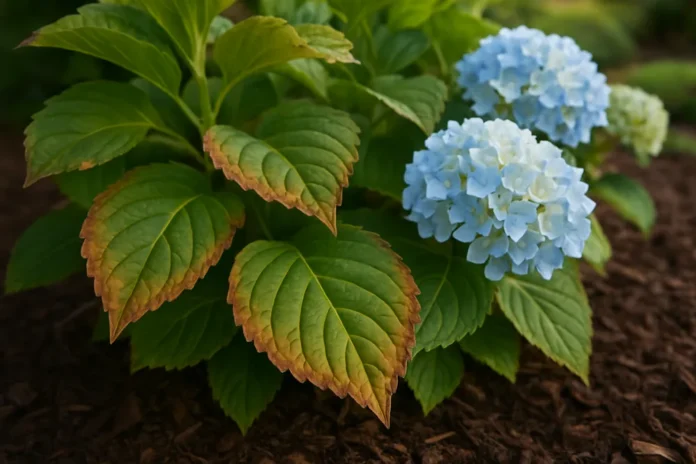
Hydrangea leaves usually develop brown edges from moisture stress, too much direct sun, fertilizer burn, or root stress. Sometimes fungal disease or winter damage can also leave the leaf margins brown and crispy.
Seeing hydrangea leaves with brown edges can be frustrating, especially when the shrub otherwise looks healthy and is still trying to bloom. In my experience, this symptom is often the plant's way of saying its roots and leaves are out of balance. The problem is usually tied to water, heat, soil salts, or root stress rather than one dramatic cause.
Hydrangeas have broad leaves that lose moisture quickly in hot, dry, or windy weather, so they tend to show stress right along the margins first. That is why the leaf edges often turn tan, brown, or crisp before the whole leaf declines. The good news is that brown leaf edges on hydrangeas are often manageable once you match the pattern to the cause.
A close look at where the browning starts, which leaves are affected, and what the weather has been doing will usually narrow things down fast. The sections below walk through the most common reasons, how to tell them apart, and what to do next.
What Brown Leaf Edges Usually Mean
When a hydrangea leaf turns brown at the edges, the tissue there has dried out or been damaged. The outer margin is often the first part of the leaf to fail because it is farthest from the plant's moisture supply and most exposed to heat, sun, and wind. This does not always mean the whole shrub is in serious trouble, but it does mean the plant has been under stress.
The pattern matters. Crispy browning on many leaves after a hot week usually points to water stress or leaf scorch. Browning that appears soon after feeding often suggests fertilizer burn. Random spotting with browning around the edges can lean more toward disease. If only older interior leaves are affected late in the season, the issue may be mild and temporary.
When I diagnose hydrangeas, I look at the newest leaves first. If the fresh outer growth is clean but older leaves are browning, I usually suspect an environmental stress that already happened rather than an active disease spreading through the shrub.
Moisture Stress Is the Most Common Cause
Underwatering and Dry Soil
Hydrangeas are thirsty shrubs, especially bigleaf and smooth hydrangeas with large soft leaves. If the soil dries too deeply between waterings, the leaf edges often turn brown and brittle. You may also see drooping in the afternoon, faster fading blooms, and leaves that feel papery instead of supple.
This is especially common in newly planted hydrangeas, shrubs growing under trees, and plants in sandy soil. Even if you water regularly, roots may not be getting enough moisture if the water is shallow and only wets the top inch or two.
Overwatering and Poor Drainage
Too much water can create brown edges too. When roots sit in soggy soil, they cannot take up oxygen properly, and stressed roots struggle to supply moisture to the leaves. The plant can look wilted even though the ground is wet. Leaves may develop brown margins, yellowing, or a dull limp texture rather than crisp dryness.
- Dry-stress browning usually comes with crispy edges and dry soil several inches down.
- Overwatering stress often includes yellowing, limp leaves, and soil that stays wet for days.
- Container hydrangeas can swing between both extremes if the pot drains poorly and then bakes in heat.
I prefer deep, slow watering over frequent light sprinkling. A thorough soak encourages deeper roots and does a much better job preventing repeat browning than quick daily surface watering.
Too Much Sun, Heat, and Wind Can Scorch the Leaves
Hydrangeas often appreciate morning sun and afternoon shade, especially in warmer parts of the U.S. If your plant gets intense afternoon sun, reflected heat from a wall, or drying wind, the leaves can scorch. Brown edges may appear suddenly during a hot spell, even if the plant was fine earlier in the season.
Sun scorch tends to show up on the most exposed side of the shrub first. The leaves may look faded, bleached, or slightly curled before the margins turn brown. Blooms can also wilt faster than usual. This is common with bigleaf hydrangeas planted in a spot that looked shaded in spring but becomes much brighter in summer.
- South- and west-facing exposures are the most likely to cause scorch.
- Dark mulch close to stone, brick, or pavement can raise root-zone temperatures.
- Windy sites dry leaves and soil faster, making edge browning worse.
If the plant is otherwise healthy, sun scorch is often more cosmetic than fatal. New leaves can emerge normally once conditions moderate, but badly burned tissue will not turn green again.
Fertilizer Burn and Salt Buildup Are Easy to Miss
Hydrangeas do not need heavy feeding, and too much fertilizer can damage leaf edges. Excess salts from synthetic fertilizer, manure-heavy soil amendments, or even repeated irrigation with hard water can pull moisture away from roots and scorch the margins of leaves.
This kind of browning often shows up not long after feeding. Leaf edges may look sharply burned, sometimes with a thin yellow band just inside the brown tissue. You might also notice crusty residue on the soil surface in containers or planting beds that have been fertilized repeatedly.
Common Ways Hydrangeas Get Salt Stress
- Applying more fertilizer than the label recommends
- Feeding during hot, dry weather when roots are already stressed
- Using fast-release lawn fertilizer near the shrub's root zone
- Letting container plants sit too long without flushing the potting mix
If fertilizer burn is the cause, hold off on more feeding and water deeply to help dilute salts in the root zone, provided the soil drains well. In containers, letting water run freely through the pot can help flush excess buildup.
Root Problems and Soil Issues Can Trigger Brown Margins
Anything that limits healthy root function can show up as browning along the leaf edges. Compacted soil, roots crowded by nearby trees, poor planting depth, and root damage from digging all interfere with steady moisture uptake. A hydrangea may be getting enough water on paper but still act drought-stressed if the roots cannot use it well.
Soil pH itself is not usually the direct cause of brown edges, but poor soil structure can contribute. Clay that stays waterlogged and sandy soil that dries too fast both create stress. Container hydrangeas can also become root-bound, which causes quick drying and recurring leaf-edge burn in warm weather.
Signs the Roots May Be Involved
- The plant declines even when watering seems consistent
- New growth is smaller than normal
- The shrub wilts quickly during mild heat
- Water runs off the surface instead of soaking in
- A potted hydrangea dries out again within a day
A hydrangea that keeps getting brown edges despite careful watering often has a root-zone problem. I see this a lot where shrubs were planted too close to mature trees, and the hydrangea never really gets first access to moisture.
Diseases Can Cause Browning, But They Are Not Always the Main Suspect
Fungal and bacterial leaf problems can cause brown areas on hydrangea leaves, but they usually create spots or blotches first rather than clean, even browning along the entire edge. Cercospora leaf spot is one of the more common hydrangea issues. It starts as purple or brown spots, mostly on lower or inner leaves, and heavy infections can make leaves yellow and drop early.
Anthracnose can cause larger irregular brown lesions, sometimes beginning near the leaf edge and expanding inward. This can be confused with scorch, especially during humid weather. The difference is that disease lesions often look patchy, target-like, or surrounded by darker borders rather than simply dry and crisp.
- Disease is more likely when leaves stay wet for long periods.
- Overhead watering can make spotting problems worse.
- Dense shrubs with poor airflow tend to hold humidity and dry slowly.
If you suspect disease, remove badly affected fallen leaves, improve airflow with selective pruning, and water the soil instead of the foliage. Fungicides are sometimes used, but home gardeners often get better results by correcting moisture and airflow first.
Weather Damage, Winter Injury, and Seasonal Stress
Late frosts, drying winter winds, and abrupt spring weather swings can all leave hydrangea leaves with brown edges. Tender new growth is especially vulnerable. If buds or leaves emerge and then get hit by a cold snap, the margins may blacken or brown and the tissue can appear water-soaked before drying out.
In summer, sudden heat waves can do the same thing, particularly if the root zone was already dry. This kind of damage often affects exposed top growth first and may stop progressing once temperatures settle back down.
Seasonal stress is more likely if the timing lines up with unusual weather and the plant looked fine before that event. In those cases, patience matters. If the roots are healthy, fresh growth often follows once conditions improve.
How to Tell Which Cause Fits Your Hydrangea
The fastest way to solve brown edges is to match the symptom pattern to recent conditions. Think about watering habits, fertilizer use, sunlight exposure, and the weather over the last two weeks. Hydrangeas usually respond fairly quickly to environmental stress, so the timeline often gives you the answer.
- Check the soil 3 to 4 inches deep. If it is bone dry, underwatering or heat stress is likely. If it is soggy, consider drainage or overwatering.
- Look at which leaves are affected. Outer, upper, or sun-facing leaves suggest scorch. Lower inner leaves with spots suggest disease.
- Think about recent feeding. Browning that followed fertilizer application can point to salt injury.
- Notice the texture. Crispy and brittle usually means dry stress or scorch. Soft, limp, or yellowing points more toward root problems.
- Review recent weather. Heat, wind, and sudden cold snaps often leave a clear timing clue.
You do not need a lab test for most cases. A careful look at pattern, timing, and soil moisture will usually separate stress damage from disease.
How to Fix Brown Edges on Hydrangea Leaves
The best fix depends on the cause, but the goal is the same: reduce stress on the roots and prevent more damage on new growth. Existing brown tissue will stay brown, so judge success by what the next leaves do.
If the Problem Is Dry Soil or Heat
- Water deeply so moisture reaches the main root zone.
- Add 2 to 3 inches of mulch, keeping it a few inches away from the stems.
- Provide afternoon shade if the site is too intense, especially in hot climates.
- Water early in the day so the plant enters afternoon heat with good moisture reserves.
If the Problem Is Overwatering or Poor Drainage
- Let the soil begin to dry before watering again.
- Improve drainage with compost if the soil is compacted.
- Avoid keeping containers in saucers full of water.
- Consider moving the plant if the site stays chronically soggy.
If the Problem Is Fertilizer or Salt Burn
- Stop fertilizing for now.
- Flush the soil with deep watering if drainage is good.
- Use a slow-release fertilizer later and only at the recommended rate.
- Keep lawn fertilizers away from the hydrangea's root area.
If Disease Is Part of the Problem
- Remove fallen infected leaves.
- Increase airflow by thinning crowded stems lightly if needed.
- Water at the base instead of overhead.
- Use a labeled fungicide only when spotting is persistent and severe.
Change one thing at a time when possible. If you increase watering, move the pot, fertilize, and spray all in the same weekend, it becomes much harder to learn what actually solved the problem.
How to Prevent Brown Edges From Coming Back
Prevention is mostly about stable growing conditions. Hydrangeas are far less likely to burn at the edges when the soil stays evenly moist, roots stay cool, and the plant is matched to the right light exposure.
- Choose a site with morning sun and afternoon protection if you live in a hot region.
- Mulch yearly to keep soil moisture more even.
- Water deeply during dry spells rather than waiting for wilting.
- Feed lightly, not heavily, and avoid fertilizing stressed plants.
- Prune for airflow when the shrub gets too dense.
- Repot container hydrangeas before they become severely root-bound.
Once you know what triggered the browning on your shrub, prevention gets easier. Most hydrangeas recover well when you remove the stress and keep new growth protected.
FAQ
Should I Cut Off Hydrangea Leaves with Brown Edges?
You can remove badly damaged leaves if they look unsightly, but it is not always necessary. If a leaf is still mostly green, it can continue helping the plant. Focus more on correcting the cause than on cosmetic cleanup.
Will Brown Leaf Edges Turn Green Again?
No. Brown tissue is dead and will not recover. Look for healthy new growth as the real sign that your fix is working.
Can Too Much Sun Alone Cause Brown Edges on Hydrangeas?
Yes. Strong afternoon sun, especially with heat and wind, can scorch hydrangea leaves and leave the margins brown and crispy. Bigleaf hydrangeas are especially prone to this in warmer climates.
How Often Should I Water a Hydrangea with Brown Leaf Edges?
Watering frequency depends on weather, soil, and whether the plant is in the ground or a pot. Aim for deep watering when the soil several inches down begins to dry, rather than watering by a rigid calendar.
Can Fertilizer Burn Make Only the Leaf Edges Brown?
Yes. Excess fertilizer often shows up as scorched margins or tips, sometimes with a yellow band next to the brown area. This is especially common after overfeeding or feeding during hot, dry conditions.
Are Brown Edges a Sign My Hydrangea Has a Disease?
Sometimes, but not usually as a first guess. Disease often causes spots, blotches, or irregular lesions, while clean crispy edges are more often tied to moisture, heat, or salt stress.
Why Do My Potted Hydrangea Leaves Keep Getting Brown Edges?
Container hydrangeas dry out faster, heat up faster, and build up fertilizer salts more easily than plants in the ground. Root crowding and inconsistent watering are very common causes in pots.
Need help choosing the right fix fast? Read our hydrangea care and treatment guides to compare watering tools, fertilizers, mulch options, and disease controls that actually make recovery easier.
