

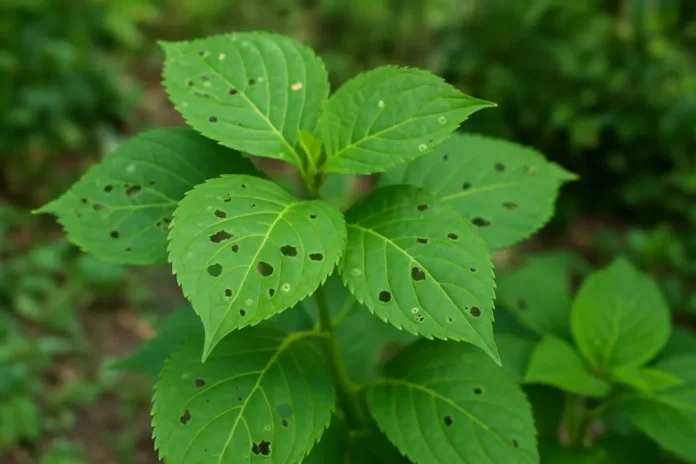
Hydrangea leaves usually get holes from chewing insects such as slugs, beetles, caterpillars, or earwigs. Less often, holes appear after leaf spot, hail, or torn tender growth.
If your hydrangea leaves have holes in them, the good news is that this symptom is usually easier to diagnose than yellowing, wilting, or poor blooming. Holes almost always point to something that chewed the leaf, tore it while it was soft, or killed a small patch of tissue that later dropped out.
When I look at damaged hydrangea leaves, I pay attention to the shape of the holes, where they appear on the plant, and whether the edges look clean, ragged, or darkened. A few scattered holes on older leaves is a very different problem from shredded new growth or round holes surrounded by purple or brown spotting.
In most home gardens, the main culprits are slugs and snails, Japanese beetles, caterpillars, and earwigs. Weather injury and a few leaf diseases can also create holes, especially when damaged tissue dries and falls away.
What the Hole Pattern Usually Means
The pattern matters more than the hole itself. Clean bites along the leaf edge usually mean chewing insects. Ragged holes in the middle of the leaf often point to beetles, caterpillars, or slugs feeding at night or early morning. Tiny holes that seem to start as spots can suggest disease or minor physical damage that expanded as the leaf grew.
- Large irregular holes with smooth-ish edges often come from slugs or snails.
- Skeletonized leaves or holes between veins often suggest Japanese beetles.
- Random torn holes in tender leaves can happen after hail, wind, or rubbing.
- Small brown or purple spots that later drop out can indicate leaf spot disease.
- Chewed margins and hidden daytime feeders often point to earwigs or caterpillars.
I try not to diagnose from one leaf. If the same kind of damage repeats across several leaves at the same height and exposure, I suspect pests. If damage is heaviest on the side hit by wind or weather, I start with physical injury instead.
Chewing Pests Are the Most Common Cause
Slugs and Snails
Slugs and snails are high on the list when hydrangeas grow in shade, mulch, and steady moisture. They leave irregular holes, especially on lower leaves and tender growth. You may also notice silvery slime trails on pots, stones, or mulch nearby. Damage often looks worse after rainy spells or heavy overhead watering.
Japanese Beetles
Japanese beetles can turn hydrangea leaves ragged quickly. They often feed between the veins, creating a lacy or skeletonized look before full holes appear. On some hydrangeas they gather in groups, so damage can seem to explode in just a few days. Adults are metallic green and copper, which makes them easy to recognize.
Caterpillars and Leaf-chewing Larvae
Caterpillars make larger, more obvious bites than many other pests. You might see chunks missing from leaf edges, holes through the center, or dark droppings on leaves below. Some feed openly during the day, while others stay tucked under leaves until evening.
Earwigs
Earwigs are sneaky feeders that hide in damp mulch, under pots, and in tight crevices through the day. Their chewing usually creates ragged edges and shallow holes, especially on softer growth. They are more likely to be involved if you inspect at night and finally catch something in the act.
Other Occasional Pests
Grasshoppers, rose chafers, and assorted beetles can also chew hydrangea foliage. They are less predictable than slugs or Japanese beetles, but worth considering if damage appears suddenly during hot summer weather and nearby plants show similar feeding.
When Disease Causes Holes Instead of Pests
Not every hole starts as a bite. Some fungal and bacterial leaf spots begin as small dark lesions. As the damaged tissue dries, it can crack or fall away, leaving a neat little hole in the leaf. This is sometimes called a shot-hole effect, even though it is less common on hydrangeas than on some other landscape plants.
If disease is involved, the holes usually have a story around them. Look for purple, brown, tan, or black spotting near the hole, yellow halos, or many leaves with the same peppered pattern. Disease-related holes tend to be smaller and more numerous than insect chewing, and the leaf often looks blotched or spotted before it ever tears open.
- Dark or purplish spots that later dry out
- Holes with brown rims instead of fresh green edges
- More damage after humid, rainy weather
- Spotted lower leaves first, especially where air flow is poor
Leaf spot on hydrangeas is usually more cosmetic than deadly, but repeated infections can make a shrub look tired and sparse by late summer. If your plant otherwise looks vigorous and is setting healthy new growth, the damage is often manageable with cleanup and better watering practices.
Weather and Physical Damage Can Mimic Pest Feeding
Hydrangea leaves are broad and tender, so they tear more easily than many gardeners expect. Hail can punch holes right through young leaves. Strong wind can whip leaves against stems, fencing, or nearby shrubs and create ragged openings. Even a sudden heat spike after cool, wet weather can leave soft growth distorted and more prone to splitting.
This kind of damage often shows up all at once, usually after a storm. The holes may be concentrated on the outer or topmost leaves rather than hidden in the interior. You also will not usually find frass, slime, insects, or the repeated day-by-day worsening that comes with active feeding.
If the plant puts out clean new leaves after the event, I treat weather damage as a one-time cosmetic issue and avoid spraying anything. New growth tells you more than old torn leaves do.
How to Tell Which Culprit Is Damaging Your Hydrangea
A quick inspection routine usually solves the mystery. Start by looking at both old and new leaves, then check the top and underside of the foliage. Next, think about timing. Damage that appears overnight is often caused by slugs, earwigs, or caterpillars. Damage that ramps up on hot sunny days can fit beetles or grasshoppers better.
- Examine the edges of the holes. Clean chewing points to insects or slugs, while darkened rims suggest tissue died first.
- Check where on the plant the damage is happening. Lower leaves near mulch often point to slugs or earwigs.
- Look for signs besides holes such as slime trails, beetles, droppings, or spotted tissue.
- Inspect after dusk or early in the morning if daytime checks show nothing.
- Notice whether new growth is coming in clean. If it is, the worst damage may already be over.
You do not need to identify every insect species to choose a useful response. The main question is whether something is still actively chewing, whether disease is spreading, or whether the injury is old and cosmetic.
What to Do for Each Common Cause
For Slugs and Snails
Reduce hiding places around the base of the plant, especially soggy mulch pressed against stems, boards, and debris. Water at the soil line early in the day rather than wetting foliage and mulch late in the evening. Hand-picking at dusk helps when populations are small, and iron phosphate slug baits are a common home-garden option when damage is persistent.
For Japanese Beetles
Pick beetles off in the morning when they are sluggish and drop them into soapy water. If only a few leaves are affected, simple hand removal often works better than broad spraying. Avoid overreacting to minor feeding on a healthy, established hydrangea. Many shrubs tolerate some cosmetic damage without long-term harm.
For Caterpillars
Inspect leaves carefully for the actual larvae. On small plants, hand removal is usually enough. If feeding becomes heavy and you confirm caterpillars, targeted treatments labeled for ornamental shrubs may help. It is best to use them only when you know chewing larvae are present rather than spraying on a guess.
For Earwigs
Thin clutter around the shrub, pull mulch slightly back from the crown, and reduce cool damp hiding spots. Traps can help you confirm they are present. Because earwigs often feed at night, many gardeners miss them unless they check with a flashlight.
For Leaf Spot Disease
Remove badly affected fallen leaves, water at the base, and improve air flow if the plant is packed tightly against other shrubs. Avoid wetting the leaves late in the day. Fungicides are not always necessary for mild cases, especially late in the season, but repeated severe spotting may justify a labeled ornamental fungicide as part of a broader prevention plan.
For Weather Injury
Leave moderately damaged leaves in place unless they are mostly dead. They still help feed the plant. Focus on steady watering during dry stretches and let the shrub replace the damaged foliage naturally.
When several fixes are possible, I make one change at a time. If you bait for slugs, start overhead watering, prune hard, and spray all in the same week, you will not know what actually solved the problem.
When Holes Are Mostly Cosmetic and when to Worry
A few holes rarely threaten an established hydrangea. Mature shrubs can handle limited feeding without losing vigor, especially if the roots are healthy and the plant is getting enough moisture. Cosmetic damage looks frustrating, but it does not always mean the plant is in danger.
It is time to worry more when damage is accelerating, tender new leaves are being stripped, or the shrub also shows wilting, blackened stems, severe spotting, or overall decline. Young hydrangeas, recently transplanted shrubs, and container plants have less margin for stress and should be watched more closely.
- More than a small portion of new foliage is disappearing
- Holes are paired with severe spotting or dieback
- You can clearly see active pests every day
- The plant is weak from drought, root stress, or recent transplanting
- Damage spreads to flower buds or tender stems
How to Prevent Future Holes in Hydrangea Leaves
Healthy hydrangeas are not immune to pests, but they recover faster and look better through minor damage. Prevention is mostly about reducing conditions that favor repeat problems. In practice, that means clean watering habits, smart spacing, and catching chewing pests before they build up.
- Water deeply at the base instead of wetting leaves often
- Keep mulch a few inches back from the main stems
- Clean up fallen leaves that may hold disease spores or shelter pests
- Check the plant weekly during humid weather and peak beetle season
- Encourage air flow by avoiding crowded plantings
- Protect tender spring growth if hail or strong wind is common in your area
I have found that regular observation matters more than aggressive treatment. Catching a handful of beetles, a slug outbreak, or early spotting is much easier than trying to rescue a shrub after weeks of unnoticed damage.
FAQ
Will Holes in Hydrangea Leaves Kill the Plant?
Usually not. Most hole damage is cosmetic unless a young or stressed hydrangea is losing a large amount of new foliage or dealing with a second problem such as drought or disease.
Do Slugs Eat Hydrangea Leaves?
Yes. Slugs commonly chew irregular holes in hydrangea leaves, especially on lower growth in shady, moist beds with heavy mulch or frequent evening watering.
Can Japanese Beetles Make Holes in Hydrangea Leaves?
Yes. Japanese beetles often feed between the veins, creating a lacy or skeletonized look that later turns into larger holes and ragged foliage.
Should I Cut Off Hydrangea Leaves with Holes?
Only remove leaves that are badly damaged, diseased, or already declining. Slightly damaged leaves still help the plant photosynthesize, so leaving them is often better than stripping the shrub.
Why Do the Holes Have Brown Edges?
Brown edges suggest the tissue may have died before falling out. That can happen with leaf spot disease, sun or weather injury, or older chewing damage that dried after feeding.
Is It Better to Spray or Hand-pick Pests on Hydrangeas?
For light infestations, hand-picking is often the simplest and least disruptive option. Sprays make more sense when you have identified the pest and damage is becoming severe.
Can Too Much Rain Cause Holes in Hydrangea Leaves?
Indirectly, yes. Rain can encourage slugs and some leaf diseases, and hail or wind-driven storms can physically tear tender leaves and leave them full of holes.
Need help choosing the best treatment for chewing pests and leaf spot? Read our hydrangea care and pest-control guides to compare the most effective products before damage spreads.
