

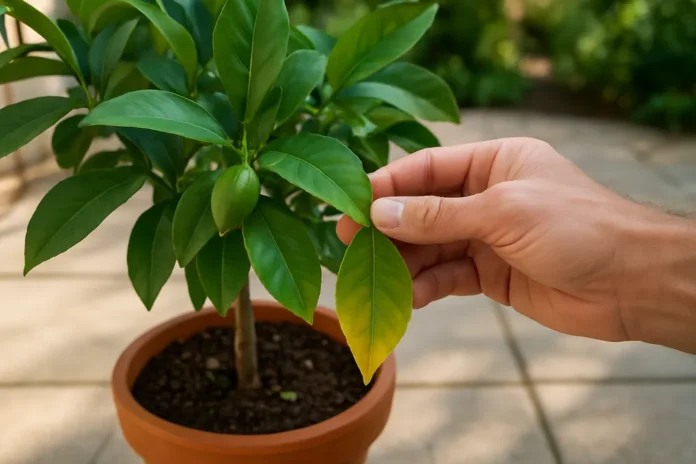
Lemon tree leaf tips usually turn yellow because the tree is under stress from watering problems, salt buildup, or a nutrient imbalance. Cold snaps, poor drainage, and root stress can also cause the tips to discolor first.
When a lemon tree starts showing yellow tips, it is easy to assume the whole plant is heading downhill. In my experience, yellowing at the very ends of the leaves is often an early stress signal, not a death sentence. The tree is telling you something is off before the rest of the leaf or canopy fully reacts.
On citrus, yellow leaf tips usually come from a short list of causes: watering that swings too wet or too dry, excess fertilizer salts, a nutrient issue, cold stress, or roots that are not happy in their container or planting spot. The tricky part is that several of these problems can look similar at first glance.
The good news is that lemon trees tend to recover well when you correct the real cause and give them a little time. What matters most is reading the pattern correctly, because the fix for a thirsty tree is very different from the fix for a waterlogged or overfed one.
What Yellow Tips Usually Mean on a Lemon Tree
Leaf-tip yellowing is a classic stress symptom. The tip is one of the most exposed parts of the leaf, so it often shows trouble first when the tree cannot move water, nutrients, or oxygen through the roots properly. On lemon trees, this can stay limited to the tips at first, or it can spread along the margins and eventually turn brown if the stress continues.
Tip yellowing is different from a leaf that turns uniformly pale. A whole pale leaf can suggest broader chlorosis or low nitrogen, while yellowing that starts at the tip often points more strongly toward moisture stress, salt injury, or root disruption. That is why the exact pattern matters so much.
- Yellow only at the very tip often suggests early water stress or salt buildup.
- Yellow tips with crispy brown edges usually mean the problem has gone on long enough to damage leaf tissue.
- Yellow tips on older leaves first can lean toward salt buildup, magnesium deficiency, or inconsistent watering.
- Yellow tips on lots of leaves after cold weather often reflect environmental shock rather than a feeding problem.
When I diagnose citrus, I rarely judge the tree by one leaf. I compare several older leaves, several newer leaves, and the overall canopy. If every affected leaf shows the same tip pattern, I suspect a root-zone issue before I blame pests or disease.
Start by Looking at the Pattern Before You Treat Anything
Before adding fertilizer or changing your watering routine, step back and look at where the yellowing appears. Citrus responds to stress in patterns. A tree with yellow tips on the sunny outer canopy may be drying too hard between waterings. A tree with yellow tips scattered throughout a soggy pot may be sitting in low oxygen around the roots.
- Check whether the problem is on old leaves, new leaves, or both.
- Notice whether the tips are soft and yellow or dry and crisp.
- Look for curling, leaf drop, or browning along the edges.
- Think about any recent changes such as repotting, moving the tree, a heat wave, a cold night, or a stronger fertilizer schedule.
- Check the soil several inches down instead of judging moisture from the surface alone.
That quick pattern check often narrows the cause faster than any product label will. Lemon trees are especially sensitive to root-zone swings, so what happened in the soil over the last two to three weeks matters more than what the leaves look like today.
Watering Problems Are the Most Common Cause
Underwatering and Inconsistent Moisture
If your lemon tree gets too dry between waterings, the leaf tips may yellow first because the tree cannot keep moisture moving evenly to the farthest parts of the leaf. This is especially common with container lemon trees in hot weather, terra-cotta pots, and plants that are rootbound. You may also see slight curling, drooping in the afternoon, or leaves that later develop brown crispy ends.
In-ground trees can show the same symptom if they are watered too shallowly and the upper soil dries fast. A quick sprinkle is usually not enough for citrus. Lemon trees do best with deep watering followed by partial drying, not constant shallow wetting.
Overwatering and Poor Drainage
Too much water can also cause yellow tips. When soil stays soggy, roots cannot get enough oxygen. Nutrient uptake slows, fine roots decline, and leaves begin to show stress even though the soil is wet. In this case, the yellowing may be paired with dull green leaves, leaf drop, slow growth, and soil that smells stale or sour.
- A thirsty tree often has dry soil below the surface and leaves that feel slightly limp.
- An overwatered tree often has persistently damp soil, heavier pots, and leaves that yellow without perking back up after watering.
- Roots stressed by standing water may trigger yellow tips even if you have not changed fertilizer at all.
If I am unsure whether citrus is too wet or too dry, I use the pot weight test or dig a small inspection hole near the root zone. Guessing from the top inch of soil is one of the fastest ways to misdiagnose a lemon tree.
Salt Buildup From Fertilizer or Tap Water Can Burn the Tips
Lemon trees are fairly sensitive to salt accumulation, especially in containers. When fertilizer salts build up in the potting mix, they interfere with water uptake and can effectively burn the leaf tips. The tips may turn yellow first, then tan or brown. This is one of the most common reasons I see neat-looking citrus with discolored tips even when the owner swears they have been feeding it well.
Hard tap water can contribute too. Over time, minerals from irrigation water collect in the soil, especially if water runs through too quickly or saucers are left full. The root zone gets more concentrated, and the tree responds as if it is both wet and thirsty at the same time.
- White crust on the soil surface or pot rim often points to salt buildup.
- Yellow tips after a recent fertilizer increase are a strong clue.
- Small pots develop salt problems faster than large containers.
- Citrus fed too often with liquid fertilizer can show tip burn even when the product is labeled for fruit trees.
If salt buildup is the problem, more fertilizer will make it worse. This is where many gardeners accidentally push the tree in the wrong direction, because yellow leaves often trigger a reflex to feed.
Nutrient Imbalances Can Start at the Tips or Margins
Lemon trees are heavy feeders, but their yellowing patterns can be misleading. Not every nutrient issue starts between the veins. Some deficiencies show up as yellowing along the margins or tips, especially when the root system is stressed and cannot absorb nutrients properly even if they are present in the soil.
Magnesium Deficiency
Magnesium deficiency is common in citrus and often appears first on older leaves. You may notice yellowing that begins near the tip or edges while some green remains near the leaf base or along part of the midrib. It can be subtle early on and easy to confuse with water stress.
Potassium Deficiency
Low potassium can cause yellowing or scorching along leaf tips and margins, especially on older leaves. Because potassium supports water movement and overall stress tolerance, a deficiency can make the tree more vulnerable during heat or irregular watering.
Iron and Manganese Issues
These are more famous for causing yellow new growth with greener veins, but severe root stress or alkaline soil can create mixed symptoms. If your lemon tree is in high-pH soil or watered with very hard water, micronutrient uptake can be limited even when fertilizer is present.
- Older leaves affected first often suggests magnesium or potassium issues.
- Newest leaves affected first often leans more toward iron, manganese, or root trouble affecting micronutrient uptake.
- A tree that was healthy until a watering or drainage problem started may not have a true deficiency at all. It may simply be unable to use available nutrients.
Temperature Swings, Dry Air, and Recent Stress Can Trigger Tip Yellowing
Lemon trees dislike abrupt environmental changes. A cold night, a blast of hot wind, moving a container outdoors too quickly, or keeping the tree near a heating vent can all cause the leaf tips to yellow. Indoor citrus often reacts to very dry air in winter, especially when the root ball also runs dry faster than expected.
This kind of stress usually shows up after a clear event. The tree may look mostly healthy, but a flush of leaves develops tip discoloration within days or a couple of weeks after the change. Damage from cold often has a water-soaked look at first, then fades to yellow or brown. Heat and dry air more often leave crisp tips or margins.
I pay close attention to timing with citrus. If leaf tips turned yellow right after the tree was moved, repotted, or caught in a cold snap, I do not rush to correct nutrients first. Stress from a recent change often has to settle before the plant tells you what it really needs.
Root Problems Can Make Leaf Tips Yellow Even when Care Seems Correct
Sometimes the care routine looks fine on paper, but the roots are still struggling. Lemon trees in pots can become rootbound, meaning water rushes around the root mass instead of soaking in evenly. Other trees develop root rot from chronic sogginess. In the ground, heavy clay soil can create the same low-oxygen conditions after frequent rain or over-irrigation.
When roots are compromised, the leaves often show mixed messages: yellow tips, slowed growth, leaf drop, or a tree that wilts even though the soil is damp. This is because damaged roots cannot regulate water well. If you gently slide a potted tree from its container and see dense circling roots or black mushy roots, the leaf symptoms suddenly make more sense.
- Rootbound trees dry unusually fast and may need water more often than the soil volume should suggest.
- Rotting roots often smell sour and appear dark, soft, or sloughing.
- Trees planted too deeply can also develop chronic root stress and poor leaf color.
- Compacted soil reduces oxygen and can create yellow tips without obvious insect damage.
Pests and Disease Are Less Common Causes, but They Still Matter
If the yellowing is strictly at the tips, pests are usually not my first suspect. Still, spider mites, scale, and sap-sucking insects can weaken a lemon tree enough to create general stress symptoms, including pale or yellowing leaf ends. Mites are especially common on indoor citrus or outdoor trees during hot, dry spells.
Disease is also possible, but most citrus diseases produce broader symptoms than neat tip yellowing alone. If you see spots, cankers, sticky residue, webbing, or distorted new growth, inspect more closely. A tree under pest pressure may not take up water and nutrients efficiently, so secondary yellowing can follow.
- Fine webbing and stippled leaves point toward spider mites.
- Sticky leaves or bumps on stems suggest scale or other sap feeders.
- Localized damage on just one branch may indicate a branch-specific problem rather than a whole-root-zone issue.
- Uniform tip yellowing across the tree usually points back to watering, salts, or roots before pests.
How to Fix Yellow Leaf Tips on a Lemon Tree
Once you have a likely cause, keep the response simple and targeted. Lemon trees recover best when you remove the stress instead of piling on multiple treatments at once. Existing yellow tips may not turn green again, so judge success by how the next flush of growth looks.
- Correct watering first. Water deeply, then let the upper soil dry slightly before watering again. Do not keep the root zone constantly soggy.
- Improve drainage if needed. Empty saucers, make sure pots have drainage holes, and consider repotting into a fast-draining citrus mix if the soil stays dense and wet.
- Flush excess salts from container soil by watering thoroughly until extra water runs out freely. Repeat periodically if fertilizer or hard water has built up.
- Pause heavy feeding if you suspect fertilizer burn. Resume later with a citrus-specific fertilizer at an appropriate rate.
- Address clear nutrient deficiencies with the right product, especially a balanced citrus fertilizer or targeted magnesium or micronutrient supplement when symptoms match.
- Protect the tree from temperature shock and dry indoor air. Avoid cold exposure, hot reflective spots, and forced-air vents.
- Inspect roots and repot if the tree is badly rootbound or the mix has broken down into a dense, poorly draining mass.
If the tree is in the ground, focus on deep, less frequent irrigation and better soil conditions around the root zone. Mulch can help moderate moisture swings, but keep it a few inches away from the trunk to avoid inviting rot.
What Not to Do While the Tree Is Recovering
A stressed lemon tree can decline faster when the fix is too aggressive. The biggest mistakes are overcorrecting and treating yellow leaves as proof of hunger without checking the roots and soil first.
- Do not fertilize heavily just because leaves look pale or yellow.
- Do not water on a strict calendar without checking actual soil moisture.
- Do not prune hard while the tree is already stressed unless you are removing dead tissue.
- Do not leave a potted lemon tree sitting in runoff water.
- Do not expect damaged leaf tips to repair themselves. Look for healthy new growth instead.
In many cases, patience is part of the cure. Citrus can take several weeks to show improvement after the root zone is corrected, especially outside the peak growing season.
FAQ
Will Yellow Lemon Leaf Tips Turn Green Again?
Usually no. Once a leaf tip has yellowed from stress, it often stays discolored or may turn brown later. The real sign of recovery is healthy new leaves without the same tip damage.
Should I Cut Off Leaves with Yellow Tips?
If most of the leaf is still green and functional, leave it on the tree. The leaf still helps the plant. Remove it only if it becomes mostly brown, badly damaged, or drops easily.
Can Too Much Epsom Salt Cause Yellow Tips on Lemon Trees?
Yes. Epsom salt can help true magnesium deficiency, but too much adds more salts to the root zone and can worsen tip burn. It is best used only when the symptom pattern actually fits magnesium deficiency.
Why Are Only the Older Leaves Getting Yellow Tips?
Older leaves showing symptoms first often points toward magnesium or potassium issues, salt buildup, or uneven watering. It can also happen when the tree pulls resources away from older foliage during stress.
Can Hard Tap Water Make Lemon Leaf Tips Yellow?
Yes. Over time, mineral-heavy water can raise salts in the soil and interfere with nutrient uptake. Container citrus is especially vulnerable because minerals accumulate in a smaller root zone.
How Often Should I Water a Potted Lemon Tree with Yellow Tips?
There is no single schedule that fits every tree. Water when the root zone has dried slightly but not completely, then soak thoroughly. Pot size, weather, soil mix, and root density all change the timing.
Is Yellow Tipping a Sign of Citrus Disease?
Not usually by itself. Plain yellow tips are more often caused by watering stress, salt buildup, or root issues. Disease becomes more likely when you also see spots, lesions, cankers, sticky residue, or distorted growth.
Need a stronger fix plan for struggling citrus? Read our guide to the best citrus fertilizers, soil mixes, and watering tools so you can correct yellow leaf tips with confidence.
