

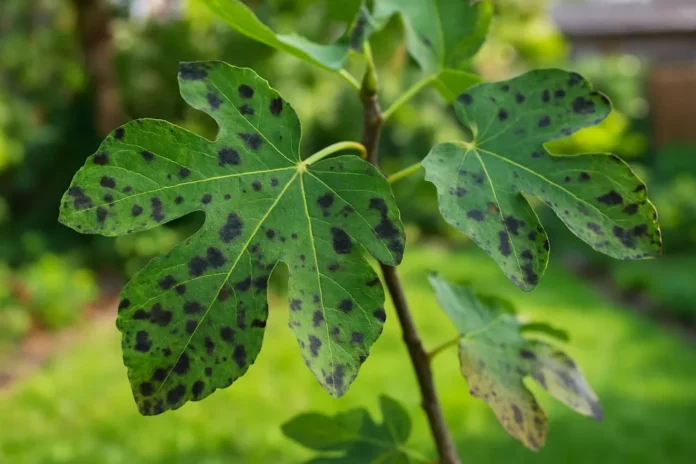
Fig tree leaves usually develop black spots because of fungal leaf diseases, excess moisture, or stressed tissue that later darkens and dies. Pest damage and weather injury can also leave blackened spotting on the leaves.
When I see fig tree leaves with black spots, I do not assume there is only one culprit. Figs are tough trees, but their leaves react quickly to humid weather, wet foliage, poor airflow, and a few common diseases. Sometimes the problem is mostly cosmetic. Other times it is an early sign that the tree is under enough stress to affect fruit and new growth.
The good news is that the spotting pattern usually tells a useful story. Small dark specks with yellow halos often suggest disease, while larger scorched patches can point to sun, water stress, or physical injury. If your fig leaves have black spots, the goal is to read the pattern before you start spraying or pruning.
What Black Spots on Fig Leaves Usually Mean
Black spotting on fig leaves is most often tied to fungal problems, especially during warm, humid stretches or whenever leaves stay wet for long periods. Fig rust can start as yellowish spots on the upper leaf surface with rusty or brown pustules underneath, but other fungal leaf spots can look darker from the start. As the tissue dies, those areas may turn deep brown or nearly black.
Not every black spot is a disease, though. Water stress, poor drainage, overfertilizing, salt buildup, and sun scorch can all create dead patches that darken over time. Insects can also trigger blackened areas either by feeding directly or by leaving behind honeydew that supports sooty mold.
- Tiny round spots scattered across many leaves often suggest leaf spot disease.
- Blotchy dark patches after rainy or humid weather often point to fungal infection.
- Blackened edges or large irregular scorched zones can be environmental rather than infectious.
- A black film that rubs off may be sooty mold growing on sticky insect residue.
- Damage mostly on older inner leaves often shows a mild problem that built up slowly.
When I diagnose figs, I look at both sides of several leaves before I decide anything. If the underside shows dusty pustules, spores, or a velvety coating, I lean toward disease. If the leaf feels crisp and the dark area follows the margin or tip, I start thinking stress or scorch instead.
Common Causes of Black Spots on Fig Tree Leaves
Fungal Leaf Spot and Fig Rust
Fungal diseases are the top suspects on figs, especially in the Southeast, Gulf Coast, and other humid regions. Fig rust is especially common late in the season. It often begins with pale or yellow spots on top of the leaf and rust-colored pustules underneath, then progresses to browning and blackening as the tissue collapses. Other fungal leaf spots may start as small brown to black dots with a distinct margin.
These diseases spread faster when leaves are crowded, overhead watering is frequent, and the canopy stays damp overnight. A fig that looks healthy in spring can suddenly develop lots of spotting in midsummer after a spell of humidity and rain.
Overwatering and Poor Drainage
Fig trees like consistent moisture, but they do not enjoy soggy soil. When roots sit in wet ground, the plant becomes stressed and more vulnerable to leaf spotting and tissue death. You may see blackened blotches, yellowing around the spots, and general leaf drop. In containers, this is especially common when pots are too large, soil drains poorly, or saucers hold standing water.
Insect Honeydew and Sooty Mold
Scale, aphids, and whiteflies can feed on fig leaves and stems, then leave sticky honeydew behind. That sugary coating attracts sooty mold, which looks like a black dusty or soot-like layer on the leaves. It can resemble spotting at first glance, but it often wipes or smears when rubbed with a finger.
Sun Scorch, Wind, and Weather Injury
A sudden heat wave, strong drying wind, or rapid move from shade to full sun can leave fig leaves with dark burned patches. The blackening usually appears where the tissue dried out and died, often along edges or in large uneven sections rather than neat circular dots. Late cold snaps can also damage emerging leaves, which later darken in spots.
Nutrient and Salt Stress
Figs are not especially fussy feeders, but too much fertilizer can burn roots and show up as marginal leaf damage that darkens. Container figs are more prone to salt buildup from repeated feeding. While nutrient deficiencies alone are more likely to cause yellowing than black spots, imbalances can weaken the plant enough that disease takes hold more easily.
How to Tell Which Cause Is Most Likely
Instead of focusing on one damaged leaf, compare several leaves from different parts of the tree. Look at older leaves, newer leaves, outer canopy leaves, and inner shaded leaves. Also check whether the spots are dry and fixed in the tissue or sitting on the surface like a coating.
- Spots with yellow halos or rusty undersides suggest fungal disease.
- A black coating plus sticky leaves points to honeydew and sooty mold.
- Large dry black patches after heat or wind exposure suggest scorch.
- Widespread yellowing, droop, and dark blotches in wet soil suggest root stress from overwatering.
- Damage limited to a few leaves that touched a wall, fence, or hot surface may be physical or heat related.
Timing matters too. If the problem appeared after several rainy weeks, disease climbs higher on the list. If it showed up after repotting, a fertilizer application, or a sudden hot spell, environmental stress may be more likely. Outdoor figs often show mixed symptoms because one stress opens the door to another.
I try not to treat every dark spot the same way. If the newest leaves are coming in clean, the issue may already be passing. If new leaves are spotting fast, the underlying problem is still active and needs attention.
What to Do Right Now to Help Your Fig Tree
Your first job is to reduce stress and slow any spread. Start by removing the worst affected leaves that have heavily spotted, collapsed, or mold-covered tissue, especially if they are still attached and easy to reach. Do not strip the tree bare, because it still needs healthy leaves to feed itself.
- Pick up fallen leaves from the ground and discard them.
- Prune lightly for better airflow if the canopy is dense.
- Water at the soil level instead of wetting the foliage.
- Check the soil before watering again, especially for container figs.
- Inspect stems and leaf undersides for aphids, scale, or whiteflies.
If you find insects, wash the leaves with a firm spray of water and follow up with insecticidal soap or horticultural oil if needed, using the product exactly as labeled. If you strongly suspect fungal disease and the problem is spreading, a labeled copper fungicide or another fungicide approved for figs may help protect new leaves. Fungicides do not repair existing damage, so judge results by whether fresh growth stays clean.
For potted figs, slide the pot away from walls that trap heat, empty any saucer after watering, and make sure drainage holes are open. If the potting mix stays wet for too long, the tree may need a faster-draining mix once it is out of immediate stress.
When Black Spots Are Mostly Cosmetic and when They Are Serious
A few spotted older leaves near the end of summer are often more unsightly than dangerous. Many figs still ripen fruit and come back fine the next year, especially if the tree is otherwise vigorous. If spotting is light and new growth remains healthy, you can often manage it with sanitation and better watering habits.
The problem becomes more serious when many leaves yellow and drop early, the tree repeatedly pushes weak new growth, or fruit quality declines. Severe defoliation reduces the plant's ability to photosynthesize, which can weaken it going into winter and reduce next season's performance.
- Mild: scattered spots, mostly older leaves, little to no leaf drop.
- Moderate: spotting on many leaves, some yellowing, visible spread during humid weather.
- Severe: heavy leaf drop, repeated spotting on new growth, branch dieback, or obvious root stress.
I worry less about ugly leaves than about the trend line. A fig can tolerate some damage. What gets my attention is when the tree keeps losing leaves faster than it replaces them, or when each new flush comes out smaller and weaker than the one before.
How to Prevent Black Spots on Fig Leaves in the Future
Prevention is mostly about keeping the canopy drier and the roots healthier. Fig trees are easier to keep clean when they have sun, airflow, and a watering routine that matches the weather instead of a rigid calendar.
- Plant figs in full sun with enough space for air movement.
- Water deeply but let the top layer of soil dry a bit before watering again.
- Avoid overhead watering when possible, especially late in the day.
- Rake and remove fallen diseased leaves during the season and at cleanup time.
- Prune overcrowded interior growth during the appropriate dormant period.
- Do not overfeed, especially with high-salt synthetic fertilizers in containers.
- Monitor for scale and other sap-sucking insects before sooty mold builds up.
If you live in a humid region and your fig gets rust every year, consistent sanitation and early preventive care matter more than reacting late. Some years are simply worse for leaf disease than others, so do not judge your tree too harshly after one bad summer.
Special Notes for Potted Fig Trees Versus In-ground Figs
Container figs and in-ground figs can show similar spotting, but the causes often differ. Potted plants are much more likely to suffer from watering mistakes, salt buildup, root crowding, and heat reflected from patios or walls. In-ground trees are more likely to deal with sustained humidity, dense canopies, and disease pressure from surrounding vegetation.
Container Figs
- Check moisture by feel before watering.
- Use a pot with strong drainage.
- Flush the potting mix occasionally if fertilizer salts may have built up.
- Repot when roots are circling tightly and water runs straight through.
In-ground Figs
- Thin crowded branches to improve airflow.
- Keep mulch off the trunk and avoid creating constantly damp conditions at the base.
- Water deeply during dry periods, but do not keep the soil continually soaked.
- Clean up fallen leaves so spores have fewer places to persist.
When to Call in a Local Expert
If your fig tree is losing leaves rapidly, the spots are spreading despite better care, or branches are beginning to die back, it may be time to get a local diagnosis. The same goes for mature trees that suddenly decline after years of good health. Local extension offices, certified arborists familiar with fruit trees, or independent garden centers can often recognize regional disease patterns quickly.
A local expert is especially helpful when symptoms overlap. Root problems, fungal disease, and insect activity can all happen at the same time, and treatment only works well when you aim at the main cause rather than the symptom alone.
FAQ
Will Black Spots on Fig Leaves Kill My Tree?
Usually not if the problem is mild and the tree is otherwise healthy. Severe repeated leaf loss, root stress, or unchecked disease can weaken a fig enough to reduce fruiting and winter hardiness.
Should I Remove All Spotted Fig Leaves?
No. Remove the worst damaged or fallen leaves, but keep healthy and lightly affected leaves so the tree can still photosynthesize. Stripping too many leaves can stress the plant further.
Can I Eat Figs From a Tree with Spotted Leaves?
In many cases, yes, if the fruit itself is healthy and untreated beyond labeled products used properly. Leaf spotting does not automatically mean the fruit is unsafe, but badly stressed trees may produce lower-quality fruit.
What Does Fig Rust Look Like Compared with Other Black Spots?
Fig rust often starts with yellowish spots on top of the leaf and rusty brown pustules underneath. As the damage progresses, those areas can darken and lead to premature leaf drop.
Does Neem Oil Help with Black Spots on Fig Leaves?
Neem oil may help with some insect issues and can suppress certain surface problems, but it is not a cure-all for every leaf spot. It works best when the issue involves pests or when used appropriately for mild fungal pressure according to the label.
Why Are Only the Lower Fig Leaves Getting Black Spots?
Lower leaves are often older, more shaded, and closer to moisture splashing from the soil, so they tend to show fungal spotting first. They can also be the first leaves a stressed tree sheds.
Can Overwatering Cause Black Spots Even if the Leaves Do Not Look Moldy?
Yes. Overwatering can stress the roots and lead to dark blotches, yellowing, and leaf drop without a visible mold coating. Wet roots also make fungal disease more likely.
Want the right fix faster? Read our guide to the best fungicides, insect controls, and care products for fig tree leaf problems so you can treat the real cause with confidence.
