

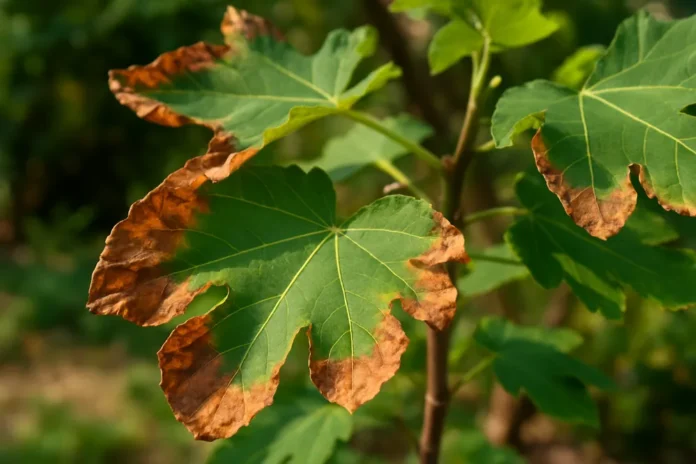
Fig tree leaves usually get brown edges from water stress, hot dry weather, salt buildup, or root trouble. In some cases, transplant shock, poor drainage, or fertilizer burn can cause the same symptom.
When I see fig tree leaves with brown edges, I do not jump straight to disease. On figs, crispy or darkened margins are much more often a stress signal from the roots, moisture level, heat, or salts building up in the soil. The leaf edge is one of the first places a fig shows trouble because that area dries out and burns faster than the rest of the leaf.
The tricky part is that several different problems can create a very similar look. A potted fig on a sunny patio may scorch from inconsistent watering, while an in-ground fig might show the same symptom after a stretch of hot wind, heavy feeding, or soggy soil that damages roots. If your fig leaves still have a healthy green center and the browning starts at the tips or margins, that pattern usually tells you the plant is under environmental stress rather than being eaten away by a leaf spot disease.
The good news is that figs are resilient. Once you identify the cause and correct it, new growth often comes in healthy even if the damaged leaves never recover.
What Brown Leaf Edges Usually Mean on Fig Trees
Brown edges are a form of leaf scorch. That does not always mean sunburn in the literal sense. It means the outer tissue of the leaf dried, burned, or died back after the plant could not keep that tissue hydrated and balanced. On figs, this often starts as a tan or yellowish border, then turns crisp brown as the damage advances.
The symptom tends to appear first on older, larger leaves because they lose more moisture and have been exposed to stress longer. If the entire tree still looks vigorous and only a few outer leaves are affected, the issue may be temporary. If many leaves are browning at once, curling, or dropping, the stress is more significant and needs attention.
- Dry, crisp edges usually point toward underwatering, intense heat, wind, or salt injury.
- Brown edges with yellowing between the veins can suggest root stress, nutrient imbalance, or poor drainage.
- Soft brown edges on limp leaves often show up when roots stay too wet and begin to struggle.
- Damage mostly on the sunniest side of the tree often indicates heat or sun scorch.
When I diagnose figs, I look at where on the tree the browning is worst before I look at the color. If the outer, exposed leaves are hit hardest, I suspect weather stress first. If the whole plant looks uniformly affected, I start thinking about watering habits, roots, or salt buildup in the soil.
Water Stress Is the Most Common Cause
Underwatering and Uneven Moisture
Figs like deep watering followed by some drying at the surface, but they do not like swinging from bone dry to soaked over and over. If the root ball dries too much, the plant cannot move enough water to the leaf edges, and those margins start to brown and crisp. This is especially common in containers, where potting mix dries much faster than garden soil.
You may also notice slight curling, drooping in afternoon heat, smaller new leaves, or premature leaf drop. Fruit can split or fail to size properly when moisture is inconsistent. In a hot spell, one missed watering can be enough to mark tender foliage.
Overwatering and Oxygen-starved Roots
Too much water can create the same symptom from the opposite direction. Roots need oxygen as much as moisture. When the soil stays saturated, roots stop functioning well and cannot supply leaves properly. The result can be brown edges, yellowing, limp growth, and eventually leaf drop.
This is common in heavy clay, decorative pots without adequate drainage, or when gardeners water on a schedule instead of by actual soil moisture. If the soil smells sour, stays wet for days, or the plant never perks up between waterings, overwatering is a strong possibility.
- For in-ground figs, water deeply and less often rather than giving shallow daily sprinkles.
- For potted figs, water until excess drains out, then wait until the top inch or two begins to dry before watering again.
- Adjust for weather. A fig that needed water every five days in spring may need it every day or two in midsummer.
- Use mulch around in-ground trees to slow moisture loss, but keep it a few inches away from the trunk.
Heat, Sun, and Dry Wind Can Scorch Leaf Margins
Figs love sun, but even a sun-loving plant can show stress when temperatures spike or dry wind pulls moisture from the leaves faster than the roots can replace it. Brown edges often appear after a sudden heat wave, especially if the tree was recently moved from shade to full sun or if it is growing in a dark container that heats up quickly.
Leaves damaged by heat or sun scorch often feel papery and may bleach slightly before turning brown. The injury is usually worse on the outer canopy and on the afternoon-sun side. Young container figs on patios, balconies, or against reflective walls are especially vulnerable because their roots heat up fast.
- Move potted figs gradually into stronger sun instead of making a sudden jump.
- During extreme heat, water earlier in the day so the root zone is well supplied before afternoon stress.
- Protect container figs from reflected heat off concrete, brick, or south-facing walls.
- In windy sites, a fence, shrub screen, or better placement can reduce leaf-edge burn.
If a potted fig keeps getting crispy edges in summer, I often slip the nursery pot inside a larger, lighter-colored outer pot or shade the container itself. Cooling the root zone can make a surprising difference even when the top of the plant still gets full sun.
Fertilizer Burn and Salt Buildup Are Common in Containers
Brown leaf edges on figs are often linked to excess salts in the root zone. Those salts can come from synthetic fertilizer, frequent liquid feeding, hard water, or softened water. When salts accumulate, they pull moisture away from roots and interfere with water uptake. The leaves then respond with browning at the tips and margins.
This problem shows up most often in potted figs because salts stay trapped in the mix unless water drains freely and occasionally flushes the container. A white crust on the soil surface or around the rim of the pot is a classic clue. New growth may also come in smaller, and the plant may seem thirsty even when the soil is damp.
How to Correct Salt Injury
Stop feeding temporarily and flush the pot thoroughly with plain water, allowing plenty to drain out the bottom. In the ground, avoid repeated heavy fertilizer applications and water deeply to move some salts below the root zone. If you use softened household water, switch to rainwater, filtered water, or another source when possible, because sodium can gradually damage sensitive roots.
- Use fertilizer at label rates, not extra for faster growth.
- Feed only during active growth, not when the tree is stressed or heat-struck.
- Leach container soil periodically by watering deeply until excess runs out freely.
- Repot if the mix is old, compacted, or visibly crusted with mineral deposits.
Root Problems and Poor Drainage Can Cause Edge Browning
Anything that damages roots can show up as brown edges on leaves. Poor drainage is one of the biggest culprits, but so are compacted soil, rootbound pots, transplant shock, and mechanical injury during planting. Since roots control water uptake, any setback below ground can mimic drought stress above ground.
A rootbound fig may dry out too quickly because there is little loose potting mix left to hold moisture. On the other hand, roots in compacted or soggy soil may sit wet and weak even though the top of the soil looks dry. Both situations reduce the plant's ability to support the leaf margins.
Clues That Roots Are Involved
- Water runs straight through the pot without soaking in well.
- Roots circle heavily around the inside of the container.
- The tree wilts quickly even after being watered.
- Soil stays waterlogged, dense, or muddy for long periods.
- Growth has stalled after transplanting or after a wet spell.
If the fig is in a container and badly rootbound, repotting into a slightly larger pot with fresh, fast-draining mix is often the best fix. If it is in the ground and drainage is poor, reduce watering frequency and consider improving the planting area over time rather than constantly adding more water.
Nutrient Issues Can Contribute, but They Are Not the First Suspect
Home gardeners often assume brown edges mean a nutrient deficiency, but on figs that is less common than watering or root stress. Potassium deficiency can contribute to edge burn on older leaves, and magnesium or other imbalances can create yellowing followed by browning. Still, feeding a stressed fig without confirming the issue can make the problem worse.
Look for pattern and context. If the tree has not been fertilized in a long time, is growing in depleted potting mix, and the older leaves show yellowing around the edges before browning, a nutrient shortage may be part of the picture. If the browning started right after a hot spell or heavy fertilizer application, deficiency is much less likely.
For in-ground figs, a soil test is the best way to know whether nutrient levels are actually low or whether pH is interfering with uptake. For container figs, replacing exhausted potting mix and using a balanced fertilizer lightly during active growth is usually more useful than chasing symptoms with multiple products.
Pests and Diseases Are Possible, but Less Likely for Edge Browning Alone
If brown edges are the only symptom, I usually do not blame insects or disease first. However, severe spider mite infestations can stress leaves enough to cause bronzing, stippling, and eventual crisping, especially in hot, dry conditions. Scale and other sap-feeding pests can also weaken a fig and make it more sensitive to heat and water fluctuations.
Leaf spot diseases on figs typically create distinct spots, blotches, or irregular lesions rather than a clean marginal burn. Fungal issues are more likely if you see spotting across the leaf surface, premature defoliation, or damage following long periods of humid, wet weather.
- Check the undersides of leaves for fine webbing, speckling, or tiny moving dots that suggest spider mites.
- Look for sticky residue, bumps on stems, or sooty mold that may point to scale or other sap feeders.
- If lesions are spotty and scattered instead of mainly on the edges, consider a disease issue.
- Prune lightly for airflow and avoid wetting foliage late in the day if fungal pressure is high.
A true pest or disease problem usually leaves more than one fingerprint. I expect to see spots, stippling, webbing, sticky residue, or uneven patches across the leaf surface. If the damage is mostly a neat brown rim, environmental stress is still the better bet.
How to Tell Which Cause Fits Your Fig
The fastest way to narrow this down is to connect the symptom with recent conditions. Ask what changed in the last one to two weeks. Figs respond fairly quickly to watering mistakes, heat spikes, repotting, fertilizer, and wind exposure.
- Check the soil moisture several inches down, not just the dry-looking surface.
- Think back to weather patterns, especially heat waves, dry wind, or sudden exposure to stronger sun.
- Review your watering routine for missed waterings or constantly wet soil.
- Remember any recent fertilizer applications, especially liquid feed or granular products applied to dry soil.
- Inspect the pot or planting area for drainage problems, crowded roots, or compacted mix.
- Look closely for mites, scale, or leaf spots if the pattern does not clearly fit environmental stress.
Try not to change everything at once. If you water more, fertilize, repot, and spray all in the same weekend, it becomes hard to tell what helped and what caused extra stress. Damaged leaves will usually stay damaged, so judge success by the condition of new leaves over the next couple of weeks.
How to Fix Brown Edges on Fig Tree Leaves
Once you have a likely cause, the fix is usually straightforward. The main goal is to stabilize the root environment so the plant can resume normal water movement. Figs recover best when conditions become consistent rather than perfect for a day and neglected the next.
- Correct watering by soaking thoroughly, then watering again only when the root zone begins to dry appropriately for the growing conditions.
- Reduce heat stress with mulch, better placement, or temporary afternoon shade for container figs during extreme weather.
- Flush out excess salts and pause fertilizer if overfeeding is likely.
- Repot rootbound container figs into fresh mix with strong drainage.
- Address drainage issues before adding more water to a struggling plant.
- Treat confirmed pests with the least disruptive method that matches the pest, such as insecticidal soap or horticultural oil when appropriate.
Do not expect damaged edges to turn green again. Once leaf tissue is dead, it stays brown. What you want to see is that the browning stops spreading rapidly and that new growth emerges clean and healthy.
When Brown Edges Are Serious Enough to Worry
A few brown-edged leaves after a rough weather week are not usually a crisis. It becomes more concerning when the symptom spreads quickly, many leaves drop, stems begin to die back, or the plant stays wilted regardless of moisture level. Those signs suggest broader root failure or severe ongoing stress.
If the fig is in a pot and you suspect root rot, unpotting to inspect roots may be necessary. Healthy roots are generally firm and pale. Rotting roots are often dark, soft, or foul-smelling. For large in-ground trees with persistent decline, a local extension office or arborist familiar with fruit trees can help rule out site and soil problems.
How to Prevent Brown Edges in the Future
Prevention mostly comes down to consistency. Figs are forgiving, but they respond best when moisture, feeding, and sun exposure are steady instead of extreme. A healthy root system is the best protection against scorched leaf margins.
- Water deeply and adjust frequency with the season instead of following a rigid calendar.
- Use a well-draining potting mix and containers with real drainage holes.
- Mulch in-ground figs to even out soil moisture and temperature.
- Fertilize lightly and only when the plant is actively growing.
- Acclimate figs gradually when moving them outdoors or into stronger sun.
- Watch containers closely during hot, windy weather because they dry out much faster than garden beds.
Once you learn your fig's rhythm, this symptom becomes much easier to avoid. In my experience, most recurring edge browning is solved not with a special product, but with better moisture management and less stress on the roots.
FAQ
Will Brown Edges on Fig Leaves Turn Green Again?
No. Brown leaf tissue is dead and will not recover. The real sign of improvement is healthy new growth and the browning no longer spreading.
Should I Cut Off Fig Leaves with Brown Edges?
If the leaf is mostly green, leave it in place because it still helps the plant photosynthesize. Remove leaves only if they are mostly damaged, diseased-looking, or dropping on their own.
Can Too Much Fertilizer Cause Brown Edges on Fig Leaves?
Yes. Excess fertilizer can burn roots and create salt buildup, especially in pots. This often causes brown tips and margins along with a stressed, thirsty-looking plant.
Why Does My Potted Fig Get Brown Edges Faster than My In-ground Fig?
Containers heat up and dry out much faster than garden soil, and salts build up more easily in potting mix. That makes potted figs much more prone to water stress and fertilizer burn.
Can Hard Water Cause Brown Edges on a Fig Tree?
It can over time, especially in containers. Mineral-heavy water may contribute to salt accumulation in the potting mix, which can eventually burn leaf edges.
Do Brown Edges Mean My Fig Tree Has a Disease?
Not usually when the damage is mainly along the margins. Disease is more likely when you see spotting, blotches, fungal growth, or widespread leaf drop tied to wet conditions.
How Often Should I Water a Fig Tree with Brown Leaf Edges?
There is no single schedule that fits every fig. Water based on soil moisture, pot size, heat, wind, and drainage, aiming for even moisture rather than constant wetness or repeated dry spells.
Need the right fix fast? Explore our fig tree care guides and recommended watering tools, fertilizers, and potting mixes to help stressed figs recover and grow clean new leaves.
