

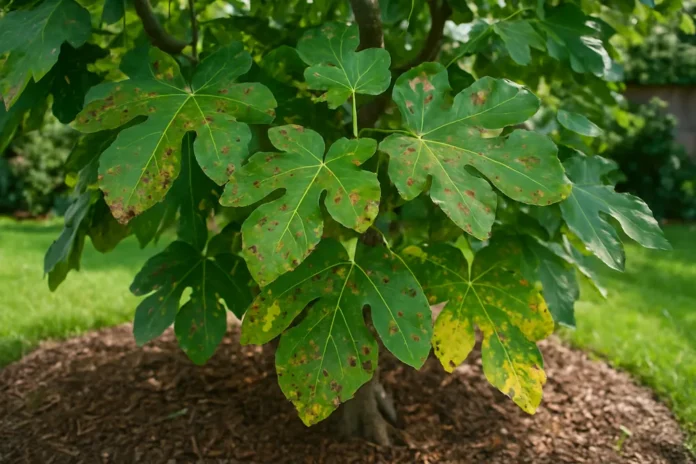
Fig tree leaves usually get brown spots from watering stress, fungal leaf spot diseases, sunscald, fertilizer burn, or pest damage. The exact cause often shows up in the spot pattern, leaf texture, and how fast the problem spreads.
Brown spotting on fig tree leaves can look alarming fast, especially when a tree that seemed healthy last week suddenly starts showing freckles, tan patches, or crispy edges. In my experience, figs are productive but a little dramatic. They often show stress on their leaves before the branches or fruit give you any other warning.
The tricky part is that brown spots on fig leaves are not one single problem. Too much water, too little water, fungal disease, sunburn, fertilizer salts, and a few common pests can all leave behind similar-looking marks. The good news is that figs usually give clues in the shape, location, and spread of the damage, so with a close look you can narrow it down.
What Brown Spots on Fig Leaves Usually Mean
When I diagnose a fig, I start by asking whether the spots are scattered across the whole tree, limited to older leaves, clustered on sun-exposed sides, or showing up with yellow halos or crisp margins. That pattern matters more than the color alone. A single brown spot can come from minor physical damage, but repeated spotting usually points to a cultural or disease issue.
- Small round brown or rust-colored spots that multiply after humid weather often suggest a fungal leaf spot or rust problem.
- Large dry tan patches on the hottest, brightest side of the tree often point to sunscald or heat stress.
- Brown edges or tip burn across many leaves at once can come from inconsistent watering, salt buildup, or fertilizer burn.
- Spots paired with yellowing, droop, or leaf drop often show root stress from overwatering or poor drainage.
- Speckling, stippling, or patchy bronzing can come from sap-feeding pests such as spider mites or scale.
If all the affected leaves look almost identical, I usually suspect an environmental cause like watering or heat. When the spots vary a lot in size and seem to spread from leaf to leaf, disease moves higher on my list.
Overwatering and Poor Drainage
One of the most common reasons fig leaves develop brown spotting is root stress from soil that stays too wet. Figs like consistent moisture, but they do not like sitting in soggy soil for long periods. When roots struggle for oxygen, leaves often respond with yellowing first, followed by soft brown spots, dull foliage, and premature leaf drop.
This is especially common in heavy clay soil, low spots in the yard, and containers without excellent drainage. A fig in a pot can go downhill quickly if water collects in a saucer or the potting mix has broken down into a dense, compact mass. In the ground, repeated rain plus frequent irrigation can create the same effect.
- Leaves yellow before or around the brown spots
- Spots look water-soaked at first, then turn tan or dark brown
- Affected leaves feel limp rather than crispy
- Lower or inner leaves decline first
- Soil stays wet several inches down for days at a time
If overwatering is the issue, the fix is not just giving less water once. The real goal is better root-zone balance. Let the top few inches of soil dry modestly before watering again, and make sure excess water can move away from the root area. For potted figs, repotting into a fast-draining mix may be necessary if the soil stays dense and sour.
Underwatering and Drought Stress
Dry soil can also cause brown spots, but the look is usually different. Instead of soft, blotchy damage, drought-stressed fig leaves often develop crisp brown margins, dry patches between veins, or scorched-looking tips. During hot weather, a fig can lose water through its big leaves faster than the roots can replace it, especially in containers or raised beds.
Figs are fairly tough once established, but repeated swings between bone-dry and soaked soil put the foliage under stress. That inconsistency alone can trigger leaf spotting and drop, even if the tree is not severely dehydrated.
- Brown areas start at the edges or tips and feel papery
- Leaves may curl inward or droop during the hottest part of the day
- Fruit can shrivel or stop sizing up
- Container soil pulls away from the pot edge
- New growth looks smaller than normal
I prefer deep, thorough watering over frequent light sprinkling. A shallow daily splash often wets the surface but leaves fig roots chasing moisture upward, which makes heat stress worse.
Fungal Leaf Spot and Fig Rust
If the spots are numerous, distinct, and seem to spread after warm, humid weather, a fungal problem becomes more likely. Two of the usual culprits on figs are leaf spot diseases and fig rust. Gardeners often notice small yellow or brown flecks first, then larger brown patches as the leaves age and the infection develops.
Fig rust is especially common in humid regions and late in the season. It often starts as yellowish spots on the upper leaf surface, with rusty orange, cinnamon, or brown pustules underneath. As it worsens, leaves can turn blotchy, dry out, and drop early. General fungal leaf spots may create circular brown lesions with darker borders or pale centers.
- Spots increase in number over a week or two
- Humid weather or frequent overhead watering came first
- Lower leaves are affected before upper leaves
- You may see rusty dusting or raised pustules underneath the leaf
- Defoliation happens even when watering seems normal
Good sanitation makes a big difference. Remove fallen infected leaves, prune lightly to improve airflow, and avoid wetting the foliage late in the day. If disease pressure is heavy year after year, gardeners sometimes use an appropriate fungicide labeled for figs and the specific disease, but cultural cleanup is still the foundation.
Sunburn, Heat Stress, and Sudden Exposure
Figs love sun, but leaves can still burn under extreme conditions. Brown spots from sunscald usually appear as larger bleached, tan, or brown areas on the side of the plant facing intense afternoon sun. This often shows up after a greenhouse-grown fig is moved outdoors, after heavy pruning exposes previously shaded leaves, or during a heat wave combined with dry wind.
Unlike fungal spotting, sunburn damage usually does not keep multiplying in a spreading pattern. The injured patches stay where the tissue was scorched. You may also notice that only the most exposed leaves are affected, while shaded interior leaves remain fairly clean.
- Large irregular tan or brown patches rather than many tiny dots
- Damage is worst on the southwest or west-facing side
- Spots look dry and thin, almost bleached before turning brown
- The problem began after moving the plant or a sudden jump in heat
- Newer leaves may burn first if they were not hardened off
Fertilizer Burn and Salt Buildup
Too much fertilizer can mimic disease by causing brown spots or necrotic edges on fig leaves. This is particularly common with potted figs, where salts from synthetic fertilizer or hard water accumulate in the soil. The roots take up water less efficiently when salt levels rise, so the leaves show scorch symptoms even if the soil is technically moist.
High-nitrogen feeding can also push a flush of tender growth that burns more easily in heat and becomes more attractive to pests. If you recently fertilized and the spotting appeared soon after, that timing is worth taking seriously.
- Brown tips and margins appear soon after feeding
- A white crust may form on the soil surface or pot rim
- New growth is soft, lush, and more sensitive to heat
- Leaf edges dry out evenly across much of the plant
- Container plants are affected more often than in-ground trees
Mild cases often improve when the soil is flushed thoroughly and fertilizer is paused for a while. Long term, use measured feeding instead of guessing, and avoid piling on multiple products at once.
Pests That Leave Spotting or Bronzing
Several sap-feeding pests can leave fig leaves spotted, bronzed, or blotchy. Spider mites are a common one in hot, dry weather, especially on container figs or plants near walls that reflect heat. Their feeding causes fine stippling that can merge into brownish patches. Scale insects can also weaken leaves and create yellow-brown spotting, and heavy infestations often make foliage look dull and tired.
Pest damage is easiest to miss when gardeners focus only on the top of the leaf. Always inspect the undersides, stems, and the points where leaf petioles meet the branch. Fine webbing, tiny moving dots, sticky residue, or small shell-like bumps are all useful clues.
- Tiny pale speckles that merge into bronzed or brown patches
- Leaf undersides show mites, webbing, or small insects
- Sticky honeydew or sooty mold may appear with scale
- Damage is worse during hot, dusty weather
- Leaves may drop if the infestation gets heavy
When pest damage is the real problem, the brown spotting usually looks more like a surface effect than a true dead lesion with a border. I rub a suspect leaf gently and then check the underside before I assume disease.
Nutrient Problems and pH Issues
True nutrient deficiencies on figs more often cause overall yellowing, poor growth, or interveinal chlorosis than classic brown spotting, but prolonged deficiency can lead to dead patches in the leaf tissue. Potassium shortages may show as scorched edges on older leaves. Magnesium issues can create yellowing between veins that later turns necrotic. Improper soil pH can lock up nutrients and make these symptoms worse.
This cause is more likely when growth has been weak for a while, the tree has not been fed appropriately, or the soil is highly alkaline or otherwise out of balance. Nutrient issues tend to affect leaves in a more consistent pattern, rather than creating random disease-like spots on just a few leaves.
- Older leaves show marginal browning first
- Yellowing appears before the tissue turns brown
- Growth is slow, sparse, or pale overall
- Soil history suggests poor fertility or high pH
- Symptoms persist without the spread pattern typical of fungal disease
How to Tell Which Cause Is Most Likely
If you are standing in front of a spotted fig and trying to sort it out, focus on pattern, texture, timing, and recent weather or care changes. Those four clues solve most cases. Brown spots are a symptom, not a diagnosis, so avoid jumping straight to a spray before you know what you are dealing with.
- Look at where the damage started. Lower leaves suggest moisture or disease issues, while the outer sunny side suggests heat or sunscald.
- Feel the tissue. Soft or limp spotting points more toward water stress or rot-related trouble, while crisp papery damage leans toward drought, salts, or sunburn.
- Check the underside of several leaves. Rust pustules, mites, scale, or webbing can settle the diagnosis quickly.
- Think about what changed recently. Heavy rain, a fertilizer application, moving a container, or a heat spike often explains the timing.
- Watch new growth. If fresh leaves emerge clean after you correct conditions, the problem was likely environmental rather than an active spreading disease.
What to Do for a Fig Tree with Brown Spotted Leaves
Start with the least disruptive corrections first. Water more evenly, improve drainage if needed, remove badly diseased or heavily damaged leaves, and clean up debris around the base of the tree. If the tree is in a container, inspect the pot, root zone, and soil texture before adding any more fertilizer.
For disease-prone figs, better airflow and dry foliage matter a lot. Thin crowded growth lightly, water at the base, and avoid splashing soil onto leaves. For pest problems, use a treatment that matches the pest rather than a broad guess. Miticides, horticultural oil, or insecticidal soap may help in some cases, but labels and temperatures matter, especially on heat-stressed plants.
- Adjust watering so the soil is evenly moist but not soggy
- Make sure containers drain freely and are not sitting in runoff
- Remove and discard fallen diseased leaves
- Pause fertilizing if salt injury is possible
- Provide temporary shade for recently moved or heat-stressed potted figs
- Treat confirmed pests or fungal disease with products labeled for that use
Change one major variable at a time when possible. If you water differently, fertilize, prune, and spray all in the same week, it becomes much harder to tell what actually helped or what caused new stress.
When Brown Spotting Is Serious Enough to Worry About
A few marked leaves on an otherwise vigorous fig are usually manageable. I worry more when the tree is dropping lots of leaves early, new growth is also spotting, the trunk or branches show dieback, or the root zone stays wet and foul-smelling. Those signs suggest the problem is moving beyond cosmetic leaf damage.
Young trees and container figs deserve quicker attention because they have less margin for error. If more than a third of the canopy is declining, fruit is aborting, or the plant continues worsening after basic care corrections, it is worth getting a local diagnosis from a cooperative extension office, arborist, or nursery professional familiar with figs in your region.
How to Prevent Brown Spots on Fig Leaves in the Future
The healthiest figs are usually the ones with steady conditions. Most repeat spotting problems come from moisture swings, crowded growth, or foliage that stays wet too long. A tree with enough sun, good airflow, and consistent root moisture is much less likely to develop chronic leaf issues.
- Water deeply and consistently instead of on a rigid calendar
- Use a well-drained site or fast-draining potting mix
- Mulch the root zone to moderate moisture swings, while keeping mulch off the trunk
- Prune lightly for airflow rather than a dense tangled canopy
- Avoid overhead watering when possible
- Feed moderately and base fertilizer on plant needs, not habit
- Inspect leaves regularly during humid or very hot weather
Once you learn how your fig responds to your climate, these problems get much easier to prevent. In humid areas, disease prevention and cleanup matter most. In hot dry areas, consistent watering and mite checks tend to be the bigger win.
FAQ
Should I Remove Fig Leaves with Brown Spots?
Remove leaves that are heavily diseased, badly damaged, or already fallen, especially if you suspect a fungal problem. Leave lightly affected leaves in place if the tree still needs them for energy and the issue is more likely environmental than infectious.
Can Brown Spots on Fig Leaves Go Away on Their Own?
The damaged spots themselves will not turn green again. What can improve is the overall plant, with new leaves emerging clean once the underlying cause is corrected.
Is Fig Rust the Same as Sunburn?
No. Fig rust is a fungal disease that usually creates many spots and often shows rusty pustules on the undersides of leaves, while sunburn causes dry scorched patches on the most exposed foliage.
Do Brown Spots Mean My Fig Tree Is Dying?
Not usually. Many figs recover well from temporary stress, minor disease, or pest damage, but widespread spotting with heavy leaf drop, branch dieback, or root problems deserves closer attention.
Can Overwatering and Fungal Disease Happen at the Same Time?
Yes. Wet soil stresses the roots, and humid conditions or wet foliage also favor fungal leaf diseases, so a fig can show both root stress and infectious spotting together.
Why Are Only the Lower Leaves on My Fig Tree Getting Brown Spots?
Lower leaves are often the first to show problems from splash-borne fungal disease, poor airflow, and moisture-related stress. They also stay shaded and damp longer than upper leaves.
Will Neem Oil Fix Brown Spots on Fig Leaves?
Neem may help with some pests and some disease pressure, but it does not correct watering mistakes, salt injury, or sunburn. It is useful only when the cause matches the treatment and temperatures are safe for application.
Want the right fix faster? Read our guide to the best fungicides, insecticidal sprays, and soil care products for fig tree problems so you can choose a treatment that actually matches the symptoms.
