

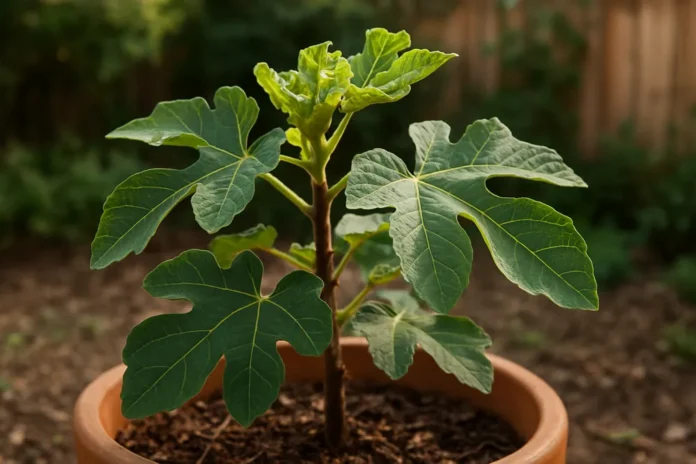
Fig tree leaves usually curl because of water stress, heat, pests like aphids or spider mites, nutrient imbalance, or transplant stress. Sometimes leaf curl also points to disease, especially when curling comes with spots, distortion, or poor growth.
Seeing fig tree leaves curling can be frustrating because figs usually look bold and lush when they are happy. When those broad leaves start cupping, twisting, rolling inward, or puckering at the edges, the plant is telling you something has changed around its roots, foliage, or overall growing conditions.
In my experience, curled leaves on a fig are not always a sign of a major crisis. Sometimes the tree is simply reacting to a hot week, uneven watering, or the stress of being moved. Other times, the leaf shape is the first clue that pests, a nutrient imbalance, or disease is beginning to interfere with normal growth. The key is to match the kind of curling you see with the rest of the symptoms on the tree.
This guide will help you sort through the most common reasons fig leaves curl, how to tell one cause from another, and what changes are most likely to help your tree recover.
What Curling Leaves Usually Mean on a Fig Tree
Leaf curl is a symptom, not a single diagnosis. A fig leaf may curl upward to reduce moisture loss, roll inward when roots cannot keep up with water demand, or become twisted and distorted when sap-sucking insects feed on tender growth. Older leaves and new leaves can also react differently, which gives you an important clue.
Start by looking at the whole plant rather than one damaged leaf. Ask whether the curling is mostly on new growth, older leaves, only the sunny side, or only one branch. Also note whether leaves are dry and crispy, limp and soft, sticky, spotted, yellowing, or dropping. Those extra symptoms usually narrow the cause quickly.
- Curling with dry edges often points to heat or drought stress.
- Curling with yellowing can suggest watering problems or nutrient imbalance.
- Curling with sticky residue or distorted new leaves often means aphids or other sap feeders.
- Curling with stippling, bronzing, or fine webbing can indicate spider mites.
- Curling with blotches, mosaic patterns, or severe deformity may suggest disease or viral issues.
When I diagnose fig leaf problems, I compare the newest leaves to the oldest ones first. If the newest growth is misshapen while older leaves still look mostly normal, I start by suspecting pests or a micronutrient problem before I blame watering.
Water Stress Is the Most Common Cause
Underwatering and Dry Soil
Figs are fairly tough once established, but they still respond quickly to inconsistent moisture. If the soil gets too dry, leaves often curl inward or upward to conserve water. They may also feel papery, develop brown edges, or droop during the hottest part of the day. In containers, this can happen fast because potting mix dries much more quickly than garden soil.
Underwatering is especially likely when temperatures jump suddenly, wind increases, or the tree is fruiting heavily. A young fig with a still-developing root system can show stress after just a few missed waterings.
Overwatering and Soggy Roots
Too much water can also make fig leaves curl, although the look is often softer and more sluggish than drought curl. Saturated soil limits oxygen around the roots, and stressed roots cannot support healthy leaf growth. Leaves may curl downward, yellow, or look limp even when the soil is wet.
Overwatering is common in heavy clay soil, low spots, or containers without excellent drainage. If the tree stays wet for long periods, root damage can follow, and curling may be joined by leaf drop or slowed growth.
- Dry soil several inches down, crisp edges, and midday wilting suggest underwatering.
- Wet soil that stays soggy, yellowing leaves, and limp curled foliage suggest overwatering.
- Container figs often need more frequent watering in summer, but they should still not sit in water.
- Fresh new growth after watering corrections is a better sign than waiting for damaged leaves to flatten completely.
If watering is the likely cause, change the schedule gradually and watch the next set of leaves. I do not judge success by badly curled leaves recovering perfectly, because older damaged fig leaves often stay misshapen even after the problem is fixed.
Heat, Sun, and Environmental Stress Can Trigger Leaf Curl
Figs love warmth, but extreme heat can still push them into stress. During intense summer weather, leaves may cup upward or fold slightly at the edges as a protective response. This is especially common on young trees, recently planted figs, and container-grown plants with roots that heat up quickly.
Hot reflected surfaces like brick walls, patios, driveways, and fences can amplify the problem. A fig that looked fine in spring may begin curling in midsummer simply because root moisture cannot keep pace with leaf demand under harsh afternoon exposure.
Wind can worsen this symptom too. Dry wind strips moisture from large fig leaves, and the tree responds by curling foliage to reduce water loss. If the tree is otherwise healthy, heat-related curling is often most noticeable during the afternoon and less dramatic in the morning.
- Leaves curl most on the hottest or sunniest side of the tree.
- Edges may look slightly scorched or faded.
- The soil may dry much faster than expected during heat waves.
- Young fruit and tender shoot tips may also stall temporarily.
Pests Often Distort Fig Leaves From the Top Down
Aphids and Other Sap-sucking Insects
Aphids feed on tender new growth, which can make young fig leaves curl, twist, or pucker as they expand. Because they cluster on stems and the undersides of leaves, the damage often appears concentrated at growing tips rather than evenly across the whole tree.
You may also notice sticky honeydew, ants climbing the plant, or a shiny coating on leaves below the feeding site. On a small fig, aphids can distort enough new growth to make the whole plant look stunted.
Spider Mites in Hot, Dry Conditions
Spider mites are tiny, but the leaf symptoms can be dramatic. They are more common in hot, dusty, dry weather and usually cause stippling, bronzing, and fine speckling before leaves begin curling or drying out. A heavy infestation may leave faint webbing on the undersides of leaves or between stems.
Scale, Thrips, and Other Less Common Culprits
Scale insects and thrips are less common causes of fig leaf curl, but they can contribute to distorted or weakened foliage. Thrips often scar tender leaves and cause silvery patches, while scale tends to weaken the plant more gradually.
- Check the undersides of leaves and the soft stem tips.
- Look for sticky residue, ants, stippling, bronzing, or tiny moving insects.
- Damage focused on new leaves points more strongly to pests than to heat alone.
- Pest-damaged leaves may stay twisted even after insects are controlled.
I have seen gardeners miss aphids because they focus on the biggest curled leaves instead of the newest ones. On figs, the insects are often packed into the fresh growth where the leaves have not fully opened yet.
Nutrient Problems and Soil Imbalance Can Affect Leaf Shape
Figs do not usually need heavy feeding, but they can react when nutrients are too low, too high, or unavailable because of soil pH. Leaf curling from nutrition issues is often accompanied by pale color, interveinal yellowing, weak growth, or unusually small leaves.
Too Much Fertilizer
Overfertilizing can push lush but weak growth that curls more easily under heat or pest pressure. Salt buildup in containers can also stress the roots and contribute to leaf edge burn, curling, and reduced vigor.
Deficiencies and Lockout
Low potassium, magnesium, or certain micronutrients can affect leaf development, especially in potted figs that have been in the same mix for a long time. If your fig has not been repotted or fed appropriately in a while, curling may be one symptom among several. Yellowing between veins, poor fruiting, and undersized new growth give that theory more support.
Nutrient issues are usually not the first thing I blame unless the tree's watering and pest picture look fairly normal. In many home gardens, a nutrient problem turns out to be secondary to root stress rather than the true starting point.
- Container figs are more prone to nutrient imbalance than established in-ground trees.
- Excess fertilizer can damage roots and mimic drought stress.
- Chronic yellowing plus curling suggests looking beyond simple heat stress.
- A soil test is the most reliable way to confirm a true deficiency.
Transplant Shock and Root Restriction Are Common with Young or Potted Figs
If your fig was planted recently, moved to a new location, or shifted into a different pot, curling leaves may be part of transplant stress. Even a healthy-looking tree can pause and curl some foliage while roots adjust to new soil moisture, temperature, and light conditions.
Root-bound figs also develop stress symptoms that look a lot like inconsistent watering. When roots circle tightly in a container, water may run through quickly while the root ball stays unevenly moist. The leaves respond by curling, drooping, or yellowing despite regular care.
Transplant shock is more likely if the tree also drops a few leaves, stops putting on new growth for a short period, or was planted during hot weather. Fortunately, this kind of curling often improves once the root system stabilizes.
Disease Is Less Common but Still Worth Ruling Out
Most curling fig leaves are caused by environment, roots, or pests rather than disease, but infections can sometimes distort foliage. Fungal leaf problems may begin with spots, blotches, or yellow patches and later lead to curling or premature drop. Viral issues can cause more dramatic misshaping, mosaic patterns, or persistent distortion on multiple flushes of growth.
If the leaves show unusual mottling, ringed patterns, severe crinkling, or repeated deformation that does not improve as conditions stabilize, disease becomes more plausible. Damage limited to one season during extreme weather usually points away from a virus, while recurring distorted growth in normal conditions deserves closer attention.
- Leaf spots, blotches, and early leaf drop can accompany fungal issues.
- Mosaic or patchy discoloration with distortion may suggest viral trouble.
- Poor airflow and prolonged wet foliage can worsen disease pressure.
- Pruning out obviously damaged material and keeping foliage dry helps reduce spread of many fungal problems.
How to Tell Which Cause Is Most Likely
Because several problems can curl a fig leaf, pattern recognition matters more than guessing from one symptom. Try to match the timing, location, and texture of the damage. A tree that curled after a heat wave likely has a different issue than one with sticky, twisted new leaves in mild weather.
- Check whether the curled leaves are mostly old or new.
- Feel the soil several inches down instead of judging from the surface alone.
- Inspect the undersides of leaves and growing tips for insects or webbing.
- Look for yellowing, spotting, bronzing, sticky residue, or scorched edges.
- Think about recent changes such as repotting, fertilizing, a cold snap, or extreme heat.
If the damage is mostly on older leaves during hot weather, water and heat stress are more likely. If the newest leaves are misshapen and sticky, check for aphids first. If the whole plant looks weak in a pot that dries oddly fast or stays soggy too long, root restriction or drainage trouble may be the bigger issue.
Do not change five things at once. If you adjust watering, fertilize, spray for pests, and repot all in the same weekend, you make it much harder to tell what actually helped and you can stack stress on an already struggling fig.
What to Do to Help Your Fig Tree Recover
Once you have a likely cause, focus on steady recovery rather than trying to make every damaged leaf look perfect again. Fig trees usually respond best to consistent conditions and modest corrections. Healthy new growth is the goal.
- Water deeply but only when the root zone actually needs it, not by a rigid calendar.
- Mulch around in-ground figs to moderate soil temperature and moisture, while keeping mulch away from the trunk.
- Give potted figs excellent drainage and consider repotting if roots are crowded.
- Rinse or treat pest infestations promptly, especially on new growth.
- Avoid overfertilizing, especially during heat stress or right after transplanting.
- Remove badly diseased leaves if fungal spotting is spreading, and improve airflow around the tree.
A stressed fig often needs a few weeks of stable care before you see obvious improvement. If new leaves emerge flatter, greener, and more evenly shaped, you are moving in the right direction even if the older curled leaves stay unattractive.
When Curling Leaves Are a Sign of a Bigger Problem
Occasional curling on a few leaves is not always serious, especially during weather swings. More concern is warranted when the whole canopy is affected, the tree stops growing, fruit drops heavily, or leaf curl is paired with yellowing, spotting, branch dieback, or repeated decline.
If a fig continues to produce distorted growth despite corrected watering, pest control, and better growing conditions, the root system or a disease issue may be involved. At that point, a closer inspection of roots, drainage, and overall plant history becomes important.
FAQ
Will Curled Fig Leaves Uncurl on Their Own?
Sometimes slightly stressed leaves relax a bit after watering or cooler weather, but badly curled leaves often stay misshapen. The better sign is that new growth comes in normally.
Can Too Much Sun Make Fig Leaves Curl?
Yes. Extreme heat and intense afternoon sun can cause fig leaves to cup or curl, especially on young trees and potted plants that dry out quickly.
Do Aphids Cause Fig Tree Leaves to Curl?
Yes. Aphids commonly distort tender new fig leaves, and the damage is often paired with sticky honeydew and ant activity.
Should I Remove Curled Leaves From My Fig Tree?
Only remove leaves that are badly damaged, diseased, or mostly dead. If a curled leaf is still green, it can still help feed the tree while you correct the underlying problem.
Why Are Only the New Leaves on My Fig Tree Curling?
Curling limited to new growth often points to aphids, spider mites, thrips, or a nutrient issue affecting developing tissue. It is less typical of simple drought than whole-tree curling on older leaves.
Can a Potted Fig Tree Get Curling Leaves More Easily than One in the Ground?
Yes. Container figs are more likely to deal with fast drying, salt buildup, root crowding, and temperature swings, all of which can trigger leaf curl.
Is Leaf Curl on a Fig Tree Always a Disease?
No. Disease is usually less common than watering stress, heat, or pests. Look for spots, mosaic patterns, or repeated severe distortion before assuming disease is the cause.
Need a faster fix for a stressed fig? Check our guide to the best insecticidal soaps, moisture meters, and fig fertilizers so you can choose the right treatment with confidence.
