

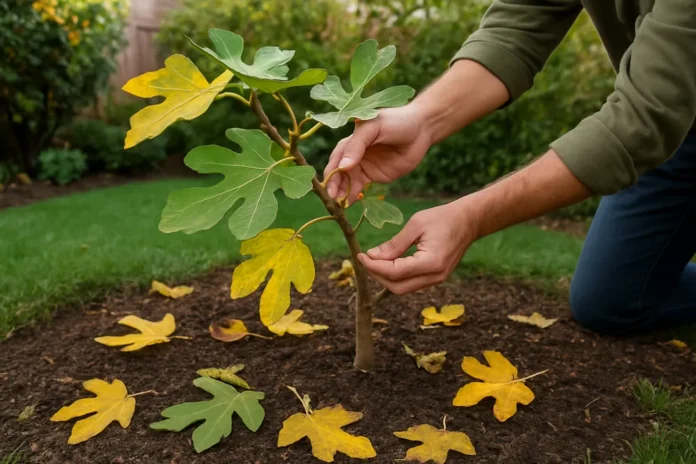
Fig trees usually lose leaves because of normal seasonal dormancy, watering stress, temperature shock, transplant stress, or pest and disease pressure. The cause is often environmental rather than permanent damage.
A fig tree losing leaves can look alarming fast, especially if it was full and healthy just a week or two ago. In many cases, though, leaf drop is your fig's way of reacting to stress rather than a sign that the tree is dying.
I've found that figs are productive but honest plants. When something is off, they show it in their leaves first. Sometimes the explanation is completely normal, like fall dormancy. Other times the problem comes from watering swings, root disturbance, cold snaps, pests, or disease. The key is to look at how the leaves are dropping, not just the fact that they are falling.
If your fig tree is shedding green leaves, yellowing first, dropping after a move, or thinning out in midsummer, you can usually narrow the cause down with a few visible clues. Once you match the pattern to the cause, the right fix becomes much clearer.
When Leaf Drop Is Normal and when It Is a Problem
Not every case of leaf loss means your fig is in trouble. Deciduous fig trees naturally shed their leaves as they enter dormancy in fall and winter. Outdoor figs in most parts of the U.S. will yellow and drop leaves as day length shortens and temperatures cool. That is expected behavior.
Leaf drop is more concerning when it happens during active growing season, especially in spring or summer, or when the leaves fall while still green. Sudden defoliation during warm weather usually points to stress. The most common triggers are overwatering, underwatering, abrupt temperature changes, root issues, transplant shock, or a pest problem.
- Usually normal: yellowing leaves in fall followed by gradual leaf drop
- Usually a warning sign: green leaves dropping in spring or summer
- Often stress-related: leaf drop shortly after repotting, planting, or moving the tree
- Needs close inspection: spotted, curled, sticky, or chewed leaves before they fall
When I diagnose figs, I pay attention to timing first. A bare fig in late fall is usually doing exactly what it should, but a fig dropping half its canopy in June is almost always reacting to a specific stress event.
Watering Problems Are the Most Common Cause
Overwatering and Soggy Soil
Too much water is one of the biggest reasons fig trees start dropping leaves. Figs like consistent moisture, but they do not want to sit in waterlogged soil. When roots stay too wet, they struggle to take up oxygen. The result can be yellowing leaves, limp growth, and sudden leaf drop.
Overwatered figs often look thirsty even though the soil is wet. Leaves may yellow from the bottom up, soften, or fall before the soil has a chance to dry. In containers, poor drainage is a major culprit. In the ground, heavy clay or low spots can keep roots too wet after rain.
Underwatering and Drought Stress
Underwatering can cause the same end result, but the clues look a little different. Dry-stressed figs may develop drooping, crispy, curled, or browned leaves before they fall. During hot weather, a potted fig can go from fine to stressed very quickly, especially if it is rootbound.
Repeated swings between very dry and very wet soil are especially hard on figs. That cycle stresses roots and often triggers leaf yellowing and drop even if neither extreme lasts very long.
- Signs leaning toward overwatering: yellow leaves, soft stems, wet soil, sour smell, slow growth
- Signs leaning toward underwatering: dry soil, wilted leaves, crisp edges, leaf curl, fast drop during heat
- Signs of inconsistent watering: mixed yellowing and browning, irregular leaf loss, stalled growth, fruit drop
With figs, I prefer deep watering followed by partial drying rather than frequent light sips. The goal is moist root soil, not constantly wet surface soil.
Seasonal Changes and Dormancy Can Make a Healthy Fig Look Dead
If your fig tree is outdoors and the weather is cooling, leaf drop may simply mean it is preparing for winter. Leaves often fade from green to yellow, then drop over a short period. This is normal for common figs grown in temperate climates.
A dormant fig can look surprisingly bare and lifeless, especially to newer gardeners. Twigs may appear gray or dry, but the tree can still be perfectly healthy. As long as the wood is not mushy, split, or fully dead inside, the plant may just be resting until spring.
Indoor or greenhouse figs can also react to shorter days and lower light. Even if they stay warm, reduced light in winter often causes some leaf yellowing and drop. This is common when a potted fig spends summer outside and then comes indoors in fall.
Transplant Shock and Moving the Tree Can Trigger Leaf Loss
Figs often drop leaves after being transplanted, repotted, or moved to a new location. Root disturbance alone can cause stress, but a move usually changes several things at once: light intensity, wind exposure, temperature, and watering patterns. The tree responds by shedding some foliage to reduce demand on the roots.
This kind of leaf drop often happens a few days to a few weeks after the change. Leaves may yellow, curl, or fall while still partly green. Young trees and container figs are especially prone to this because their root systems dry out or shift more easily.
The good news is that transplant-related leaf loss is often temporary if the roots remain healthy. New leaf growth is the best sign that the fig is settling in. Older damaged leaves may continue to fall while the tree recovers.
- Recent planting into the garden
- Repotting into a larger container
- Moving from indoors to full sun outdoors too quickly
- Bringing a container fig indoors for winter
- Root pruning or rough handling during the move
Temperature Stress and Cold Damage Are Frequent Triggers
Figs are tougher than many gardeners expect, but sudden temperature swings can still make them drop leaves. A late spring cold snap, a blast of dry wind, or a jump from mild weather into extreme heat can all shock the canopy.
Cold stress may cause leaves to darken, wilt, or drop quickly after a chilly night. Tender new leaves are the most vulnerable. Heat stress often shows up as drooping, edge scorch, and leaf drop during or after very hot afternoons, especially when roots are dry.
Container figs are more exposed than in-ground trees because their roots do not have the insulation of surrounding soil. A black pot in full sun can heat up fast, while a small pot can also chill rapidly during cold nights.
If a fig drops leaves right after weather turns sharply, I usually suspect temperature stress before disease. The pattern is often sudden and widespread, with many leaves reacting at once instead of a slow progression from one branch.
Light Changes Can Cause Indoor and Container Figs to Shed
Fig trees like strong light. When a plant that was growing in bright outdoor sun is moved into a dimmer room, porch, or garage, leaf drop is common. The tree simply cannot support the same amount of foliage under lower light conditions.
You may also see leaf loss when a fig is moved suddenly from shade to full direct sun. In that case, leaves can scorch first, then dry up and fall. This is less about not enough light and more about a harsh transition.
- Low light tends to cause pale leaves, slow growth, and gradual shedding
- Sudden intense sun can cause scorched patches, curling, and faster drop
- Indoor figs near heating vents or drafty windows often face both light and temperature stress at the same time
Pests That Make Fig Leaves Fall
Several sap-sucking pests can weaken a fig enough to cause yellowing and leaf drop. Spider mites, scale, aphids, and mealybugs are the ones I see most often on container figs and sheltered plants. These pests feed on leaf tissue and plant juices, which stresses the tree over time.
Spider mites are especially common in hot, dry conditions and indoors. They can cause fine stippling, dull leaves, webbing, and premature drop. Scale and mealybugs may leave sticky honeydew, black sooty mold, or visible bumps and cottony clusters on stems and leaf undersides.
A heavier infestation can lead to thinning foliage and a generally tired-looking plant. If leaf drop comes with sticky residue, webbing, or visible insects, pests deserve a close look.
- Spider mites: tiny speckling, bronzed leaves, fine webbing, leaf drop
- Scale: hard bumps on stems or leaves, sticky residue, yellowing
- Aphids: clusters on tender growth, curling, sticky honeydew
- Mealybugs: white cottony masses, weak new growth, yellowing leaves
Diseases and Root Problems Can Also Be Involved
Figs are fairly resilient, but fungal and bacterial issues can still lead to leaf loss, especially when moisture and airflow problems are involved. Leaf spot diseases may create brown, black, or yellow lesions before leaves fall. Root diseases are more serious because they interfere with the plant's ability to take up water even when moisture is present.
Root rot is a major concern in poorly drained soil or pots without good drainage. Affected figs may wilt, yellow, and drop leaves while the soil remains wet. The roots themselves may turn brown or black and feel mushy instead of firm.
Other disease issues can be local to certain climates and conditions, but in home gardens, disease-driven leaf drop often goes back to too much moisture around roots or foliage. Wet leaves, overcrowding, and weak airflow make those problems worse.
- Leaf spot often shows as distinct lesions before leaves yellow and fall
- Root rot often comes with wet soil, weak growth, and soft damaged roots
- Repeated overhead watering can worsen foliar disease issues
- Crowded container setups or dense canopies can slow drying and increase risk
Nutrient Imbalances and Rootbound Containers
A fig that has been in the same container too long may begin dropping leaves because its roots have run out of space, moisture buffer, and available nutrition. Rootbound figs dry faster, stress more easily, and often show yellowing leaves before they fall.
Nutrient problems can also contribute, though they are less often the only cause of sudden leaf drop. Nitrogen deficiency may cause pale older leaves and reduced vigor. Potassium and magnesium shortages can show up as marginal yellowing or patchy discoloration. More often, poor nutrition weakens the plant and makes it less able to handle heat, watering swings, or pests.
If the fig has not been repotted or fed in a long time, and watering seems to run straight through the pot, root crowding may be part of the issue.
How to Tell Which Cause Fits Your Fig
The best diagnosis comes from combining timing, leaf appearance, and recent changes. One clue by itself can mislead you. For example, yellow leaves can come from overwatering, dormancy, low light, or nutrient issues. The surrounding conditions help sort those apart.
- Look at the season. Fall leaf drop on outdoor figs is often normal dormancy.
- Check whether leaves are green, yellow, spotted, crispy, or sticky before they fall.
- Feel the soil several inches down instead of judging by the surface alone.
- Think back over the last two to four weeks for moves, repotting, heat waves, cold snaps, or missed watering.
- Inspect undersides of leaves and stems for pests, webbing, bumps, or honeydew.
- Consider the pot size and drainage if the fig is container-grown.
I try not to change three things at once when a fig starts dropping leaves. If you adjust watering, light, fertilizer, and pot size all together, it becomes much harder to tell what actually helped.
What to Do to Help Your Fig Recover
Once a leaf has dropped, it will not reattach, so recovery is measured by healthy new growth and stabilization. Start by correcting the most likely stressor instead of forcing growth with extra fertilizer or constant watering. A stressed fig usually improves faster from steadier conditions than from aggressive treatment.
If Watering Is the Issue
Let soggy soil dry to an appropriate level before watering again, and make sure excess water drains freely. If the plant is badly waterlogged, consider improving drainage or repotting into a better-draining mix once the tree is stable. For dry soil, water deeply until the root zone is evenly moistened, then maintain a more even schedule.
If the Tree Was Recently Moved or Transplanted
Give it time and keep conditions as even as possible. Avoid heavy pruning or strong fertilizer right away. Protect it from harsh afternoon sun or strong wind while it settles, but still provide good light.
If Pests Are Involved
Treat the specific pest rather than spraying randomly. In many home garden situations, insecticidal soap, horticultural oil, or a strong rinse works for light infestations, but coverage matters. Repeat treatments may be needed because eggs and hidden insects often survive the first round.
If Dormancy Is the Cause
Do less, not more. Dormant figs need less water, no pushy feeding, and protection appropriate to your climate. Wait for spring growth before assuming the tree failed.
If Root Crowding or Poor Soil Is Part of the Problem
Repot during the appropriate season for your growing conditions, using a container with drainage and a mix that holds moisture without staying soggy. If roots are circling tightly, gently loosen them before replanting.
- Remove only clearly dead or diseased leaves and stems
- Do not keep adding water just because leaves are falling
- Avoid fertilizing a severely stressed fig until you see recovery
- Watch new leaves for improvement rather than focusing only on old damaged ones
How to Prevent Future Leaf Drop
The best prevention is consistency. Figs handle normal seasonal change well, but they react quickly to extremes and sudden shifts. Stable moisture, strong light, good drainage, and gradual transitions go a long way.
- Water deeply and consistently rather than on a rigid calendar
- Use containers with generous drainage holes
- Acclimate figs gradually when moving them indoors or outdoors
- Inspect leaves regularly for early pest signs
- Avoid planting in spots that stay soggy after rain
- Repot container figs before they become severely rootbound
- Protect tender growth from late frosts and sudden cold snaps
In my experience, figs bounce back well when the basic conditions are right. Even a tree that drops a lot of leaves can recover nicely if the roots are sound and the stress is corrected before it drags on too long.
FAQ
Will My Fig Tree Grow Leaves Back After Dropping Them?
Often, yes. If the tree is still healthy and the stress is corrected, it can push new leaves during the growing season. If it dropped leaves in fall because of dormancy, new leaves should return in spring.
Why Is My Fig Tree Dropping Green Leaves Instead of Yellow Ones?
Green leaf drop usually points to sudden stress rather than normal aging. Common triggers include abrupt watering changes, transplant shock, temperature swings, or root problems.
How Often Should I Water a Fig Tree That Is Losing Leaves?
There is no single schedule that fits every fig. Water based on soil moisture, pot size, weather, and season. The goal is evenly moist but not saturated soil, with some drying between deep waterings.
Is It Normal for a Potted Fig Tree to Lose Leaves Indoors in Winter?
Yes, that can be normal. Lower light, drier indoor air, and the shift from outdoors to indoors often cause some leaf drop, especially if the tree is entering dormancy or adjusting to reduced light.
Can Overwatering Make a Fig Tree Look Dry?
Yes. Overwatered roots cannot function properly, so the leaves may wilt or yellow in a way that looks like drought. Checking the soil and drainage is more reliable than judging by wilting alone.
Should I Fertilize a Fig Tree After It Drops Leaves?
Usually not right away unless you are sure nutrient deficiency is the main issue. Fertilizing a stressed fig can make things worse if the real problem is roots, watering, or temperature stress.
How Do I Know if My Fig Tree Is Dormant or Dead?
A dormant fig typically has firm wood and viable buds even though it is leafless. Dead wood is usually brittle all the way through and may fail a scratch test by showing dry brown tissue instead of green beneath the bark.
Want the right fix faster? Read our guide to fig tree care problems and browse the best soils, pest controls, and pots for stronger recovery.
