

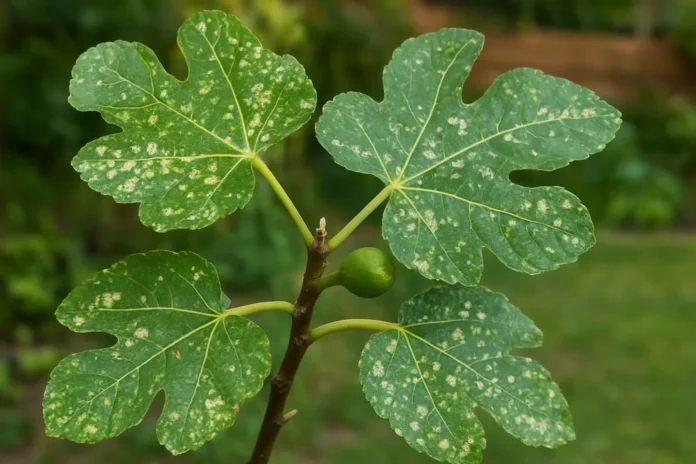
Fig tree leaves usually get white spots from powdery mildew, sap-sucking pests, dried mineral residue, or stress-related leaf damage. The exact cause depends on whether the spots look dusty, raised, speckled, or bleached.
White spotting on fig tree leaves can look alarming, especially when it seems to spread fast across otherwise healthy growth. In my experience, the good news is that this symptom is often more diagnosable than gardeners think. The shape, texture, and location of the white marks usually point you toward the real cause.
Some white spots are caused by fungal growth, while others come from insects feeding under the leaves, hard water residue, sun stress, or even minor physical damage. If your fig leaves have white spots, the key is not to treat everything the same. A dusty coating needs a different fix than pinprick stippling or chalky spots that wipe right off.
Below, I will walk through the most common reasons fig leaves develop white spotting, how to tell them apart, and what to do so the tree can keep pushing healthy new growth.
What the White Spots Are Telling You
Before reaching for a spray, look closely at the spots themselves. On fig trees, white symptoms usually fall into a few distinct patterns. A powdery or dusty coating often suggests fungal disease. Tiny pale dots scattered across the upper surface can point to pest feeding. White crusty marks may be leftover residue from water, foliar sprays, or sap. Larger pale patches can come from sunscald or stress injury.
- If the white area looks like flour dusted on the leaf, think powdery mildew.
- If the spots are tiny, evenly scattered, and the leaf looks faded or stippled, think mites or other sap-feeding pests.
- If the marks are raised, cottony, or clustered near veins and stems, think mealybugs or scale.
- If the spots wipe away easily and do not seem attached to the leaf tissue, think mineral or spray residue.
- If the tissue itself looks bleached or papery, think sun or environmental stress.
When I diagnose fig leaves, I never judge from one leaf alone. I compare older leaves, new leaves, the top surface, and the undersides. That pattern usually tells me more than the color does.
Powdery Mildew Is One of the Most Common Causes
Powdery mildew is a common reason fig leaves develop white spots, especially during warm weather with poor airflow, humid nights, and crowded growth. It usually begins as small white patches that look dusty or fuzzy, then expands into a thin film across parts of the leaf. Unlike residue, it tends to cling to the tissue and spread over time.
Mildew does not always kill a fig tree, but it can weaken growth, reduce photosynthesis, and cause leaves to curl, yellow, or drop earlier than they should. Potted figs and figs grown near walls or fences are especially prone because air circulation is often limited.
How to Recognize Powdery Mildew
- White or grayish patches that look dusty or talc-like
- Spots that gradually enlarge instead of staying fixed
- Affected leaves may curl, wrinkle, or look distorted
- The problem often shows up on both older and newer leaves during humid spells
What to Do
- Remove the worst affected leaves if the problem is still light.
- Prune lightly to improve airflow through the canopy.
- Avoid overhead watering late in the day.
- Use a labeled fungicidal option such as horticultural oil, neem-based products, sulfur, or potassium bicarbonate if mildew is actively spreading. Always follow the product label and avoid spraying during high heat.
I treat mildew based on the condition of new growth, not the old leaves already marked up. If fresh leaves are emerging clean, the tree is recovering even if older leaves still look rough.
Sap-sucking Pests Can Leave Pale Stippling or White Flecks
Several small pests feed by piercing fig leaves and sucking out cell contents. This creates tiny white or pale dots known as stippling. Spider mites are especially common in hot, dry conditions, while leafhoppers and some other pests can create a similar speckled look. At first glance, gardeners sometimes describe these as white spots, even though they are actually tiny areas of damaged tissue.
Unlike mildew, pest stippling is usually flat, not dusty. The leaf may look faded overall, and severe infestations can lead to bronzing, curling, or premature leaf drop. On the underside, you may find fine webbing from spider mites or see the pests moving if you inspect closely.
Signs the Spots Are From Pests
- Many very small pale dots rather than a powdery patch
- Damage is often heavier on the upper leaf surface but the pests are underneath
- Leaves may look dull, dry, or bronze over time
- Fine webbing can appear with spider mites
- The pattern is usually worse during hot, dry weather
How to Handle It
- Rinse the undersides of leaves with a firm stream of water to knock pests down.
- Increase humidity around container figs if spider mites are the issue, while still keeping the foliage dry overnight.
- Use insecticidal soap or horticultural oil labeled for the pest and plant.
- Repeat treatments as directed because eggs and hidden pests often survive the first round.
Mealybugs and Scale Can Look Like White Spots at First
If the white spots are raised, waxy, or cottony, you may be looking at insects rather than leaf discoloration. Mealybugs can leave fuzzy white clumps along leaf veins, stems, or where the leaf joins the branch. Some scale insects also have pale coverings that look like little bumps stuck in place.
These pests feed on sap and weaken the tree gradually. You may also notice sticky honeydew on the leaves or black sooty mold growing on that sugary residue. Fig trees grown indoors for part of the year, in greenhouses, or in sheltered patio areas are especially likely to pick up mealybugs.
How to Tell if Insects Are the Problem
- White spots are raised off the leaf surface
- They gather near veins, stems, or nodes rather than appearing evenly across the leaf
- They can look cottony, waxy, or shell-like
- Leaves or stems may feel sticky from honeydew
For a light infestation, wipe individual mealybugs off with a cotton swab dipped in rubbing alcohol, being careful not to overdo it on tender tissue. For broader infestations, prune heavily infested growth and use insecticidal soap or horticultural oil according to label directions. Check the plant weekly because these pests are easy to miss when they first start.
Mineral Residue, Spray Residue, and Sap Can Mimic Disease
Not every white mark means the leaf is sick. In many home gardens, especially where hard water is common, fig leaves develop chalky white spots simply from irrigation splash, foliar feeding residue, or dried droplets. Dust mixed with guttation or sap can dry into pale crusty marks too.
This kind of spotting is often irregular and superficial. It may look dramatic from a distance but does not spread in the same way mildew does. If you gently wipe the leaf with a damp cloth and the white mark comes off cleanly, residue is far more likely than disease.
Clues That the White Spots Are Only Residue
- Spots are concentrated where water droplets would land
- The pattern appeared soon after spraying or overhead watering
- The marks wipe off easily
- New leaves are unaffected unless they also get splashed
If residue is the cause, switch to watering the soil instead of the foliage, avoid mixing stronger-than-labeled foliar products, and occasionally rinse dusty leaves early in the day so they dry quickly.
Sunscald and Environmental Stress Can Bleach Leaf Tissue
Fig leaves can also develop pale or white-looking patches from stress, especially after sudden exposure to stronger sun. This is common when a potted fig is moved from indoors to full outdoor light too quickly, or when a previously shaded branch is exposed after pruning. In this case, the leaf tissue itself is damaged and looks bleached, tan-white, or papery.
These patches are usually larger and less spot-like than pest damage. The edges may later turn brown and crispy. The pattern often appears on the most exposed side of the plant rather than deep in the canopy.
When Stress Damage Is the Likely Cause
- The pale area is broad and irregular, not dusty
- It shows up soon after a move into brighter sun
- The worst damage is on outer, upper, or south-facing leaves
- The tissue feels thin, dry, or papery rather than fuzzy or sticky
You cannot reverse damaged tissue, but you can prevent more of it. Acclimate container figs to outdoor sun over a week or two, keep watering consistent during heat, and avoid heavy pruning right before intense summer weather.
Less Common Causes Worth Considering
A few less common issues can also be behind white spotting. Minor physical abrasion from windblown debris can scar leaves. Some nutrient problems can make foliage look pale, but they usually cause general chlorosis rather than clean white spots. Chemical injury from soaps, oils, or fertilizers applied in hot sun may also leave pale patches or spotting.
If the symptom appeared right after a product application, recent spray burn should move high on your suspect list. Damage from sprays often follows droplet patterns and shows up within a day or two, particularly during hot afternoons.
When a fig problem starts suddenly, I always ask what changed this week. A move, a pruning session, a heat wave, or a new spray often explains symptoms faster than a disease chart does.
How to Diagnose the Cause Step by Step
If you are unsure which problem you have, use a simple process instead of guessing. Most fig leaf issues become clearer once you inspect both sides of the leaf and compare old growth to new growth.
- Examine the texture. Dusty suggests mildew, raised suggests insects, flat suggests tissue damage.
- Check whether the spots wipe off. If they do, think residue first.
- Look under the leaves for pests, webbing, eggs, or cottony clusters.
- Notice where the damage is worst. Full-sun outer leaves point toward stress, while crowded inner growth often points toward mildew.
- Think about recent conditions such as humid weather, drought, heat, or foliar sprays.
Do not rush into multiple treatments at once. If you spray fungicide, insecticide, and foliar feed all in the same week, you may solve nothing and make diagnosis harder. Match the response to the symptom pattern you actually see.
What Treatment Looks Like for a Recovering Fig Tree
Once you have identified the likely cause, focus on helping the tree produce clean new growth. Old spotted leaves may not return to perfect appearance, even after the problem is controlled. That does not mean the treatment failed.
- Keep watering even and deep, especially for container figs in summer.
- Avoid excess nitrogen, which can push soft growth that is more vulnerable to pests and disease.
- Prune out crowded interior shoots if airflow is poor.
- Clean up badly infected fallen leaves if fungal issues are involved.
- Monitor the tree weekly for changes in fresh leaves rather than obsessing over the oldest damaged ones.
Healthy figs are resilient. If roots are sound and the trunk is healthy, the tree can usually outgrow cosmetic leaf spotting once the underlying problem is corrected.
When White Spots Are a Serious Warning
Most white spotting on fig leaves is manageable, but some situations deserve quicker attention. If many leaves are dropping, new growth is coming in distorted, branches are sticky with heavy insect activity, or a mildew problem is coating large parts of the canopy, the tree is under enough stress that fruiting and overall vigor may suffer.
You should also act quickly if a small potted fig is declining fast, since containers dry out and destabilize more easily than in-ground trees. Severe pest infestations can explode surprisingly fast in sheltered locations such as patios, sunrooms, and indoor winter storage.
How to Prevent White Spots on Fig Leaves in the Future
Prevention is mostly about creating conditions that favor healthy leaves. Fig trees like sun, but they also like consistency. Abrupt changes in light, moisture, airflow, and spray routines are what seem to trigger many of these issues in home gardens.
- Water at the soil line instead of wetting the foliage regularly.
- Space and prune figs so air can move through the canopy.
- Inspect the undersides of leaves during hot, dry stretches for mites.
- Acclimate container figs gradually when moving them outdoors.
- Use foliar products only as directed and avoid spraying in intense sun or extreme heat.
- Clean up fallen diseased leaves and remove obvious pest clusters early.
A few minutes of close inspection every week during the growing season can prevent a small white spotting issue from becoming a bigger decline problem later.
FAQ
Can White Spots on Fig Leaves Go Away on Their Own?
Some causes, like dried residue or mild sun stress, may stop worsening without major treatment, but the old spots usually stay visible. The real sign of improvement is healthy new leaves.
Should I Remove Leaves with White Spots From My Fig Tree?
Remove heavily affected leaves if they are covered in mildew, badly infested with pests, or mostly damaged. If only a few spots are present, leave enough healthy foliage for the tree to keep feeding itself.
Is It Safe to Eat Figs if the Leaves Have White Spots?
Usually yes, as long as the fruit itself is healthy and you have used any garden products according to label directions. Leaf spotting does not automatically mean the fruit is unsafe.
Why Do Only the Lower Fig Leaves Have White Spots?
Lower leaves are often older, shadier, and more likely to stay damp or collect residue, which favors mildew and spotting. They can also show stress first because they are the oldest foliage.
Can Hard Water Cause White Spots on Fig Leaves?
Yes. Hard water often leaves chalky white mineral deposits on leaf surfaces, especially after overhead watering or misting, and those spots usually wipe away.
What Does Powdery Mildew Look Like on a Fig Tree?
It usually looks like a white or gray dusty coating on the leaf surface. The patches often spread, and affected leaves may curl or become misshapen.
Are Spider Mites Responsible for White Dots on Fig Leaves?
They can be. Spider mites often cause many tiny pale specks, especially during hot, dry weather, and you may find fine webbing on the undersides of leaves.
Need the right treatment fast? Check our guide to the best fungicides, insecticidal soaps, and horticultural oils for fig tree problems so you can choose a fix that actually matches the symptom.
