

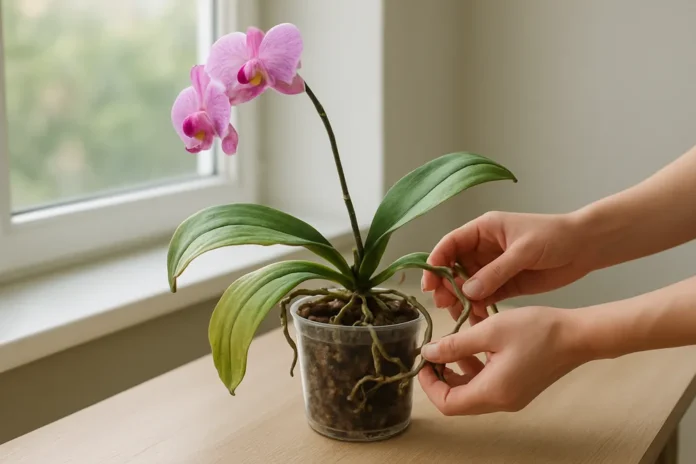
An orchid usually looks like it is dying because its roots are failing from overwatering, dehydration, rot, or poor growing conditions. Low light, temperature stress, pests, and normal aging can also make leaves, flowers, and roots decline.
If your orchid is dying, the first thing to know is that orchids often decline slowly before they collapse. A plant may drop flowers, wrinkle its leaves, or lose roots for weeks or even months before the real cause becomes obvious. That is why this problem can feel confusing. The part that looks worst is not always where the trouble started.
In my experience, most struggling orchids are not actually impossible to save. They are usually stressed by a short list of common issues: bad watering habits, suffocating potting mix, too little light, root damage, or rot around the crown. Once you learn how to read the roots, leaves, and potting media together, it gets much easier to tell whether your orchid is thirsty, drowning, aging normally, or heading toward a more serious problem.
This guide walks through the most likely reasons an orchid is declining, what each symptom usually means, and how to tell the difference between temporary stress and a true emergency.
What a Dying Orchid Usually Looks Like
Orchids do not all decline in the same way, but there are a few classic warning signs. Leaves may turn yellow, become limp, wrinkle, or develop dark mushy areas. Flowers can drop early. Roots may look brown, papery, hollow, black, or mushy instead of plump and green or silvery. In severe cases, the crown or stem may soften and collapse.
- Lower leaves yellowing one at a time can be normal aging, especially after blooming.
- Several leaves yellowing at once usually points to stress, root trouble, or rot.
- Wrinkled leaves often mean the plant is not taking up water, even if the pot looks wet.
- A limp orchid in soggy media is often overwatered, not underwatered.
- Black, mushy tissue is more urgent than dry brown tips or spent flowers.
When I assess a struggling orchid, I trust the roots more than the leaves. Leaves often show delayed symptoms, but the roots tell me whether the plant can still support recovery right now.
Overwatering and Root Rot Are the Most Common Causes
If I had to bet on the most common reason an orchid seems to be dying, I would start with overwatering. Most home-grown orchids, especially phalaenopsis, need air around their roots as much as they need moisture. When bark stays wet too long, or the plant sits in a decorative pot with trapped water, the roots begin to suffocate. Once that happens, fungi and bacteria can move in and cause rot.
Signs of Overwatering
- Potting mix smells sour or swampy
- Roots look brown, black, mushy, or easily peel apart
- Leaves are limp even though the medium is damp
- The pot feels heavy for days after watering
- Yellowing spreads beyond one old bottom leaf
This is what makes overwatering tricky: a rotting orchid often looks thirsty. The roots are too damaged to absorb moisture, so the leaves wrinkle and droop. Many gardeners respond by watering more, which speeds up the decline.
Why Root Rot Happens
Root rot is usually caused by a combination of excess moisture, stale potting media, low airflow, and low light. An orchid in a dark corner dries far more slowly than one near a bright window. Fine-textured moss packed tightly around the roots can also hold more water than beginners realize.
Underwatering and Dehydration Can Look Just as Serious
Not every struggling orchid is drowning. Some are simply too dry for too long. Orchids grown in chunky bark can dry surprisingly fast in warm rooms, especially during summer or when indoor heat is running in winter. Dehydrated orchids often have wrinkled leaves, dry silvery roots, and buds or flowers that shrivel or drop.
Signs of Underwatering
- Roots look pale, shriveled, or papery rather than firm
- Pot feels very light soon after watering
- Bark is bone dry throughout the pot
- Leaves are leathery or accordion-like rather than mushy
- Aerial roots dry out and stop growing
A dry orchid usually feels crisp or thin rather than soft and rotted. The difference matters because the fix is completely different. A plant with healthy but dehydrated roots can often bounce back much faster than a plant with extensive rot.
If you are unsure whether the plant is overwatered or underwatered, slide it out of the pot and inspect the roots before changing your routine. Guessing from leaf texture alone leads a lot of gardeners the wrong way.
The Potting Mix May Be Old, Compacted, or Working Against the Roots
Even if your watering schedule is reasonable, the potting medium may be the real problem. Orchid bark breaks down over time. As it decomposes, it holds more water, packs more tightly, and reduces airflow around the roots. That creates conditions where healthy roots slowly die off. Many orchids decline simply because they have stayed too long in old mix.
Clues That the Potting Media Is Failing
- Bark pieces have turned small, soft, or crumbly
- The center of the pot stays wet much longer than it used to
- Roots near the middle are dead while outside roots still look usable
- The plant wobbles because the root system has thinned out
- You have not repotted in two to three years
A compacted mix can mimic poor watering habits because it causes both rot and dehydration at the same time. Some roots may sit wet and rot, while others in dead pockets of mix stop functioning altogether. That is one reason orchids can be so puzzling when they start to fail.
Too Little Light Weakens Orchids Over Time
Light problems usually do not kill an orchid overnight, but they can weaken it enough that other issues become more serious. An orchid grown in very dim light often produces dark green leaves, weak roots, little or no blooming, and slow recovery after stress. If the plant has just enough light to survive but not enough to grow well, it may seem stuck in a gradual decline.
What Low Light Looks Like
- No reblooming for a long period despite otherwise decent care
- Leaves are very dark green instead of medium green
- New growth is small or weak
- Potting mix stays damp too long because the plant is using less water
On the other hand, too much direct sun can scorch leaves. Sunburn shows up as bleached, yellow, tan, or blackened patches, often on the side facing the window. Scorched tissue will not turn green again, but if the crown and roots are healthy, the plant can still recover.
Crown Rot and Stem Rot Can Turn Serious Fast
For many common orchids, especially phalaenopsis, the crown is the most vulnerable part of the plant. If water sits in the center where the leaves meet, that tissue can begin to rot. Crown rot often starts quietly, then suddenly causes leaves to yellow and fall because the growing point has been damaged.
Symptoms of Crown or Stem Rot
- A black or brown soft area in the center of the plant
- Leaves loosening from the base
- A foul smell or wet-looking collapse near the stem
- Rapid yellowing despite recent watering
- The plant falls apart when handled
This kind of rot is more dangerous than ordinary dehydration because it affects the central structure of the orchid. Some orchids can produce a side growth or basal keiki and survive, but many decline quickly if the crown is badly damaged.
Temperature Swings, Drafts, and Dry Indoor Air Add Stress
Orchids are often sold as easy windowsill plants, but they still react strongly to indoor extremes. Cold drafts from winter windows, blasts from heating vents, and sudden hot afternoon sun can all trigger stress. Leaves may yellow, buds may blast before opening, and flowers may fade early.
- Cold injury can make leaves look water-soaked, yellow, or collapsed days later.
- Very dry air can dehydrate buds and root tips, especially in heated homes.
- Hot, stagnant air can increase rot pressure if the potting mix already stays wet.
Most common orchids prefer steady warmth, decent humidity, and moving air rather than sharp swings. A plant that was happy in summer may start struggling in the same exact spot once winter heating season begins.
Pests and Disease Can Mimic General Decline
Some orchids look like they are slowly dying because sap-feeding pests are weakening them. Mealybugs, scale, spider mites, and thrips can all stress an orchid, especially when it is already weakened by poor roots or low humidity. Damage may show up as sticky residue, stippling, silvery scars, deformed growth, or cottony clusters around leaf joints and flower spikes.
Common Pest Clues
- White cottony patches suggest mealybugs
- Brown shell-like bumps often indicate scale
- Fine webbing and speckled leaves point to spider mites
- Scarred flowers or distorted buds can come from thrips
Bacterial and fungal diseases can also cause leaf spots, black lesions, or soft watery areas. These problems are more likely when water sits on leaves, airflow is poor, and temperatures stay warm. Disease damage usually looks more defined or spotted than simple watering stress.
If only one orchid looks bad while nearby houseplants are fine, I still inspect for pests before blaming care alone. Orchids have tight leaf joints and sheaths that hide insects better than many other indoor plants.
Bloom Drop Does Not Always Mean the Whole Plant Is Dying
One of the biggest orchid misunderstandings is assuming a finished bloom cycle means the plant is dying. Flowers do not last forever. A healthy orchid will naturally drop blooms after its flowering period ends, then shift energy back into leaves and roots.
That said, orchids can also drop buds or flowers early from stress. This is often called bud blast. Sudden temperature changes, dry air, moving the plant, underwatering, or weak roots can all cause it. If the leaves and roots still look good, the plant may be fine even if the flowers are not.
- Normal bloom fade happens gradually while foliage stays fairly stable.
- Stress-related bloom drop often comes with limp leaves, bud shrivel, or root issues.
- A flower spike drying up after bloom is not the same as the whole orchid dying.
How to Tell Whether Your Orchid Can Still Be Saved
An orchid can look rough and still recover if it has some live roots, a firm crown or stem, and at least part of its leaf structure intact. Even plants with few roots can sometimes rebound if rot is stopped and conditions improve. What matters most is whether there is living tissue left that can support new growth.
Good Signs
- Some roots are still firm, green, white, or silvery
- The crown or stem feels solid rather than mushy
- There is a healthy leaf or a new root tip forming
- Yellowing is limited to one older leaf
Poor Signs
- All roots are black, hollow, or mushy
- The crown has collapsed
- Leaves pull off easily with black tissue at the base
- There is a strong rotten smell from the plant
If you are deciding whether to try saving it, focus on the roots and crown first. Flower spikes are much less important. I would rather have a leafless orchid with healthy roots than a blooming orchid whose root system is gone.
What to Do Next Depending on the Cause
Once you have identified the likely cause, the next move should match the problem. Orchids decline further when gardeners pile on fixes all at once, such as watering more, fertilizing heavily, and moving the plant into stronger sun on the same day.
- If roots are rotted, repot into fresh orchid mix and remove dead roots with clean tools.
- If the plant is severely dry but roots are alive, resume thorough watering and let excess drain fully.
- If the mix is old, replace it even if the top still looks acceptable.
- If light is weak, move the orchid to brighter indirect light rather than harsh direct midday sun.
- If the crown is staying wet, avoid watering from above and keep water out of the center of the plant.
- If pests are present, isolate the orchid and treat consistently until new growth is clean.
After making a correction, judge progress by new roots and new leaves, not by damaged old ones. Orchid recovery is slow, and the leaves that look bad today may never look perfect again even when the plant is improving.
How to Prevent Your Orchid From Declining Again
Prevention is mostly about consistency and observation. Orchids do best when watering is tied to how fast the potting mix dries, not to a rigid calendar. The roots, pot weight, and media condition tell you far more than a once-a-week rule ever will.
- Use a pot and medium designed for orchids, usually bark, sphagnum, or a mix of both.
- Do not let the inner nursery pot sit in standing water inside a cachepot.
- Repot before bark breaks down completely, usually every one to two years for many indoor orchids.
- Give bright indirect light near an east window or a filtered south or west exposure.
- Keep water out of the crown, especially overnight.
- Check roots and leaves regularly so you catch changes early.
A healthy orchid is rarely dramatic. It simply puts out firm leaves, active roots, and steady growth over time. When you learn what that normal rhythm looks like, it becomes much easier to spot trouble before the plant reaches the point where it appears to be dying.
FAQ
Can an Orchid Come Back After All the Flowers Fall Off?
Yes. Losing flowers after a bloom cycle is normal and does not mean the plant is dying. If the leaves and roots are healthy, the orchid can rest, grow, and bloom again later.
Should I Cut Off Yellow Orchid Leaves?
Only remove a leaf once it is mostly dead and comes away easily or can be trimmed cleanly with sterile tools. If the leaf is partly green, leave it in place because the plant may still be using it.
How Do I Know if Orchid Roots Are Dead?
Dead roots are usually brown, black, mushy, hollow, or papery and do not firm up after watering. Healthy roots are plump and usually green when wet or silvery when dry.
Why Are My Orchid Leaves Wrinkled Even Though I Water It?
Wrinkled leaves often mean the roots are not functioning well. That can happen from underwatering, but it also happens when overwatering has caused root rot and the plant can no longer absorb moisture properly.
Is Tap Water Killing My Orchid?
Usually not by itself, but very hard water or heavily softened water can contribute to stress over time. If you see mineral buildup or leaf tip issues, flushing the pot regularly or switching to filtered water may help.
How Often Should I Repot an Orchid?
Many indoor orchids benefit from repotting every one to two years, or sooner if the bark breaks down, the roots outgrow the pot, or the mix stays wet too long.
Can I Save an Orchid with No Roots?
It is harder, but sometimes possible if the crown or stem is still alive and rot has stopped. Recovery takes time, and success depends on the amount of healthy tissue left.
Why Did My Orchid Suddenly Turn Yellow After Blooming?
One lower leaf turning yellow after blooming can be normal. If several leaves yellow quickly, the more likely causes are root problems, crown rot, temperature stress, or a major change in watering conditions.
Need the right setup to rescue a struggling orchid? Read our guide to the best orchid pots, bark mixes, and root-care supplies so you can fix the problem before the plant declines further.
