

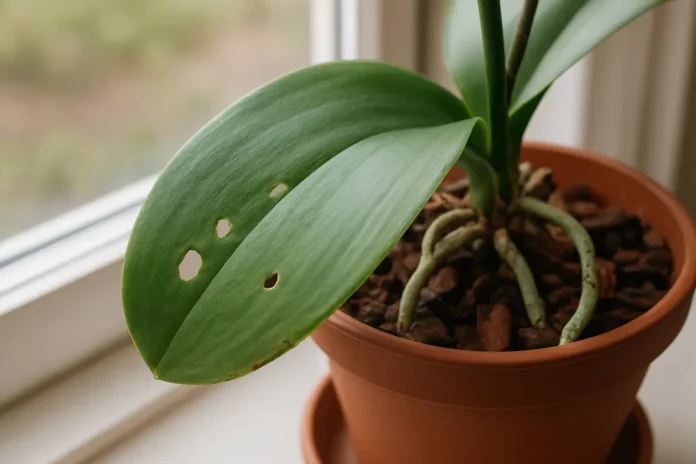
Orchid leaves usually get holes from chewing pests, rot that causes tissue to collapse, or accidental physical damage. In many cases, the hole formed after the leaf was weakened earlier and later split open.
Finding holes in an orchid leaf can be unsettling because the damage looks dramatic and often seems to appear overnight. In my experience, orchid leaves with holes usually point to one of a few categories: something ate the tissue, the leaf was physically injured, or the tissue was weakened first and then tore later.
The good news is that holes themselves do not heal, but they also do not always mean your orchid is in serious trouble. A healthy plant can keep growing just fine with a scarred leaf. What matters is figuring out whether the damage is old and finished or whether an active problem is still affecting the plant.
With orchids, the pattern tells the story. Clean tears, ragged chew marks, black soft spots, or tiny lesions that dry out and drop away each suggest a different cause. Once you know what you are looking at, it gets much easier to decide whether to treat pests, improve care, or simply leave the plant alone.
What Holes in Orchid Leaves Usually Mean
A hole is not really a disease by itself. It is a symptom of leaf tissue being removed or collapsing. With orchids, that often happens in one of four ways: pests chew through the leaf, rot kills a section that later falls out, mechanical damage tears the tissue, or earlier stress leaves a weak spot that eventually opens up.
If the rest of the plant looks strong, with firm leaves and healthy roots, the issue may be cosmetic and already over. If you also see yellowing, black spots, mushiness, webbing, slime trails, distorted new growth, or spreading lesions, then the holes are just one part of a larger problem.
- Ragged edges often suggest chewing pests like snails, slugs, caterpillars, or roaches.
- Smooth splits or tears often suggest handling damage or leaves cracking under stress.
- Dark, soft, water-soaked areas that later open up often suggest bacterial or fungal rot.
- Dry brown spots that become papery and fall out can point to older tissue damage, sun injury, or leaf spot.
When I inspect an orchid with holes, I pay as much attention to the leaf edges as the hole itself. A clean rip behaves very differently from tissue that looks eaten, softened, or cratered, and that difference usually narrows the cause fast.
Pests That Chew Holes in Orchid Leaves
Snails and Slugs
Snails and slugs are some of the most common culprits when orchid leaves have irregular holes. They feed at night and often hide in pots, under benches, inside bark mix, or around humid growing areas. Their damage usually looks ragged rather than neatly cut, and tender new leaves and buds are frequent targets.
You may also notice silvery slime trails on pots, benches, or nearby surfaces. Indoor growers sometimes assume snails are only an outdoor problem, but they can hitchhike in potting media, nursery plants, and decorative moss.
Caterpillars, Grasshoppers, and Larger Chewing Insects
If your orchids spend warm months outdoors, larger chewing insects become more likely. Caterpillars can remove sections of leaves surprisingly fast. Grasshoppers and similar feeders may leave bigger, obvious bites along the margins or through softer parts of the leaf.
This kind of damage is often sudden. One day the plant looks fine, and the next morning there are chunks missing. Unlike rot, the remaining tissue usually still feels firm unless a secondary infection sets in.
Cockroaches, Earwigs, and Opportunistic Feeders
In greenhouses, garages, patios, and even some homes, roaches and earwigs can nibble orchid leaves, flowers, and buds. They are messy feeders and usually damage plants at night. If holes are appearing but you cannot find daytime pests, nocturnal insects are worth considering.
- Look for ragged or uneven holes rather than circular, tidy openings.
- Check flowers, buds, and root tips too, since many chewing pests prefer tender growth.
- Damage that appears overnight is more consistent with animal feeding than nutrient issues.
- Outdoor and summered orchids are at higher risk than plants kept inside year-round.
Rot and Leaf Spot Can Create Holes Too
Not every hole comes from something eating the leaf. Sometimes a spot of tissue dies first, dries or softens, and then falls away. This can leave a round or irregular opening that looks like chewing damage even though no pest was involved.
Bacterial Soft Rot
Bacterial rot often starts as a water-soaked, soft, and dark area. It may smell unpleasant and can spread quickly in warm, stagnant, humid conditions. As the infected tissue breaks down, the damaged section may collapse and open into a hole.
This is more urgent than cosmetic tearing. If a leaf feels mushy or the spot enlarges from day to day, the orchid is dealing with active tissue loss rather than old damage.
Fungal Leaf Spots
Some fungal problems begin as small dark or tan lesions with defined edges. As the center of the lesion dries, it can become thin and papery. Eventually that dead center may crack or drop out, especially if the leaf gets bumped or watered overhead.
This tends to look more like a spot with a missing center than like a bite. You may see a yellow halo, concentric rings, or several similar lesions on the same leaf.
Sunscald Followed by Tissue Failure
Orchid leaves that were scorched by too much direct sun can develop bleached, tan, or dry brown areas. Those weakened patches may later crack or break open, especially on broad-leaved orchids like Phalaenopsis. In that case, the hole is secondary damage. The tissue was injured earlier and only later gave way.
If you are unsure whether a hole came from pests or collapsed tissue, compare it with nearby spots. When several leaves have lesions with the same color pattern or dry center, I lean toward disease or environmental injury rather than chewing.
Physical Damage Is More Common than Many Growers Think
Orchid leaves can tear surprisingly easily. Broad leaves, especially on moth orchids, crease or split when bent, squeezed, scraped, or folded during watering, transport, repotting, or cleaning. A tiny nick in a young leaf can become a much larger hole later as the leaf expands.
I see this a lot after plants are moved in and out for seasonal weather, packed tightly on windowsills, or brushed repeatedly by pets, curtains, or nearby foliage. New leaves are especially vulnerable because the tissue is tender while unfolding.
- Long slits or splits along the leaf often point to bending or pressure.
- Damage on the edge of the leaf may come from rubbing against another pot or stake.
- Holes near the center can start from an early crease that opened wider over time.
- If the tissue around the hole is dry and firm, old physical damage is likely.
Mechanical injury does not spread on its own. As long as the leaf remains dry and firm and no rot develops around the wound, the orchid usually grows past it. The leaf will stay scarred, but the plant can still produce healthy new growth.
Stress Factors That Weaken Leaves Before They Split
Sometimes the hole is the final result of earlier stress rather than the original problem. Dehydration, root loss, heat stress, low humidity, and abrupt changes in watering can make leaves less resilient. Weak tissue tears more easily and does not hold up well against minor bumps or sun exposure.
Root Problems and Dehydration
An orchid with damaged roots may produce limp, wrinkled, or thinner leaves. Those leaves are more likely to crease or split. Root issues do not directly eat holes into leaves, but they can set the stage for leaves to fail later.
Low Humidity During Active Growth
When new leaves develop in very dry air, they may emerge less supple than usual. This alone is not a common cause of holes, but it can contribute to tearing during expansion, especially if watering is inconsistent at the same time.
Nutrient Imbalance and Weak Tissue
Orchids are not heavy feeders, so nutrient issues are less often the direct cause of leaf holes than gardeners sometimes assume. Still, chronically weak growth from poor root health, exhausted potting media, or long-term underfeeding can leave leaves thinner and easier to damage.
I do not usually blame fertilizer first when an orchid leaf has a hole. If the plant is underfed, the whole plant generally looks undersized or pale. A single torn or missing section usually has a more local cause.
How to Tell Old Damage From an Active Problem
This is the biggest question for most home growers. A hole that happened weeks ago needs a different response than one that is still expanding. The easiest way to judge is by looking at the edges, surrounding color, and whether new damage keeps appearing.
- Old damage usually has dry, firm, stable edges.
- Active rot often has soft, wet, dark, or enlarging margins.
- Fresh chewing damage may look moist or bright green at the torn edge before it dries.
- Multiple new holes on different leaves usually suggest an ongoing pest issue.
- A single hole on an otherwise healthy older leaf is often just past damage.
Also look at the plant's newest growth. New leaves tell you more about current orchid health than old damaged leaves do. If fresh leaves are emerging clean, firm, and evenly colored, the problem may already be resolved even if older leaves still look rough.
Do not expect the hole to fill back in. Orchids do not regenerate missing leaf tissue. Success means no new holes, no spreading lesions, and healthy future growth.
What to Do when Your Orchid Leaves Have Holes
Once you have a likely cause, your response should match it. The biggest mistake I see is treating every hole with the same routine. Pest damage, rot, and accidental tearing all need different follow-up.
If Pests Are Responsible
Isolate the orchid if possible and inspect it at night with a flashlight. Check under the pot rim, inside cachepots, beneath bark pieces, and around the growing area. Hand removal, traps, and appropriate pest control products are often more effective than broad spraying when the issue is snails, slugs, caterpillars, or roaches.
If Rot or Leaf Spot Is Involved
Improve air circulation, avoid letting water sit in the crown or on leaves for long periods, and separate the plant from others if you suspect a contagious issue. Severely affected tissue may need to be trimmed away with a sterile tool if the rot is spreading, though many minor dry spots can simply be monitored.
If the Damage Is Physical
Leave the leaf in place unless it is mostly dead or beginning to rot. A partially damaged green leaf still contributes energy to the plant. Prevent repeat injury by giving the orchid more space, gentler handling, and support stakes that are not rubbing the foliage.
If Stress Made the Leaf Vulnerable
Focus on the basics: healthy roots, proper watering, fresh orchid mix when needed, bright indirect light, and steady humidity. Strengthening the plant will not repair the hole, but it greatly lowers the odds of future tearing and secondary infections.
I try not to cut off a damaged orchid leaf just because it looks ugly. If the leaf is still mostly firm and green, it is still useful to the plant, and removing it creates a new wound the orchid has to manage.
How to Prevent Holes in Orchid Leaves in the Future
Prevention mostly comes down to clean growing conditions, careful handling, and avoiding the moisture patterns that favor rot. Orchids do best when problems are caught early, before a weak spot turns into visible tissue loss.
- Inspect orchids regularly, especially new leaves, buds, and the undersides of foliage.
- Keep plants spaced so leaves are not constantly rubbing each other.
- Avoid frequent leaf wetness late in the day or in stagnant rooms.
- Water consistently enough to support firm growth, but do not leave roots soggy.
- Repot orchids when the bark breaks down and root health starts slipping.
- Check outdoor orchids and newly purchased plants for hitchhiking snails and slugs.
- Move and clean orchids gently so leaves are not bent or creased.
If you grow orchids on a windowsill, one simple habit helps a lot: turn the pot carefully and only when necessary. Repeated brushing against glass, blinds, neighboring pots, or decorative supports can cause more leaf damage than many people realize.
FAQ
Will Holes in Orchid Leaves Heal?
No. Orchid leaves do not replace missing tissue, so the hole will remain. The goal is to stop new damage and keep the rest of the leaf healthy.
Should I Cut Off a Leaf That Has Holes in It?
Usually no, unless the leaf is mostly dead, actively rotting, or threatening the rest of the plant. A green leaf with cosmetic damage still helps feed the orchid.
Can Spider Mites Cause Holes in Orchid Leaves?
Spider mites usually cause stippling, silvery discoloration, or a dull, dehydrated look rather than obvious holes. Large openings are more likely from chewing pests, rot, or tearing.
Do Orchid Leaves Get Holes From Too Much Sun?
Direct sun can damage leaf tissue and create scorched patches that later crack or fall away. The sun does not chew the leaf, but it can weaken tissue enough to form holes later.
Why Does My Orchid Have One Hole but Otherwise Looks Healthy?
A single stable hole often comes from old physical damage or one-time pest feeding. If there is no spreading discoloration and no new damage appears, the plant may be perfectly fine.
Can Overwatering Cause Holes in Orchid Leaves?
Overwatering does not directly punch holes in leaves, but it can damage roots and encourage bacterial or fungal rot. When leaf tissue rots and collapses, holes can develop.
Are Holes in New Orchid Leaves More Serious than Holes in Old Leaves?
Often yes. Damage in new leaves can indicate active pests, crown moisture issues, or handling injury during expansion. Old lower leaves with stable holes are more often leftover cosmetic damage.
Want to keep your orchid healthy from roots to leaves? Read our orchid care and treatment guides to choose the best potting mix, pest controls, and watering tools before minor damage turns into a bigger setback.
