

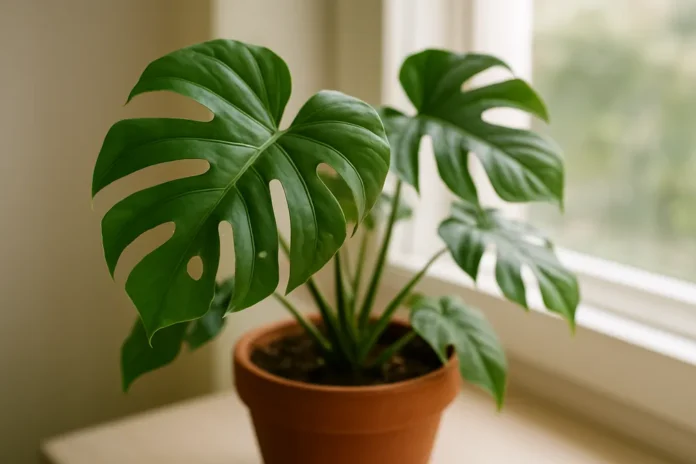
Philodendron leaves usually get holes from pest feeding, mechanical tearing while leaves unfurl, or stress from dry air and inconsistent care. The cause is often clear from the hole pattern and whether the damage is on old leaves, new leaves, or both.
Seeing holes in a favorite philodendron leaf can be frustrating, especially when the rest of the plant looked fine just a few days earlier. In my experience, philodendron leaves with holes are often blamed on insects right away, but pests are only one of several common causes.
The good news is that the shape, placement, and timing of the damage usually tell you a lot. A leaf that tore while unfurling looks very different from a leaf chewed by pests, and both look different from older leaves that were bumped, bent, or scraped. If you pay attention to whether the holes appear on fresh growth or mature foliage, you can usually narrow the problem down pretty quickly.
Below, I will walk through the most likely reasons your philodendron leaves have holes, how to tell them apart, and what to do so the next round of leaves comes in cleaner and stronger.
What the Holes Are Telling You
Before you treat anything, look closely at the pattern. Random tears near the edge of a leaf often point to physical damage. Small holes with ragged edges can suggest chewing pests. Long splits or missing sections on newly opened leaves often happen when a leaf sticks as it unfurls. If the damage stays on older leaves and new growth looks perfect, the issue may already be over.
- Holes on newly unfurled leaves often suggest low humidity, inconsistent watering, or a leaf that got stuck while opening.
- Tiny holes plus silvering, black specks, or distorted new growth often point to thrips.
- Larger irregular holes with visible bite marks can come from chewing pests, though these are less common indoors.
- Clean tears, splits, or punctures on otherwise healthy leaves often come from handling damage or leaves rubbing against furniture, walls, or other plants.
When I am diagnosing philodendron damage, I always compare the newest two leaves with the oldest damaged ones. If the plant is still pushing out clean new growth, I usually focus less on repairing the old damage and more on what changed in care or environment right before the problem showed up.
Pests That Can Cause Holes in Philodendron Leaves
Thrips
Thrips are one of the first pests I think about when philodendron leaves emerge looking scarred, thin, or torn. These tiny insects feed on soft tissue, especially inside still-folded leaves. As the leaf opens, the damaged areas can look like holes, slits, or papery patches that later break apart.
- Silvery or bronze streaking on leaves
- Tiny black specks that look like pepper
- Misshapen or stuck new growth
- Damage concentrated around the newest leaves
Caterpillars, Beetles, or Outdoor Feeders
If your philodendron spends warm weather outdoors, chewing insects become much more likely. Caterpillars, earwigs, beetles, slugs, and even grasshoppers can leave obvious holes with uneven edges. This kind of damage is usually easier to recognize because pieces of the leaf are plainly missing rather than thin or scarred.
Less Likely Indoor Pests
Spider mites, scale, and mealybugs usually do not create true holes. They cause stippling, yellowing, sticky residue, or weak growth instead. If you are seeing actual missing tissue, I would look at thrips or physical damage before blaming those pests.
To confirm pest damage, inspect the undersides of leaves, the petioles, and the folds of new growth with a flashlight. If you suspect thrips, look especially where the newest leaf is still wrapped.
Damage That Happens While Leaves Unfurl
One of the most common non-pest causes of holes is a leaf that was damaged before it even opened. Philodendron leaves emerge rolled and delicate. If the air is very dry, the plant is dehydrated, or the leaf sticks to itself while opening, small tears can form. Once the leaf expands, those little tears become visible holes or elongated splits.
This is especially common in homes with forced-air heat, strong air conditioning, or a plant placed near a vent. It also happens when watering swings from very dry to very wet, which interrupts smooth leaf expansion.
- Holes appear mostly on the newest leaf
- Damage looks stretched or split rather than chewed
- Leaf edges may look crinkled or slightly stuck together
- Other signs of stress, like curling or crispy margins, may show up too
If a new philodendron leaf is struggling to open, I avoid pulling it apart unless the tissue is clearly trapped and rotting. Most forced unfurling tears the leaf more than it helps, and the better long-term fix is steadier moisture and slightly higher humidity.
Physical Damage From Handling, Pets, or Placement
Philodendron leaves are softer than many people realize, especially when they are fresh. A leaf can be punctured or torn by brushing against a shelf edge, being squeezed during transport, getting bent while you rotate the pot, or rubbing against another plant. If you have children or pets, that possibility goes even higher.
This kind of damage is often random. You may see a single hole, a crease that later dried out and split, or a torn section near the margin. Unlike pest damage, there is usually no spreading pattern and no signs on nearby leaves unless the same rubbing keeps happening.
- A hole or tear lines up with where the leaf hits a wall, support, or nearby pot
- Only one or two leaves are affected
- The plant otherwise looks vigorous and continues growing normally
- Damage appeared after moving, repotting, shipping, or cleaning
Humidity, Watering, and General Stress
Philodendrons are fairly forgiving, but they still respond to environmental stress. Chronic dryness in the pot, very low humidity, cold drafts, and sudden temperature swings can weaken leaf tissue and increase the odds of tearing. These stressors do not always punch holes directly into the leaf, but they make new leaves more likely to emerge thin, stuck, or fragile.
Underwatering is a common contributor because the plant does not have enough internal pressure to expand new leaves smoothly. Overwatering can also play a role if root stress reduces the plant's ability to support healthy growth. In both cases, the newest leaves usually tell the story first.
Signs Stress May Be Part of the Problem
- Leaves feel thinner or weaker than usual
- New foliage is smaller than older foliage
- Brown tips or edges accompany the holes
- The potting mix goes bone dry for long periods or stays soggy for too long
- The plant sits near heating vents, air conditioners, or drafty windows
I see a lot of leaf tearing during seasonal changes, especially when indoor air turns dry in winter. Gardeners often think a disease arrived overnight, but the plant is really reacting to a big shift in air moisture and watering rhythm.
Could It Be a Fungal or Bacterial Problem?
Diseases are possible, but they are not the first explanation for holes in philodendron leaves. Some leaf spot diseases create brown or black lesions that dry out and eventually fall away, leaving a shot-hole effect. This is more likely if you first notice circular spots with yellow halos before the holes appear.
Disease-related holes are usually paired with other warning signs, such as spreading dark spots, mushy tissue, yellowing around the damage, or leaves that deteriorate quickly. Poor airflow, constantly wet foliage, and overly wet soil can increase the risk.
- Look for dark spotting before tissue disappears
- Check whether the damage is expanding on multiple leaves
- Avoid overhead watering if leaves stay wet for long periods
- Remove badly affected foliage if lesions are actively spreading
How to Figure Out the Real Cause
If your philodendron has holes and you are not sure why, start with simple observation instead of immediate treatment. The pattern on the leaf often gives you better information than a random spray ever will.
- Check whether the holes are mostly on new leaves, old leaves, or all over the plant.
- Inspect both sides of the leaves for insects, black specks, webbing, or silvery scarring.
- Think back to any recent move, repotting, shipping, or accidental bumping.
- Review your watering routine over the last few weeks, not just the last day or two.
- Note nearby vents, dry heat, strong sun shifts, or crowding that could affect unfurling.
If you find pests, treat for pests. If you find no pests and the damage is concentrated on new leaves that recently struggled to open, improve growing conditions first. If the pattern points to random tearing on isolated leaves, physical damage is usually the simplest explanation.
What to Do Next for Healthier New Leaves
If Pests Are the Cause
Isolate the plant from other houseplants. Rinse the foliage, then use an appropriate treatment such as insecticidal soap or neem-based products for light infestations, or a product labeled for thrips if that is the confirmed problem. Repeat treatments as directed, because one application rarely catches every life stage.
If Leaves Are Tearing While Unfurling
Keep the soil evenly moist but not soggy. Raise humidity moderately if your air is very dry, especially around new growth. Move the plant away from heating or cooling vents, and avoid drastic swings between very dry and very wet soil.
If the Damage Is Mechanical
Give the plant more space so leaves do not scrape walls, blinds, or neighboring plants. Handle new leaves gently during cleaning or rotation. If the holes bother you visually, you can prune off the worst leaves, but only if the plant still has enough healthy foliage to grow well.
If Disease Is Suspected
Remove severely spotted leaves, improve airflow, and keep water off the foliage when possible. Make sure the pot drains freely and the roots are not sitting in water. If spotting continues to spread rapidly, a houseplant-safe fungicidal product may help, but correcting the wet conditions is usually more important.
Will the Damaged Leaves Recover?
No, existing holes will not fill back in. A philodendron leaf can stay functional even with cosmetic damage, so you do not need to remove every imperfect leaf right away. What matters more is whether future leaves come in normally.
I usually leave mildly damaged leaves in place unless they are heavily infected, badly torn, or making the plant look sparse and tired. Those leaves still help the plant photosynthesize while it grows replacement foliage.
FAQ
Should I Cut Off Philodendron Leaves with Holes?
Only if the damage is severe, diseased, or visually bothers you. Mildly damaged leaves still help feed the plant, so I usually leave them until healthy new growth replaces them.
Can Low Humidity Really Cause Holes in Philodendron Leaves?
Yes. Low humidity can make new leaves stick while unfurling, and those stuck spots often tear into holes or splits as the leaf opens.
Do Thrips Make Actual Holes in Philodendron Leaves?
They can. Thrips often damage soft, folded leaf tissue before it opens, so the leaf later unfurls with holes, thin patches, or torn-looking scars.
Why Does Only One Leaf Have Holes While the Rest Look Fine?
A single damaged leaf often points to physical injury during unfurling, transport, or handling. Pest or disease issues are more likely to affect multiple leaves over time.
Can Overwatering Cause Holes in Philodendron Leaves?
Not usually as a direct symptom, but root stress from overwatering can weaken new growth. That can lead to smaller, softer leaves that tear more easily.
Are Holes in Split-leaf Philodendrons Normal?
Natural fenestrations are normal on certain plants that are often called split-leaf philodendrons, such as Monstera. On true philodendrons that do not naturally fenestrate, random holes are usually a sign of damage or stress.
How Long Will It Take to Know if I Fixed the Problem?
Judge your success by the next one or two leaves, not the damaged ones already on the plant. Existing holes stay as they are, but clean new growth usually means the issue is improving.
Want cleaner, healthier tropical foliage fast? Read our philodendron care guide and our top houseplant pest treatment picks to choose the right fix before the next leaf opens damaged.
