

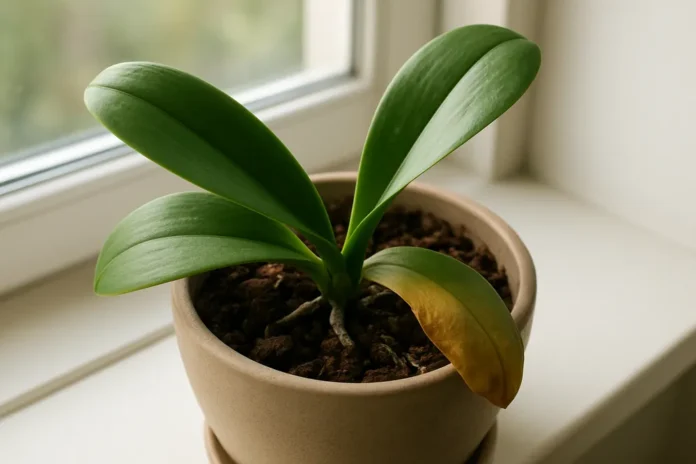
Orchid leaves usually rot because too much moisture stays around the crown, roots, or leaves for too long. Cold injury, poor airflow, and bacterial or fungal infections can also turn healthy tissue soft, dark, and mushy.
When an orchid leaf starts turning soft, dark, or mushy, the problem is usually more serious than a little cosmetic damage. In most cases, orchid leaf rot points to excess moisture, poor airflow, or infection, especially if the base of the leaf is affected.
The good news is that rotting leaves often leave clues. Where the rot starts, how fast it spreads, whether it smells, and what the roots look like can tell you a lot. I have found that orchids are very readable once you know which symptoms matter most, and catching the issue early can make the difference between losing one leaf and losing the whole plant.
Below, I will walk through the most common causes, how to tell them apart, and what to do if your orchid leaves are rotting right now.
What Rotting Orchid Leaves Usually Look Like
Rotting orchid leaves do not just look wilted or wrinkled. Rot usually makes the tissue soft, water-soaked, translucent, yellow-brown, dark brown, or black. In advanced cases, the leaf may collapse, ooze, or pull away easily from the plant.
The location matters. If the leaf is rotting from the center of a monopodial orchid like a Phalaenopsis, crown rot is high on the list. If the leaf base near the stem is decaying, stem rot or infection may be involved. If the leaf tips or edges are going mushy after a cold night or splash exposure, temperature stress or localized infection may be the trigger.
- Soft, mushy spots that feel wet rather than dry
- Dark brown or black areas that spread over days
- Yellow tissue surrounding a soft center
- A foul or sour smell, which often suggests bacterial rot
- Leaves dropping off easily when gently touched
- Rot beginning where water sits, especially in the crown or between leaf joints
When I diagnose orchid rot, I look at the newest leaf and the plant center first. If the newest growth is affected, I worry much more about crown or stem rot than if only one older outer leaf is breaking down.
Too Much Moisture Is the Most Common Cause
Most orchid leaf rot starts with moisture staying where it should not. Orchids like regular watering, but they do not like stagnant wetness around the crown, leaf bases, or roots. When the potting mix stays soggy or water collects in the plant's center, tissues weaken and pathogens get an easy opening.
Overwatering and Soggy Potting Media
If the bark mix has broken down into dense, soggy material, roots cannot breathe well. Damaged roots stop absorbing water properly, so the plant sits in wet media while still becoming stressed. That combination often leads to yellowing, soft leaves, and rot near the base.
This is especially common in grocery-store orchids that have been in the same pot for too long. Old sphagnum moss can stay wet for days, and compacted bark often hides root decline until the leaves begin to show it.
Water Trapped in the Crown
Phalaenopsis orchids are famous for this problem. Their leaves grow in a central rosette, and water can settle in that cup-like center after watering, misting, or overhead spraying. If that moisture sits overnight, especially in a cool room, the center can begin to rot.
Crown rot often starts subtly. The center leaf may yellow, loosen, or develop a darkened base. By the time the damage is obvious, the growing point may already be compromised.
Poor Airflow Around Wet Leaves
Even when watering frequency is reasonable, stale indoor air can keep leaves and crowns damp too long. Orchids need moisture, but they also need gentle air movement so surfaces dry in a normal amount of time.
Crown Rot Is One of the Most Serious Orchid Problems
If your orchid leaf rot seems to begin at the plant's center, crown rot is a likely cause. This is especially common in moth orchids. Because the crown contains the growing point, rot there is more dangerous than damage to an outer leaf.
Typical signs include a yellowing or blackening center leaf, a soft or black spot deep in the crown, water trapped after watering, and leaves that detach from the middle with little resistance. Sometimes the crown smells unpleasant, but not always.
- Rot starts where the newest leaves emerge
- The center of the plant stays wet after watering
- New growth looks weak, dark, or collapsed
- The rest of the leaves may look fine at first
A plant with mild crown damage can sometimes recover by producing a basal keiki, which is a baby plant from the base. But if the entire crown turns mushy and the stem also begins to fail, survival odds drop sharply.
If I accidentally get water into a Phalaenopsis crown, I blot it out right away with a paper towel corner or cotton swab. That tiny habit prevents a surprising number of rot problems.
Root Problems Can Make Leaves Rot From Stress and Decline
Sometimes the leaves are not the original problem at all. Root rot often starts first, then the leaves weaken, yellow, soften, or rot as the whole plant declines. Healthy orchid roots should be firm, not mushy, and depending on species they are usually silvery, green, tan, or pale when hydrated.
When roots die from overwatering, stale media, or lack of oxygen, the plant loses its ability to manage water and nutrients. The leaves may look limp at first, then develop soft collapse near the base. Gardeners sometimes respond by watering even more because the orchid looks thirsty, which makes the problem worse.
Signs the Roots Are Involved
- Potting mix smells sour or swampy
- Roots look brown, hollow, or mushy
- Leaves are soft and limp even though the pot is wet
- The plant wobbles in the pot because roots are gone
- Lower leaves yellow and the stem base starts to soften
If you suspect root trouble, unpotting the orchid is often the fastest way to confirm it. A healthy top cannot compensate for a failing root system for very long.
Bacterial and Fungal Infections Can Spread Quickly
Once orchid tissue stays wet too long or becomes damaged, bacteria and fungi can move in. Bacterial rot often appears fast, with soft, wet, foul-smelling spots that enlarge quickly. Fungal issues may look darker, drier, or more sunken at first, though symptoms can overlap.
Infections spread more easily when plants are crowded, leaves stay wet, air circulation is weak, or temperatures are cool and damp. Water splashing between plants can also spread pathogens.
Clues That Infection Is Part of the Problem
- Spots expand noticeably within a day or two
- The tissue feels slimy or water-soaked
- There is a bad smell
- Black or brown lesions form with yellow halos
- Nearby leaves begin showing similar symptoms
A localized spot does not always mean the entire orchid is doomed, but fast-moving soft rot needs prompt attention. Isolating the plant from others is a smart first step whenever infection is suspected.
Cold Damage and Sudden Stress Can Mimic Rot
Not every mushy orchid leaf begins with overwatering. Chilling injury can damage leaf cells, especially if the plant sat near a drafty window, was left in a cold car, or touched an icy pane in winter. The tissue may first look water-soaked, then turn brown or black and collapse.
This kind of damage often shows up on exposed leaf tips, edges, or sections that had direct contact with cold surfaces. After the tissue is injured, secondary rot organisms may take advantage of it, so what began as cold damage can become a true rot problem.
Other Stress Factors That Contribute
- Sudden temperature drops at night
- Watering late in the day in a cool room
- Mechanical injury from handling or broken leaves
- Sunscald that weakens tissue before infection sets in
- Heavy fertilizer salts that stress roots and overall plant health
If the damaged area matches the side that faced a cold window or air vent, I usually suspect environmental injury before disease. Pattern matters as much as color when you are sorting out orchid problems.
How to Tell Which Kind of Rot You Are Dealing With
A good diagnosis starts with three questions: where did the rot start, what does it feel like, and what is happening below the potting mix? Those answers usually narrow the cause quickly.
- Center of the plant affected: likely crown rot, especially in Phalaenopsis
- Base of leaves and stem soft: possible stem rot, advanced crown issues, or severe root decline
- Outer older leaf only: could be normal aging, injury, or a localized infection
- Bad smell and rapid spread: often bacterial soft rot
- Mushy roots and soggy media: likely overwatering and root rot driving the leaf symptoms
- Damage after cold exposure: chilling injury with or without secondary infection
It also helps to compare old growth with new growth. If only one oldest leaf is failing while the crown and roots look sound, the issue may be minor. If the newest leaf or central growth is involved, act quickly.
What to Do Right Away if Your Orchid Leaves Are Rotting
When you notice rot, focus first on stopping the spread. You do not need to do everything at once, but you do need to remove the conditions that are keeping the tissue wet and vulnerable.
- Move the orchid away from other plants if infection might be involved.
- Stop watering until you inspect the crown, stem, roots, and potting mix.
- Blot away standing water from the crown and leaf joints immediately.
- Remove the plant from its pot if root rot is suspected.
- Trim clearly dead, mushy roots or leaves with sterilized scissors or pruners.
- Repot into fresh, airy orchid media if the old mix is compacted or sour.
- Place the plant in bright, indirect light with good airflow while it recovers.
If only a small section of one leaf is affected, you may be able to cut away damaged tissue and keep the rest of the plant stable. If the crown is deeply mushy, recovery is much less certain, but a healthy base can still sometimes produce new growth.
How to Prevent Orchid Leaf Rot in the Future
Prevention is mostly about moisture control. Orchids do need water, but they need the right kind of wet-dry cycle, clean potting media, and enough airflow for leaves and crowns to dry reasonably fast.
Water in a Way That Lets the Plant Dry Properly
Water early in the day when possible. Avoid leaving water pooled in the crown or between leaves. If you soak the pot, let it drain completely before returning it to a cachepot or saucer.
Repot Before Media Breaks Down Badly
Bark and moss do not last forever. As they decompose, they hold more water and less air. Repotting on a sensible schedule keeps roots healthier and makes leaf problems less likely.
Keep Temperatures and Airflow Steady
Protect orchids from cold drafts, air conditioner blasts, and chilly window contact. Gentle airflow from a fan in the room can help a lot, as long as it is not blasting directly onto the plant.
Avoid Overcrowding and Splash Spread
If you grow several orchids together, give them some space. Wet leaves touching each other or shared splash from watering can turn one problem plant into several.
When an Orchid Can Recover and when It May Not
Orchids are tougher than many people expect, but recovery depends on what is still healthy. If the roots are mostly intact and the crown is not fully destroyed, the plant often has a fair chance. If only one older leaf is rotting and the rest of the plant is strong, recovery is very likely.
The outlook worsens when the growing point is gone, the stem is soft, most roots are dead, or the rot spreads despite treatment. In those cases, the plant may still surprise you with basal growth, but it is best to be realistic.
The best sign after treatment is not the old damaged tissue improving. It is new growth staying firm and clean. Rot rarely reverses in place, so judge success by what the orchid does next.
FAQ
Can a Rotting Orchid Leaf Turn Green Again?
No. Rotting tissue does not recover to healthy green growth. What you want to see is the spread stopping and new leaves or roots developing normally.
Should I Cut Off a Rotting Orchid Leaf?
If the leaf is clearly mushy, infected, or collapsing, removing damaged tissue can help reduce spread. Use sterilized tools and avoid cutting into healthy crown tissue unless absolutely necessary.
Is Misting Bad for Orchids with Leaf Rot?
Yes, in most cases. Misting can keep the crown and leaf surfaces wet longer, which is the opposite of what a rotting orchid needs.
How Do I Know if It Is Crown Rot or Just an Old Leaf Dying?
An old leaf usually yellows and dries from the outside of the plant, while crown rot affects the center where new leaves emerge. A soft, dark middle is much more concerning than one aging bottom leaf.
Can Overwatering Cause Just One Leaf to Rot?
Yes. Early overwatering damage may show up first in a single leaf, especially near the base. But if excess moisture is the cause, roots or the stem often show trouble too.
What Does Bacterial Orchid Rot Smell Like?
It often has a sour, foul, or rotten smell. That odor, combined with soft wet tissue and quick spread, strongly suggests bacterial involvement.
Should I Water an Orchid After Removing Rotten Roots?
Usually you should let fresh cuts dry briefly, then return to careful watering in fresh media. The exact timing depends on how much root mass remains and how moist the new mix is.
Need help choosing the right orchid potting mix, fungicide, or care setup? Read our orchid rescue and repotting guides to save stressed plants faster and prevent rot from coming back.
