

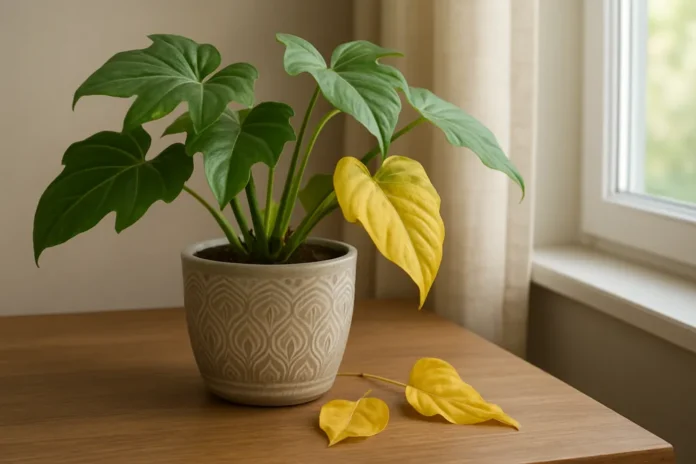
A philodendron usually loses leaves because of watering stress, low light, temperature shock, root problems, pests, or normal aging of older foliage. Sudden leaf drop often means the plant is reacting to a recent change in its environment.
A philodendron dropping leaves can look alarming fast, especially when a plant that seemed fine last week starts shedding several at once. In my experience, philodendron leaf drop is usually not random. The plant is almost always responding to stress in its roots, light, moisture, or temperature, and the way the leaves fall tells you a lot about the cause.
Some leaf loss is completely normal. Older leaves near the base eventually yellow, fade, and drop as the plant puts energy into new growth. But if your philodendron is losing multiple leaves, dropping healthy green ones, or declining after a move or watering change, it is worth taking a closer look before a small problem turns into a bigger one.
The good news is that philodendrons are forgiving houseplants. Once you match the symptom pattern with the most likely cause, they often recover well and start pushing healthy new leaves again.
When Leaf Drop Is Normal and when It Is a Warning Sign
Not every falling leaf means your plant is in trouble. Mature philodendrons regularly retire their oldest foliage, especially lower leaves that get less light. If a single bottom leaf turns yellow over time, then dries or slips off while the rest of the plant looks healthy, that is usually part of normal growth.
Leaf drop becomes more concerning when it is sudden, repeated, or affects leaves throughout the plant. A philodendron that sheds several leaves within a short period is often reacting to root stress, dry air, inconsistent watering, or an abrupt environmental change. Healthy green leaves dropping without much warning tend to point to stress rather than aging.
- Usually normal: one older lower leaf fading at a time
- More concerning: several leaves dropping in a week or two
- More concerning: green leaves falling before they yellow
- More concerning: leaf drop paired with mushy stems, limp growth, or a bad soil smell
- More concerning: leaf loss after repotting, moving, or a heating or cooling change
When I diagnose philodendron problems, I look at which leaves are falling first. Lower yellow leaves usually suggest age or watering imbalance, while leaves dropping all over the plant often mean a recent stress event like a move, cold draft, or root disturbance.
Watering Stress Is the Most Common Cause
Overwatering and Soggy Roots
Overwatering is one of the most common reasons philodendrons lose leaves. These plants like evenly moist but not constantly wet soil. If the potting mix stays soggy, roots cannot get enough oxygen and may begin to rot. Once roots are damaged, the plant struggles to support its leaves, and they may yellow, soften, and drop.
Signs of overwatering often include yellowing leaves, soft stems, a droopy plant that does not perk up after watering, fungus gnats, and a sour or swampy smell from the pot. Leaf drop from overwatering often starts after repeated watering on a fixed schedule instead of watering based on how dry the soil actually is.
Underwatering and Repeated Dry-outs
Philodendrons can also drop leaves when they get too dry too often. A plant that is repeatedly allowed to bone-dry may shed older leaves to conserve moisture. In this case, leaves may turn crisp at the edges, curl, feel thin, or drop after wilting.
Underwatering tends to be easier to correct than overwatering, but long stretches of drought can still weaken the plant. If the soil has pulled away from the sides of the pot or water runs straight through without soaking in, the root ball may have become overly dry and resistant to rewetting.
- Overwatering clues: yellow leaves, soft tissue, wet soil for days, sour smell
- Underwatering clues: curling leaves, crispy tips, dry compact soil, wilt that improves after watering
- Both problems can cause drooping and leaf loss, so soil moisture matters more than appearance alone
I do not water philodendrons by calendar. I check the potting mix with a finger or a wooden skewer and wait until the top inch or two has dried before watering thoroughly. That simple change prevents a lot of leaf drop.
Light Problems Can Trigger Leaf Loss
Philodendrons handle lower light better than many houseplants, but they do not thrive in deep shade. If your plant is sitting far from a window, it may slowly weaken and start dropping older leaves because it cannot support as much foliage. Growth may become sparse, stems may stretch, and newer leaves may come in smaller than usual.
On the other side, too much direct sun can scorch leaves and stress the plant enough to make it shed damaged foliage. Harsh afternoon sun through glass can leave pale patches, crispy brown areas, or bleached leaves. After that stress, the plant may drop some of the worst affected leaves.
What Good Light Looks Like
Most philodendrons do best in bright, indirect light. An east-facing window or a few feet back from a bright south or west window often works well. Variegated types usually need a bit more light than solid green types, while very dim spots often lead to slow decline and eventual leaf loss.
- Too little light: stretched stems, smaller leaves, slow growth, lower leaf drop
- Too much direct sun: faded patches, browning, scorch marks, stressed leaf drop
- Ideal light: bright room, filtered sun, no long hours of intense hot rays
Temperature Swings and Dry Indoor Air Can Shock Philodendrons
Philodendrons are tropical plants, so they dislike sudden cold, hot drafts, and sharp temperature changes. A plant placed near an exterior door, drafty window, air conditioner, or heating vent may start dropping leaves after being stressed by that exposure. Sometimes the timing is obvious, especially after a cold snap or a move from one room to another.
Very dry indoor air does not always cause full leaf drop by itself, but it can contribute to stress, especially in winter. Low humidity more often shows up as browning edges, unfurling issues, or crispy tips. When that dryness is combined with erratic watering or low light, the plant may begin shedding leaves more readily.
The Comfort Range Philodendrons Prefer
Most philodendrons are happiest in typical indoor temperatures between about 65 and 80 degrees Fahrenheit. They do not like temperatures dropping much below 55 degrees. Stable conditions matter as much as the actual number. A plant in a moderate spot usually performs far better than one that gets chilled at night and heated during the day.
Root Problems and Pot Issues Often Hide Behind Leaf Drop
When a philodendron loses leaves and does not improve after a basic watering adjustment, I start thinking about the roots. Root rot, severe root binding, compacted soil, or a pot without proper drainage can all interfere with the plant's ability to take up water and nutrients. Above the soil, the plant may simply look droopy, yellow, and unstable.
Root Rot
Root rot happens when wet conditions linger long enough for roots to decay. Affected roots turn brown or black, feel mushy, and stop functioning well. The plant may continue declining even if the top of the soil looks dry, because the damaged root system can no longer regulate moisture properly.
Root Bound Plants
A severely root bound philodendron can also start dropping leaves. When roots fill the pot completely, water may rush through too quickly or the plant may dry out unusually fast. You may notice roots circling the bottom, pushing from drainage holes, or lifting the plant slightly above the soil line.
Old, Dense Potting Mix
Philodendrons prefer a chunky, airy potting mix that drains well while still holding some moisture. Old soil eventually breaks down and compacts. When that happens, it can stay too wet in some spots and too dry in others, creating inconsistent moisture around the root zone and setting the stage for leaf drop.
If a philodendron keeps dropping leaves even though you think your watering is reasonable, I would not assume the schedule is the problem. I would suspect the root environment instead. Poor drainage and broken-down soil can make careful watering behave like overwatering.
Pests and Disease Can Make Leaves Fall
Houseplant pests do not always show up dramatically at first. Spider mites, thrips, mealybugs, and scale can all stress philodendrons enough to cause yellowing and leaf drop over time. The plant may lose vigor before you notice the insects themselves, so it helps to inspect stems, leaf undersides, and new growth closely.
Spider mites often leave fine webbing and a speckled, dull look on leaves. Thrips can scar leaves and distort new growth. Mealybugs show up as white cottony clusters, while scale looks like small bumps attached to stems or foliage. Any of these pests can weaken the plant enough to trigger leaf loss if the infestation grows.
Disease is less common indoors than cultural stress, but bacterial or fungal issues can play a role when plants stay too wet or have poor air circulation. If leaves develop dark mushy spots, stems soften, or the plant smells off, disease may be part of the problem.
- Inspect leaf undersides and stem joints with good light
- Look for stippling, sticky residue, cottony clusters, or tiny moving insects
- Isolate the plant if you suspect pests to protect nearby houseplants
- Avoid soaking foliage late in the day if disease is a concern
Recent Changes Can Cause Temporary Leaf Drop
Philodendrons often react to change even when the change seems minor to us. Moving the plant to a new room, bringing it home from a store, repotting it, rotating it into stronger light, or shifting from summer to winter conditions can all trigger a short period of leaf drop. This is often a stress response rather than a sign of permanent decline.
Repotting is a common example. Even when done correctly, repotting disturbs the roots. A philodendron may droop or drop a leaf or two while it adjusts. The same can happen after relocation from a greenhouse to a much dimmer home environment, where the plant sheds some foliage it can no longer support.
The key is whether the plant stabilizes. A short adjustment period followed by normal new growth is very different from ongoing leaf loss paired with worsening color, mushy stems, or bare vines.
How to Figure Out the Real Cause
Because several issues can cause philodendron leaf drop, it helps to read the whole pattern instead of chasing one symptom. Start by noticing whether the fallen leaves were old or new, green or yellow, crisp or soft. Then connect that pattern to any recent changes in watering, light, temperature, or potting conditions.
- Check the soil moisture several inches down, not just on the surface.
- Lift the pot and note whether it feels unusually heavy or very light.
- Look at the oldest leaves first, then inspect new growth for damage or distortion.
- Examine the pot for drainage holes, compacted soil, and roots circling the container.
- Think back over the past two to four weeks for moves, repotting, drafts, or schedule changes.
- Inspect for pests with bright light, especially under leaves and at stem joints.
Most of the time, the cause becomes clearer once you stop asking only, "Why are leaves falling?" and start asking, "What changed?" Sudden leaf drop often follows a recent shift, while slow ongoing loss usually points to a care condition that has been off for a while.
How to Stop a Philodendron From Losing More Leaves
The best fix depends on the cause, but the general goal is the same: reduce stress and create stable growing conditions. Philodendrons recover better from calm, consistent care than from a series of major changes made all at once.
Adjust Watering First
If the soil is staying wet too long, let the top layer dry before watering again and make sure excess water drains freely. If the plant has been going too dry, water thoroughly until moisture runs from the drainage holes, then let the top inch or two dry before the next watering. Avoid tiny sips that only wet the surface.
Improve Light Without Shocking the Plant
Move the plant into brighter indirect light if it has been in a dim corner, but do it gradually if the new spot is much brighter. Avoid placing it immediately into intense direct sun, which can create a second problem.
Check Roots if Decline Continues
If leaf drop continues despite better watering, slide the plant out of the pot and inspect the roots. Trim off mushy rotten roots with clean scissors, then repot in a fresh, airy mix if needed. If the plant is severely root bound, move it up just one pot size rather than a dramatically larger container.
Stabilize the Environment
Keep the plant away from cold windows, heater blasts, and AC vents. Aim for a steady location with moderate warmth and decent humidity. If your home is very dry in winter, grouping plants or using a humidifier can help reduce stress.
Treat Pests Promptly
If you find pests, isolate the philodendron and treat it consistently. Wiping leaves, rinsing the plant, and using insecticidal soap or another houseplant-safe treatment can help, but repeated follow-up matters more than one dramatic application.
When a stressed philodendron is dropping leaves, change one main variable at a time unless roots are clearly rotting. That makes it much easier to tell what is helping, and it prevents piling new stress on top of old stress.
What Recovery Looks Like
A recovering philodendron does not usually look perfect overnight. The damaged leaves already on the plant may not improve, and some may still fall. What you want to watch for is the end of active decline and the start of healthy new growth.
- Leaf drop slows or stops
- New leaves emerge with normal size and color
- Stems firm up instead of staying limp
- The soil dries at a more predictable rate
- No new yellowing appears on multiple leaves at once
Be patient with bare sections of vine. If the plant is otherwise healthy, you can prune leggy growth later to encourage fuller branching. For now, focus on keeping conditions steady long enough for the root system and new foliage to catch up.
FAQ
Should I Remove Yellow Leaves From My Philodendron?
Yes, once a leaf is mostly yellow or clearly dying, you can remove it with clean scissors or pinch it off gently. Leaving a severely damaged leaf on the plant will not usually help it recover.
Can a Philodendron Recover After Dropping a Lot of Leaves?
Often yes, as long as the stems and roots are still healthy. Philodendrons can bounce back well once the main stress is corrected and the plant is given stable conditions.
Why Is My Philodendron Dropping Green Leaves?
Green leaves dropping usually suggest sudden stress rather than normal aging. Common causes include overwatering, cold exposure, shock after moving, or root disturbance after repotting.
Do Philodendrons Lose Leaves in Winter?
They can lose more leaves in winter if light levels drop, indoor air gets drier, or watering habits stay too heavy for slower growth. Seasonal change itself is not always the problem, but winter conditions often expose weak care routines.
How Often Should I Water a Philodendron to Prevent Leaf Drop?
There is no single schedule that works in every home. Water when the top inch or two of the mix feels dry, then water thoroughly and let extra moisture drain away.
Can Low Humidity Alone Make a Philodendron Lose Leaves?
Usually low humidity causes browning edges and crispy tips before it causes major leaf drop. But when very dry air is combined with underwatering, heating vents, or other stress, leaf loss becomes more likely.
Is Repotting a Philodendron After Leaf Drop Always a Good Idea?
Not always. Repot only when the current pot or root system is part of the problem, such as root rot, severe root binding, or old compacted soil. Unnecessary repotting can add more stress.
Want to save a struggling houseplant faster? Read our guide to the best indoor plant soils, moisture meters, and pest treatments so you can choose the right fix with confidence.
