

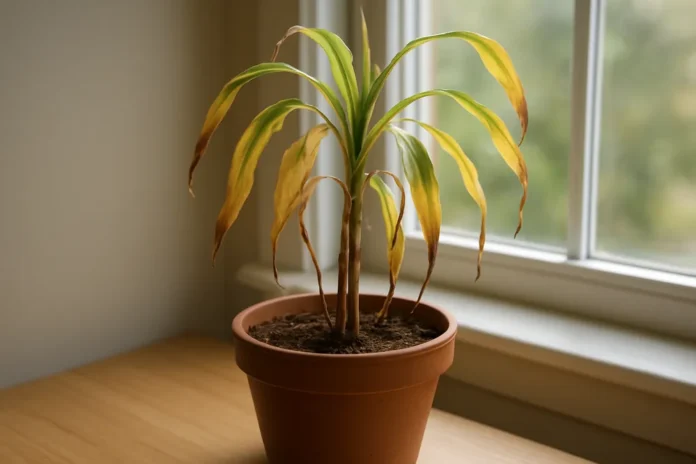
A dracaena usually declines because of overwatering, poor drainage, root rot, low light, salt or fluoride buildup, pests, or temperature stress. Brown tips and yellowing can also come from dry indoor air and inconsistent watering.
When a dracaena starts looking rough, the plant is usually reacting to watering stress before anything else. These plants are tougher than they look, but they do not like soggy soil, poor drainage, or a long stretch of neglect followed by a heavy soaking.
I have found that dracaena decline often shows up slowly at first. A few brown tips turn into yellow leaves, the cane feels softer than it should, or the plant stops putting out healthy new growth. The good news is that many dracaenas can recover if you catch the pattern early and correct the real cause instead of treating every symptom the same way.
The key is to look at the whole plant, not just one damaged leaf. Soil moisture, light levels, root health, tap water quality, room temperature, and pest pressure can all push a dracaena downhill, and the visible symptoms often overlap.
What Usually Causes a Dracaena to Decline
Most dying dracaenas are not suffering from old age. They are reacting to conditions that stay wrong for too long. The most common issue is overwatering, especially when the plant sits in dense soil or a pot without fast drainage. Once roots stay wet, they cannot pull in oxygen well, and root rot can follow.
Underwatering can also cause serious stress, but it usually works more slowly. Dry soil, crispy leaf edges, drooping, and leaf drop are common signs. If the plant swings back and forth between bone dry and soaking wet, you can end up with both root stress and leaf damage at the same time.
- Overwatering and poor drainage
- Root rot from constantly wet soil
- Underwatering or inconsistent watering
- Low light that slows growth and water use
- Fluoride or salt buildup from tap water or fertilizer
- Cold drafts, heat vents, or sudden temperature changes
- Spider mites, mealybugs, or scale insects
- A pot that is badly rootbound or packed with old soil
When I inspect a struggling dracaena, I look at the oldest leaves and the newest leaves separately. If old leaves are yellowing from the bottom while the center cane stays firm, I usually suspect watering or light issues first. If new growth is weak, twisted, or speckled, pests or root damage move higher on my list.
Symptoms That Help You Narrow Down the Problem
Yellow Leaves and Leaf Drop
A few lower leaves aging and dropping is normal, especially as a dracaena grows taller. Trouble starts when several leaves yellow at once, the soil stays damp for days, or the plant looks stalled. That pattern often points to overwatering, weak roots, or not enough light.
Brown Tips and Brown Edges
Brown tips are extremely common on dracaena and do not always mean the plant is dying. They often come from dry indoor air, mineral salts, fluoride in tap water, or a missed watering. If the brown areas stay mostly at the tips while the rest of the leaf remains green, think water quality and consistency before you assume disease.
Soft Cane or Mushy Stem
A soft, wrinkled, or mushy cane is more serious. This usually means the stem or roots have started rotting from excess moisture. A healthy dracaena cane should feel firm. If it compresses easily or smells sour near the soil line, act quickly.
Drooping Leaves
Drooping can happen from both dry soil and wet soil, so you need context. If the pot feels very light and the soil has pulled from the sides, the plant is likely thirsty. If the pot is heavy and the soil feels swampy, the roots may be suffocating.
Pale, Weak, or Stretched Growth
Dracaenas tolerate lower light than many houseplants, but they do not thrive in deep shade. If the plant is leaning, growing slowly, or making long bare stretches between leaves, low light may be a major part of the problem. In dim rooms, the soil also dries more slowly, which increases the risk of overwatering.
How Watering Mistakes Affect Dracaena Health
Watering is where most dracaena problems begin. These plants like the soil to dry partway between waterings. They do best when you water thoroughly, let excess moisture drain away, and then wait until the top portion of the potting mix dries before watering again.
If you water on a rigid schedule without checking the soil, trouble follows quickly. A dracaena in winter, low light, or a large pot may need much less water than the same plant in summer or bright indirect light. One reason dracaenas get labeled fussy is that their water use changes more than many people expect.
- Signs of overwatering include yellow leaves, soft stems, a heavy pot, fungus gnats, and soil that stays wet for too long.
- Signs of underwatering include dry compacted soil, crispy tips, drooping that improves after watering, and a very light pot.
- Inconsistent watering often causes a mix of brown tips, yellowing, and uneven leaf drop.
I do not water dracaenas by the calendar. I push a finger into the soil, lift the pot, and compare it to how it feels right after watering. That quick weight check catches more problems than moisture meters do in old, compacted potting mix.
Root Rot and Poor Drainage Are Common Hidden Problems
A dracaena can look thirsty and still be suffering from root rot. Damaged roots stop absorbing water properly, so leaves wilt even though the soil is wet. This is why repeated watering often makes a declining plant worse instead of better.
Take the plant out of its pot if you suspect root trouble. Healthy roots are usually pale and firm. Rotten roots are brown, mushy, slimy, or hollow. The potting mix may smell stale or sour, and the base of the cane may look darkened.
- Slide the dracaena out of the pot and inspect the roots.
- Trim away clearly rotten roots with clean scissors.
- Cut off any soft or collapsing stem tissue back to firm tissue if needed.
- Repot into fresh, airy potting mix in a container with drainage holes.
- Wait until the mix is only lightly moist before watering again.
If the cane itself has rotted far up the stem, full recovery may not be realistic. In that case, your best option may be taking healthy top cuttings from firm growth and rooting them as new plants.
Light, Temperature, and Placement Issues That Weaken Dracaena
Dracaenas prefer bright, indirect light, though many varieties tolerate moderate indoor light. What they dislike is a dark corner where growth nearly stops, or harsh direct sun that scorches leaves. If the plant receives too little light, it uses water more slowly and becomes easier to overwater.
Placement also matters because dracaenas react badly to temperature swings. Cold windows in winter, blasting heat vents, and air conditioner drafts can all trigger leaf drop, browning, or general decline. Damage often shows after a sudden change, such as moving the plant outdoors or placing it too close to a bright west-facing window.
- Best light is bright filtered light or a spot near an east or north window.
- Too much direct afternoon sun can bleach or scorch leaves.
- Temperatures below about 60 degrees Fahrenheit can stress many dracaenas.
- Drafts and heating vents dry leaves and make brown tips worse.
Water Quality and Fertilizer Can Damage Leaf Tips
Dracaenas are more sensitive to fluoride and salt buildup than many common houseplants. If your plant has persistent brown tips despite otherwise decent care, the water itself may be contributing. Fertilizer salts can cause the same issue, especially when plants are fed too often or the soil is never flushed.
This problem is especially likely if the tips brown first while the center of the leaves stays green and the roots seem healthy. Distilled water, rainwater, or filtered water often reduces new tip damage over time, though already brown tissue will not turn green again.
- Use low-mineral water if your tap water is heavily treated or very hard.
- Fertilize lightly during active growth, not every time you water.
- Flush the potting mix occasionally so salts do not build up around the roots.
- Avoid piling on fertilizer when a stressed plant is already declining.
I have seen many dracaenas blamed on humidity when the real issue was salt buildup in old soil. If tip burn keeps returning in the same pattern after every feeding cycle, I think about the potting mix chemistry before I buy a humidifier.
Pests and Disease That Can Make a Dracaena Look Like It Is Dying
Spider mites, mealybugs, and scale are the most common pests on indoor dracaena. Spider mites are especially sneaky because the first signs can look like general decline. Leaves may appear dull, speckled, or dusty before you notice any webbing.
Mealybugs look like tiny white cottony masses, often tucked where leaves meet stems. Scale appears as small brown or tan bumps attached to stems or leaves. Heavy infestations weaken the plant, slow growth, and cause yellowing or leaf drop.
- Isolate the plant from your other houseplants.
- Wipe leaves and stems thoroughly to remove visible pests.
- Treat with insecticidal soap or horticultural oil according to the label.
- Repeat treatments because eggs and hidden insects often survive the first round.
- Keep monitoring new growth for several weeks.
True disease is less common indoors than simple root or watering stress, but fungal issues can develop in overly wet conditions. Good airflow, clean pots, and fast drainage go a long way toward prevention.
How to Save a Dying Dracaena
If your dracaena still has firm cane tissue and at least some healthy roots or green growth, recovery is possible. Focus on stabilizing the environment instead of throwing five fixes at the plant at once. Dracaenas respond best when the root zone gets corrected and the plant has time to produce healthy new leaves.
- Remove dead leaves and obviously damaged tissue so you can track fresh symptoms clearly.
- Check the soil and roots to decide whether the plant is too wet, too dry, or rotting.
- Repot if the mix is sour, dense, waterlogged, or packed with dead roots.
- Move the plant into bright indirect light if it has been sitting in a dim corner.
- Water deeply only when the upper portion of the mix has dried.
- Switch to filtered, rain, or distilled water if tip burn has been persistent.
- Inspect for pests on the undersides of leaves and along the stems.
- Hold fertilizer until you see steady new growth again.
Do not judge progress by old damaged leaves. Those leaves usually stay marked. What matters is whether the plant starts producing cleaner, firmer new growth and whether the cane remains solid over the next few weeks.
When the Plant May Not Recover
Some dracaenas are too far gone to save as whole plants. If the cane is mushy from the base upward, the roots are mostly gone, or the crown has collapsed, recovery odds drop sharply. That does not always mean the entire plant is lost, though.
If the upper cane is still firm and green, you may be able to cut above the damaged area and root the healthy top. Many dracaena varieties root well from cane sections or tip cuttings in moist potting mix or water, as long as the cutting itself is not infected or rotting.
- A firm upper stem is a good sign even if lower roots failed.
- A foul smell and black, collapsing tissue usually mean severe rot.
- No new growth is not fatal by itself, but it matters when paired with soft stem tissue.
- Take cuttings sooner rather than later if rot is moving upward.
How to Keep the Problem From Happening Again
Once your dracaena recovers, prevention is mostly about steadier care. Use a pot with drainage, choose a loose indoor potting mix, and place the plant where it gets bright indirect light. Let the soil dry partway before watering again, and adjust the schedule as seasons change.
I also recommend rotating the plant occasionally for even growth and wiping the leaves so you notice pests early. A quick check each time you water is often enough to catch yellowing, soft stems, or unusual spotting before the plant slips into serious decline.
- Water based on soil dryness, not the calendar.
- Empty saucers so roots do not sit in runoff.
- Use gentle light rather than deep shade or harsh direct sun.
- Feed lightly during active growth only.
- Use better-quality water if brown tips are a recurring issue.
- Inspect stems and leaf undersides often for pests.
FAQ
Can a Dracaena Come Back After All the Leaves Fall Off?
Sometimes, yes. If the cane is still firm and the roots are alive, a dracaena can push new growth even after heavy leaf loss. If the stem is soft or blackened, recovery is much less likely.
Should I Cut the Brown Tips Off My Dracaena?
You can trim brown tips for appearance, but only remove the dead brown tissue and follow the natural leaf shape. Trimming does not fix the cause, so the main issue still needs attention.
How Often Should I Water a Dracaena Indoors?
There is no perfect schedule because light, temperature, pot size, and season all affect drying time. Most indoor dracaenas do best when watered after the top part of the soil has dried rather than on a fixed weekly routine.
Why Is My Dracaena Dying After Repotting?
Repot shock usually comes from root disturbance, a pot that is too large, or a mix that stays too wet. If the plant was repotted into dense soil or watered too often afterward, root stress can show up quickly.
Is Yellowing on the Bottom of a Dracaena Always Bad?
Not always. Older lower leaves naturally age and drop over time. It becomes a concern when many leaves yellow at once, the soil stays wet, or the plant stops growing.
Does Tap Water Hurt Dracaena Plants?
It can. Dracaenas are sensitive to fluoride and mineral salts, which often show up as brown tips and edges. If your tap water is hard or heavily treated, filtered, distilled, or rainwater is usually better.
What Pests Are Most Common on Dracaena?
Spider mites, mealybugs, and scale are the usual culprits. Spider mites often cause pale speckling and a tired-looking plant, while mealybugs and scale are easier to spot on stems and leaf joints.
Need the right fix fast? Explore our dracaena care guides and product picks for potting mixes, watering tools, and pest treatments that actually help stressed houseplants recover.
