

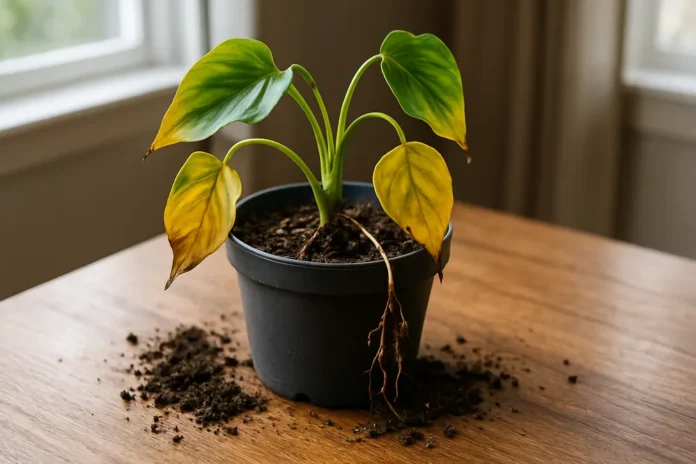
A philodendron usually starts dying because its roots are stressed by too much water, too little water, poor drainage, weak light, or temperature shock. Pests and rot can also cause rapid decline, especially when the plant is already stressed.
When a philodendron starts looking tired, limp, yellow, or bare, it can feel like the whole plant is slipping away fast. The good news is that a philodendron rarely declines for no reason. In most cases, the problem traces back to root stress, watering habits, light levels, or a pest issue that has been quietly building for a while.
I have found that a so-called dying philodendron is often not actually beyond saving. These plants give clues if you know where to look: yellowing lower leaves, mushy stems, crispy edges, a sour-smelling pot, stalled growth, or leaves dropping one by one. If you match the symptom pattern instead of guessing, you can usually stop the decline and help the plant put out healthy new growth again.
Below are the most common reasons a dying philodendron starts failing, how to tell them apart, and what each symptom usually means in a real home setting.
What a Dying Philodendron Usually Looks Like
Philodendrons do not all die the same way. Some collapse from root rot and look soft and yellow. Others slowly fade from low light or chronic underwatering and look thin, dry, and weak. The first step is noticing whether the decline looks sudden or gradual.
- Leaves turning yellow across much of the plant
- Brown, crispy tips or edges
- Drooping that does not improve after watering
- Soft stems or blackened leaf bases
- Leaves falling faster than new ones appear
- Small new leaves or no new growth at all
- A potting mix that stays wet for many days
- Roots that smell sour, look brown, or feel mushy
One or two old leaves aging out is normal. A philodendron in trouble shows a broader pattern. If several leaves are changing color at once, stems are softening, or the plant has stopped growing during active season, there is almost always an environmental or root-level issue behind it.
When I diagnose philodendrons, I pay more attention to the newest growth and stem firmness than to one ugly old leaf. If new leaves are smaller, distorted, or failing to unfurl, the plant is usually under active stress right now, not just cleaning up older foliage.
Overwatering and Root Rot Are the Most Common Causes
If I had to pick the single most common reason a philodendron declines indoors, it would be overwatering or a potting mix that stays wet too long. Philodendrons like moisture, but they do not want soggy roots. When air is squeezed out of the root zone, roots begin to suffocate and rot. Once the roots are damaged, the leaves may droop even though the soil is still wet.
Signs the Roots Are Staying Too Wet
- Yellowing leaves, especially several at the same time
- Drooping with damp soil
- Soft or mushy stems near the soil line
- Brown or black patches spreading from leaf bases
- A musty or sour smell from the pot
- Soil that is still wet a week or more after watering
Overwatering does not always mean watering too often on the calendar. It can also mean the plant is in a pot that is too large, a decorative container with poor drainage, dense soil that holds too much water, or a dim room where the mix dries slowly. In other words, the roots may be wet for too long even if you water only occasionally.
How This Problem Starts
Root rot usually begins quietly. The plant may look only a little off at first, with a yellow leaf here and there. Then growth stalls, leaves soften, and the entire vine or stem starts looking tired. By the time a philodendron looks like it is dying, the roots may already be partly gone.
If a philodendron is drooping in wet soil, I do not water again just because it looks thirsty. Drooping from rot and drooping from dryness can look similar above the soil, but adding more water to rotten roots makes the problem move faster.
Underwatering Can Make a Philodendron Look Weak and Lifeless
Although overwatering is more common, underwatering also causes philodendrons to decline. A dry plant often looks thinner and more brittle than a rotting one. Leaves may curl inward, develop crispy brown edges, or droop with a lighter, papery feel instead of a soft, mushy one.
Symptoms of a Too-dry Philodendron
- Dry, curled, or crispy leaves
- Brown edges and tips
- Wilted stems that feel limp but not mushy
- Soil pulling away from the inside of the pot
- A pot that feels unusually light
- Slow growth and smaller leaves over time
Chronic underwatering does not always mean you forgot the plant for weeks. It can happen if the root ball has become so dry that water runs down the sides and never fully soaks in. It can also happen when a very rootbound philodendron uses water faster than you expect, especially in summer.
Repeated cycles of severe drying weaken the roots and make the plant more vulnerable to pests, transplant shock, and leaf drop. That is why a plant that has been neglected for a while can seem to keep declining even after you finally water it.
Poor Light Slowly Starves the Plant
Philodendrons are often sold as low-light houseplants, but that label can be misleading. They tolerate lower light better than some tropicals, but they do not thrive in a dark corner forever. If your philodendron is getting weaker month after month, poor light may be part of the reason.
What Low Light Decline Looks Like
- Long, stretched stems with wide spacing between leaves
- Smaller new leaves
- Slow or stopped growth
- Loss of lower leaves over time
- Soil drying very slowly because the plant is using less water
A philodendron kept in dim light cannot process water efficiently or produce enough energy to support dense, healthy foliage. That often leads gardeners to water on the same schedule as before, which then creates root problems on top of the light problem.
Bright, indirect light is the sweet spot for most common philodendrons. Gentle morning sun can work well for many varieties, but harsh afternoon sun can scorch leaves, especially if the plant was grown in lower light.
Temperature Swings and Dry Indoor Air Add Stress Fast
Philodendrons are tropical plants, so they react badly to cold drafts, sudden temperature drops, heater blasts, and very dry air. A plant near an exterior door, drafty window, or HVAC vent may start declining even if watering seems about right.
- Leaf yellowing or browning after a cold snap
- Blackened or water-soaked patches after chilling injury
- Crispy edges from hot, dry air
- Leaves failing to unfurl cleanly in very dry rooms
- Sudden leaf drop after moving the plant
Most philodendrons are happiest in typical indoor temperatures around 65 to 80 degrees Fahrenheit. Once temperatures dip much below that, growth slows and stress compounds. If the plant is already struggling from moisture issues, temperature stress can make it look like it is dying almost overnight.
I see a lot of winter philodendron problems that are really placement problems, not watering problems. A plant can be perfectly healthy in October, then start yellowing in January simply because the same windowsill is now colder at night and much darker during the day.
Pests Can Weaken a Philodendron Until It Crashes
Spider mites, mealybugs, scale, and thrips can all make a philodendron look dull, yellow, or deflated. Pests feed on plant tissue and sap, which drains energy from the plant and distorts new growth. Light infestations are easy to miss, especially on the undersides of leaves and around leaf joints.
Common Pest Clues
- Tiny pale speckles or stippling on leaves
- Sticky residue on foliage or nearby surfaces
- Fine webbing, especially from spider mites
- Cottony white clusters from mealybugs
- Brown bumps on stems or leaf undersides from scale
- Misshapen new leaves and scarred surfaces from thrips
A heavy infestation can absolutely make a philodendron look like it is dying, but pests are often part of a bigger picture. Weak light, dry air, drought stress, and a crowded plant shelf all make infestations more likely and harder to control.
If leaves are yellowing with no obvious watering explanation, always inspect both sides of the leaves, the stems, and the base of the plant. A quick glance from above is often not enough.
Diseases and Stem Rot Cause Rapid Decline
If your philodendron seems to be collapsing quickly, disease may be involved. Bacterial and fungal issues often take hold when the plant is stressed and conditions stay damp. Stem rot, crown rot, and leaf spot can move faster than many gardeners expect.
Symptoms That Suggest Disease Rather than Simple Dryness
- Black, wet-looking lesions on stems or leaves
- Mushy tissue that spreads over a few days
- Foul odor from the pot or stem base
- Dark spots with yellow halos on leaves
- Whole stems collapsing even though the soil is not dry
Disease is more likely when water sits on leaves for long periods, airflow is poor, tools are dirty, or the potting mix remains saturated. Once the crown or lower stem starts rotting, the top growth may fail quickly because the plant can no longer move water and nutrients normally.
Rootbound Plants, Bad Soil, and Repotting Mistakes Matter Too
Not every dying philodendron is overwatered or pest-ridden. Sometimes the plant has simply outgrown the pot, or the soil has broken down into a dense, compact mass that no longer drains or aerates well. Old potting mix can behave very differently from fresh mix even if you have not changed your watering habits.
- Roots circling tightly around the pot
- Water running straight through without soaking in
- Soil that has shrunk, compacted, or turned heavy
- A plant that dries out far too quickly because there is little soil left
- Sudden decline after repotting into a much larger pot
Repotting stress can also look dramatic. If too many roots were damaged, the plant was repotted into overly wet dense soil, or the new container is much too large, a philodendron can droop and shed leaves while it struggles to reestablish. The key is not just repotting, but repotting into an airy mix and an appropriate pot size.
How to Tell Which Problem You Actually Have
Because the symptoms overlap, the best diagnosis comes from putting a few clues together instead of relying on one leaf color. Look at the soil moisture, root condition, light level, stem texture, and where the damage appears first.
Patterns That Point Toward Each Cause
- Yellow leaves plus wet soil plus mushy roots usually point to overwatering or rot.
- Crispy edges plus bone-dry soil plus a lightweight pot usually point to underwatering.
- Small new leaves plus stretched vines plus slow drying soil often point to insufficient light.
- Sticky residue, speckling, or webbing points to pests.
- Black mushy stems or spreading wet lesions suggest disease or advanced rot.
- Sudden stress after moving, repotting, or a cold event suggests environmental shock.
If you are unsure, start with the roots and the potting mix. Roots tell the truth faster than leaves do. Healthy philodendron roots are usually pale, firm, and fresh-smelling. Rotten roots are brown, soft, and may slide apart when touched.
How to Help a Struggling Philodendron Recover
Recovery depends on fixing the actual cause, not doing everything at once. Philodendrons can bounce back surprisingly well if enough healthy stem and root tissue remains, but they need stable conditions while they recover.
If the Problem Is Overwatering or Rot
- Take the plant out of the pot and inspect the roots.
- Trim away mushy, black, or foul-smelling roots with clean scissors.
- Repot into a container with drainage using a loose, airy mix.
- Do not water again until the top portion of the mix begins to dry.
If the Problem Is Underwatering
- Rehydrate the root ball thoroughly so dry pockets are fully moistened.
- Let excess water drain completely.
- Adjust your routine so the plant is watered before it becomes extremely dry again.
If the Problem Is Low Light
- Move the plant to brighter indirect light.
- Expect old damaged leaves to stay damaged.
- Judge progress by healthier new growth over the next several weeks.
If the Problem Is Pests
- Isolate the plant from others.
- Wash the foliage and inspect hidden areas carefully.
- Treat consistently with the pest control method you choose until new damage stops.
Avoid fertilizing a badly stressed plant right away. Fertilizer does not revive damaged roots and can make a struggling plant work harder. Once you see steady new growth, then normal feeding can resume during the growing season.
When the Plant Is Too Far Gone and Propagation Is the Better Rescue
Sometimes the root system is mostly lost, the crown is rotting, or only a few healthy stem sections remain. In that case, propagation is often the best way to save the plant. Many philodendrons root well from stem cuttings with at least one node, as long as the remaining tissue is healthy and not mushy.
If the base is failing but the upper vine is still green and firm, cutting and rerooting healthy sections can preserve the plant faster than trying to nurse a rotten root ball along. It is not giving up. It is often the most practical rescue move.
How to Prevent the Same Problem From Happening Again
Once a philodendron recovers, prevention is mostly about consistency. These plants are forgiving when their environment is stable, but repeated extremes wear them down.
- Use a pot with drainage every time.
- Grow philodendrons in an airy indoor mix rather than dense garden soil.
- Water based on soil dryness and plant use, not a rigid weekly schedule.
- Give bright, indirect light whenever possible.
- Keep the plant away from cold drafts and heating vents.
- Inspect leaves regularly for early pest signs.
- Repot before the mix becomes compacted or the plant becomes severely rootbound.
The biggest habit shift for most indoor gardeners is learning to read the root zone, not just the top leaf. A philodendron that gets the right light and a well-drained potting mix becomes much easier to water correctly.
FAQ
Can a Philodendron Come Back After Losing Most of Its Leaves?
Yes, if the stem and roots are still healthy enough to support new growth. A bare vine or stem can recover, but mushy stems and rotten roots are a much worse sign.
Should I Cut Off Yellow Leaves From a Dying Philodendron?
Yes, if the leaves are fully yellow or badly damaged. Removing them tidies the plant and helps you monitor whether new leaves are continuing to yellow.
Why Is My Philodendron Drooping Even Though the Soil Is Wet?
That usually points to root stress rather than thirst. Overwatered or rotting roots cannot take up water properly, so the plant wilts even while sitting in damp mix.
How Often Should I Water a Philodendron?
There is no perfect schedule because watering depends on light, temperature, pot size, and soil mix. Most philodendrons do best when watered after the upper portion of the potting mix has dried.
Do Philodendrons Need Direct Sun to Recover?
No. Most recover best in bright, indirect light. Strong direct afternoon sun can add stress and scorch leaves, especially on weakened plants.
What Do Healthy Philodendron Roots Look Like?
Healthy roots are generally light-colored, firm, and fresh-smelling. Rotten roots are brown or black, soft, and may feel slimy or break apart easily.
Is Misting Enough to Help a Stressed Philodendron?
Usually not. Misting is not a fix for root problems, poor light, or pests, and the effect is very temporary. Stable watering and placement matter much more.
When Should I Give Up and Propagate Instead?
If the crown is rotting, roots are mostly gone, or only a few healthy stem sections remain, propagation is often the best rescue plan. Save firm green nodes before rot spreads further.
Want to save your plant faster? Read our philodendron care and repotting guides to choose the right soil mix, pot, and recovery steps before the damage spreads.
