

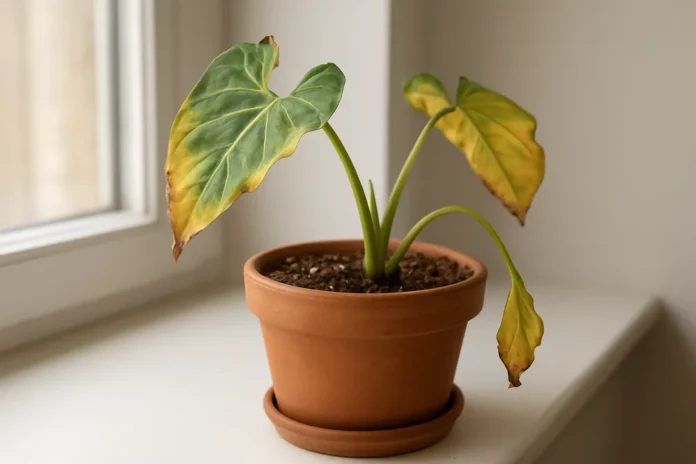
An alocasia usually declines because of watering stress, root rot, low humidity, cold temperatures, poor light, or pests. In some cases, it is not dying at all and is simply entering dormancy.
When an alocasia starts dropping leaves, yellowing, or collapsing fast, it can feel like the plant is dying overnight. In my experience, these plants are dramatic responders. They often show stress earlier and more intensely than tougher houseplants, which is why small care problems can suddenly look severe.
The good news is that a struggling alocasia dying back above the soil does not always mean the whole plant is lost. Many problems trace back to roots, moisture, temperature, or seasonal slowdowns, and the corm can still recover if you catch the cause early enough.
The key is to read the pattern of symptoms instead of reacting to one damaged leaf. Yellow leaves, brown edges, mushy stems, drooping, and leaf drop each point toward different issues, and the right fix depends on which pattern your plant is showing.
The Most Common Reasons an Alocasia Declines
Most alocasia problems come down to a handful of causes. These plants want consistent moisture, warmth, bright indirect light, and enough humidity to support their large leaves. When one of those pieces is off, the plant can decline quickly.
- Overwatering that leads to root rot and mushy stems
- Underwatering that causes drooping, crisping, and dry soil pull-away
- Cold drafts or cool room temperatures that shock the plant
- Low humidity that leads to browning edges and stalled growth
- Too little light, which weakens the plant and slows water use
- Too much direct sun, which can scorch leaves
- Spider mites, thrips, or other sap-sucking pests
- Natural dormancy, especially in fall and winter
If your alocasia is losing older leaves one at a time while producing healthy new growth, that can be normal. If several leaves yellow together, stems go soft, or the plant suddenly collapses, that usually points to a cultural or root problem.
When I diagnose alocasia trouble, I look at the petioles and the soil before I look at the leaves. Damaged leaves tell you that stress happened, but soft lower stems and wet, stale soil usually tell you why it happened.
How to Tell if Overwatering Is the Main Problem
Overwatering is the most common reason an alocasia appears to be dying. That does not always mean you are watering too often by the calendar. It can also mean the potting mix stays wet too long, the pot is too large, drainage is poor, or the plant is sitting in low light and not using water fast enough.
Signs of Overwatering and Root Rot
- Leaves turn yellow quickly, often starting with lower or older leaves
- Stems or petioles feel soft, limp, or mushy near the base
- The soil smells sour or stays wet for many days
- New growth is weak, distorted, or fails to unfurl
- Roots look brown, black, or slimy instead of firm and pale
Root rot develops when roots sit in oxygen-poor conditions for too long. Once roots are damaged, the plant cannot take up water properly, so it may droop even while the soil is wet. That combination confuses a lot of growers and often leads to even more watering.
What to Do
Take the plant out of its pot and inspect the roots. Trim away soft, rotten roots with clean scissors. Repot into a chunky, fast-draining mix with ingredients like potting soil, bark, perlite, and a little coco coir or peat for moisture balance. Use a pot with drainage holes, and do not size up more than about an inch or two beyond the root ball.
After a rot cleanup, I do not rush to water on a fixed schedule. I water thoroughly once, then wait until the top inch or two dries and the pot feels noticeably lighter before watering again.
How Underwatering Looks Different
Underwatering can also make an alocasia look like it is dying, but the symptoms usually feel drier and crispier than rot symptoms. Alocasias do not like to bone-dry between waterings, especially during active growth.
- Leaves droop but stems are not mushy
- Leaf edges and tips turn brown and crisp
- The potting mix shrinks away from the sides of the pot
- The plant perks up temporarily after watering
- Roots may look dry and brittle rather than dark and slimy
A very dry root ball can become hydrophobic, which means water runs down the sides instead of soaking in. If that has happened, a quick top watering may not actually rehydrate the roots.
To fix underwatering, water slowly and thoroughly until the root ball is evenly moist and excess drains out. If the mix has become badly compacted or water-repellent, repotting into fresh soil is often the better long-term fix.
Low Humidity and Dry Indoor Air
Alocasias come from humid environments, so dry indoor air often shows up as browning edges, crispy tips, curling, and stalled leaf development. This is especially common in winter when heating systems dry the air.
Low humidity usually does not kill a healthy alocasia overnight, but it weakens the plant and makes it more vulnerable to spider mites, transplant stress, and poor leaf expansion. If your plant keeps trying to grow but each new leaf emerges smaller or damaged, humidity may be part of the problem.
- Aim for moderate to high humidity, ideally around 50 percent or higher
- Keep the plant away from heating vents and forced-air blasts
- Group plants together to create a slightly more humid microclimate
- Use a humidifier if your home is consistently dry
- Do not rely on occasional misting as the main solution
Misting is often overrated for alocasias. It raises humidity only briefly and can leave foliage wet without meaningfully changing the room environment. A humidifier does far more than a spray bottle.
Light Problems That Weaken the Plant
Alocasias need bright light to grow well, but they do best when that light is indirect or gently filtered. In a room that is too dim, the plant uses water more slowly, growth stalls, leaves yellow more easily, and the root zone stays wet longer. In harsh direct sun, leaves can scorch, bleach, or develop dry patches.
Signs of Too Little Light
- Slow or no new growth during the growing season
- Long gaps between leaves
- Smaller new leaves
- Persistent damp soil after watering
- Gradual yellowing without crisp sunburn patches
Signs of Too Much Direct Sun
- Bleached or faded areas on leaves
- Brown, dry scorch marks
- Curling after strong afternoon exposure
- Rapid stress after moving to a brighter window
A bright east window often works well. South or west windows can also work if the light is filtered by a sheer curtain or if the plant is set back from the glass. The goal is bright, steady light without intense midday burn.
Temperature Stress and Shock After Environmental Changes
Alocasias dislike sudden change. A move from greenhouse conditions to a dry room, a cold draft from a door, air conditioning blowing directly on the leaves, or a chilly windowsill can all trigger leaf loss.
These plants generally prefer warm conditions, roughly 65 to 85 degrees Fahrenheit. When temperatures dip too low, especially below about 60 degrees, growth can stall and leaves may yellow or collapse.
- Keep the plant away from drafty windows and exterior doors
- Do not let leaves press against cold glass
- Protect it from strong AC or heater airflow
- Expect a short adjustment period after bringing a plant home or repotting
A stressed alocasia often drops its oldest leaf first after a move, and that alone does not alarm me. What gets my attention is when the next leaf follows quickly and the plant stops pushing new growth.
Pests That Make an Alocasia Fail Fast
Spider mites, thrips, mealybugs, and aphids can all weaken alocasias, but spider mites are especially common indoors. Because alocasia leaves are thin and dramatic, pest damage often shows up fast as stippling, dull foliage, curling, or leaf decline.
Common Pest Symptoms
- Tiny pale speckles or a washed-out look on leaves
- Fine webbing, especially under leaves or near petiole joints
- Distorted new leaves
- Sticky residue or visible insects on stems and undersides
- A plant that declines even though watering seems correct
Check the undersides of leaves carefully. If pests are present, isolate the plant and treat it thoroughly. Insecticidal soap, horticultural oil, or neem-based products can help, but repeated treatment is usually necessary because eggs and hidden pests survive the first round.
Rinsing the foliage first can reduce the population before applying treatment. Always follow the product label, avoid harsh midday sun after spraying, and test on a small area if your cultivar has delicate foliage.
Dormancy Can Look Like Decline
One of the most confusing things about alocasias is that they may go partially or fully dormant, especially in fall and winter. A dormant plant can lose leaves, stop growing, and seem like it is fading away, even though the corm is still alive.
Dormancy is more likely when light levels drop, temperatures cool, or the plant has been stressed. Some alocasias keep a leaf or two through winter, while others die back much more dramatically.
How Dormancy Differs From Rot
- The plant slows gradually instead of collapsing suddenly
- Leaves yellow and drop, but the corm stays firm
- Stems dry down rather than turning wet and mushy
- The potting mix may stay moist longer because the plant is using less water
If you suspect dormancy, reduce watering rather than trying to force growth. Keep the corm barely on the moist side, maintain warmth, and be patient. When conditions improve, new growth often returns from the center.
Repotting Mistakes, Poor Soil, and Root Crowding
Alocasias like moisture, but they also need air around the roots. Dense, heavy soil stays wet too long and encourages rot. On the other hand, a severely root-bound plant can dry too quickly and struggle to support its foliage.
A healthy mix for alocasia is loose and chunky enough to drain well while still holding some moisture. Many growers have success with a blend of indoor potting mix, orchid bark, perlite, and a moisture-retentive component such as coco coir.
- Repot if roots are circling heavily or coming out of drainage holes
- Repot if the mix is compacted, sour-smelling, or breaks down into sludge
- Avoid jumping into a very large pot, which can keep soil wet too long
- Water after repotting, then let the plant settle before making more changes
Repotting itself can cause temporary droop, especially if roots were disturbed. Give the plant warm conditions, bright indirect light, and steady moisture while it recovers.
How to Save a Dying Alocasia Step by Step
If your alocasia looks close to death, avoid changing everything at once. A calm, methodical check gives you the best chance of saving it.
- Check the soil moisture with your finger or a wooden skewer.
- Inspect stems at the base for mushiness or collapse.
- Slide the plant from the pot and inspect the roots if rot is suspected.
- Trim rotten roots and remove dead foliage with clean tools.
- Repot into fresh, airy mix if the old soil is compacted or waterlogged.
- Move the plant to bright indirect light in a warm room.
- Raise humidity if your air is very dry.
- Inspect closely for pests and treat if needed.
- Water based on soil dryness, not on a rigid weekly schedule.
- Judge recovery by healthy new growth, not by whether damaged leaves improve.
I try to change only the conditions most likely to be causing the problem. If you repot, fertilize, move the plant, and spray it all in one day, it becomes much harder to tell what helped and what added stress.
When an Alocasia Cannot Be Fully Recovered
Sometimes the foliage is too far gone to save, but the plant itself is still salvageable. If the roots are mostly lost but the corm is firm, you may still be able to regrow the plant. Remove dead tissue, place the corm in a lightly moist, airy medium, keep it warm, and wait for signs of new growth.
If the corm is soft, foul-smelling, or completely decomposed, recovery is unlikely. At that point, the best lesson is usually diagnostic. Look back at the soil, pot size, watering rhythm, and seasonal conditions so the next alocasia gets a better start.
FAQ
Should I Cut Off Yellow Leaves on My Alocasia?
Yes, once a leaf is mostly yellow or fully spent, you can remove it with clean scissors. If the leaf is only partly damaged, I usually leave it until the plant has another healthy leaf supporting growth.
Can an Alocasia Come Back After Losing All Its Leaves?
Yes, if the corm and some roots are still healthy. A leafless alocasia can regrow from the corm when kept warm, lightly moist, and in bright indirect light.
How Often Should I Water a Struggling Alocasia?
There is no fixed schedule that works in every home. Water when the top inch or two of the mix has dried and the pot feels lighter, then water thoroughly and let excess drain away.
Why Is My Alocasia Drooping Even Though the Soil Is Wet?
That often points to root damage from overwatering or poor drainage. Wet soil can suffocate roots, leaving the plant unable to take up water even while sitting in moisture.
Does My Alocasia Need a Humidifier?
Not always, but many alocasias grow better with one in dry homes. If you regularly see crispy edges, stuck new leaves, or winter decline, a humidifier can make a real difference.
Is Fertilizer the Reason My Alocasia Is Dying?
It can contribute, especially if salts build up in the soil or strong fertilizer burns weakened roots. But fertilizer is less often the main cause than watering, roots, light, temperature, or pests.
Why Did My Alocasia Suddenly Drop a Leaf After I Brought It Home?
Alocasias often react to environmental change with leaf loss. A shift in humidity, light, temperature, or watering conditions can cause one or two older leaves to decline during adjustment.
Need the right setup to stop the decline fast? Read our alocasia care guide and compare the best potting mixes, humidifiers, and pest treatments for healthier regrowth.
