

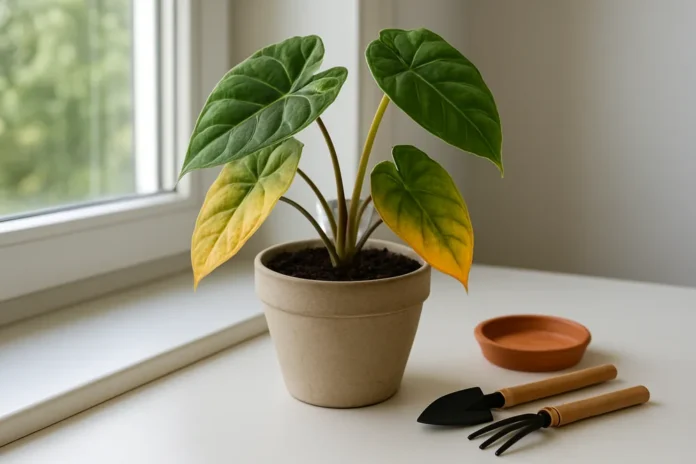
Alocasia leaves usually turn yellow because of overwatering, inconsistent moisture, low light, stress from cold or dry air, pests, or simple leaf aging. In many cases, the plant is reacting to root stress more than a problem with the leaf itself.
When an alocasia starts pushing out yellow leaves, it is usually telling you that something in its growing conditions is off. Sometimes the cause is harmless, like an older leaf naturally fading as new growth comes in. Other times, yellowing is the first visible sign of root trouble, watering mistakes, pest pressure, or stress from sudden environmental changes.
I have found that yellow alocasia leaves are easiest to diagnose when you look at the whole pattern, not just one leaf. A single bottom leaf turning yellow is very different from several leaves fading at once, leaves with mushy stems, or yellowing paired with brown edges and drooping. Once you match the symptom pattern to the most likely cause, the fix gets much clearer.
Below, I will walk through the most common reasons alocasia leaves turn yellow, how to tell them apart, and what usually helps the plant recover.
What Yellow Leaves Usually Mean on Alocasia
Alocasia is a tropical plant with large, fast-reacting leaves, so it tends to show stress quickly. Yellowing often happens when the roots are not functioning well, either because they are staying too wet, drying out too hard between waterings, or struggling in poor conditions. Since healthy roots support water and nutrient movement, leaf color is often one of the first things to change.
Not every yellow leaf means disaster. If your plant is actively growing and only the oldest lower leaf fades while a new one opens, that can be normal. But if yellowing spreads, multiple leaves change color at once, or the plant also wilts, stalls, or develops brown spots, you are likely dealing with an environmental or care problem rather than simple aging.
- A single oldest leaf turning yellow can be normal leaf replacement.
- Several leaves yellowing together usually points to stress.
- Yellow leaves with soggy soil often suggest overwatering or root issues.
- Yellow leaves with crispy edges often suggest dry conditions or inconsistent watering.
- Yellow speckled or patchy leaves can point to pests such as spider mites or thrips.
When I troubleshoot alocasia, I look at the newest leaf first. If the newest growth is coming in smaller, paler, or distorted, I worry about an active care problem. If the newest growth looks strong and only one old leaf is fading, I am much less concerned.
Overwatering and Root Stress Are the Most Common Causes
Why Too Much Moisture Causes Yellow Leaves
If I had to pick the most common reason alocasia leaves turn yellow indoors, it would be overwatering or soil that stays wet too long. Alocasia likes evenly moist soil, but not stale, airless soil. When the potting mix remains saturated, roots cannot breathe properly, and they start to weaken or rot. Once that happens, the leaves often turn soft yellow before drooping or collapsing.
Overwatering is not only about how often you water. It can also come from a dense potting mix, a pot without good drainage, low light that slows water use, or cool room temperatures that keep the soil wet for too long. In other words, a watering schedule that worked in summer can easily become too much in winter.
Signs That Point to Excess Water
- Leaves yellow from the base or all over and feel soft rather than dry
- Stems or petioles feel mushy near the soil line
- Soil stays wet for many days after watering
- The pot feels heavy almost all the time
- There is a sour or swampy smell from the pot
- The plant droops even though the soil is wet
How to Correct It
Let the top inch or two of the potting mix dry before watering again, but do not leave the plant bone dry for long stretches. Make sure the container has drainage holes and that excess water can leave the pot freely. If the soil is compacted or peaty and stays soggy, repot into a chunkier aroid-style mix with ingredients like bark, perlite, and coco coir or high-quality potting mix amended for airflow.
If you suspect root rot, slide the plant gently out of the pot and inspect the roots. Healthy roots are usually firm and light colored. Rotting roots are dark, mushy, or hollow. Trim damaged roots with clean scissors, repot in fresh mix, and water lightly until you see signs of recovery.
I never try to fix a wet alocasia by simply watering less while leaving it in swampy soil. If the mix is staying wet for a week or more, the real solution is usually better drainage, more airflow around the roots, or a smaller amount of soil around the root ball.
Underwatering and Inconsistent Moisture Can Look Similar
While overwatering gets most of the attention, underwatering and uneven moisture can also turn alocasia leaves yellow. This plant does not enjoy repeated cycles of getting very dry and then suddenly soaked. That pattern stresses the roots and can cause yellowing, browning at the edges, curling, or crisp patches.
An underwatered alocasia often looks lighter and thinner overall than an overwatered one. The soil may pull away from the sides of the pot, the leaves may droop with a dry texture, and older leaves may yellow before developing brown edges. If the potting mix has become hydrophobic, water may run straight through without truly rewetting the root ball.
- Dry, lightweight pot and soil shrinking from the edges
- Leaf tips or edges turning yellow, then tan or brown
- Drooping paired with dry soil instead of wet soil
- New leaves emerging smaller than normal
- Water rushing through the pot too quickly
To fix underwatering, water thoroughly until the entire root zone is moistened and excess drains out. If the mix has become too dry to absorb water well, bottom watering for a short period or watering slowly in stages can help rehydrate it. Then aim for a steadier routine where the soil stays lightly and evenly moist instead of swinging between extremes.
Light Problems Can Trigger Yellowing and Weak Growth
Too Little Light
Alocasia generally prefers bright, indirect light. In rooms that are too dim, the plant uses water more slowly, growth becomes weaker, and older leaves may yellow and drop because the plant cannot support them all. Low light also makes overwatering more likely, which is why these two issues often overlap.
If your alocasia is far from a window, growing slowly, leaning hard toward light, or producing smaller leaves, low light may be contributing to the yellowing. Moving it closer to a bright east-facing window or a few feet back from a bright south- or west-facing window often helps, especially if the current location is gloomy for most of the day.
Too Much Direct Sun
Strong direct sun can also cause trouble. Alocasia leaves may develop washed-out yellow patches, bleached areas, or crispy brown sections where the sun hits hardest. This is more common when a plant is moved suddenly from lower light into intense afternoon sun without time to adjust.
If sunlight is the issue, the discoloration often appears irregular rather than evenly yellowing the whole leaf. Move the plant to bright filtered light and remove only the leaves that are mostly damaged. Mildly scorched leaves can still photosynthesize, so there is no need to rush into heavy pruning.
Humidity, Temperature, and Seasonal Stress Matter More than Many Gardeners Expect
Alocasia comes from warm, humid environments, and it reacts poorly to cold drafts, dry furnace air, and sudden temperature swings. While low humidity alone does not always cause full yellow leaves, it can weaken the plant enough to cause edge yellowing, tip burn, curling, and general decline. Cold stress is more serious and can trigger fast yellowing or leaf collapse.
- Leaves yellowing soon after the plant is placed near an AC vent, heater, or drafty window
- Edges browning and curling in very dry indoor air
- Sudden leaf decline after a cold night or transport in chilly weather
- Growth slowing sharply in winter with one or more older leaves fading
Keep alocasia in a stable room, ideally above 60 degrees Fahrenheit, and away from blasts of hot or cold air. Moderate to higher humidity helps, especially during winter heating season. A humidifier usually works better than misting, which gives only a brief humidity bump and can leave foliage wet without solving the underlying dryness.
I see a lot of alocasia stress after people bring a plant home from a greenhouse or garden center. The shift from warm, humid, bright conditions to a dry living room can trigger a yellow leaf or two even when the plant is otherwise healthy. That kind of transition stress is frustrating, but it is often temporary if the roots stay healthy.
Nutrient Problems and Poor Soil Can Cause Pale or Yellow Leaves
Alocasia is not the hungriest houseplant, but it does need regular nutrition during active growth. If the plant has been in the same mix for a long time, is badly rootbound, or has gone many months without fertilizer during spring and summer, leaves may turn pale green or yellow from nutrient deficiency. Nitrogen deficiency often shows up as overall pale older leaves, while other nutrient imbalances may affect newer growth.
The challenge is that nutrient problems can mimic watering stress, and damaged roots often prevent nutrient uptake even when fertilizer is present. That is why fertilizer should not be the first thing you reach for if the soil is soggy or the roots are failing.
- General paling rather than patchy damage
- Slow growth during the warm season
- Long time since repotting or feeding
- Roots circling densely with very little fresh soil left
- Yellowing that develops without obvious pest damage or watering extremes
During the growing season, feed with a balanced diluted houseplant fertilizer according to label directions, or even a bit lighter if your plant is sensitive. If the plant is badly rootbound or the mix is exhausted, repotting into fresh soil may do more good than feeding alone. Avoid fertilizing a stressed, dormant, or recently root-damaged plant heavily, since that can make recovery harder.
Pests Can Turn Leaves Yellow Before You Notice the Insects
Spider mites, thrips, and sometimes mealybugs can all contribute to yellowing on alocasia. Spider mites are especially common in warm, dry indoor air. Their feeding causes a stippled, faded, or dusty yellow look, and heavy infestations can make leaves decline surprisingly fast.
Thrips often cause silvery scarring, distorted new growth, and irregular pale patches. Mealybugs are easier to spot because they leave cottony clusters in leaf joints or near the base of stems. Any sap-sucking pest can weaken the plant enough to trigger yellowing and leaf drop.
- Fine webbing, especially under leaves or near stems
- Tiny moving specks on the underside of leaves
- Silvery streaks, stippling, or patchy yellow discoloration
- Distorted or damaged new leaves
- Sticky residue or white cottony clumps
Inspect both sides of the leaves and along the petioles. If you find pests, isolate the plant and treat it with insecticidal soap, horticultural oil, or another houseplant-safe treatment labeled for the pest you found. Repeat treatments as directed, because one application rarely catches eggs and newly hatched pests.
Normal Aging and Dormancy Are Sometimes the Whole Story
Alocasia does not keep every leaf forever. It is common for an older leaf to yellow and die off as the plant produces new growth, especially when a fresh leaf is emerging. Many varieties also become less active in fall and winter, and some may partially defoliate if conditions are cooler and darker.
This is where context matters. If the plant is otherwise healthy, the roots smell fine, and only the oldest leaf is fading while the rest look good, normal aging is the likely explanation. In seasonal dormancy, growth slows down, watering needs decrease, and one or more leaves may yellow naturally.
Do not keep forcing summer care onto a winter-resting plant. Reduce watering frequency to match slower growth, hold back on fertilizer until active growth resumes, and keep the plant warm. If the corm and roots stay healthy, many alocasias return strongly once conditions improve.
How to Tell Which Cause Is Most Likely
Because several problems can produce yellow leaves, it helps to narrow things down by looking at the full symptom set. A yellow leaf alone is only one clue. Soil moisture, leaf texture, growth rate, and pest signs usually point you in the right direction.
- Check whether the yellowing is limited to one old leaf or affecting several leaves.
- Feel the soil and note whether it is soggy, evenly moist, or bone dry.
- Look for soft stems, bad smells, or black roots that suggest rot.
- Inspect for pest damage on both sides of the leaves.
- Think about recent changes in light, temperature, humidity, or location.
- Consider whether the plant is actively growing or slowing down for the season.
If several stress factors changed at once, such as repotting, relocation, and watering changes, recovery can be slower because the plant is responding to more than one issue. In that case, focus on the root environment first. Healthy roots give you the best chance of new, green leaves later.
What to Do Right Now if Your Alocasia Is Yellowing
Start by pausing before you prune everything. A leaf that is partly yellow may still be helping the plant. First figure out whether the problem is too much water, too little light, low humidity, pests, or seasonal slowdown. Then make one or two targeted corrections rather than changing every variable at once.
- Check drainage and soil moisture before watering again.
- Move the plant into bright, indirect light if it is currently too dim.
- Keep it away from cold drafts, heaters, and AC vents.
- Inspect leaves closely for mites, thrips, or mealybugs.
- Repot only if the mix is staying wet too long, the roots are rotting, or the plant is severely rootbound.
- Trim fully yellow leaves if they detach easily or once they are mostly spent.
After you adjust care, judge success by the condition of new growth, not by whether old yellow leaves turn green again. Most yellow tissue will not recover. The goal is to stop the progression and encourage healthy new leaves.
FAQ
Should I Cut Off Yellow Alocasia Leaves?
If a leaf is fully yellow or mostly spent, you can remove it with clean scissors. If it is only partly yellow, I usually leave it until the plant has taken what it can from that leaf.
Can Yellow Alocasia Leaves Turn Green Again?
Usually no. Once a leaf has turned fully yellow, that tissue does not normally regain its green color. Focus on correcting the cause so new leaves grow in healthy.
How Often Should I Water an Alocasia to Prevent Yellow Leaves?
There is no fixed schedule that works year-round. Water when the top inch or two of soil begins to dry, then adjust based on light, pot size, season, and how fast the mix dries in your home.
Why Is Only One Lower Alocasia Leaf Turning Yellow?
A single lower leaf yellowing is often normal aging, especially if the plant is producing a new leaf and the rest of the plant looks healthy. It becomes more concerning when multiple leaves yellow together.
Do Alocasia Leaves Turn Yellow in Winter?
Yes, they can. Shorter days, cooler rooms, and slower growth often lead to reduced water use and occasional leaf loss. Winter yellowing is common when watering is not adjusted for the season.
Can Low Humidity Make Alocasia Leaves Yellow?
Yes, especially when dry air is combined with other stress like underwatering or pests. Low humidity more often causes crispy edges and curling, but it can contribute to yellowing over time.
What Pests Cause Yellowing on Alocasia?
Spider mites and thrips are two of the most common. They damage leaf tissue by feeding on it, which can make the foliage look faded, speckled, patchy, or generally yellow.
Need help choosing the right fix fast? Read our alocasia care guide or compare the best houseplant pest treatments and moisture meters to stop yellowing before it spreads.
