

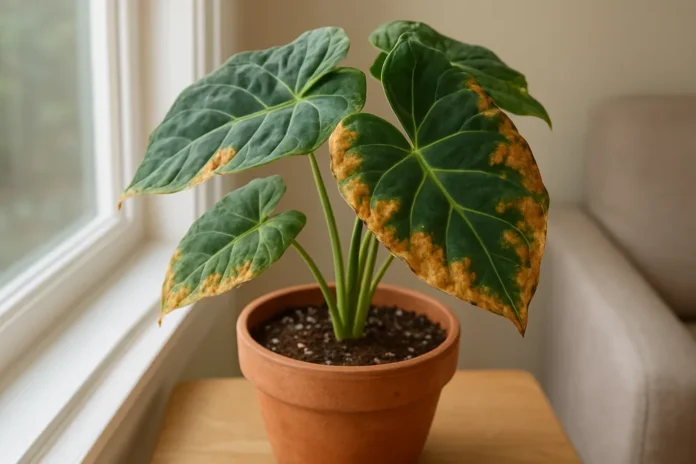
Alocasia leaves usually turn brown because of watering stress, dry air, too much direct sun, fertilizer salt buildup, or temperature shock. Browning can also happen when older leaves naturally decline or pests damage the foliage.
When an Alocasia starts developing brown edges, crispy patches, or whole leaves that seem to collapse, it is usually reacting to stress in its growing conditions rather than one mysterious disease. These plants are dramatic by nature, and they tend to show displeasure quickly when moisture, humidity, light, or temperature swings out of balance.
In my experience, brown leaves on Alocasia often come from a combination of factors instead of a single cause. A plant sitting in dry indoor air might also be getting watered unevenly, or a plant in strong afternoon sun may become more sensitive to fertilizer salts. The good news is that the pattern of the browning usually gives you useful clues.
If you look closely at where the damage starts, such as the tips, margins, center of the leaf, or the oldest foliage first, you can usually narrow the problem down fast. Once you match the symptom pattern to the cause, Alocasia often rebounds well with a few targeted adjustments.
What Brown Alocasia Leaves Are Telling You
Brown on an Alocasia leaf is dead tissue, so that part will not turn green again. What matters is whether the browning is limited and cosmetic or whether it signals an ongoing care problem that is still spreading through the plant.
Start by noticing the pattern. Brown, crispy tips often point to dry air, inconsistent watering, or salt buildup. Brown patches in the middle of the leaf can suggest sun scorch or physical damage. A whole lower leaf turning yellow, then brown, is often natural aging, especially if the rest of the plant looks healthy. Soft brown areas may signal rot from soil staying too wet.
- Crispy brown edges usually suggest dryness, low humidity, or excess fertilizer salts.
- Bleached tan or brown blotches often come from too much direct sunlight.
- Soft dark brown areas near the base can point to overwatering or rot.
- One older leaf browning while new growth looks good is often normal leaf replacement.
- Browning with stippling, webbing, or distorted growth can indicate pest feeding.
When I diagnose Alocasia, I look at new growth first. If the newest leaf is emerging clean and the damage is mostly on older leaves, the plant is often recovering or simply cycling out old foliage. If new leaves already look browned or misshapen, the stress is still active.
Watering Stress Is the Most Common Cause
Underwatering and Inconsistent Moisture
Alocasia likes evenly moist soil, not soil that swings from bone dry to soaking wet. If the potting mix dries too far between waterings, the leaf edges and tips often turn brown and crisp. This is especially common in warm rooms, small pots, and plants with lots of foliage.
Inconsistent watering can create the same symptoms even if you are not technically underwatering every time. Repeated stress from dry periods damages tender leaf margins first. You may also see drooping, curling, or leaves that feel thinner than usual.
Overwatering and Root Stress
Too much water can also lead to browning, but the texture is often different. Instead of dry crisp edges, you may see broad brown areas, yellowing before browning, or soft tissue near the petiole and base of the leaf. When roots stay deprived of oxygen, they cannot support healthy foliage, and the leaves begin to fail.
Alocasia is particularly sensitive if it is growing in a dense, slow-draining mix. Wet soil for days at a time raises the risk of root rot, especially in cooler months when the plant is using less water.
- Underwatering usually causes crisp tips, dry edges, and drooping between waterings.
- Overwatering often causes yellowing, mushy stems or roots, and brown areas that feel soft rather than papery.
- A pot without drainage makes both root stress and salt buildup more likely.
- Seasonal changes matter. An Alocasia may need frequent watering in summer and far less in winter.
I avoid watering Alocasia on a rigid calendar. I check the potting mix a couple of inches down and water when it feels lightly moist to nearly dry, not saturated and not fully parched. That simple habit prevents most browning issues.
Low Humidity and Dry Indoor Air Can Crisp the Edges
Alocasia comes from humid environments, so dry indoor air often shows up as brown tips or margins, especially in winter when heating systems are running. The plant may still produce leaves, but they come out with browning sooner and may unfurl with minor damage.
Humidity stress is more likely when the plant is near a heat vent, radiator, fireplace, or frequently opened exterior door. Dry air alone may not destroy the plant, but it makes it less forgiving of every other issue, including missed waterings and fertilizer buildup.
- Browning starts at the tips and outer edges.
- Leaf tissue feels crisp and papery, not mushy.
- New leaves may emerge smaller or tear more easily while unfurling.
- Problems worsen during winter or in air-conditioned rooms.
A room humidifier is usually more effective than misting. Grouping plants can help a little, but it rarely solves severe dryness on its own. If your home routinely sits at very low humidity, Alocasia often benefits from a dedicated humidity boost.
Too Much Direct Sun Can Scorch Alocasia Foliage
Alocasia likes bright light, but many varieties do best in bright indirect light rather than strong direct afternoon sun. Too much sun can bleach sections of the leaf first, then those damaged areas turn tan or brown. The patches are often irregular and appear on the side facing the window.
Sun scorch is especially common after a sudden move from a dim room to a bright window, or when seasonal sun intensity increases. Glass can magnify heat, and tender leaves can burn surprisingly fast if the plant is not acclimated.
- Look for pale, faded, tan, or crispy patches in exposed areas of the leaf.
- Damage often appears on the window-facing side first.
- Recently moved plants are more vulnerable than established ones.
- Morning sun is usually gentler than hot afternoon sun.
If you suspect scorch, move the plant a little farther from the window or filter the light with a sheer curtain. Existing brown areas will stay brown, but new leaves should emerge healthier once the exposure is corrected.
Fertilizer Buildup and Water Quality Problems
Alocasia can be sensitive to excess fertilizer salts in the potting mix. When too much fertilizer accumulates, roots struggle to take up water properly, and the leaf tips and edges often brown. This can happen even when you are fertilizing with a product marketed for houseplants if the dose is too strong or applied too often.
Hard tap water can add to the problem over time. Minerals and salts build up in the soil, especially if you water lightly and rarely flush the pot thoroughly. A white crust on the soil surface or pot rim is a common clue.
- Tip burn after recent feeding often points to fertilizer stress.
- A white or yellow crust on soil or the pot edge suggests salt accumulation.
- Plants in small pots build up salts faster than plants in larger containers.
- Dormant or slow-growing Alocasia needs much less fertilizer than an actively growing one.
If browning appears after you started feeding more aggressively, I would suspect salts before I assume a nutrient deficiency. Deficiencies usually show color changes or weak growth first, while excess fertilizer often burns the most delicate leaf edges.
Using a diluted fertilizer during active growth and occasionally flushing the pot with water can help prevent buildup. If your tap water is very hard, filtered, rain, or distilled water may reduce future browning on sensitive plants.
Temperature Shock and Drafts Can Damage Leaves
Alocasia dislikes sudden temperature swings. Cold drafts from windows, blasts from air conditioning, or hot dry air from heating vents can all stress the leaves and trigger browning. Tropical plants react quickly when their environment shifts from stable to harsh.
Cold stress may show up as darkened patches, limp foliage, or a sudden decline after a chilly night near glass. Heat stress often causes rapid drying and crisp edges, especially if it is paired with low humidity.
- Keep Alocasia away from HVAC vents and drafty entryways.
- Avoid letting leaves press against cold winter glass.
- Do not place the plant outdoors abruptly in hot sun or cool nights.
- Stable warmth usually supports healthier leaves than fluctuating conditions.
Pests Can Leave Brown Spots, Edges, and Distorted Growth
Spider mites, thrips, and occasionally mealybugs or scale can contribute to brown or damaged Alocasia leaves. These pests feed on plant tissue, leaving stippling, bronzing, scarring, or dry patches that later turn brown. Infestations are more common when the air is dry and the plant is already stressed.
Spider mites are especially common on Alocasia indoors. You may notice fine webbing, a dusty look, or tiny pale speckles before the leaves start browning more heavily. Thrips can scar new leaves and cause distorted unfurling, silvering, and irregular brown patches.
- Check the undersides of leaves and along the midrib.
- Look for speckling, webbing, silvery streaks, or sticky residue.
- Inspect new leaves, since pests often damage tender growth first.
- Isolate infested plants from nearby houseplants while treating them.
If pests are involved, improving the environment alone will not stop the browning. You need to physically remove pests and use an appropriate treatment such as insecticidal soap, neem-based products, or another indoor-safe control labeled for the pest you have identified.
Natural Aging and Dormancy Are Sometimes the Reason
Not every brown Alocasia leaf means something is wrong. As the plant grows, it often sheds older leaves, especially lower ones, to support fresh growth. An older leaf may yellow, droop, then brown and die back while a new leaf is emerging.
Some Alocasia also slow down sharply or enter partial dormancy when light drops in fall and winter. During that period, the plant may hold fewer leaves and become more sensitive to excess watering. Browning paired with leaf drop can simply reflect a seasonal slowdown rather than a fatal problem.
- One aging lower leaf is usually normal.
- Multiple leaves failing at once points more toward a care issue.
- Reduced winter growth means reduced water and fertilizer needs.
- Healthy new growth is the best sign that the plant is fundamentally okay.
How to Fix Brown Alocasia Leaves and Prevent More Damage
Once leaf tissue is brown, it will not recover, so the goal is to stop the problem from spreading to new growth. Start by correcting the most likely stress points rather than changing everything at once. Too many sudden changes can create fresh stress and make diagnosis harder.
- Check the soil moisture and root zone. If the mix is soggy, compacted, or smells sour, repot into a chunky, well-draining houseplant mix and trim rotten roots.
- If the soil is repeatedly drying out too hard, water thoroughly whenever the top layer becomes lightly dry rather than waiting for the whole pot to dry.
- Move the plant into bright indirect light if it is getting harsh midday or afternoon sun.
- Raise humidity if your indoor air is dry, especially in winter.
- Pause fertilizer for a few weeks if you suspect buildup, then resume at a lower strength during active growth only.
- Inspect carefully for pests and treat promptly if you find any signs.
- Trim away fully dead leaves or just the brown portions if you prefer a tidier look.
When I clean up a damaged Alocasia, I judge success by the next leaf, not the old one. If the following leaf opens larger, cleaner, and less crispy, your changes are working even if the plant still has a few scarred older leaves.
If your Alocasia continues browning after you adjust care, take the plant out of the pot and inspect the roots. Healthy roots are firm and pale. Rotten roots are dark, mushy, and sometimes have a sour smell. Root trouble can mimic several leaf symptoms at once, so it is worth checking when the cause is not obvious.
When Browning Means a More Serious Problem
Most brown Alocasia leaves come from environmental stress, but there are times when the issue is more urgent. If browning spreads quickly through multiple leaves, the stems feel soft, the soil stays wet for long periods, or the plant suddenly collapses, root rot or severe stress is likely involved.
Likewise, if new leaves are emerging badly deformed, heavily spotted, or dying before they open, look closely for pests and root issues. Alocasia can decline fast when the roots are compromised, so catching the problem early matters.
- Act quickly if the plant has mushy stems or a foul-smelling root ball.
- Do not keep watering a plant that stays wet and keeps worsening.
- Remove dead tissue and improve airflow around the plant.
- Treat for pests only after you identify what is present, since different pests leave different patterns.
FAQ
Should I Cut Off Brown Alocasia Leaves?
Yes, you can remove fully brown leaves because they will not recover. If only the edges are brown, you can trim the dead part off for appearance, but use clean scissors and follow the leaf's natural shape.
Can Brown Alocasia Leaves Turn Green Again?
No. Brown tissue is dead and will stay brown. Focus on correcting the cause so future leaves come in healthy.
How Often Should I Water an Alocasia to Prevent Brown Leaves?
Water when the potting mix is lightly drying near the top but not completely dried out through the pot. The exact timing depends on pot size, light, season, humidity, and your soil mix.
Do Alocasia Need High Humidity?
They generally do better with moderate to high humidity than with very dry indoor air. Low humidity often causes brown tips and makes the plant less tolerant of other care mistakes.
Why Are Only the Tips of My Alocasia Leaves Turning Brown?
Brown tips usually point to dry air, inconsistent watering, or fertilizer salt buildup rather than a major disease. It is one of the most common early stress signals on Alocasia.
Can Too Much Sun Make Alocasia Leaves Brown?
Yes. Strong direct sun can scorch the foliage, leaving bleached, tan, or brown patches, especially on leaves closest to a hot window.
Is It Normal for an Older Alocasia Leaf to Turn Brown?
Yes, sometimes. An older lower leaf may yellow and brown as the plant redirects energy to new growth. That is more likely normal if the rest of the plant looks healthy.
What Kind of Soil Helps Prevent Brown Leaves on Alocasia?
A loose, airy mix that drains well but still holds some moisture works best. A chunky blend with ingredients like potting mix, bark, perlite, and coco coir or peat helps reduce both dryness stress and soggy root conditions.
Need help dialing in care for tropical houseplants? Read our Alocasia care guide and our best humidifiers and indoor plant fertilizer picks to stop browning and grow cleaner new leaves.
