

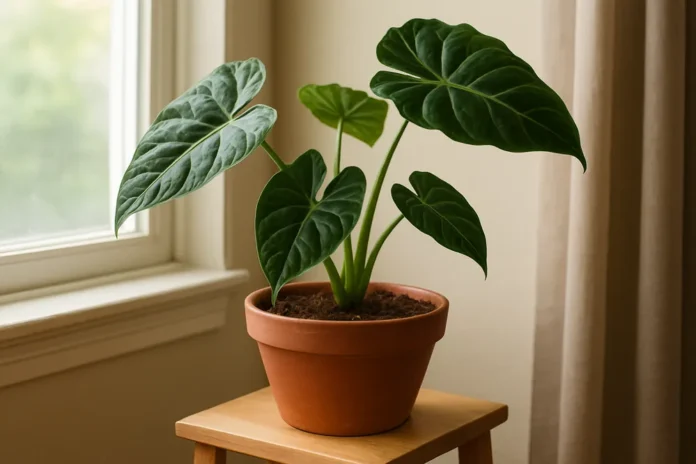
An alocasia usually stops growing because it is not getting enough warmth, light, or root health to support new leaves. Seasonal dormancy, watering stress, and a too-small or damaged root system are also common reasons.
When an alocasia not growing just sits there for weeks or months, it can feel like the plant has frozen in time. These plants are beautiful, but they are not especially forgiving. In my experience, slow or stalled growth usually means one of their core needs is off, even if the plant still looks mostly alive.
The tricky part is that alocasias often stop growing for more than one reason at once. A plant in low light may also be staying too wet. A rootbound plant may also be running short on nutrients. And sometimes the answer is not trouble at all, but normal seasonal slowdown, especially in cooler homes.
If your alocasia growth has stalled, the goal is to separate true stress from normal rest, then fix the biggest issue first. Once conditions improve, alocasias usually respond by pushing healthier new leaves rather than repairing old damage.
What Normal Alocasia Growth Looks Like
Alocasias do not grow at the same pace year-round. In active growing conditions, most put out new leaves in waves rather than steadily every week. A healthy plant may produce a leaf, pause, then start again once it has enough light, warmth, and energy.
Growth also depends on the species, the size of the corm or root system, and how established the plant is in its pot. A recently repotted alocasia can spend several weeks rebuilding roots before you see visible top growth. That delay is frustrating, but it is not always a sign of decline.
- Faster growth is most common in spring and summer.
- Slower growth is common in fall and winter, especially indoors.
- Small plants and recently divided plants often grow more slowly than mature specimens.
- A healthy alocasia may hold steady for a while, then suddenly push a new leaf.
Low Light Is One of the Most Common Causes
If your alocasia is not growing, low light is one of the first things to question. These plants like bright conditions indoors. They usually do best near a window with plenty of indirect light, and many tolerate a little gentle morning sun. In a dim room, they may stay alive but stop producing leaves.
Light drives photosynthesis, which means it controls how much energy the plant has to build roots, stems, and leaves. Without enough light, the plant shifts into survival mode. It conserves resources instead of investing in fresh growth.
- Leaves are smaller than before.
- Petioles stretch or lean hard toward the window.
- The soil stays wet for a long time because the plant uses less water.
- New growth is absent even though the plant is otherwise green.
When I troubleshoot a stalled alocasia, I pay close attention to how far it sits from the window, not just whether the room seems bright. A spot that looks well lit to us can still be too dim for an alocasia once the plant is several feet back.
If this sounds like your setup, move the plant closer to a bright window or supplement with a grow light. Better light usually improves growth gradually, not overnight. Judge success by the next leaf, not by whether the current leaves suddenly change.
Watering Problems Can Stall Growth in Either Direction
Overwatering Slows Roots First
Alocasias dislike sitting in soggy soil. If the potting mix stays wet too long, roots lose access to oxygen and begin to weaken. Once roots are stressed, the plant cannot take up water and nutrients properly, so top growth slows or stops.
Overwatering is not only about how often you water. It can also come from a dense potting mix, a pot without enough drainage, or conditions that stay cool and dark for long stretches.
Underwatering Also Interrupts Growth
On the other side, a plant that gets too dry too often will also pause growth. Alocasias use a lot of moisture when actively growing, especially in warm weather. If the roots repeatedly dry out hard, the plant pulls back to protect itself.
- Too wet: yellowing leaves, mushy stems near the base, sour-smelling soil, fungus gnats, or no growth despite moist soil
- Too dry: drooping, crispy edges, curling leaves, shrinking older foliage, or very fast-draining bone-dry soil
The best balance is evenly moist but not waterlogged soil during active growth. Letting the top layer dry slightly before watering again usually works better than sticking to a rigid schedule.
If you are torn between watering more and watering less, check the root zone rather than guessing from the surface. I find that many alocasias with stalled growth are wetter deeper in the pot than the top inch suggests.
Cold Temperatures and Dry Air Can Put Alocasia on Pause
Alocasias are tropical plants, and they respond quickly to cold stress. When indoor temperatures dip too low, growth often slows to a crawl. Even if the average room temperature seems acceptable, cold drafts from windows, doors, air conditioning vents, or winter heating patterns can make the plant hesitate.
Most alocasias grow best when temperatures stay consistently warm. Humidity is secondary to temperature in many cases, but very dry indoor air can still contribute to sluggish growth, especially when paired with low light or erratic watering.
- Cool nights can trigger dormancy-like behavior.
- Drafts may damage leaf edges and slow new growth.
- Dry air increases stress and can make leaves unfurl poorly.
- Warm, stable conditions support steadier leaf production.
If your plant is near a cold window in winter, simply moving it a little farther from the glass while keeping it in bright light can help. Try to avoid sudden temperature swings as much as possible.
Dormancy May Be the Reason, Especially in Fall and Winter
Sometimes an alocasia is not actively growing because it has entered a rest period. This is especially common in homes with shorter winter days, cooler rooms, and lower humidity. The plant may keep one or two leaves, drop a few, or seem dormant above the soil while the corm remains alive below.
Dormancy can look alarming if you expect constant tropical growth all year. But a dormant or semi-dormant alocasia is not necessarily unhealthy. It is conserving energy until conditions improve.
- Growth stopped after days became shorter.
- The plant is indoors in a cool room.
- Older leaves yellowed off without signs of rot spreading rapidly.
- The corm and roots remain firm rather than mushy.
During dormancy, the biggest mistake is often continuing summer care unchanged. The plant usually needs less water when it is resting. Once spring light and warmth return, it often wakes up on its own.
Root Problems Often Hide Below the Surface
Root Rot Stops the Plant From Supporting New Leaves
If an alocasia has been overwatered or left in heavy, compacted soil, root rot is a major possibility. Damaged roots cannot absorb what the plant needs, so growth stops even if the leaves are still hanging on.
Rootbound Plants Can Also Slow Down
Alocasias often like being somewhat snug in their pots, but there is a limit. If roots are circling tightly or the pot is packed solid, water may race through too quickly and nutrients may not stay available long enough to support strong growth.
Freshly Disturbed Roots May Need Recovery Time
Repotting, dividing offsets, or cleaning roots can stall top growth temporarily. That does not always mean the plant is declining. It may simply be redirecting energy below the soil line.
I do not rush to repot every slow alocasia. If the plant is in the off-season, disturbing the roots can set it back further. I usually repot only when I see a clear root issue or a pot that has truly become too cramped.
If you suspect root trouble, slide the plant gently from the pot and inspect the root ball. Healthy roots are typically firm and light colored. Rotting roots are often brown, mushy, and may smell unpleasant.
Poor Soil and Low Nutrients Can Limit Growth
Even with good light and watering, an alocasia may sit still if the soil mix is wrong or nutrients are depleted. These plants prefer a loose, airy mix that holds some moisture while draining well. Dense soil can choke roots, while exhausted soil may no longer support active growth.
A plant that has been in the same potting mix for a long time may have used up much of what was available. Salts from fertilizer can also build up over time, which may irritate roots and make growth weaker instead of stronger.
- Compacted soil stays wet too long and reduces oxygen around roots.
- A mix that is too coarse may dry so fast the plant cannot stay evenly hydrated.
- Low nutrient levels can lead to pale growth, small leaves, or long pauses between leaves.
- Excess fertilizer can burn roots and suppress new growth.
During active growth, a light, balanced feeding routine often helps more than occasional heavy doses. Alocasias generally respond better to steady support than to strong fertilizer applications.
Pests Can Drain Energy Even Before Damage Looks Severe
Spider mites, thrips, mealybugs, and scale can all reduce alocasia growth. These pests feed on plant tissue and sap, which weakens the plant over time. Sometimes the plant stops growing before the leaf damage becomes dramatic.
Alocasias are especially prone to spider mites in dry indoor conditions. Check the undersides of leaves, where early infestations often hide. You may notice stippling, dull foliage, distorted new leaves, or fine webbing in severe cases.
- Spider mites often cause speckling and faded leaves.
- Thrips can distort new growth and leave silvery scarring.
- Mealybugs appear as white cottony clusters in leaf joints.
- Scale looks like small bumps attached to stems or leaves.
A healthy plant can tolerate small pest pressure better than a stressed one. But if your alocasia has stalled and the care basics seem right, inspect carefully before assuming the issue is purely environmental.
Common Care Mistakes That Keep Alocasia Stuck
Many stalled alocasias are dealing with a stack of smaller issues rather than one dramatic failure. A plant in medium light, cool air, and tired soil may survive for a long time without actually growing.
- Keeping the plant too far from a bright window
- Watering on schedule instead of by soil moisture
- Leaving roots in dense or soggy potting mix
- Feeding too heavily or not at all during the growing season
- Ignoring pests because the leaves still look mostly green
- Repotting too often in search of a quick fix
- Expecting summer growth speed during winter
The best correction is usually the simplest one. Improve the growing environment, then give the plant time to respond. Constantly changing several variables at once makes it harder to tell what actually helped.
How to Help an Alocasia Start Growing Again
Once you identify the likely cause, focus on restoring steady conditions. Alocasias are much more responsive to consistency than to rescue-style overcorrection.
- Move the plant into brighter indirect light or add a grow light.
- Adjust watering so the mix stays lightly and evenly moist, not soggy or bone dry.
- Keep temperatures warm and protect the plant from cold drafts.
- Inspect roots if the plant has been stalled for a long time or the soil stays wet unusually long.
- Repot into an airy, well-draining mix only if the current soil or roots are clearly a problem.
- Feed lightly during active growth if the plant has been nutrient-starved.
- Treat any pests thoroughly and continue monitoring for several weeks.
Do not expect damaged leaves to become perfect again. What you want to see is a healthy new leaf, stronger petioles, and more consistent water use. Those are the signs that the plant is back in growth mode.
When to Worry That the Plant Is Declining, Not Just Resting
A resting alocasia may look unimpressive, but a declining one shows progressive symptoms. If multiple leaves are yellowing quickly, the base feels soft, the corm is mushy, or pests are spreading, the plant is likely under real stress rather than harmlessly paused.
In those cases, the plant needs intervention sooner rather than later. Root rot and severe pest problems rarely improve by waiting. On the other hand, a firm corm, stable leaves, and no dramatic decline often point to dormancy or slow seasonal growth.
If you are ever unsure, look for direction rather than perfection. Is the plant slowly worsening, or simply sitting still? That answer usually tells you whether you need immediate corrective action or just patience.
FAQ
How Long Can an Alocasia Go Without Growing?
An alocasia can pause for several weeks or even a few months, especially in winter or after repotting. If the plant stays firm and does not show worsening symptoms, a temporary pause is not unusual.
Will My Alocasia Grow Back After Losing All Its Leaves?
Yes, it can, as long as the corm and roots are still alive and firm. Some alocasias resprout after dormancy or stress once warmth, light, and moisture improve.
Should I Fertilize an Alocasia That Is Not Growing?
Not automatically. If the plant is dormant, overwatered, root-damaged, or in low light, fertilizer will not solve the problem and may make it worse. Feed lightly only when the plant is in active growth or clearly ready to resume it.
Do Alocasias Need Direct Sunlight to Grow Well?
Most indoor alocasias do best in bright indirect light rather than harsh direct sun. Gentle morning sun can work for some, but strong afternoon sun may scorch leaves.
Can a Small Pot Stop My Alocasia From Growing?
Yes, if the roots have filled the pot so tightly that water and nutrients are no longer moving through the root ball well. Slightly snug is fine, but severely rootbound plants often slow down.
Why Is My Alocasia Healthy-looking but Not Making New Leaves?
That often points to light levels that are good enough for survival but not strong enough for active growth. Seasonal slowdown, cool temperatures, and mild root crowding can also cause this pattern.
Is Humidity the Main Reason My Alocasia Is Not Growing?
Usually not by itself. Low humidity can add stress, but light, root health, temperature, and watering are more often the main reasons an alocasia stops growing indoors.
Want to get your plant back on track faster? Read our alocasia care guide and compare the best grow lights, potting mixes, and fertilizers for stronger leaf growth.
