

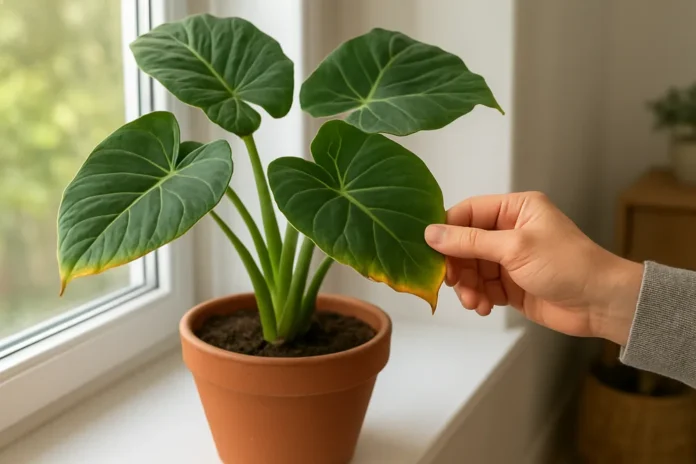
Alocasia leaf tips usually turn yellow because the plant is under stress from dry air, inconsistent watering, excess fertilizer, or mineral-heavy tap water. Sometimes normal aging or root trouble is part of the problem too.
When an alocasia starts showing yellow leaf tips, it is usually a sign that something in its environment is just a little off rather than completely wrong. These plants can be dramatic, and small swings in moisture, humidity, light, or feeding often show up first right at the edges and tips of the leaves.
I usually treat yellow leaf tips as an early warning instead of a disaster. If you catch the pattern early, you can often stop the damage before it creeps farther into the leaf or starts affecting new growth. The trick is figuring out whether your plant is dealing with dry air, watering stress, fertilizer salts, poor roots, or a simple aging leaf.
Alocasia leaves do not repair once damaged, so the goal is to protect the next leaves that emerge. Looking closely at where the yellowing starts, how fast it spreads, and what the potting mix feels like will usually tell you a lot.
What Yellow Tips Usually Mean on Alocasia
Yellow tips on alocasia leaves are most often tied to stress at the leaf margins, where the plant shows trouble first. That stress can come from too little moisture, too much moisture, low humidity, salt buildup from fertilizer, or roots that are not functioning well. Because several problems create similar symptoms, the exact pattern matters more than the color alone.
If the very tip turns pale yellow and then dries to tan or brown, I usually suspect dry air, irregular watering, or excess salts. If the yellowing moves beyond the tip and starts spreading along the edges or between veins, I start thinking about root issues, overwatering, nutrient imbalance, or low temperatures. A single older leaf yellowing at the tip before fading away may simply be part of the plant cycling out old foliage.
- Tip only, with crisp dry tissue: often low humidity, missed watering, or mineral buildup
- Tip and edges yellowing together: often moisture imbalance or root stress
- Several leaves changing at once: often watering, fertilizer, or environmental shock
- One oldest leaf declining while new growth looks healthy: often normal leaf aging
When I diagnose alocasia problems, I pay the most attention to the newest leaf and the oldest leaf. If the newest one opens clean while an older one declines, I worry less. If fresh leaves already have yellow tips, the plant is still under active stress.
Inconsistent Watering Is the Most Common Cause
How Underwatering Shows Up
Alocasia likes evenly moist soil, but not constant sogginess. If the mix gets too dry between waterings, the plant often responds with yellowing or browning at the tips first. The leaf tissue farthest from the water supply loses moisture fastest, so the tip becomes the first weak point.
Underwatered alocasia may also droop, curl slightly, or feel thinner than usual. The potting mix may pull away from the sides of the pot, and water may run straight through when you try to soak it. In that situation, the roots may not be taking up moisture evenly even if you water on schedule.
How Overwatering Creates Similar Symptoms
Yellow tips can also happen when the plant is watered too often. That sounds backward, but waterlogged soil deprives roots of oxygen. Once roots are stressed, they cannot move water properly through the plant, so the leaves can show the same dehydration-like tip damage that a dry plant shows.
If the mix stays wet for many days, the yellowing often spreads beyond the tip. You may notice soft stems near the base, a sour smell from the pot, or leaves that turn generally dull and limp instead of crisp. This is where root health becomes more important than watering frequency alone.
- Dry mix, curled leaves, crispy tips: watering too little or too unevenly
- Heavy wet mix, limp leaves, spreading yellowing: watering too often or poor drainage
- Alternating bone dry and soaked: stress from inconsistency, even if neither extreme lasts long
I do not water alocasia by the calendar. I check the top inch or two of the mix and the weight of the pot. A light pot with slightly dry topsoil usually tells me more than a fixed weekly schedule.
Low Humidity Often Causes Yellow or Brown Tips
Alocasia comes from warm, humid conditions, so indoor air can be rough on it, especially in winter or in heavily air-conditioned rooms. When humidity is too low, the leaf tips lose moisture faster than the roots can replace it. The result is often a faded yellow tip that later becomes brown and crisp.
This is especially common if your plant sits near a heating vent, a drafty window, or a ceiling fan. A plant can be watered correctly and still show tip burn if the surrounding air is too dry. Large leaves lose a surprising amount of moisture, and alocasia reacts faster than many other houseplants.
- Tips yellow first, then turn papery brown
- Damage appears worse during winter heating season
- Newest leaves may emerge smaller if dry air continues
- Leaves may look otherwise healthy in color and firmness
If you suspect humidity is the main issue, look at timing and placement. When yellow tips increase right after the heat comes on or after moving the plant near an air vent, dry air is a strong suspect. Grouping plants together, using a humidifier, or moving the plant to a more stable room often helps more than misting.
Fertilizer Salts and Hard Water Can Burn the Tips
One of the easiest alocasia problems to miss is salt buildup in the potting mix. Fertilizer residue and minerals from hard tap water accumulate over time, especially in containers that are watered lightly or rarely flushed through. Those salts concentrate around the roots and interfere with moisture uptake, which often shows up as yellowed, then browned, leaf tips.
This kind of damage often appears even when your watering routine seems fine. The plant is technically sitting in moist soil, but the dissolved salts make it harder for roots to absorb water properly. It is a bit like the plant being thirsty while standing in a full glass.
- Crusty white residue on the soil surface or rim of the pot
- Leaf tips yellowing after a recent feeding
- Worsening tip damage in a plant that has not been repotted in a long time
- Symptoms showing on several leaves at once without obvious drooping
Alocasia does appreciate regular feeding during active growth, but it does not need strong fertilizer. I have seen more tip damage from overfeeding than from slight underfeeding. A diluted fertilizer used during spring and summer is usually plenty for a healthy indoor plant.
If an alocasia looks mostly healthy except for repeated burnt-looking tips, I often suspect the water source before I suspect disease. Plants grown with softened or very mineral-heavy tap water can slowly decline even when everything else looks right.
Root Stress and Potting Mix Problems Can Trigger Yellowing
Healthy roots are the foundation of healthy leaves, and alocasia is quite sensitive to poor root conditions. If the potting mix stays dense, compacted, or airless, the roots cannot breathe well. If the mix dries into a hard brick, it may repel water and leave portions of the root ball dry. Both conditions can lead to yellow leaf tips.
A plant that is badly rootbound can also struggle. When roots circle tightly through the pot, water moves through quickly, nutrient availability drops, and the plant may swing between too dry and too wet. On the other side, an oversized pot can keep excess moisture around too long and lead to root rot.
Signs the Roots Need Attention
- Water runs straight out without soaking the mix evenly
- The pot stays soggy for a week or more
- Leaves yellow at the tips and the plant stops pushing new growth
- Roots circle tightly around the root ball or appear brown and mushy
- The mix smells sour, swampy, or stale
Alocasia usually does best in a chunky, moisture-retentive mix that still drains well. A blend with potting soil, orchid bark, coco coir or peat, and perlite often works better than a heavy standard indoor mix by itself. The goal is not to keep the roots dry. The goal is to keep them moist and oxygenated at the same time.
Light, Temperature, and Drafts Can Make Tip Damage Worse
Environmental stress is another common piece of the puzzle. Alocasia likes bright, indirect light and warm, stable temperatures. If it sits in harsh direct afternoon sun, the leaf tips and edges may fade, yellow, or scorch. If it sits in a chilly draft or near cold glass, the plant may also show yellowing because its roots and leaves are not functioning normally.
Temperature swings are especially hard on this plant. Moving it from a warm humid room to a cooler, drier spot can trigger leaf decline fast. Even if the shift is not dramatic to you, alocasia often reacts within days by curling, drooping, or showing edge and tip discoloration.
- Direct hot sun can bleach or scorch leaf margins
- Cold drafts can cause yellowing and sudden leaf collapse
- Air vents can combine low humidity with temperature stress
- Low light can slow water use and make overwatering more likely
Light matters indirectly too. In low light, the potting mix stays wet longer because the plant uses less moisture. That often leads people to keep watering normally, which then stresses the roots. When yellow tips appear, always think about placement as well as watering.
Pests, Disease, and Natural Aging Are Less Common but Still Possible
Pest Damage
Spider mites, thrips, and sometimes mealybugs can stress alocasia enough to cause yellowing at the tips and edges. Spider mites are especially common in dry indoor air. They feed on leaf tissue, creating a dull, stippled look before tips begin to discolor. Thrips may leave silvery scarring or distorted new growth.
If you suspect pests, inspect both sides of the leaves, the midrib, and where the leaf meets the stem. Fine webbing, tiny moving specks, sticky residue, or scarred patches are clues that the yellowing is not just a watering issue.
Disease and Rot
Fungal or bacterial problems are less often the reason for simple tip yellowing, but they can follow overwatering or poor airflow. If yellow tips are joined by black mushy spots, collapsing stems, or foul-smelling soil, root or crown rot becomes a stronger possibility.
Normal Aging
Alocasia commonly sheds an older leaf as it grows a new one, especially if the plant is still small or adjusting to indoor conditions. In that case, one of the oldest leaves may start yellowing at the tip, then continue across the leaf until it fades completely. If the rest of the plant looks vigorous, that is usually not a crisis.
- Pests are more likely if leaves look speckled, sticky, or scarred
- Disease is more likely if tissue is soft, dark, or foul-smelling
- Natural aging is more likely if just one oldest leaf declines while a new leaf is forming
How to Fix Yellow Tips and Prevent New Damage
The yellowed part of a leaf will not turn green again, so focus on correcting the underlying stress and watching the next round of growth. If the damage is minor, you can leave the leaf in place so it still helps the plant photosynthesize. If the tip is dry and unsightly, you can trim off the dead portion with clean scissors, following the natural shape of the leaf.
What to Adjust First
- Check the potting mix moisture before changing anything else.
- Make sure the pot drains freely and is not sitting in water.
- Move the plant away from vents, heaters, or cold drafts.
- Raise humidity if the room is dry, especially in winter.
- Pause fertilizer for a few weeks if you have been feeding heavily.
- Flush the pot thoroughly with water if salt buildup seems likely.
- Inspect roots and repot only if the mix is compacted, sour, or clearly failing.
- Check leaves closely for spider mites or thrips if the pattern looks irregular.
After making a correction, give the plant some time. Alocasia does not always respond instantly, and old damage can make it look worse before it looks better. The best sign of recovery is healthy new growth with clean edges and no fresh yellowing at the tips.
Change one variable at a time when you can. If you repot, increase humidity, move the plant, and change fertilizer all in the same week, it becomes much harder to learn what actually solved the problem.
A Quick Diagnosis Guide Based on the Pattern
If you want a fast way to narrow this down, match the pattern you see to the most likely cause. This is not perfect, but it is often enough to point you in the right direction.
- Small yellow tips that turn crisp, especially in dry months: low humidity or slight underwatering
- Yellow tips after feeding, with white crust on soil: fertilizer salt or hard water buildup
- Yellowing tips plus limp leaves and wet soil: overwatering or root stress
- Tip yellowing on several leaves after a move: environmental shock from light, temperature, or drafts
- Only one oldest leaf yellowing while a new one emerges: normal aging
- Yellow tips with speckling, webbing, or distorted growth: likely pest pressure
In my experience, alocasia problems are often layered. A plant might start with dry air, then get overwatered because growth slows, then show salt damage because the mix is never flushed. Looking for the main stressor first helps you avoid chasing symptoms.
FAQ
Should I Cut Off Yellow Alocasia Leaf Tips?
You can trim off the dead yellow or brown tip for appearance, but only remove the damaged tissue. If most of the leaf is still green, leave it on the plant so it can keep supporting growth.
Can Yellow Tips Turn Green Again?
No. Damaged leaf tissue will not recover. The goal is to stop the cause so new leaves come in healthy and existing leaves do not keep declining.
How Often Should I Water an Alocasia with Yellow Tips?
There is no fixed schedule that fits every home. Water when the upper part of the mix has started to dry but the root zone is still lightly moist, and adjust based on season, light, pot size, and room temperature.
Is Tap Water Bad for Alocasia?
It can be, depending on your water quality. Hard water, softened water, or heavily chlorinated water may contribute to tip burn over time, especially if salts build up in the pot.
Do Alocasia Need High Humidity to Avoid Yellow Tips?
They generally perform best in moderate to high humidity. While they can survive average indoor conditions, dry air often leads to yellow or brown tips, smaller leaves, and slower growth.
Why Are Only the Oldest Leaves Getting Yellow Tips?
If only the oldest leaf is fading while newer leaves look strong, the plant may simply be retiring that leaf naturally. This is common when a new leaf is developing or when the plant is adjusting to a new space.
Can Root Rot Start with Yellow Tips?
Yes. Early root trouble can show up as yellowing tips because damaged roots cannot supply water properly. If the soil stays wet for a long time or smells sour, check the roots sooner rather than later.
Need the right setup for a happier alocasia? Explore our guide to the best humidifiers, chunky houseplant mixes, and indoor plant fertilizers so you can fix yellow tips and keep new leaves flawless.
