

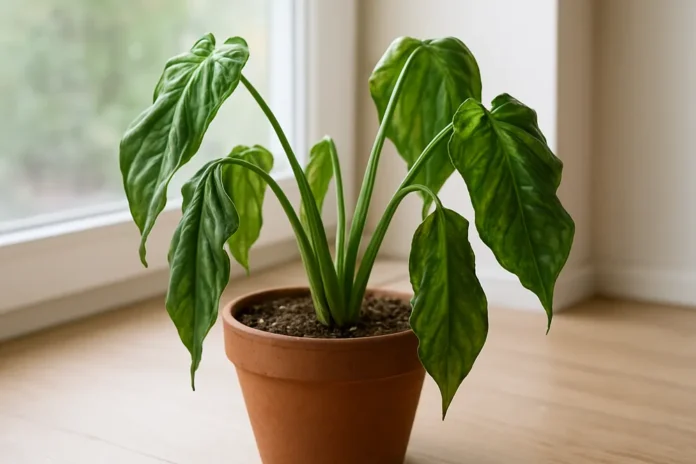
Alocasia usually wilts from watering stress, damaged roots, low humidity, or sudden temperature changes. It can also droop during transplant shock or seasonal slowdown.
A drooping alocasia can look dramatic fast. One day the leaves are held high, and the next they are hanging limp over the edge of the pot. Because these plants react quickly to stress, wilting is often the first sign that something in their growing conditions is off.
In my experience, alocasia wilting is most often tied to moisture problems, but not always in the simple "too dry" sense. Overwatering, compacted soil, root rot, cold drafts, low humidity, pest pressure, and even a recent repot can all produce the same sad, collapsed look. The trick is reading the whole plant, not just the droop.
The good news is that alocasias are expressive plants. If you match the wilt pattern with the soil condition, leaf texture, and recent changes in care, you can usually narrow the cause down pretty quickly and help the plant recover.
What Wilting Usually Means in Alocasia
Wilting means the plant is not keeping enough pressure in its tissues to hold the leaves upright. That loss of firmness can happen because roots are not supplying water properly, because the plant is losing moisture faster than it can replace it, or because the roots are stressed enough that normal uptake has slowed down.
With alocasia, wilt often shows up in a few distinct ways. The leaves may go soft and floppy while the soil feels dry. They may droop even though the pot is wet, which points more toward root trouble. Sometimes only the oldest leaf folds downward while new growth still looks fine, which can be normal aging rather than a crisis.
- Leaves hanging limp but still green often suggest recent watering stress.
- Drooping with yellowing and wet soil often points to root damage or overwatering.
- Curling edges plus wilt can signal dry air, dry soil, or heat stress.
- A single older leaf collapsing while the rest of the plant looks healthy can simply be leaf turnover.
When I diagnose a wilting alocasia, I look at the petioles as much as the leaves. If the stems feel mushy or weak near the base, I worry about root or crown problems. If they still feel firm but the leaf blades are drooping, I think first about moisture balance and humidity.
Underwatering and Uneven Moisture
A thirsty alocasia wilts fast. These plants have large leaves and can use water quickly in warm, bright conditions. If the root ball dries too far, the leaves lose tension and the whole plant can suddenly look collapsed.
The catch is that underwatering does not always mean you forgot to water for weeks. Sometimes the soil has become so dry and compact that water runs down the sides of the pot without soaking the root ball. Other times the top inch looks damp, but the center of the pot is dry.
Signs the Plant Is Too Dry
- Leaves droop but stay mostly green
- Soil feels dry several inches down
- Pot feels much lighter than usual
- Leaf edges may crisp or curl inward
- Plant perks up within a day after a thorough watering
If dryness is the cause, water deeply until excess drains from the bottom. Then let the pot drain fully instead of leaving it in standing water. Going forward, water when the top inch or two of soil feels dry, not on a rigid calendar. In brighter light and summer warmth, that may be more often than you expect.
If the root ball has gone bone dry and is repelling water, I like to bottom-water the pot for 20 to 30 minutes once, then let it drain well. That rehydrates the mix more evenly than repeatedly splashing water across a shrunken surface.
Overwatering, Soggy Soil, and Root Rot
It sounds backward, but an overwatered alocasia can wilt just as badly as an underwatered one. When roots sit in airless, saturated soil, they cannot function normally. If that stays unresolved, roots begin to rot, and the plant wilts because damaged roots can no longer move water upward.
This is one of the most common reasons people are confused. They see drooping leaves and water again, which makes the problem worse. Alocasias like consistent moisture, but they do not like stale, swampy soil.
Clues That Excess Moisture Is the Real Problem
- Soil stays wet for many days after watering
- Leaves droop and may turn yellow at the same time
- The base of stems feels soft
- The pot smells sour or musty
- Roots look brown, mushy, or peel easily if inspected
If you suspect root rot, slide the plant out of the pot and inspect the roots. Healthy roots are firm and pale. Rotten roots are dark, slimy, or hollow. Trim away damaged roots with clean scissors, repot into fresh airy mix, and use a pot with drainage holes. After repotting, keep the soil lightly moist but never soaked.
A chunky mix helps prevent repeat problems. Alocasia usually does better in a blend that holds moisture but still drains freely, such as potting soil with bark, perlite, or pumice mixed in.
Poor Drainage and the Wrong Potting Mix
Sometimes the problem is not how often you water but what the roots are sitting in. Dense potting soil, decorative containers without drainage, or an oversized pot can all keep too much moisture around the roots. That creates chronic stress and repeated wilting.
Alocasias like moisture, but they also like oxygen at the roots. A heavy mix that stays muddy works against them. This is especially true indoors where lower air movement slows drying.
Potting Issues That Trigger Drooping
- No drainage hole in the pot
- Cachepot holding runoff water around the nursery pot
- Soil made mostly of fine peat with little aeration
- Pot far larger than the root ball
- Compacted old soil that no longer drains evenly
If your alocasia keeps wilting even though your watering routine seems reasonable, improving the root environment may solve the issue better than changing the schedule. A slightly snug pot with drainage and a loose mix usually performs better than a large pot full of dense soil.
Low Humidity, Heat, and Dry Indoor Air
Alocasias are tropical plants, and dry indoor air can make them droop, curl, or crisp at the edges. This is especially common in winter when heating systems run constantly, or in summer if the plant sits near an air vent or strong afternoon sun through glass.
Low humidity alone may not make the whole plant collapse the way severe root problems do, but it can absolutely push an already stressed plant into visible wilting. A plant that is borderline dry at the roots will show it sooner in dry air.
Symptoms That Support Humidity or Heat Stress
- Leaf edges browning or crisping
- Leaves curling inward
- Wilting that worsens during the hottest part of the day
- Plant placed near heat vents, fireplaces, or blasting AC
- Soil drying much faster than normal
Move the plant away from direct blasts of hot or cold air. Aim for bright indirect light, steady warmth, and moderate to high humidity. Grouping plants together, using a humidifier, or placing the plant in a naturally more humid room can all help.
I do not rely on pebble trays alone for fussy alocasias. In a very dry house, a small humidifier makes a much more noticeable difference, especially when the plant is pushing new leaves that are easily stressed.
Cold Shock and Sudden Environmental Changes
Alocasias dislike abrupt change. A cold draft from a window, a blast of air conditioning, a chilly car ride home, or a sudden move from a greenhouse to a dry living room can all cause wilting. The leaves may droop within a day or two of the change.
This kind of stress often appears without obvious soil issues. The plant may be in adequately moist mix, yet it still slumps because the tissues were shocked by temperature or humidity change.
- Keep alocasia above about 60 degrees Fahrenheit when possible
- Avoid touching leaves to cold window glass
- Do not place the plant in the path of HVAC vents
- Acclimate gradually after bringing a plant home or moving it outdoors for summer
If cold shock is mild, the plant often recovers once conditions stabilize. If a leaf was badly damaged, it may not fully rebound, but healthy new growth should look stronger once the environment is consistent.
Transplant Shock and Disturbed Roots
A recently repotted alocasia often wilts because the roots were disturbed. Even a careful repot can interrupt water uptake for a short time, especially if the plant was divided, if many roots were broken, or if the new mix dries differently than the old one.
This type of wilting tends to happen soon after repotting, not weeks later. The plant may look limp while it reestablishes contact with the new soil and starts growing fresh root tips.
How to Help After Repotting
- Keep the plant in bright indirect light, not harsh sun
- Maintain lightly even moisture without saturating the mix
- Avoid fertilizing until you see active recovery
- Hold off on more changes such as moving, pruning, or dividing again
Most mild transplant shock improves within a couple of weeks. Judge progress by new growth and firmer posture over time, not by whether a damaged leaf looks perfect again.
Pests That Can Make Alocasia Droop
Wilting is less often caused by pests than by watering problems, but it does happen. Spider mites, thrips, aphids, and mealybugs all feed on plant tissue and can weaken leaves enough to make them droop, especially when the infestation is heavy.
Spider mites are particularly common on alocasias kept in dry indoor air. Their feeding can make leaves look dull, speckled, and stressed before you notice fine webbing.
Signs to Inspect for Pests
- Tiny pale speckles or silvery scarring on leaves
- Fine webbing under leaves or between stems
- Sticky residue, cottony patches, or visible insects
- New leaves emerging distorted or weak
Check leaf undersides, stem joints, and fresh growth closely. If pests are present, isolate the plant and treat it with insecticidal soap, neem-based products, or another houseplant-safe treatment that matches the pest. Repeated treatment is usually necessary because eggs and hidden insects survive the first round.
Natural Leaf Aging and Seasonal Slowdown
Not every drooping leaf means the plant is in trouble. Alocasias regularly shed older leaves as they produce new ones, especially if the plant is small or actively growing. One lower leaf wilting and yellowing while a new leaf opens is often normal.
Some alocasias also slow down dramatically in cooler months. Growth may pause, water use drops, and the plant can look less perky overall. In some cases, it may partially die back and rest before resuming growth later.
- A single old leaf declining is usually not alarming
- Multiple leaves collapsing at once suggests a care problem
- Lower light and cooler temperatures mean you should water less often
- Do not force heavy feeding during a slow period
If the corm and roots remain healthy, a seasonal slowdown is not a failure. The key is adjusting care to reduced growth rather than treating a resting plant like one in midsummer.
How to Figure Out the Real Cause Fast
Because several problems can cause the same drooping look, diagnosis works best when you check a few clues together. Start with the soil, then inspect the roots if needed, then think about any recent change in environment.
A Practical Wilt Checklist
- Feel the soil two inches down, not just the surface.
- Lift the pot and compare its weight to normal.
- Look for yellowing, crisping, mushiness, or pests.
- Think about recent repotting, moving, drafts, or heat exposure.
- Inspect roots if the soil has stayed wet or the plant is declining quickly.
The combination matters more than any single symptom. Dry soil plus crisp edges points you one direction. Wet soil plus yellowing points another. Try to resist making several changes at once, because that can blur the results and stress the plant further.
If you are unsure whether the issue is too dry or too wet, do not guess based on the droop alone. I have seen more alocasias lost from panic watering into already soggy soil than from waiting long enough to confirm what the roots are actually dealing with.
What Recovery Should Look Like
Once the main problem is corrected, recovery may be quick or slow depending on the cause. A mildly thirsty alocasia can perk up within hours. A plant recovering from root damage may take weeks before it pushes strong new growth.
Do not judge success only by damaged leaves. Some leaves that have wilted badly will never look perfect again. What you want to see is stable posture, no continued yellowing, healthy roots, and new leaves emerging with normal size and texture.
- Fast recovery is common after simple underwatering
- Moderate recovery time is normal after repotting or environmental shock
- Slow recovery is common after root rot because the plant must rebuild roots first
- New growth is the best sign that care changes are working
If the plant keeps worsening after you correct the obvious issue, revisit the roots and check for combined problems. It is common for alocasia to suffer from more than one stress at the same time, such as wet soil plus cold exposure or dry air plus spider mites.
FAQ
Can an Alocasia Recover After Severe Wilting?
Yes, if the roots or corm are still alive. Plants wilted from simple dryness often rebound quickly, while plants with root damage need more time and may lose older leaves before new growth returns.
Should I Water My Alocasia as Soon as I See Drooping Leaves?
Not automatically. Drooping can come from both dry soil and soggy soil, so watering immediately can worsen an overwatering problem.
How Often Should I Water an Alocasia to Prevent Wilting?
There is no fixed schedule that fits every home. Most alocasias do best when watered after the top inch or two of soil starts to dry, with frequency changing by season, light, pot size, and humidity.
Why Is Only One Alocasia Leaf Wilting?
A single older leaf drooping is often normal aging, especially if a new leaf is forming. If several leaves wilt together or the stem base softens, look for a care problem instead.
Does Low Humidity Really Make Alocasia Wilt?
Yes, especially indoors during winter or in air-conditioned rooms. Low humidity increases moisture loss and can make leaves droop, curl, or brown at the edges.
Can Repotting Cause My Alocasia to Go Limp?
Yes. Root disturbance commonly causes short-term wilting after repotting, particularly if the plant was divided or many roots were broken.
How Do I Know if My Alocasia Has Root Rot?
Persistent wet soil, yellowing with drooping, a sour smell, and brown mushy roots are classic signs. Healthy roots should feel firm and look pale rather than dark and slimy.
Need help dialing in your setup? Check our alocasia care guide and recommended soil mixes, pots, and humidity tools to stop wilting and keep new leaves strong.
