

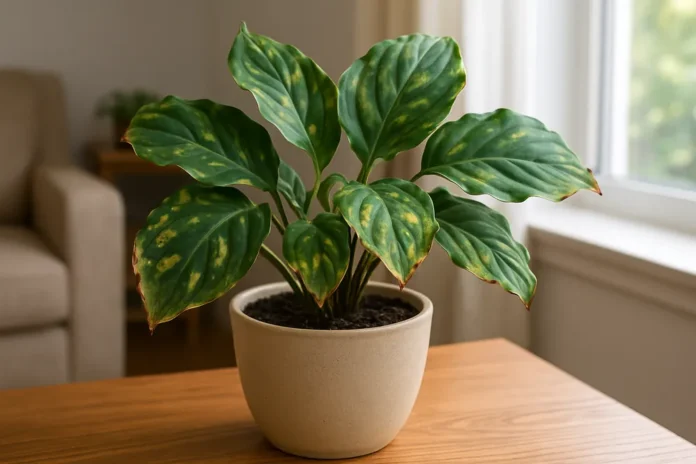
Calathea leaves develop yellow spots most often from inconsistent moisture, harsh water, direct sun, pests, or leaf spot disease. In many cases, the spotting starts when the plant is stressed and its leaves become more vulnerable.
Seeing calathea yellow spots show up on otherwise beautiful patterned leaves is frustrating, especially when the rest of the plant looked fine just a few days earlier. Calatheas are expressive plants. They react quickly to stress, and their foliage often tells you there is a problem before the whole plant declines.
In my experience, yellow spotting on a calathea is rarely random. The pattern, size, and location of the spots usually point toward a short list of causes like watering problems, mineral-heavy tap water, sun exposure, pest feeding, or a leaf disease that took advantage of damp conditions. Once you match the symptom pattern to the likely cause, the fix becomes much simpler.
What Yellow Spots Usually Mean on Calathea Leaves
Yellow spots can mean several different things on calathea, but they almost always signal that the leaf tissue has been damaged in specific patches rather than the whole leaf fading evenly. That is an important clue. When a calathea leaf turns pale all over, I think first about general stress such as chronic overwatering or a nutrient issue. When I see yellow spots on calathea leaves, I look closer at light exposure, water quality, pest feeding, and fungal spotting.
- Small scattered yellow specks can point to spider mites or thrips.
- Round or irregular yellow patches with brown centers often suggest leaf spot disease.
- Bleached yellow areas on the side facing a window may be sun scorch.
- Yellow mottling near the edges can happen after watering swings or dry air stress.
- Spotting that appears after repeated tap-water use may be tied to fluoride, chlorine, or salt buildup.
When I diagnose calathea leaves, I compare the newest leaves with the oldest and I also check whether the spots are all facing the same direction. A one-sided pattern often points to sun or draft exposure, while random spotting across multiple leaves makes me think pests or moisture-related stress first.
Moisture Stress and Inconsistent Watering
Calatheas like evenly moist soil, but not soggy roots. When the potting mix swings from very dry to very wet, the plant struggles to move water consistently through its leaves. That stress can show up as yellow spots, blotches, or patches before you ever see the classic crispy brown edges people associate with calatheas.
Underwatering can leave dry, pale spotting where leaf cells collapsed. Overwatering can do something similar in a different way by depriving roots of oxygen, weakening the plant, and making leaf tissue more prone to discoloration. If the soil stays wet for days at a time and the spots are spreading alongside drooping or soft stems, overwatering moves higher on the suspect list.
Signs Watering Is the Problem
- Spots appear after the soil got bone dry or after several heavy waterings in a row.
- Leaves curl, droop, or feel thinner than normal.
- The pot feels either extremely light for too long or dense and wet for too long.
- Lower leaves start yellowing while the plant looks generally stressed.
- You notice a sour smell, fungus gnats, or dark mushy roots, which suggests prolonged wetness.
The goal is not to keep the soil constantly soaked. It is to keep it lightly and consistently moist. Water when the top inch begins to dry, then water thoroughly enough that excess drains from the bottom. Empty the saucer so the roots are not left standing in water.
If you are not sure whether your calathea is suffering from too much or too little water, slide it out of the pot and inspect the root ball. I trust roots more than leaves in borderline cases. Healthy roots are firm and pale, while stressed roots from chronic wetness are often brown, limp, or sparse.
Tap Water Minerals and Chemical Sensitivity
Calatheas can be fussy about water quality. In many homes, yellow spots are less about how often you water and more about what is in the water. Hard water, excess dissolved salts, chlorine, chloramine, and fluoride may build up in the potting mix over time. Sensitive leaves respond with mottling, spotting, edge burn, and dull color.
This issue tends to build gradually rather than overnight. You might notice older leaves spotting first, white crust on the soil surface, or mineral residue around the pot rim. If you fertilize regularly and also use hard tap water, the combined salt load can make the problem worse.
Clues That Water Quality Is Behind the Spots
- Yellow spotting develops slowly over several weeks.
- Leaf edges also turn tan or crispy.
- There is a white film on the soil or pot.
- New growth is smaller or less vibrant than before.
- You have had similar issues with other sensitive houseplants like prayer plants, dracaenas, or spider plants.
If your tap water is hard or highly treated, switch to filtered water, distilled water, or rainwater when possible. It also helps to flush the potting mix occasionally by running plenty of low-mineral water through the pot to wash out built-up salts. If the soil is old and compacted, repotting into a fresh airy mix often speeds recovery.
Too Much Direct Sun or Heat Stress
Calatheas prefer bright indirect light. Direct afternoon sun, especially through a hot west-facing window, can damage leaf tissue quickly. The result may look like pale yellow spots at first, then bleached patches, then dry brown areas as the burned tissue dies.
Sun-related spotting is often easiest to identify because of where it appears. Leaves closest to the glass or facing the light source get hit first. The spots may be larger and more washed out than pest damage, and they often appear on the upper surface rather than evenly across the plant.
How Light Damage Differs From Other Causes
- Spots are strongest on the side nearest the window.
- The affected areas look faded or bleached before turning tan.
- Damage appears suddenly after moving the plant into brighter light.
- Only exposed leaves show spotting while shaded inner leaves stay healthy.
Move the plant back a few feet from the window, use a sheer curtain, or place it where it gets bright but filtered light. Damaged leaves will not turn green again, but stopping the exposure should protect new growth.
Low Humidity and Environmental Swings
Although low humidity more often causes browning edges, it can also contribute to yellow spotting when combined with watering stress or dry indoor heat. Calatheas are less forgiving than many common houseplants when the air is very dry, especially in winter when heating systems run constantly.
Cold drafts and sudden temperature shifts can create similar stress. If your calathea sits near an exterior door, drafty window, heating vent, or air conditioner, leaf cells may become damaged in patches. Those patches can start yellow and then turn brown.
- Humidity below about 40 percent can push a calathea into stress.
- Draft exposure often affects the same leaves repeatedly.
- Stress from dry air makes pest problems more likely, especially spider mites.
- Environmental swings usually show up alongside curling, crisping, or slowed growth.
For most calatheas, steadier conditions matter more than chasing perfect tropical humidity. Keep the plant away from vents and temperature extremes, group it with other plants, or use a humidifier if your indoor air is consistently dry.
Spider Mites, Thrips, and Other Sap-sucking Pests
Pests are one of the most common reasons calatheas develop tiny yellow spots or stippling. Spider mites, thrips, and sometimes mealybugs feed by piercing plant tissue and sucking out cell contents. That feeding leaves fine yellow specks, a faded cast, or patchy discoloration that can spread quickly if the infestation is missed.
Spider mites are especially common on calatheas kept in dry indoor air. Thrips can be trickier because they may hide in folded leaves or move between plants. If the spots are very small, numerous, and accompanied by silvery scarring, distorted new growth, or black specks of waste, inspect for pests immediately.
What to Look for when Checking for Pests
- Fine webbing under leaves or where stems meet foliage, which points to spider mites.
- Tiny moving dots on the undersides of leaves.
- Silvery streaks or scars, often linked to thrips.
- Black pinhead-sized specks of frass on leaves.
- New leaves that unfurl misshapen or scarred.
Start by isolating the plant from other houseplants. Rinse the leaves thoroughly, especially the undersides, then follow up with insecticidal soap or a houseplant-safe horticultural treatment labeled for the pest you found. Repeat treatments as directed, because eggs and hidden insects are easy to miss the first time.
I always inspect the leaf undersides with a flashlight instead of relying on the top surface alone. Calatheas can hide a surprising amount of pest activity underneath while the upper side only shows the yellow spotting.
Fungal and Bacterial Leaf Spot Diseases
If your calathea has round yellow spots that later develop brown or dark centers, a leaf spot disease may be involved. Fungal and bacterial spotting tends to appear when leaves stay wet for long periods, air circulation is poor, or the plant is already stressed from overwatering or crowding.
This kind of spotting often looks more defined than general watering stress. You may see circular lesions, yellow halos around dead tissue, or spots that enlarge over time. Sometimes several spots merge into bigger blotches.
Conditions That Encourage Leaf Spot Disease
- Frequent misting that leaves foliage wet for hours.
- Overcrowded plants with little airflow.
- Water splashing repeatedly onto leaves.
- Cool conditions combined with damp soil and wet foliage.
- Old infected leaves left on or around the plant.
Remove badly affected leaves with clean scissors, avoid getting the foliage wet, and improve airflow around the plant. Water the soil directly instead of the leaves. If the problem continues spreading fast, a houseplant-safe fungicidal product labeled for leaf spot may help, but cultural changes are the main fix indoors.
Could Nutrient Problems Cause Yellow Spots?
Nutrient deficiencies are not the first thing I suspect when a calathea gets yellow spots, but they can play a supporting role. A plant growing in exhausted soil for a long time may become more vulnerable to uneven coloring, weak growth, and stress spotting. Overfertilizing is actually more common indoors and can burn roots, leading to yellowed patches and edge damage that mimic other issues.
If you have not repotted in a couple of years, the mix may be depleted and compacted. If you fertilize every time you water or use a full-strength formula too often, salt buildup can injure the roots and worsen spotting. In both cases, the issue is less about a single missing nutrient and more about the root zone becoming unhealthy.
- Use a diluted houseplant fertilizer during active growth, not at every watering.
- Pause feeding if the plant is stressed, newly repotted, or sitting in low light.
- Repot when the mix has broken down or salts have accumulated.
- Judge improvement by healthy new leaves rather than damaged old leaves.
How to Figure Out the Real Cause on Your Plant
The fastest way to solve yellow spotting is to read the pattern instead of treating everything at once. Start with the simplest clues. Are the spots tiny and numerous, or large and patchy? Are they mostly on the side facing the window? Do they have brown centers? Is the soil soggy, bone dry, or crusted with minerals? Is the air dry? Are pests visible underneath the leaves?
A Simple Diagnosis Path
- Check the undersides of leaves for mites, thrips, webbing, or black specks.
- Review recent watering habits and feel the potting mix several inches down.
- Look at the plant's position relative to direct sun, vents, and drafts.
- Inspect the leaf shape of the spots. Round lesions with halos suggest disease more than watering stress.
- Notice any crust on the soil or pot that hints at mineral or fertilizer buildup.
If more than one factor fits, that is normal. Houseplants often decline from layered stress. A calathea watered with hard tap water, sitting in dry air, may become weak enough for spider mites or leaf spot to take hold. Fix the big stressors first and the plant has a much better chance to recover.
Do not make five changes in one day unless you have an active pest outbreak. If the issue is not urgent, I prefer to correct the biggest likely cause first, then watch the next leaf or two. New growth gives cleaner feedback than old damaged leaves.
How to Help Your Calathea Recover
Once the cause is identified, recovery is mostly about stability. Calatheas bounce back best when their environment becomes predictable. Keep them in bright indirect light, use a well-draining mix that still holds some moisture, water consistently, and avoid unnecessary stress from poor water quality or sudden location changes.
You can trim off the worst damaged leaves if they are unsightly or if disease is involved, but do not strip the plant bare. Even spotted leaves still photosynthesize if much of the surface is intact. Focus on protecting new growth, because old damage will not reverse.
- Adjust your watering routine so the mix stays evenly moist, not saturated.
- Switch to filtered, distilled, or rainwater if tap water is harsh.
- Move the plant out of direct sun and away from vents or drafts.
- Raise humidity modestly if your home is very dry.
- Treat pests thoroughly and repeat treatments on schedule.
- Remove diseased leaves and keep foliage dry if leaf spot is present.
Expect the plant to recover gradually. The spots already there are permanent, but fresh leaves should emerge cleaner if your correction worked. That is the real sign that you solved the problem.
FAQ
Will Yellow Spots on Calathea Leaves Turn Green Again?
No. Once the leaf tissue has been damaged, those yellow spots usually stay as they are or later turn brown. The goal is to stop new spots from forming on future leaves.
Should I Cut Off Leaves with Yellow Spots?
Only remove leaves that are badly damaged, diseased, or making the plant look crowded. If a leaf still has plenty of healthy green area, it can continue helping the plant even with some spotting.
Can Misting Cause Yellow Spots on Calathea?
Yes, it can contribute if misting keeps the foliage wet for long periods or encourages leaf spot disease. Misting also does very little to raise humidity for long, so it is not usually the best solution.
Do Spider Mites Cause Yellow Dots on Calathea?
Yes. Spider mites often create many tiny yellow specks or a faded stippled look, especially on the undersides of leaves. Fine webbing is another common clue.
Is Hard Tap Water Bad for Calathea?
It can be. Many calatheas react poorly to mineral-heavy or highly treated tap water, especially over time. Salt and chemical buildup may lead to spotting, browning edges, and weak growth.
Can Too Much Sun Cause Yellow Spots Instead of Brown Burns?
Yes. Light damage often starts as pale yellow or bleached patches before the tissue dries out and turns tan or brown. The side facing the window usually shows the worst damage.
How Long Does It Take a Calathea to Recover After Yellow Spotting?
You may see improvement within a couple of weeks if the stress is corrected, but full recovery depends on new growth. A healthier pattern on the next leaves is the best sign the plant is back on track.
Want to keep your calathea foliage clean and vibrant? Read our guide to the best water, humidity tools, and pest treatments for prayer plants so you can fix spotting fast and prevent it from coming back.
