

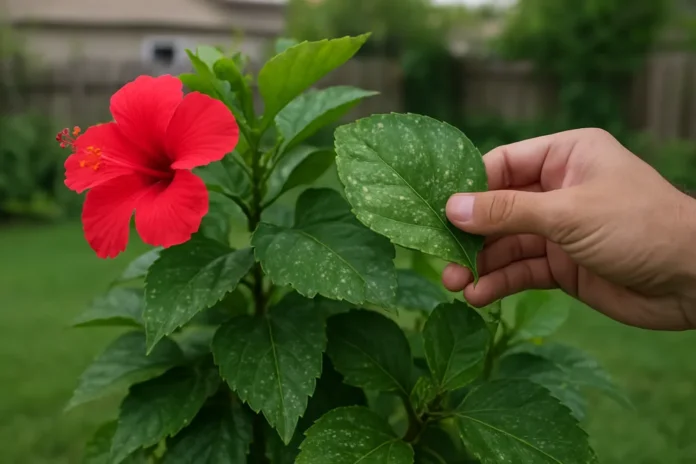
White spots on hibiscus leaves are most often caused by sap-sucking pests, powdery mildew, sunscald, or mineral residue left on the foliage. The exact cause depends on whether the spots look dusty, bleached, raised, or tied to insect activity.
When I see hibiscus leaves with white spots, I try not to jump straight to disease. On hibiscus, those pale marks can come from a few very different problems, including spider mites, whiteflies, powdery mildew, sun damage, or even harmless residue left behind by hard water or sprays.
The good news is that the pattern usually tells the story. Some spots look like a powdery coating, some are tiny speckles from insect feeding, and some are larger bleached patches where the leaf tissue has been stressed. Once you match the look of the spots to the cause, the fix becomes much more straightforward.
If your hibiscus leaves have white spots but the plant is otherwise growing well, do not assume the worst. A close look at both sides of the leaves, the newest growth, and the overall placement of the damage will usually tell you whether you are dealing with a cosmetic issue or something that needs quick treatment.
What White Spots on Hibiscus Usually Mean
White spotting is really a symptom category, not a single diagnosis. On hibiscus, the most common causes fall into four groups: pests feeding on leaf tissue, fungal growth on the leaf surface, environmental stress that bleaches part of the leaf, or deposits sitting on top of the leaf that only look like damage.
Start by asking a few simple questions. Are the spots dusty or fuzzy? Are they tiny pinpricks spread across the whole leaf? Do they wipe off? Are they only on leaves getting intense afternoon sun? Is there webbing, sticky residue, or little flying insects when the plant is disturbed? Each clue helps separate one issue from another.
- A powdery, wipeable coating points toward powdery mildew.
- Fine pale stippling, often with webbing, suggests spider mites.
- Sticky leaves with tiny white insects often mean whiteflies.
- Large bleached patches on exposed leaves can be sunscald.
- Chalky spots that rinse away may just be hard water or spray residue.
When I diagnose hibiscus, I compare old leaves and new leaves first. If the newest leaves look clean but older exposed leaves are spotted, I lean toward sun or residue. If tender new growth is already marked, I suspect pests or disease.
Pests That Cause Pale or White Spotting
Spider Mites
Spider mites are one of the top reasons hibiscus leaves develop a faded, speckled look. They feed by piercing leaf tissue and sucking out contents, which leaves behind lots of tiny pale dots. From a distance, the leaf may look dusty, silvery, or lightly bleached rather than distinctly spotted.
Mites are especially common in hot, dry weather and on stressed container hibiscus. Check the undersides of leaves for fine webbing and look closely along the midrib. Heavy infestations can cause leaf drop, dull foliage, and overall decline.
- Damage starts as tiny white or yellow speckles
- Leaves may look bronzed or washed out over time
- Fine webbing may appear between leaves and stems
- Problems usually worsen during heat and low humidity
Whiteflies
Whiteflies do not usually create bright white round spots, but their feeding can leave foliage pale and mottled. The stronger clue is the insect itself. If small white insects flutter up when you brush the plant, whiteflies are likely involved. They also leave honeydew, which can make leaves sticky and encourage sooty mold later.
Mealybugs and Scale
Mealybugs can look like little white cottony spots clustered along stems, leaf joints, or veins. Scale insects are often tan, brown, or whitish bumps that stay fixed in place. In both cases, the white material may be the pest itself rather than damage to the leaf. Feeding can weaken hibiscus and cause yellowing, curling, and poor flowering.
If you can scrape the white bump or cottony patch off with a fingernail, inspect closely before assuming fungus. Pests that remain attached in one place usually need a different treatment plan than leaf diseases.
Diseases That Leave White Patches or Coatings
Powdery Mildew
Powdery mildew is a common reason hibiscus leaves look white. It forms a pale, flour-like coating on leaf surfaces, stems, or buds. Early on, it may show up as a few scattered white spots. As it spreads, those spots merge into larger powdery patches.
This fungus is more likely when air circulation is poor, foliage stays crowded, and humidity is high. Unlike many fungal problems, powdery mildew does not require soaking wet leaves to take hold. Warm days, cool nights, and stagnant air can be enough.
- White growth sits on the surface of the leaf
- Affected tissue may distort or curl
- New growth can be more vulnerable than older leaves
- Severe infections reduce vigor and flowering
Leaf Spot Diseases with Pale Centers
Some fungal or bacterial leaf spots begin as small water-soaked or tan lesions and then develop lighter centers. On a quick glance, these can look like white spots. Usually, though, they have a defined border that is brown, reddish, or dark purple around the pale middle.
These lesions do not wipe away like powdery mildew. If the spots have clear edges and some tissue has died in the center, you are probably looking at true leaf damage rather than surface residue.
If you are unsure whether the white material is mildew or residue, rub a small area with a damp dark cloth. Mildew often smears like chalk and exposes stressed green tissue beneath it. Mineral residue usually lifts cleanly without revealing damaged leaf tissue.
Environmental Causes That Mimic Disease
Sunscald and Heat Stress
Hibiscus loves sun, but sudden exposure to intense direct light can still bleach leaves. This is especially common when a greenhouse-grown plant is moved outdoors, when a houseplant hibiscus is set on a bright patio, or when a previously shaded plant loses nearby protection.
Sunscald usually appears as larger pale, white, or tan patches on the most exposed leaves. The tissue often looks thin, papery, or dry rather than dusty. The pattern is usually strongest on the top and outer sides of the plant where the sun hits hardest.
Water Stress and Nutrient Imbalance
Water stress by itself more often causes yellowing, crisp edges, or dropping leaves than distinct white spots. Still, chronic stress can make leaves more vulnerable to bleaching, mite damage, and disease. A nutrient issue may also make existing spotting look worse because the leaf cannot recover well.
If the whole plant looks weak, pale, and slow-growing along with the spots, look at the overall care routine too. White spotting is often the symptom that gets your attention, while the real underlying problem is a stressed plant in the wrong conditions.
Chemical Burn
Foliar sprays can leave white marks if mixed too strongly or applied in harsh sun. Insecticidal soap, horticultural oil, homemade sprays, and some fertilizers can all mark hibiscus foliage. Chemical injury often follows the pattern of where droplets landed, so the spots may look splattered or evenly distributed after a recent treatment.
When the Spots Are Only Residue
Not every white mark means the leaf is damaged. Hibiscus grown outdoors or under overhead irrigation often picks up mineral deposits from hard water. Foliar feeds, dust, dried guttation salts, and spray products can all leave chalky white spotting that sits on the leaf surface.
Residue usually looks more superficial than true damage. It may collect where water dried, especially near leaf edges or tips. If the leaf underneath is healthy green and the mark washes or wipes off easily, you are likely not dealing with a disease at all.
- Spots are most obvious after watering or spraying
- The pattern may match dried droplets
- Both old and new leaves may be marked equally
- Leaf tissue stays firm and green beneath the deposit
How to Tell Which Cause You Have
The fastest diagnosis comes from close observation instead of broad treatment. Look at several leaves from different parts of the plant, especially the undersides. A single marked leaf can mislead you, but a pattern across the plant usually tells the truth.
- Check whether the white material wipes off with a damp finger or cloth.
- Inspect the undersides of leaves for mites, webbing, whiteflies, scale, or mealybugs.
- Notice whether only sun-exposed leaves are affected or whether the damage is throughout the plant.
- Look for sticky residue, curled new growth, or distorted buds that suggest insect feeding.
- Think about recent changes such as moving the plant, spraying products, or shifting the watering routine.
If the problem is powdery and spread across leaf surfaces, mildew is a strong possibility. If the leaves look stippled and weak with webbing or tiny moving dots, spider mites are much more likely. If the white marks are blotchy and mostly on the side that faces the afternoon sun, sunscald jumps to the top of the list.
I try to avoid treating for fungus and insects at the same time unless I am certain both are present. Hibiscus can react badly to unnecessary sprays, and layered treatments sometimes create more leaf spotting than the original problem.
What to Do for Each Common Cause
If Spider Mites Are the Issue
Rinse the plant thoroughly, especially the undersides of leaves, to knock mites off. Repeat several times over a week or two because eggs hatch quickly. If needed, follow with insecticidal soap or a horticultural oil labeled for ornamentals, applied carefully according to the label.
Try to reduce stress at the same time. Mites explode on dry, struggling plants, so steady watering and less dusty conditions help slow reinfestation.
If Whiteflies, Mealybugs, or Scale Are Present
Remove heavily infested leaves or stems if practical. Wash the plant, then treat with insecticidal soap, horticultural oil, or another appropriate product for ornamental pests. Mealybugs can also be dabbed directly with alcohol on a cotton swab in small infestations.
Repeat applications are often necessary because these pests hide well and return from eggs or protected life stages.
If Powdery Mildew Is the Problem
Remove the worst affected leaves if the plant is not stripped bare by doing so. Improve air movement around the plant, avoid crowding, and water the soil rather than wetting foliage late in the day. If the infection is spreading, use a fungicide labeled for powdery mildew on ornamentals.
Mild cases sometimes stabilize once conditions improve, especially if new growth emerges clean.
If Sunscald Is to Blame
Move the plant gradually into stronger light instead of shifting it all at once. Give recently moved hibiscus filtered or morning sun for several days before full exposure. Damaged leaves will not turn green again, but new leaves should adapt if the plant is hardened off slowly.
If the Spots Are Residue or Spray Marks
Rinse or wipe the leaves with plain water. Use lower-mineral water for foliar applications if possible, and avoid spraying in direct sun. If the marks followed a recent treatment, double-check the mixing rate and whether hibiscus is listed as sensitive on the product label.
How to Prevent White Spots From Coming Back
Healthy hibiscus is much less likely to stay covered in white spotting. Prevention mostly comes down to reducing stress and catching small issues before they spread.
- Water consistently so the plant is not swinging between drought and soggy soil
- Space plants or prune lightly for better airflow
- Inspect leaf undersides regularly during hot weather
- Wash dust off outdoor container plants from time to time
- Acclimate hibiscus gradually when moving it into brighter light
- Avoid overusing foliar sprays or mixing stronger than the label directs
- Remove heavily diseased leaves and keep fallen debris cleaned up
One of the best habits is simply routine inspection. White spots are much easier to manage when they first appear on a few leaves than when the entire shrub has been stressed for weeks.
When White Spotting Is a Serious Problem
A few scattered white marks are often minor, but larger patterns of decline deserve quicker attention. If your hibiscus is dropping leaves, failing to bloom, producing distorted new growth, or showing widespread sticky residue, the issue is no longer just cosmetic.
You should also move faster if the plant is young, recently transplanted, or already stressed by heat or poor drainage. Hibiscus can rebound well, but repeated pest pressure or prolonged fungal growth can set it back hard during the growing season.
- Spotting is spreading rapidly to new leaves
- Leaves are curling, dropping, or turning brown after spotting appears
- You see webbing, insects, or cottony clusters throughout the plant
- Flowers and buds are aborting or opening poorly
- Home treatments have not slowed the issue after a couple of weeks
FAQ
Can White Spots on Hibiscus Leaves Go Away on Their Own?
The existing spots usually do not disappear, especially if the leaf tissue is damaged. What matters is whether new growth comes in clean after the cause is corrected.
Are White Spots on Hibiscus Always a Fungus?
No. Many cases are caused by spider mites, whiteflies, mealybugs, sunscald, chemical burn, or simple mineral residue rather than fungal disease.
How Do I Know if It Is Powdery Mildew or Hard Water Residue?
Powdery mildew tends to look fuzzy or flour-like and may spread across leaf surfaces and new growth. Hard water residue usually follows dried droplets and wipes away without revealing damaged tissue underneath.
Should I Remove Leaves with White Spots?
Remove badly affected leaves if the plant has enough healthy foliage left and the problem appears infectious or pest-related. If only a few leaves are lightly marked, observation and treatment may be enough.
Do Spider Mites Cause White Dots on Hibiscus Leaves?
Yes. Spider mites commonly cause fine white or yellow stippling that makes leaves look speckled, dull, or silvery, especially during hot dry weather.
Can Too Much Sun Make Hibiscus Leaves Look White?
Yes. Sudden intense sun can bleach sections of the leaf, creating pale or whitish patches that often look dry or papery rather than powdery.
Is It Safe to Spray Hibiscus Leaves for White Spots?
Only if you know what you are treating and use a product labeled for hibiscus or ornamental plants. Unnecessary or overly strong sprays can create additional spotting and leaf burn.
Need the right fix fast? Explore our hibiscus care guides and treatment recommendations to choose the best pest control, fungicide, or recovery plan for cleaner leaves and stronger blooms.
