

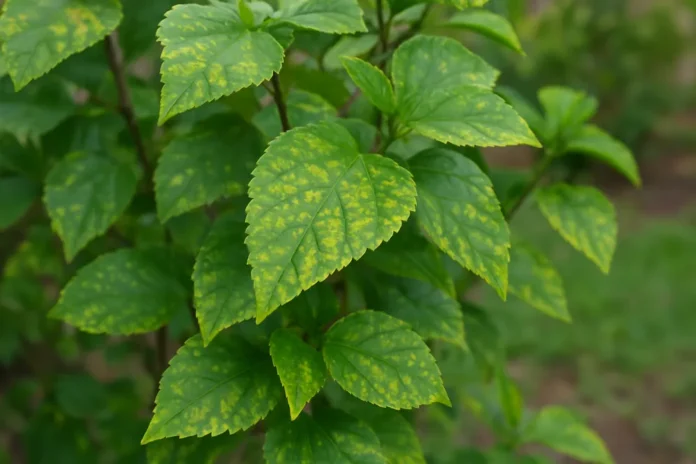
Yellow spots on hibiscus leaves are most often caused by sap-sucking pests, fungal leaf spots, nutrient imbalance, or inconsistent moisture. The exact cause usually shows up in the size, pattern, and spread of the spots.
Seeing hibiscus leaves with yellow spots can be frustrating because the problem rarely looks dramatic at first. A few speckles may seem harmless, then suddenly more leaves start fading, dropping, or picking up brown edges. In my experience, hibiscus often gives early warning signs through leaf color changes before the plant declines in a bigger way.
The good news is that yellow spotting is usually diagnosable if you slow down and look at the pattern. Tiny stippling points to pests, round lesions often suggest disease, and broader blotchy yellowing can trace back to watering or feeding issues. Once you match the symptom to the cause, yellow spots on hibiscus leaves are often very manageable.
What Yellow Spots Usually Mean on Hibiscus
Yellow spots are not one single problem. They are a symptom of stress or damage inside the leaf tissue. On hibiscus, the most common triggers are spider mites, aphids, whiteflies, fungal leaf spot diseases, poor drainage, nutrient deficiencies, and environmental stress from abrupt heat or sun exposure changes.
The shape of the spots matters. Fine pale speckles scattered across the leaf usually come from insect feeding. Larger circular yellow areas with darker centers often point to fungal infection. Irregular blotches between veins can suggest a nutrient issue, while general yellowing with some mottled spotting can happen when roots stay too wet.
- Tiny yellow pinpricks or stippling: commonly spider mites or other sap-sucking pests
- Round yellow spots that turn tan or brown: often fungal or bacterial leaf spot
- Blotchy yellow areas on older leaves: possible nutrient deficiency or root stress
- Yellow spotting followed by leaf drop: often a sign the plant has been stressed for a while
When I diagnose hibiscus, I compare several leaves from different parts of the plant instead of staring at one damaged leaf. If the newest and oldest leaves show different patterns, that usually tells me I am dealing with more than one stress at the same time.
Pests That Cause Yellow Stippling and Mottled Leaves
Spider Mites
Spider mites are one of the most common reasons hibiscus leaves develop many tiny yellow spots. They pierce the leaf surface and suck out plant juices, leaving a dusty or stippled appearance. In hot, dry weather, they multiply fast. You may also notice faint webbing under leaves or between stems if the infestation is heavy.
Aphids and Whiteflies
Aphids and whiteflies can also create pale yellow speckling or patchy chlorosis. Whiteflies often flutter up when the plant is disturbed, while aphids cluster on soft growth and buds. Their feeding weakens leaves and can lead to curling, sticky honeydew, and black sooty mold later.
Thrips
Thrips are less obvious but still damaging. They can leave silvery scarring mixed with yellow spotting, especially on young leaves and flowers. Hibiscus blooms may come out distorted if thrips are feeding heavily.
- Check the undersides of leaves first, especially near the midrib
- Tap a branch over white paper to spot tiny moving pests
- Look for sticky residue, webbing, or distorted new growth
- Isolate the plant if it is in a container and near other ornamentals
For treatment, start with a strong spray of water to knock pests off, especially on the underside of the leaves. Follow with insecticidal soap or horticultural oil, coating the entire plant carefully. Repeat applications are usually necessary because eggs and hidden pests survive the first pass. Avoid spraying in intense midday heat to prevent leaf burn.
If I suspect spider mites, I do not just treat once and assume it is handled. Hibiscus foliage is dense, and mites hide deep in the canopy, so two or three well-timed sprays usually work better than one heavy application.
Leaf Spot Diseases That Start Yellow and Turn Brown
Fungal and sometimes bacterial leaf spots are another frequent cause of yellow-spotted hibiscus leaves. These spots often begin as pale yellow circles or halos, then develop tan, brown, or nearly black centers as tissue dies. In humid weather, the spots can spread quickly and merge into larger blotches.
Unlike pest stippling, disease spots are usually more defined and lesion-like. They may have a clear edge, a target pattern, or a darker rim. Badly infected leaves often yellow all over and drop prematurely, especially if the plant stays wet for long periods.
- Watering overhead late in the day keeps leaves wet too long
- Poor air circulation encourages fungal spread
- Crowded growth traps humidity inside the plant
- Old infected leaves on the soil can reintroduce spores
To manage leaf spot, remove and discard badly affected leaves, including fallen debris around the base. Improve airflow by light pruning if the plant is dense. Water at the soil line rather than over the foliage. If the disease continues spreading, a copper-based fungicide or another ornamental fungicide labeled for hibiscus may help, especially when started early.
Do not expect old spotted leaves to turn green again. The goal is to protect clean new growth and slow further spread. If fresh leaves stay healthy after your changes, the plant is moving in the right direction.
Watering Problems and Root Stress
Hibiscus likes consistent moisture, but it does not like sitting in waterlogged soil. When roots stay too wet, oxygen levels drop, roots struggle, and leaves can show yellow patches, spot-like chlorosis, or a washed-out mottled look. Over time, stressed roots may lead to leaf drop and fewer blooms.
Underwatering can also trigger yellow spotting, especially if the plant repeatedly wilts and recovers. That kind of stress can damage leaf tissue unevenly, leaving pale flecks or blotches before the leaf dries at the edges. Container hibiscus are especially prone to these swings in midsummer.
Signs the Issue May Be Moisture-related
- Leaves look limp or soft in addition to being spotted
- The pot feels heavy and stays wet for days
- Soil has a sour smell or the drainage hole drains poorly
- Yellow spotting appears after a heat wave or after frequent rain
Fixing moisture stress depends on the direction of the problem. If the soil is staying soggy, reduce watering frequency and improve drainage. For potted plants, make sure the container has open drainage holes and a loose potting mix. If the plant is drying too fast, water deeply and evenly rather than giving shallow daily sips that only wet the surface.
A hibiscus that is overwatered and a hibiscus that is badly underwatered can both look yellow and unhappy. I trust the root zone more than the leaves in that moment, because the soil tells me whether the plant is drowning, drying out, or swinging between both.
Nutrient Deficiencies and pH Issues
Sometimes yellow spots are not true spots at all, but irregular chlorosis caused by nutrient imbalance. Hibiscus is a heavy feeder, and when nutrients become unavailable, leaves may show patchy yellowing between veins or scattered pale areas that mimic spotting.
Iron Deficiency
Iron deficiency often shows up on newer leaves first. The tissue between veins turns yellow while the veins remain greener. This can happen even when fertilizer is present if the soil pH is too high, because the roots cannot take up iron efficiently.
Magnesium or Nitrogen Deficiency
Magnesium deficiency usually affects older leaves and may create yellowing between veins with some scattered blotchiness. Nitrogen deficiency tends to cause more even pale yellowing, but mild cases can look uneven enough to be confused with spot problems.
- New leaves yellow first: think iron or manganese issues
- Older leaves yellow first: think nitrogen or magnesium shortages
- Fertilizer applied recently but symptoms continue: consider pH or root damage
- Container plants often run short of nutrients faster than in-ground hibiscus
Use a balanced fertilizer made for flowering plants or hibiscus, and avoid overfeeding in hopes of a quick fix. Too much fertilizer can scorch roots and make symptoms worse. If you suspect pH-related chlorosis, a soil test is worth it, especially for in-ground shrubs that have struggled for more than one season.
Sun, Temperature, and Chemical Stress
Environmental stress can also produce yellow spots or bleached patches. Hibiscus moved suddenly from shade to strong direct sun may develop sunscald, which starts as pale yellow or whitish areas before tissue turns dry and brown. Heat reflected off walls, patios, or windows can intensify the problem.
Cold snaps can cause irregular yellow spotting too, especially on tropical hibiscus. The damage may not show immediately. Leaves sometimes discolor a day or two later, then begin dropping. In some yards, this happens when warm days are followed by unexpectedly cool nights.
Chemical injury is another possibility. Strong foliar sprays, improperly mixed insecticides, or fertilizer salts splashed on leaves can leave yellow specks, burned margins, or larger blotches. If spotting appeared soon after a product application, that timing is an important clue.
- Recent move from indoors or shade to full sun
- Cold nights or wind exposure after a warm spell
- Sprays applied during hot weather
- Fertilizer or pesticide residue on the leaf surface
How to Tell Which Cause Is Most Likely
If your hibiscus has yellow spots, start by looking at the pattern before reaching for a treatment. Spot shape, leaf age, and where the damage appears on the plant will usually narrow it down quickly. The biggest mistake I see is treating everything as a nutrient issue when pests or soggy roots are the real problem.
- Inspect the undersides of several leaves for mites, aphids, whiteflies, or webbing.
- Look at whether the spots are tiny and widespread or larger and circular.
- Notice whether the newest leaves, oldest leaves, or the whole plant are affected.
- Check soil moisture a few inches down or evaluate the potting mix and drainage.
- Think back to recent weather changes, sprays, fertilizer, or plant moves.
This quick comparison usually reveals the leading cause. Tiny speckles plus webbing strongly suggest mites. Defined yellow-and-brown lesions point toward leaf spot disease. Patchy yellowing without clear lesions often comes back to roots, feeding, or pH.
How to Fix Yellow-spotted Hibiscus Leaves
Once you identify the likely trigger, keep the response targeted. Hibiscus can recover well when the main stress is removed, but trying too many remedies at once often creates a second problem.
- For pests: rinse foliage, then use insecticidal soap or horticultural oil as labeled
- For disease: remove infected leaves, water at the base, and improve airflow
- For overwatering: let the root zone dry appropriately and correct drainage
- For underwatering: water deeply and consistently rather than lightly and often
- For nutrient issues: feed with a balanced hibiscus or flowering plant fertilizer
- For sun or spray burn: move to better conditions and avoid harsh midday applications
After treatment, watch the new growth more than the damaged leaves. Spotted leaves usually stay marked, even after the cause is fixed. Improvement shows up when fresh leaves emerge greener, cleaner, and free of new lesions or stippling.
If the plant keeps declining despite your adjustments, inspect the roots if possible. Brown, mushy roots indicate rot, while tightly packed roots in a pot can create water and nutrient stress even when care seems reasonable.
How to Prevent Yellow Spots From Returning
Prevention is mostly about reducing stress and catching problems early. Healthy hibiscus still gets the occasional damaged leaf, but repeated spotting usually means conditions are favoring pests, disease, or root trouble.
- Water consistently and make sure excess water drains away
- Inspect leaf undersides weekly during hot weather
- Avoid wetting foliage late in the day
- Feed regularly during active growth, but do not overdo it
- Prune lightly for airflow if the canopy gets crowded
- Remove fallen leaves and plant debris around the base
- Acclimate hibiscus gradually when moving it into stronger sun
I have found that a simple weekly check catches most hibiscus problems before they become serious. A quick look under the leaves, a hand in the soil, and a glance at the newest growth can save a lot of cleanup later.
FAQ
Will Yellow-spotted Hibiscus Leaves Turn Green Again?
Usually no. Damaged leaf tissue rarely repairs itself. What you want to see is healthy new growth after the underlying problem is corrected.
Should I Remove Leaves with Yellow Spots From My Hibiscus?
Remove badly damaged or diseased leaves, especially if they have brown centers or are dropping. If only a few leaves are lightly spotted, you can leave them while you monitor the plant.
Can Too Much Sun Cause Yellow Spots on Hibiscus Leaves?
Yes. A sudden move into harsher sun can bleach or scorch leaves, creating pale yellow patches that later turn dry or brown.
Do Spider Mites Make Hibiscus Leaves Look Yellow?
Yes. Spider mites often cause fine yellow stippling across the leaf surface, and heavy infestations may include faint webbing underneath the leaves.
Can Overwatering Cause Yellow Spots on Hibiscus?
Yes. Roots stressed by soggy soil can lead to mottled yellowing, spot-like chlorosis, leaf drop, and generally weak growth.
What Nutrient Deficiency Causes Yellow Spotting on Hibiscus?
Iron and magnesium deficiencies are common causes of patchy yellowing that may look like spotting. Iron usually affects newer leaves first, while magnesium often shows on older leaves.
Is Leaf Spot Disease on Hibiscus Contagious to Other Plants?
Some fungal and bacterial leaf spot pathogens can spread to nearby susceptible plants through splashing water and contaminated debris. Good sanitation and avoiding overhead watering help reduce spread.
Need the right treatment fast? Read our guide to the best insecticidal soaps, fungicides, and hibiscus fertilizers so you can stop yellow spotting and get healthy blooms back sooner.
