

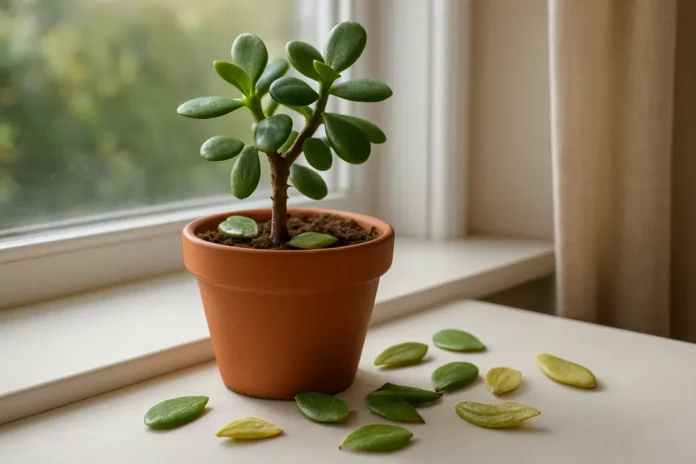
A jade plant usually drops leaves because it is stressed by too much water, too little light, sudden temperature changes, or root problems. Older leaves can fall naturally, but heavy leaf drop means something in its care or environment is off.
A jade plant dropping leaves is one of those problems that gets attention fast, because these plants usually look sturdy and dependable. When healthy, jade plants hold onto their fleshy leaves for a long time, so sudden leaf drop is a sign that something has changed.
In my experience, the most common reason is watering stress, especially overwatering, but light levels, cold drafts, repotting shock, and even normal aging can all play a role. The useful part is that jade often gives clues before or during leaf drop. The leaves may wrinkle, turn yellow, soften, or fall while still green, and each pattern points in a slightly different direction.
If your jade plant is shedding more than an occasional lower leaf, it is worth slowing down and reading the plant like a whole system: soil, roots, pot, light, and recent changes. Once you identify the main stress, recovery is usually very doable.
What Kind of Leaf Drop Is Normal for Jade Plants
Some leaf loss is completely normal. Jade plants gradually drop a few older leaves near the base as they grow and form thicker stems. If the plant looks firm, the top growth is healthy, and only an occasional lower leaf falls, that is usually not a problem.
What is not normal is a sudden shower of leaves, repeated dropping over several weeks, or leaf loss paired with yellowing, mushiness, shriveling, or leaning growth. Those signs usually mean the plant is under stress rather than simply aging.
- Normal leaf drop: a few older bottom leaves over time
- Concerning leaf drop: many leaves falling at once
- Concerning leaf drop: leaves dropping from several parts of the plant, not just the oldest area
- Concerning leaf drop: leaf loss paired with soft stems, yellow leaves, wrinkles, or a sour soil smell
Overwatering Is the Most Common Cause
Jade plants are succulents, so they store water in their leaves and stems. That means they need a full soak followed by a real drying period. When the soil stays wet too long, the roots struggle for oxygen and can begin to rot. One of the earliest visible signs is leaf drop.
Overwatered jade leaves often turn yellow or pale before they fall. They may feel soft instead of plump. In more advanced cases, the stems can become mushy, blackened, or weak at the base. If the pot feels heavy for days and the soil still feels damp several inches down, excess moisture is a likely culprit.
- Leaves turning yellow before dropping
- Soft, translucent, or mushy leaves
- Wet soil that stays damp for too long
- A musty or sour smell from the potting mix
- Black, brown, or soft roots if you inspect the root ball
When I am diagnosing jade leaf drop, I pay more attention to stem firmness than to the top inch of soil. The surface can look dry while the lower root zone is still soggy, especially in large pots or in low winter light.
If you suspect overwatering, stop watering until the mix dries thoroughly. If the plant is badly affected, slipping it out of the pot to inspect the roots is often worth doing. Trim away rotten roots, let the cut surfaces dry briefly, and repot into a fast-draining succulent mix in a pot with a drainage hole.
Underwatering Can Also Cause Leaves to Fall
Although overwatering is more common, a jade plant that stays too dry for too long can also drop leaves. The difference is that underwatered leaves usually wrinkle, flatten, or feel thin before they fall. Instead of looking soft and waterlogged, they look tired and depleted.
This happens when the plant uses up the moisture stored in its leaves faster than the roots can replace it. It can occur if the potting mix becomes so dry that it pulls away from the sides of the pot, if the root ball has become crowded, or if the plant is in hot sun and you have stretched the watering interval too far.
- Wrinkled or puckered leaves
- Leaves that feel less firm and less full
- Dry, compacted soil that repels water
- Leaf drop after a long dry spell
- Stems that stay firm rather than turning mushy
A jade that is too dry usually perks up once watering becomes more consistent, but avoid the urge to flood it repeatedly. One deep watering, followed by a return to a proper dry-down cycle, works better than frequent small drinks.
Insufficient Light Weakens the Plant
Jade plants need bright light to stay compact and support their own leaves. In dim rooms, they often stretch toward the window, produce weaker stems, and begin dropping leaves because the plant cannot sustain all that growth efficiently.
Low-light leaf drop is often slower than watering-related leaf drop. You may notice longer gaps between leaves, a thinner shape, fading color, and branches leaning hard in one direction. Sometimes the plant stays alive for quite a while but never really stabilizes until the light improves.
- Leggy or stretched growth
- Pale green leaves instead of richer green
- Plant leaning strongly toward the light source
- Gradual leaf drop without obvious mushiness or severe wrinkling
A brighter window, especially one with several hours of strong indirect light or gentle direct sun, often makes a big difference. Just do not move a low-light jade straight into harsh all-day sun without a transition, because that can cause its own stress.
Sudden Temperature Swings and Drafts Can Trigger Stress
Jade plants like stable indoor conditions. A cold draft from a door, a chilly windowsill in winter, or hot air blasting from a vent can all lead to leaf drop. These plants are tougher than they look, but they do not love abrupt changes.
Cold damage often shows up fast. Leaves may drop while still green, or they may develop dark, water-soaked patches first. Heat stress can cause shriveling, especially if it is paired with intense sun through glass or very dry indoor air.
- Leaf drop soon after moving the plant
- Damage after a cold night near glass
- Leaves falling from the side facing a draft or vent
- Dark patches, shriveling, or sudden soft spots after temperature stress
If a jade starts dropping leaves after you move it, I would first look at the new location rather than changing watering right away. A plant moved from a mild spot to a cold window or heat vent can react within days even if the soil routine stayed the same.
Root Problems and Poor Potting Mix Can Keep the Plant Struggling
Sometimes the real issue is not how often you water but what the roots are sitting in. Dense potting soil, oversized pots, and containers without drainage all increase the odds of chronic root stress. A jade can drop leaves because the roots are either rotting or simply not functioning well.
Healthy jade roots should be fairly firm and light colored. Rotten roots are dark, mushy, and may slough off their outer layer. A root-bound jade can also shed leaves if it dries out too quickly and cannot take up water evenly.
For long-term health, use a gritty, fast-draining mix made for succulents or cacti, or amend regular potting mix with coarse perlite or pumice. The pot should have a drainage hole, and it should only be a little larger than the root ball.
Repotting, Relocation, and Seasonal Changes Can Cause Temporary Leaf Drop
Jade plants can sulk after disruption. If you recently repotted, moved the plant outdoors for summer, brought it back inside, or rotated it into a much brighter or darker space, some leaf drop can happen while it adjusts.
This kind of leaf loss is usually temporary if the roots are healthy and the plant is otherwise in good condition. The key is to keep care steady instead of reacting to every fallen leaf by changing multiple things at once.
I have seen more jades decline from panic care than from the original stress. If you repotted last week and now the plant drops a few leaves, give it a stable spot and time before making another round of changes.
- Repotting into a much larger pot
- Moving from indoors to strong outdoor light
- Bringing the plant indoors in fall
- Changing both light and watering at the same time
Pests and Disease Are Less Common but Still Possible
Jade plants are not especially pest-prone compared with some houseplants, but mealybugs, scale, and occasionally spider mites can weaken them enough to cause leaf loss. If your plant looks sticky, has cottony clusters, or shows fine webbing, inspect closely.
Pests usually cause leaf drop indirectly by draining sap and stressing the plant over time. Leaves may yellow, spot, or distort before they fall. Fungal problems are less common indoors but can follow chronically wet conditions and root damage.
- White cottony patches in leaf joints from mealybugs
- Brown bumps on stems or leaves from scale
- Fine webbing and stippling from spider mites
- Leaf spotting combined with poor airflow and excess moisture
Treat pests early with repeated cleaning and an appropriate houseplant-safe control method. If the infestation is light, even wiping the leaves and stems carefully can reduce stress enough to stop the decline.
How to Tell the Difference by Reading the Symptoms
The best way to figure out why a jade is dropping leaves is to match the leaf texture and the recent conditions. Leaf drop by itself is only part of the story. The feel, color, and timing matter just as much.
- Yellow and soft leaves usually point to overwatering
- Wrinkled and thin leaves usually point to underwatering
- Green leaves dropping suddenly can point to temperature shock or relocation stress
- Leggy growth with gradual leaf loss often points to low light
- Leaf drop with mushy stems points to serious root or stem rot
- Leaf drop with visible insects or sticky residue suggests pest stress
Try to think in terms of patterns, not one leaf at a time. If the whole plant feels unstable, check the roots and the potting mix. If the stems are solid and the leaves are wrinkled, watering rhythm is more likely the issue than disease.
What to Do Right Now to Help Your Jade Recover
Start with the simplest correction that matches the most likely cause. Do not fertilize a stressed jade right away, and do not keep moving it from place to place. Recovery is usually about restoring steady conditions rather than pushing new growth.
- Check the soil several inches down, not just at the surface.
- Inspect the stems for firmness and the leaves for softness or wrinkles.
- Make sure the pot has a drainage hole.
- If the soil is soggy, let it dry thoroughly and inspect roots if needed.
- If the soil is bone dry and the leaves are wrinkled, water deeply once and let excess drain away.
- Move the plant to bright light if it has been sitting in a dim room.
- Keep it away from cold drafts, heater vents, and frequent relocation.
- Watch new growth and new leaf retention rather than expecting fallen leaves to return.
A recovering jade may still drop a few more leaves before it settles down. That is normal. What you want to see is firmer stems, stable remaining leaves, and healthy new growth over time.
How to Prevent Future Leaf Drop
Prevention mostly comes down to matching jade care to the way succulents actually grow. They like bright light, airy soil, and a wet-dry watering cycle instead of constant moisture.
- Water deeply, then wait until the mix dries well before watering again
- Use a succulent-friendly potting mix with good drainage
- Keep the plant in bright light for stronger stems and better leaf retention
- Avoid oversized decorative pots that hold too much damp soil
- Protect the plant from freezing temperatures and harsh drafts
- Change conditions gradually when moving the plant indoors or outdoors
- Check the plant every week or two so small problems do not become major ones
Jade plants are forgiving once you understand their rhythm. I have found that the healthiest ones are rarely fussed over. They get bright light, an occasional thorough drink, and plenty of time to dry out in between.
FAQ
Will Jade Plant Leaves Grow Back After They Fall Off?
The individual fallen leaves will not reattach, but the plant can produce new leaves from healthy stems once the underlying stress is corrected.
Why Is My Jade Plant Dropping Healthy Green Leaves?
Green leaf drop often points to sudden stress such as cold exposure, relocation, root disturbance, or inconsistent watering before the leaves had time to discolor.
Should I Remove Leaves That Are About to Fall?
You can gently remove fully loose leaves, but do not tug hard on attached ones. It is more important to fix the cause than to clean up every damaged leaf immediately.
How Often Should I Water a Jade Plant?
There is no perfect schedule because light, pot size, season, and soil all matter. In general, water only after the potting mix has dried well, then soak thoroughly and let the excess drain.
Can a Jade Plant Recover From Root Rot?
Yes, if enough healthy stem and root tissue remains. Remove rotten roots, repot into a fast-draining mix, and avoid watering again until the plant has had time to settle.
Do Jade Plants Drop Leaves in Winter?
They can drop a few leaves in winter if indoor light is weaker or if temperatures fluctuate, but heavy winter leaf drop usually means watering or environmental stress is involved.
Is Leaf Drop After Repotting Normal?
A small amount can be normal after repotting, especially if roots were disturbed. Ongoing heavy leaf drop suggests the new soil, pot size, watering, or root condition needs another look.
Want to keep your succulent collection healthier year-round? Read our guide to the best succulent soils and pots with drainage so you can choose a setup that prevents root stress before it starts.
