

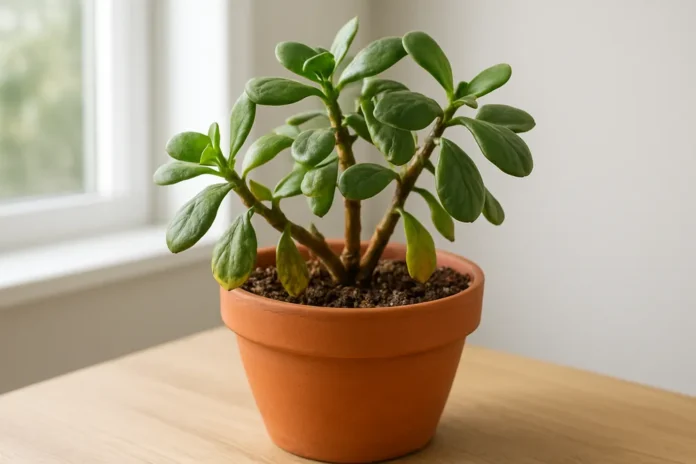
Jade plant leaves usually shrivel when the plant cannot take up or hold water properly. The most common reasons are underwatering, overwatering with root damage, poor drainage, or sudden stress from heat, cold, or harsh sun.
A jade plant with wrinkled, limp, or shrunken leaves is almost always telling you something about water balance. Even though jade is a succulent, that does not mean it can shrug off every watering mistake. When the leaves lose their plump, firm feel and start to shrivel, the plant is either running short on moisture or it has roots that are too damaged to move water where it needs to go.
I see this most often after well-meaning care changes. A plant gets watered too lightly for weeks, then drenched too often to make up for it, or it sits in a decorative pot with no drainage and slowly declines. Jade plant leaves shriveling can also show up after a cold draft, intense summer sun through glass, or a pest problem that is easy to miss until the leaves start looking tired and thin.
The good news is that jade plants are usually pretty honest once you know how to read them. If you look at the leaves, stems, soil, and roots together, you can usually narrow the cause down quickly and get the plant back on track.
What Shriveled Jade Leaves Are Telling You
Healthy jade leaves are thick, smooth, and firm. When they start to wrinkle or collapse inward, the plant is using up stored moisture faster than it can replace it. That can happen because the potting mix has stayed dry too long, because damaged roots cannot absorb water, or because environmental stress is forcing the plant to lose moisture faster than normal.
The important thing is not to assume every shriveled leaf means the same thing. A thirsty jade and an overwatered jade can both look deflated. The difference is in the rest of the plant. Dry soil, firm stems, and leaf drop from the bottom often point toward underwatering. Soft stems, blackened roots, a sour smell, and constantly wet soil usually point toward overwatering or rot.
When I diagnose a jade, I squeeze several leaves from different parts of the plant instead of judging one bad leaf. If the newest leaves are still fairly firm but older ones are wrinkling, I think water timing first. If the whole plant feels weak and the stems are soft too, I get much more suspicious of root trouble.
Underwatering Is One of the Most Common Causes
A jade stores water in its leaves and stems, so it can coast through dry spells for a while. But if the root ball gets too dry over and over, the plant starts drawing down those reserves. The leaves lose firmness, wrinkle, and may look a little thinner than usual. Older leaves often show the first symptoms.
This often happens when the plant is watered in tiny sips instead of being soaked thoroughly. A light splash can wet only the top inch of soil while the lower roots stay bone dry. It can also happen when a root-bound jade dries out so fast that the soil pulls away from the sides of the pot and water runs straight through without soaking in.
Signs the Plant Is Too Dry
- Leaves look wrinkled but not mushy
- Stems stay fairly firm rather than soft and collapsing
- Pot feels very light when lifted
- Soil is dry well below the surface
- Leaves may drop, especially older lower leaves
If this is the cause, the fix is simple but needs to be done well. Water deeply until excess drains out the bottom, then let the potting mix dry substantially before watering again. Jades do not want constant moisture, but they do want a complete watering cycle when they are dry enough.
Overwatering Can Cause Shriveling Too
This is the part that confuses a lot of gardeners. Overwatered jade plants can also develop shriveled leaves because the roots are damaged and cannot take up moisture properly. The leaves may look dehydrated even though the soil is wet. In other words, the plant is effectively thirsty because its root system is failing.
The risk is highest when jade is growing in dense potting soil, in a pot without a drainage hole, or in low light where the mix stays wet for too long. Frequent watering on a set schedule can also cause problems, especially in winter when growth slows and the plant uses much less water.
Clues That Point to Overwatering
- Leaves shrivel but also feel soft or weak
- Some leaves turn yellow before dropping
- Stems near the base feel mushy or dark
- Soil stays wet for many days
- The pot smells sour or stale
If you suspect overwatering, do not keep adding water because the leaves look thirsty. Let the mix dry, then check the roots if the plant does not improve. Healthy roots are pale and firm. Rotting roots are brown, black, mushy, or easily stripped when touched.
A jade that looks dehydrated in wet soil is one of the clearest signals that watering more will make things worse. In that situation, I focus on root health and drainage before I think about moisture levels in the leaves.
Poor Drainage and the Wrong Soil Mix Stress Jade Roots
Jade plants need air around their roots as much as they need water. If the soil stays compacted and heavy, oxygen levels drop and roots start to decline. Once that happens, shriveling leaves are often not far behind. The plant may have enough moisture in the pot, but not enough healthy root function to use it.
A standard moisture-retentive houseplant mix can be too heavy for jade unless it is amended. I prefer a gritty, fast-draining succulent blend or a cactus mix improved with extra pumice, perlite, or coarse sand. The exact recipe matters less than the result: water should soak in, excess should drain quickly, and the mix should not stay swampy.
Drainage Problems That Often Lead to Shriveling
- A pot with no drainage hole
- Heavy peat-based soil that stays wet too long
- A saucer left full of water
- An oversized pot that dries very slowly
- Compacted old soil that has broken down over time
If the mix is the problem, repotting can make a huge difference. Use a container with a drainage hole and size up only slightly if needed. A pot that is too large stays wet longer than the plant can comfortably handle.
Root Rot Is a More Serious Version of Overwatering Stress
If shriveling is severe and the plant seems to decline even after you correct watering, root rot may already be advanced. Root rot starts when roots stay too wet for too long and begin to decay. Once enough roots are lost, the plant cannot support its leaves, so they wrinkle, soften, and may eventually drop.
You may also see blackened stem tissue at the base, translucent or yellowing leaves, or branches that snap off more easily than usual. In bad cases, the crown of the plant becomes unstable and the whole jade feels loose in the pot.
What to Do if Roots Are Rotting
- Unpot the plant and inspect the roots and lower stem.
- Trim away mushy, black, or foul-smelling roots with clean pruners.
- Let cut areas dry briefly before repotting.
- Repot in fresh, fast-draining succulent soil in a clean pot with drainage.
- Wait a short period before watering so damaged roots can settle.
If the lower stem is badly rotted, the safest rescue may be to take healthy stem cuttings from unaffected growth and restart the plant. Jade cuttings root fairly easily, so even a rough-looking plant can often be saved in pieces.
Too Much Sun, Heat, or Sudden Exposure Can Dehydrate the Leaves
Jade likes bright light and can handle some direct sun, but sudden exposure to intense afternoon sun can stress the leaves. This is especially common when a plant moves from lower indoor light to a hot south- or west-facing window, porch, or patio. The plant starts losing moisture faster than the roots can keep up, and the leaves begin to wrinkle.
Heat stress often comes with other symptoms too. Leaves may look dull, develop brown or tan sunburned patches, or show reddish edging that seems stronger than normal stress coloring. A plant that dries much faster in summer may also need a different watering rhythm than it did in cooler weather.
When Light Stress Is the Likely Culprit
- Shriveling started soon after moving the plant
- The sun hits the leaves hard in late afternoon
- Wrinkling appears alongside scorched or bleached spots
- The potting mix dries much faster than it used to
The best fix is to increase light gradually, not all at once. Bright indirect light or gentler morning sun is usually easier on a stressed jade while it recovers.
Cold Drafts and Temperature Swings Can Damage Leaf Tissue
Jade plants do not like chilling temperatures, especially when combined with damp soil. A cold windowsill in winter, an exterior door that opens often, or a sudden move outdoors can shock the plant. Damaged leaf cells lose their ability to hold moisture normally, and the leaves can wrinkle, soften, or develop translucent spots.
Unlike simple thirst, cold injury often appears suddenly after one bad night or a drafty stretch of weather. The leaves may not recover fully if the tissue has been damaged, but healthy new growth can still come in once the plant is returned to stable conditions.
I pay close attention to where a jade sits at night, not just during the day. A plant can look happy in a sunny window at noon and still get stressed if the glass turns cold after sunset or if the leaves touch the pane.
Pests Can Slowly Drain Moisture From Jade Leaves
Shriveled leaves are less often caused by pests, but it does happen. Mealybugs, scale, and spider mites feed on plant sap and can leave jade looking weak, puckered, or dehydrated over time. Because jade has thick leaves, early infestations can be easy to overlook.
Look closely where leaves join stems, along branch crotches, and on the undersides of foliage. Mealybugs look like bits of cotton. Scale appears as small bumps attached to stems or leaves. Spider mites are tiny, but their fine webbing can give them away in dry indoor air.
Pest Symptoms That May Accompany Shriveling
- Sticky residue on leaves or nearby surfaces
- White cottony clusters
- Small brown or tan shell-like bumps
- Fine webbing near leaf joints
- Distorted or weakened new growth
Treat early. Wipe pests away by hand, isolate the plant, and repeat treatment as needed. Severe infestations can keep a jade from bouncing back even after watering and light are corrected.
How to Figure Out the Real Cause Fast
The quickest way to diagnose a shriveling jade is to look at the whole picture instead of any one symptom. Start with the soil, then the roots if needed, then the environment. Most mistakes happen when gardeners react to leaf texture alone and water blindly.
A Simple Troubleshooting Sequence
- Check whether the soil is truly dry or still wet below the surface.
- Feel the leaves and stems for firmness versus softness.
- Think about recent changes in light, temperature, or location.
- Inspect for pests at leaf joints and along stems.
- Unpot the plant if symptoms persist and root health is unclear.
This approach helps you avoid the most common mistake, which is treating root rot like drought. A jade with healthy roots can usually recover from wrinkled leaves. A jade with failing roots needs the root problem solved first.
How to Help a Shriveling Jade Recover
Recovery depends on matching the fix to the cause, but a few rules apply in almost every case. Give the plant stable conditions, avoid overcorrecting, and judge progress by new firmness and new growth rather than expecting every damaged leaf to plump back up perfectly.
Best Recovery Steps
- Water deeply only when the potting mix has dried enough for jade's needs
- Use a pot with drainage and a gritty succulent mix
- Keep the plant in bright light, but protect it from sudden harsh exposure
- Remove rotten roots or take cuttings if the base is compromised
- Hold off on fertilizer until the plant is actively recovering
- Be patient and watch new growth for the clearest improvement
If your jade is badly wrinkled but still has firm stems and healthy roots, it often rebounds well. If the stems are collapsing and the roots are gone, propagation may be the better route. Either way, the goal is to restore a steady cycle of bright light, thorough but infrequent watering, and excellent drainage.
FAQ
Will Shriveled Jade Leaves Plump Back Up?
Sometimes. Mildly dehydrated leaves often improve after proper watering, but badly damaged or aged leaves may stay wrinkled even if the plant recovers. Look at new growth and overall firmness for the best sign of progress.
How Often Should I Water a Jade Plant with Shriveled Leaves?
There is no fixed schedule that works in every home. Water when the potting mix has dried enough for a succulent, then soak thoroughly and let excess drain away. Light, temperature, pot size, and season all change the timing.
Can Overwatering and Underwatering Really Look Similar on Jade?
Yes. Both problems can cause leaves to look deflated. The difference is that underwatered plants usually have dry soil and firm stems, while overwatered plants often have wet soil, soft stems, yellowing, or root rot.
Should I Mist My Jade Plant if the Leaves Are Shriveling?
No. Misting does not solve the root or watering issue causing shriveled leaves. Jade stores water internally, so the real fix is correcting soil moisture, drainage, and root health.
Do I Need to Repot My Jade if the Leaves Are Wrinkled?
Only if the current setup is part of the problem. Repot if the soil stays wet too long, the pot has no drainage, the roots are rotting, or the plant is so root-bound that water no longer soaks in properly.
Can Too Much Sun Make Jade Leaves Shrivel?
Yes. Sudden intense sun and high heat can cause the plant to lose moisture faster than it can replace it. This is especially likely after moving a jade from lower indoor light into direct afternoon sun.
Is It Normal for Only the Bottom Jade Leaves to Shrivel?
It can be. Older lower leaves naturally age out over time, but if several are shriveling at once, review watering and root health. A gradual loss of a few old leaves is normal, while broad wrinkling usually signals stress.
Want the right setup for a healthier succulent? See our guide to the best succulent soils, pots with drainage, and jade plant care tools so you can fix shriveling leaves faster and prevent repeat problems.
