

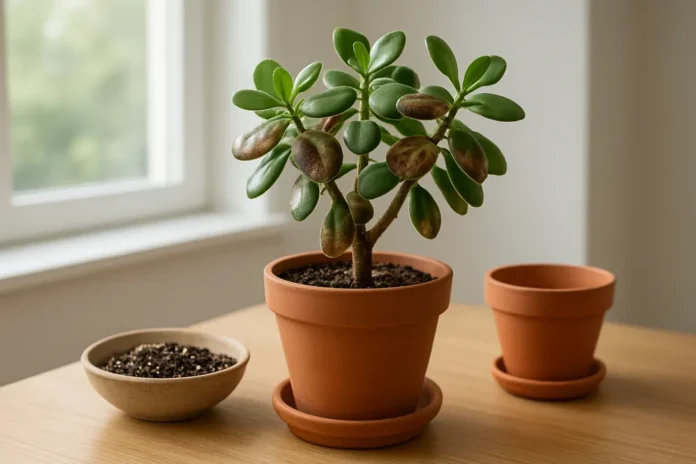
Jade plant leaves usually turn brown because of watering stress, too much harsh sun, cold exposure, or root problems. The color, texture, and location of the brown areas often reveal which issue is causing it.
A jade plant is usually one of the easier houseplants to read. When the leaves start spotting, crisping, or turning fully brown, the plant is telling you that something in its environment has shifted. In my experience, jade plant leaves turning brown is rarely random. The pattern almost always gives the cause away.
Some brown leaves are dry and papery. Others go soft, dark, and mushy. A few appear only on the sun-facing side, while others start lower on the plant and move upward. Those differences matter because a thirsty jade, a sunburned jade, and a rotting jade do not brown in the same way.
The good news is that jade plant brown leaves can often be stopped if you catch the problem early. Once you know what kind of browning you are looking at, it becomes much easier to give the plant what it actually needs instead of guessing.
What Brown Leaves on a Jade Plant Usually Mean
Brown leaves on jade plants usually fall into a few main categories: dry stress, moisture overload, sun injury, temperature damage, and age-related leaf loss. The key is to look at both the color and texture of the damaged tissue.
- Brown and crispy leaves often point to underwatering, very hot direct sun, or very dry conditions after stress.
- Brown and mushy leaves usually suggest overwatering, stem rot, or root rot.
- Brown patches on the side facing a bright window often indicate sunburn.
- Brown leaf edges or tips can come from inconsistent watering, salt buildup, or environmental swings.
- Older lower leaves that brown one at a time may simply be natural aging if the rest of the plant looks healthy.
When I diagnose a jade, I do not start with the brownest leaf. I compare several leaves from different parts of the plant. If every damaged leaf looks the same, I suspect an environmental issue like sun or watering. If the damage is random and paired with soft stems, I worry more about rot.
Overwatering Is One of the Most Common Causes
Jade plants store water in their leaves and stems, so they do not need frequent watering. If the soil stays wet too long, roots struggle to breathe and can begin to rot. That root stress often shows up above the soil as brown leaves.
Signs the Plant Is Staying Too Wet
- Leaves feel soft, limp, or slightly squishy instead of firm.
- Brown areas look dark or water-soaked rather than crisp.
- Leaves may yellow before turning brown and dropping.
- Stems near the soil line feel soft or look darker than usual.
- The potting mix stays damp for many days after watering.
This often happens when jade plants are grown in regular indoor potting soil that holds too much moisture, especially in a pot without strong drainage. Watering on a fixed weekly schedule can also cause trouble, particularly in winter when the plant uses less water.
How to Correct Overwatering
- Stop watering until the soil dries well below the surface.
- Remove obviously damaged leaves if they come off easily.
- Check that the container has a drainage hole.
- If the soil is dense or slow-draining, repot into a gritty succulent mix with extra perlite, pumice, or coarse sand.
- Trim away rotten roots if you unpot the plant and see black, mushy, or foul-smelling sections.
If only a few leaves are affected and the stems are still firm, the plant often recovers well. If the trunk base is soft, recovery is less certain and taking healthy stem cuttings may be the best insurance.
Underwatering Can Also Turn Jade Leaves Brown
Although overwatering gets more attention, jade plants can also develop brown leaves from prolonged dryness. A badly thirsty jade usually uses up stored moisture in the leaves first, which makes them shrivel, wrinkle, and eventually brown.
How Drought Stress Looks Different
- Leaves look thinner, wrinkled, or slightly deflated.
- Browning is dry and crisp, not soft.
- The potting mix may pull away from the sides of the pot.
- The plant may drop older leaves after staying dry too long.
- Branches can look less plump than usual.
A jade that has been underwatered for a while may not perk up instantly after one drink. Dry soil can become so hard and water-repellent that it sheds water around the edges instead of absorbing it evenly.
If the root ball has gone bone dry, I like to water slowly in stages rather than flood it once and walk away. The first light watering helps the mix start absorbing moisture again, and the second pass a few minutes later usually does a better job of soaking the roots.
What to Do
Water deeply until excess drains out, then let the soil dry substantially before watering again. For jades, it is better to water thoroughly and less often than to give frequent small sips. Brown tissue will not turn green again, but firm new growth is a good sign the plant is recovering.
Too Much Direct Sun Can Scorch the Leaves
Jade plants like bright light and can handle some direct sun, but sudden exposure to intense afternoon sun can burn the leaves. This is especially common when a plant is moved from a lower-light room to a hot south- or west-facing window, or straight outdoors without a gradual transition.
Typical Signs of Sunburn
- Tan, brown, or bleached patches appear on exposed leaves.
- Damage is heavier on the side facing the window or sun.
- The affected tissue feels dry and papery.
- The rest of the plant may still seem firm and healthy.
Sunburn damage can look dramatic, but it does not always mean the plant is in serious danger. The key is to prevent more injury. Move the plant back a little from harsh glass, filter the strongest afternoon light, or acclimate it more gradually if you are moving it outdoors for summer.
Bright indirect light or gentler morning sun is usually safer while the plant recovers. Once a jade adjusts, it often tolerates brighter conditions much better than it did during the sudden change.
Cold Damage and Temperature Shock Can Cause Brown Spots
Jade plants are not frost-hardy houseplants. Cold drafts, chilly windows, unheated porches, and sudden temperature drops can injure the leaves. In many homes, this happens in winter when leaves touch cold glass or when the plant sits near an exterior door.
What Cold Injury Looks Like
- Leaves develop brown or blackened patches after a cold night.
- Damaged leaves may turn soft first, then dry out.
- In severe cases, stems can also discolor or collapse.
- The injury often appears suddenly rather than gradually.
Jades prefer steady warmth and dislike dramatic swings. Try to keep them away from drafty windows, AC vents, and heating vents. If the plant was recently transported in cold weather, the browning may be delayed by a day or two after exposure.
Root Rot Is the Serious Version of Overwatering
Root rot deserves special attention because it can progress quickly and is one of the few jade problems that can kill the whole plant. It begins when roots remain wet long enough for decay to set in. The leaves may first yellow, then brown, soften, and fall.
Clues That Root Rot May Be Involved
- The soil smells sour or swampy.
- Leaves are browning and dropping even though the soil is wet.
- The lower stem feels soft, mushy, or shriveled at the same time.
- Roots appear black, brown, stringy, or slimy when removed from the pot.
At this point, watering less is usually not enough by itself. The plant often needs to come out of the pot so you can remove bad roots and replant it in fresh, fast-draining mix. Clean pruners and a clean container help reduce further problems.
If much of the root system is gone but the upper stems still look sound, you can cut healthy stem sections, let the cuts callus, and root them as new plants. Jade propagates well, so even a badly damaged plant can sometimes be saved in pieces.
Pests and Disease Can Leave Brown Scars or Spots
Pests are not the first thing I suspect when a jade turns brown, but they can contribute. Mealybugs, scale, and spider mites can stress the plant enough to cause spotting, scarring, and leaf decline. In some cases, fungal or bacterial issues also follow plant stress, especially when airflow is poor and leaves stay wet.
Signs to Look For
- Sticky residue or sooty mold on leaves can point to sap-sucking pests like scale or mealybugs.
- Tiny webbing and stippled leaves can suggest spider mites.
- Raised bumps on stems or leaf undersides often indicate scale insects.
- Small brown spots with yellow halos may suggest a disease issue rather than simple dryness.
If you find pests, isolate the plant if possible and wipe leaves and stems carefully. Cotton swabs with rubbing alcohol can help remove mealybugs and scale in light cases. More severe infestations may need repeated treatment with insecticidal soap or horticultural oil labeled for indoor plant use.
Pest damage on jade often looks messier than watering damage. Instead of whole leaves failing in a consistent pattern, you see scattered blemishes, sticky spots, hidden insects in leaf joints, or clusters of damage around stems and undersides.
Salt Buildup and Fertilizer Issues Can Brown the Edges
Jade plants do not need heavy feeding. If fertilizer is applied too often or mixed too strongly, salts can accumulate in the potting mix and stress the roots. That stress may show up as browning at the edges or tips of the leaves.
- White crust on the soil surface or pot rim suggests mineral or salt buildup.
- Leaf edges may brown while the rest of the leaf stays green for a while.
- Growth can slow even though light and watering seem reasonable.
If you suspect this issue, flush the soil thoroughly with water and let it drain well, or repot if the mix is old and compacted. In general, a diluted succulent fertilizer used sparingly during active growth is plenty. Jades usually need little to no feeding in winter.
Sometimes Browning Is Just Normal Leaf Aging
Not every brown leaf means your plant is in trouble. Mature jades naturally shed some older leaves, especially near the base of the stems. If only a few lower leaves dry up over time and the rest of the plant looks plump, upright, and healthy, normal aging is probably the explanation.
Natural leaf drop is usually gradual and limited. It should not involve many leaves at once, mushy stems, or widespread spotting across the plant. When in doubt, watch the new growth. Healthy new leaves matter more than one or two aging old ones.
How to Tell Which Problem You Have
If you are unsure why your jade leaves are turning brown, start by narrowing the problem down with a simple visual check. You do not need to guess blindly.
- Feel the leaves. Soft and mushy suggests too much water or rot. Thin and wrinkled suggests too little water.
- Check the soil. Wet soil that stays wet points toward overwatering. Bone-dry, shrunken soil points toward underwatering.
- Look at the pattern. Browning on the sun-facing side suggests scorch. Sudden random damage after a cold spell suggests cold injury.
- Inspect the stems and roots. Soft stems or black roots are urgent warning signs.
- Look closely for pests around leaf joints, undersides, and stems.
This kind of step-by-step check prevents the most common mistake I see with jade care: treating every brown leaf by watering more. Sometimes more water helps, but other times it is exactly what makes the problem worse.
How to Help Your Jade Recover
Once you identify the cause, recovery is usually about creating stable conditions and then giving the plant time. Brown tissue will not turn green again, so success should be judged by healthier new growth and the absence of new damage.
- Use a fast-draining succulent or cactus mix.
- Make sure the pot has at least one drainage hole.
- Water deeply, then wait until the mix dries significantly before watering again.
- Provide bright light, but protect the plant from sudden harsh exposure.
- Keep it away from freezing windows, cold drafts, and sudden temperature swings.
- Remove badly damaged leaves and prune rotted sections with clean tools.
- Avoid fertilizing a stressed plant until it begins active, healthy growth again.
I try to change only one major variable at a time with a stressed jade. If you repot, move it, water differently, and fertilize all at once, it becomes much harder to tell what is helping and what is adding stress.
Be patient after making corrections. Jades are slow to show dramatic improvement, but they are also resilient. If the stems remain firm and fresh leaves continue forming, the plant is usually on the right track.
How to Prevent Brown Leaves in the Future
Prevention comes down to matching jade care to how succulents naturally grow. These plants like bright light, fast drainage, and drying out between thorough waterings. Most long-term problems happen when they are treated like thirstier tropical houseplants.
- Choose a potting mix that drains quickly and does not stay soggy.
- Always use a pot with drainage.
- Water based on soil dryness, not the calendar.
- Rotate the plant occasionally for more even light exposure.
- Acclimate gradually to stronger direct sun or outdoor conditions.
- Keep indoor temperatures stable and above chilly stress levels.
- Inspect for pests regularly, especially in crowded leaf joints.
A healthy jade tends to stay compact, firm, and glossy. Once you get its rhythm right, brown leaves usually become an occasional minor issue instead of a recurring problem.
FAQ
Should I Remove Brown Leaves From My Jade Plant?
Yes, you can remove fully brown leaves, especially if they are dry or mushy and come away easily. If a leaf is only partly damaged, you can leave it until the plant replaces it, since it may still contribute some energy.
Can Brown Jade Leaves Turn Green Again?
No, brown tissue will not turn green again. Focus on stopping new damage and watching for healthy new growth.
How Often Should I Water a Jade Plant with Brown Leaves?
There is no fixed schedule that fits every home. Water only when the soil has dried well, because brown leaves can come from both too much and too little water.
Why Are Only the Bottom Leaves on My Jade Plant Turning Brown?
If it is only a few older lower leaves and the rest of the plant looks healthy, that can be normal aging. If many lower leaves are browning together, check for overwatering, poor drainage, or low light.
Can Too Much Sun Make Jade Leaves Brown?
Yes. Sudden exposure to intense direct sun can scorch jade leaves and leave tan or brown patches, especially on the side facing the window or outdoors.
What Does Root Rot Look Like on a Jade Plant?
Root rot often causes soft brown leaves, yellowing, leaf drop, wet soil that does not dry, and a mushy lower stem. Roots may look black, slimy, or stringy when you remove the plant from the pot.
Will a Jade Plant Recover After Leaves Turn Brown?
Often, yes. Jades can recover well if the stems are still firm and you fix the underlying problem early, but severely rotted plants may need to be propagated from healthy cuttings.
Need the right fix fast? See our guide to the best succulent soils, pots, and jade plant care tools so you can stop brown leaves and set your plant up for stronger growth.
