

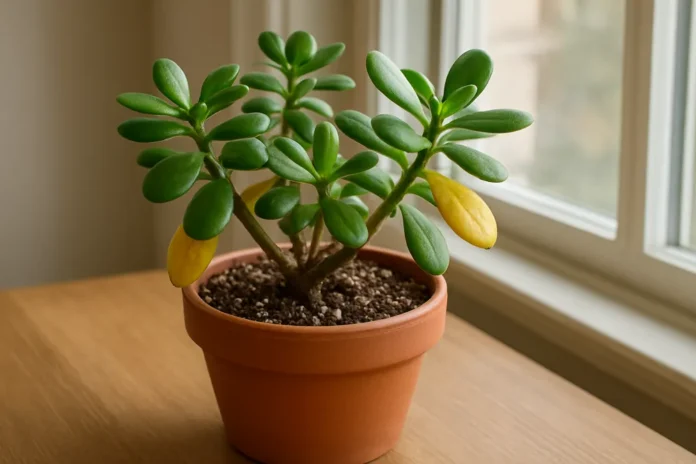
Jade plant leaves usually turn yellow from too much water, weak light, poor drainage, or sudden stress from temperature changes. Pests and natural aging can also cause some leaves to yellow.
A jade plant is usually one of the easiest houseplants to read. When it is happy, the leaves stay plump, firm, and rich green. When jade plant leaves turning yellow becomes noticeable, the plant is telling you that something in its care routine has shifted.
In most homes, the biggest culprit is overwatering or soil that stays wet too long. But yellowing can also come from low light, root trouble, cold drafts, nutrient issues, or pests hiding on the stems and leaf undersides. The good news is that jade is resilient, so if you catch the cause early, it often bounces back well.
I treat yellow leaves on jade as a pattern-reading exercise, not a one-leaf emergency. A few older leaves dropping near the base can be normal. A whole plant fading, softening, or shedding yellow leaves all at once usually means a care problem worth fixing quickly.
What Yellow Leaves Mean on a Jade Plant
Yellowing on jade does not always mean the same thing. The shade of yellow, the feel of the leaves, and where the problem starts all help narrow it down. Pale yellow leaves that feel soft and watery often point to excess moisture. Yellow leaves that look thin, slightly wrinkled, or dry can suggest underwatering or root stress. If only a few bottom leaves turn yellow and eventually fall, that may simply be normal aging.
- Soft yellow leaves often go with overwatering or root rot.
- Firm yellow leaves on a stretched plant often go with insufficient light.
- Yellow leaves with sticky residue or tiny specks may indicate pests.
- Yellowing after a cold night, draft, or move outdoors can mean temperature stress.
- A few older yellow leaves near the base can be natural leaf turnover.
When I diagnose jade, I look at the newest growth first. If the new leaves still look healthy and green while only older lower leaves yellow, the issue is often mild. If the newest leaves are also fading or dropping, I assume the roots or environment are under real stress.
Overwatering Is the Most Common Cause
Jade plants store water in their leaves and stems, so they do not need frequent watering. In a typical home, yellow leaves happen most often when the soil stays damp too long. The roots need oxygen as much as water. When a potting mix stays wet, roots begin to weaken, and the plant can no longer support firm green growth.
A jade with too much water may show yellow leaves, soft stems, leaf drop, black spots, or a mushy base near the soil line. Sometimes the leaves look swollen at first, then turn yellow and fall off with a light touch. If that describes your plant, act quickly because root rot can move faster than many gardeners expect.
Signs Your Jade Is Staying Too Wet
- Leaves turn yellow and feel soft instead of firm
- Soil is still damp several days after watering
- The pot feels heavy for a long time
- Lower stems look dark, wrinkled, or mushy
- Leaves drop suddenly after yellowing
If overwatering is the issue, reduce watering frequency right away and make sure the container has a drainage hole. Then check whether the potting mix is compacted or waterlogged. Jade does best in a gritty, fast-draining succulent mix rather than moisture-retentive indoor potting soil.
Poor Drainage and Root Rot Can Turn Leaves Yellow Fast
Sometimes the problem is not how often you water but where that water goes. A jade planted in a pot without drainage, in a decorative cachepot that traps runoff, or in dense soil can develop yellow leaves even if you water only occasionally. The roots sit in stagnant moisture, and the plant shows stress above the soil line.
If you slide the root ball out and smell sour soil, see black mushy roots, or notice stems collapsing near the base, root rot is likely. Healthy jade roots should be pale and firm. Rotten roots are dark, slimy, or brittle. Once rot has started, the fix is not just watering less. You usually need to trim damaged roots and repot the plant into fresh dry mix.
How to Fix Drainage-related Yellowing
- Remove the jade from the pot and inspect the roots.
- Trim away black, soft, or rotten roots with clean scissors.
- Let cut surfaces dry briefly before repotting.
- Use a pot with drainage and a cactus or succulent mix amended with extra pumice, perlite, or coarse grit if needed.
- Wait a few days before watering, then water deeply and let the soil dry well before the next drink.
I do not judge recovery by whether old yellow leaves turn green again, because they usually will not. On jade, success shows up as firm stems and healthy new leaves after the watering routine and soil are corrected.
Underwatering Can Also Cause Yellow Leaves
Because jade is a succulent, many gardeners swing too far in the other direction and barely water it at all. A very dry jade may begin to yellow, especially if the roots have shrunk back from the sides of the pot and can no longer absorb water evenly. This is more common in plants that sit in strong sun, warm rooms, or terracotta pots that dry quickly.
Underwatered jade leaves usually feel less plump. They may wrinkle slightly before yellowing, and the stems can look thinner than usual. The soil often pulls away from the pot edge and feels bone dry all the way through. In severe cases, older leaves yellow and drop to conserve moisture.
How Underwatering Looks Different From Overwatering
- Underwatered leaves are often thin, limp, or wrinkled rather than mushy
- The pot feels very light
- The soil is dry from top to bottom
- Stems stay firm instead of turning dark and soft
If your jade is too dry, soak the soil thoroughly until water runs out the bottom, then empty any saucer. After that, let the mix dry most of the way before watering again. Jades prefer a deep soak followed by a dry period, not tiny sips on a schedule.
Not Enough Light Can Fade a Jade Plant
Jade plants want bright light, and many do best with several hours of direct sun indoors. In dim rooms, they often stretch, lean, and lose their rich leaf color. Yellowish or pale green leaves can show up when the plant is not making enough energy to support dense compact growth.
A low-light jade may also have long gaps between leaves, weak stems, and smaller new growth. The yellowing tends to be less dramatic than with root rot, but the overall plant looks tired and sparse. If your jade lives several feet from a window or in a north-facing room, light is worth considering.
How to Improve Light Safely
- Move the plant closer to a bright south- or west-facing window
- Increase sun exposure gradually over a week or two
- Rotate the pot every week or two for even growth
- Use a grow light if natural light is limited
Do not move a shade-grown jade straight into harsh all-day sun. Sudden exposure can scorch the leaves, which creates a different problem. Ease it into brighter conditions so the plant can adapt.
Too Much Harsh Sun or Heat Can Cause Stress
While jades like bright light, there is a difference between bright indoor light and intense direct sun after a sudden move outdoors. A jade that goes from a shelf in the living room to a blazing patio can develop yellowing, bleaching, scorched patches, or reddish stress colors. Heat from a hot window can do something similar, especially in summer.
Sun stress often shows up on the side facing the light source. The affected leaves may look pale yellow, tan, or slightly burned rather than soft and rotten. If the soil is also drying too fast, the damage becomes more obvious.
Move the plant to bright filtered light or gentler morning sun, then transition it slowly if you want it in a sunnier spot later. Damaged leaves may not recover fully, but the plant can still push healthy new growth once conditions are steadier.
Cold Drafts and Temperature Swings Can Trigger Yellowing
Jade plants dislike cold stress more than many people realize. A chilly windowsill in winter, an air conditioning vent, or a sudden drop in temperature after moving the plant outdoors can all cause yellow leaves and leaf drop. This is especially likely if temperatures dip below what the plant is used to for even a short time.
Temperature-related yellowing can seem abrupt. The plant may look fine one week and then begin shedding leaves after a cold draft, a move, or a night near freezing. Because jade stores water in its tissues, cold injury can make leaves translucent, yellow, or mushy.
- Keep jade away from drafty doors and cold single-pane windows in winter
- Avoid placing it directly under heating or cooling vents
- Bring outdoor plants in before nights turn chilly
- Aim for stable indoor temperatures whenever possible
Pests Can Weaken Leaves and Make Them Yellow
A jade with pests may yellow because sap-sucking insects drain energy from the leaves and stems. Mealybugs, scale, spider mites, and aphids are the usual suspects. Some are easy to spot, while others hide in stem joints or on the undersides of leaves.
Mealybugs look like little bits of white cotton. Scale resembles small brown bumps stuck to stems or leaves. Spider mites are tiny, but they leave fine webbing and speckled, dull foliage. Over time, infested leaves may yellow and drop.
What to Do if You Find Pests
- Isolate the jade from other houseplants.
- Wipe visible pests off with cotton swabs dipped in rubbing alcohol.
- Prune heavily infested stems if needed.
- Repeat inspections weekly until no new pests appear.
- Use an appropriate houseplant treatment if the infestation is persistent.
Scale on jade is easy to miss because it can look like part of the stem at first glance. If the plant keeps yellowing despite decent watering and light, I run a fingernail gently over any suspicious brown bumps. If they lift off, I know I am dealing with pests, not corking or normal stem texture.
Nutrient Problems Are Possible but Less Common
Most yellow jade plants are suffering from moisture or light issues, not fertilizer problems. Still, a plant that has been in the same exhausted soil for years can show pale growth from nutrient depletion. On the other hand, too much fertilizer can burn roots and lead to yellowing as well.
If your jade has not been repotted in a long time and the soil has broken down into a dense mass, refreshing the mix can help more than feeding. If you do fertilize, use a diluted succulent or balanced houseplant fertilizer during active growth and avoid heavy feeding in winter.
- Nutrient deficiency usually causes gradual pale growth, not sudden collapse
- Overfertilizing can damage roots and mimic watering stress
- Repotting into fresh mix is often safer than adding more fertilizer
- Feed lightly during spring and summer, not year-round
When Yellow Leaves Are Just Normal Aging
Not every yellow leaf is a crisis. Mature jade plants naturally drop some older leaves as they grow. If only a leaf here and there near the base turns yellow, dries up, and falls while the rest of the plant looks strong, that is usually normal turnover.
The key is scale and speed. One or two older leaves over time is routine. Several leaves yellowing together, soft stems, or new growth fading means the plant needs attention. If you are unsure, look for trends rather than reacting to a single leaf.
How to Get Your Jade Back to Healthy Green Growth
Recovery starts with correcting the main stress, not piling on multiple treatments. If the plant is wet, let it dry and improve drainage. If it is starved for light, move it gradually brighter. If pests are present, clean them up before adjusting anything else. Jades recover best when conditions become predictable again.
A Simple Recovery Plan
- Remove any fully yellow or mushy leaves that come off easily.
- Check the soil moisture and root condition before watering again.
- Place the jade in bright light with stable temperatures.
- Repot if the mix is heavy, sour-smelling, or not draining well.
- Resume watering only when the soil dries sufficiently for a succulent.
- Watch new growth over the next few weeks for improvement.
Do not expect damaged leaves to reverse completely. The goal is healthier new growth, firmer leaves, and a steadier watering rhythm. Once a jade settles into the right spot and soil, it often becomes much easier to care for.
FAQ
Should I Remove Yellow Leaves From My Jade Plant?
Yes, you can remove leaves that are fully yellow, mushy, or already loosening. If a leaf is only slightly yellow and still firm, you can leave it in place while you fix the underlying issue.
Can Yellow Jade Leaves Turn Green Again?
Usually no. Once a jade leaf has turned noticeably yellow, it rarely returns to full healthy green. Focus on stopping further yellowing and encouraging healthy new growth.
How Often Should I Water a Jade Plant?
There is no fixed schedule that works in every home. Water deeply, then wait until the soil has dried well before watering again. Light, temperature, pot size, and soil type all change the timing.
Do Jade Plants Need Direct Sunlight?
They usually do best with very bright light and can handle some direct sun indoors. The exact amount depends on how the plant was grown, so increase sun exposure gradually to avoid scorch.
Why Are Only the Bottom Leaves on My Jade Turning Yellow?
If only a few older lower leaves are yellowing while the rest of the plant looks healthy, that can be normal aging. If many bottom leaves drop at once, look for watering or root problems.
Can I Save a Jade Plant with Root Rot?
Often yes, if you catch it early. Remove rotten roots, repot into fast-draining dry mix, and correct the watering routine. If the base is badly damaged, taking healthy stem cuttings may be the best backup plan.
Are Coffee Grounds Good for Jade Plants?
No, not usually. Jade plants prefer fast-draining soil and do not benefit from heavy organic additions that hold extra moisture. Coffee grounds can make the mix stay wet too long.
Need help choosing the right succulent soil, grow light, or pest treatment? Read our practical jade plant care and product guide to fix yellow leaves faster and prevent the problem from coming back.
