

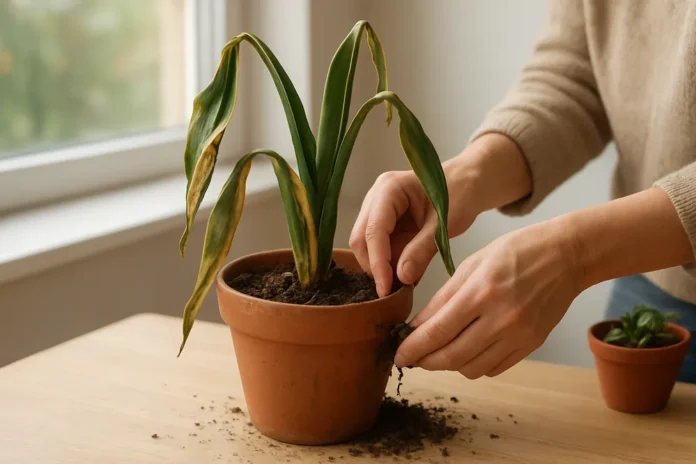
A snake plant usually wilts because its roots are stressed, most often from overwatering, rot, poor drainage, or sudden environmental changes. In some cases, severe underwatering, cold injury, or root crowding can also make the leaves droop.
A snake plant wilting can be confusing because these plants have a reputation for being almost indestructible. When the leaves start leaning, collapsing, or looking limp, the problem is usually not random. Snake plants store water in their thick leaves, so obvious wilting often means something has already been stressing the roots or the leaf tissue for a while.
In my experience, most wilted snake plants are dealing with overwatering long before the owner realizes it. But that is not the only possibility. A badly dried-out root ball, a pot with poor drainage, cold damage, transplant shock, or a plant that is simply too crowded can all lead to drooping foliage. The key is to read the full pattern, not just the wilt itself.
Once you know what kind of wilt you are looking at, the fix becomes much clearer. Healthy new growth is what tells you the plant is recovering, so the goal is to correct the root environment and give the plant time to stabilize.
What Wilting Means in a Snake Plant
Snake plants do not wilt quite the way a thirsty peace lily or hydrangea does. Their leaves are naturally upright, firm, and thick. When they begin to fold, bow outward, lean to one side, or feel soft at the base, that usually means the plant can no longer support the leaves properly. Sometimes the cause is simple dehydration, but very often the roots are damaged and can no longer move water effectively.
That is why a wilted snake plant can actually be suffering from too much water rather than too little. If roots sit in wet soil too long, they start to rot. Once that happens, the plant loses its ability to absorb moisture, even though the pot is damp. The result can look like thirst, but the real issue is root failure.
- Leaves leaning or flopping outward instead of standing upright
- Softness near the soil line
- Wrinkled, puckered, or folded leaves
- Yellowing combined with droop
- Mushy spots or a sour smell from the pot
- Leaves that suddenly collapse after a cold draft or repotting
When I diagnose a wilted snake plant, I look at the base of the leaves first, not the tips. If the base is soft or discolored, I suspect root or crown trouble. If the leaves are firm but wrinkled, I lean more toward underwatering or root crowding.
The Most Common Causes of a Wilting Snake Plant
Overwatering and Root Rot
This is the leading cause by far. Snake plants like to dry between waterings, and they struggle in dense, wet potting mix. If the soil stays moist for long stretches, the roots can rot and the lower leaf bases may soften. You may also notice yellowing, a musty smell, or leaves that pull away too easily from the plant.
Overwatering is not only about frequency. A plant can also be overwatered when it lives in a pot without drainage, sits in a dim room where soil dries slowly, or is planted in heavy mix that holds too much moisture around the roots.
Underwatering and Prolonged Dryness
Snake plants are drought tolerant, but they are not immune to drought stress. If the potting mix becomes bone dry for too long, the roots can shrink back and the leaves may start to wrinkle, curl slightly, or lose their rigid posture. The plant may look thinner than usual, and older leaves often show stress first.
A very dry plant usually feels light when lifted. The leaves often remain relatively firm at the base rather than mushy. That distinction helps separate underwatering from rot.
Poor Drainage and Compacted Soil
Even careful waterers run into trouble when the soil mix is wrong. Standard houseplant soil can become too dense for snake plants, especially after repeated watering. Compacted soil reduces airflow around the roots, traps moisture, and can create the same symptoms as overwatering. If water pools on top or drains very slowly, the root zone is probably staying too wet.
Cold Damage
Snake plants are tropical plants that dislike cold temperatures. Exposure to chilly windows, unheated porches, cold car rides, or drafts from winter doors and air conditioners can injure leaf tissue. Cold-damaged leaves may wilt, turn mushy in patches, or collapse suddenly even when the soil seems fine.
Transplant Shock
After repotting, a snake plant may droop for a short time if roots were disturbed or damaged. This is more likely when the root ball was broken apart aggressively, when the plant was moved into a much larger pot, or when it was watered too heavily right after repotting. Mild shock usually stabilizes, but severe root damage can lead to continued wilting.
Root Crowding
Snake plants tolerate being snug in their pots, but extremely crowded roots can eventually limit water uptake. If the plant dries out unusually fast, produces weak new leaves, or seems to wilt shortly after watering, it may be too tightly packed. In that case, the roots may need more room or fresh mix.
How to Tell Which Problem You Actually Have
Because different issues can cause similar drooping, it helps to inspect the plant in a consistent order. Start with the soil, then the roots if necessary, then look at the leaves and growing conditions. The combination of symptoms usually tells a clearer story than one symptom alone.
- If the soil is soggy, heavy, and slow to dry, suspect overwatering or poor drainage.
- If the soil is dusty dry and has pulled away from the pot sides, suspect underwatering.
- If leaves are yellowing and soft at the base, root rot is likely.
- If leaves are wrinkled but not mushy, dehydration or root crowding is more likely.
- If only the side facing a cold window is damaged, cold stress is a strong possibility.
- If the wilt started right after repotting, transplant shock may be the trigger.
If you are still unsure, slide the plant gently out of its pot. Healthy roots are firm and usually pale tan or orange-white, depending on age. Rotten roots are brown or black, mushy, and may have a bad smell. A severely root-bound plant may have roots circling tightly with very little soil left.
Do not judge the plant by one damaged leaf alone. I usually compare the oldest leaves, the center growth, and the firmness at the crown. New growth tells the truth faster than old scarred leaves do.
How to Fix a Wilting Snake Plant
If the Plant Is Overwatered
Stop watering right away and let the pot dry down. Move the plant to bright, indirect light so the soil dries more evenly, but avoid hot direct sun if the plant is already stressed. If the soil remains wet for many days or the leaves continue softening, take the plant out of the pot and inspect the roots.
Trim away rotten roots with clean scissors and remove any leaves that are mushy at the base. Repot into a container with drainage holes using a fast-draining cactus or succulent mix, or regular potting mix amended with extra perlite and coarse material. Wait a few days before watering if healthy roots remain and the cuts need time to callus.
If the Plant Is Underwatered
Give the soil a thorough soak until water drains from the bottom, then let the excess drain away completely. If the potting mix has become so dry that it repels water, bottom watering for 20 to 30 minutes can help rehydrate the root ball more evenly. Do not keep watering repeatedly over the next few days. One deep watering is better than several shallow splashes.
Leaves that have become badly creased may not fully flatten again, but the plant can still recover. Watch for firmer texture and steadier posture over the next couple of weeks.
If the Soil or Pot Is the Problem
Repotting is usually the best fix when the mix stays wet too long, feels compacted, or the pot has no drainage. Choose a pot only slightly larger than the root mass. Oversized pots hold excess moisture, which slows recovery and increases the chance of rot returning.
- Use a container with at least one drainage hole
- Choose a gritty, airy mix rather than heavy moisture-retentive soil
- Avoid a dramatic jump to a much larger pot
- Empty saucers after watering so roots do not sit in runoff
If Cold Damage Caused the Wilt
Move the plant to a stable spot above 55 degrees Fahrenheit, ideally warmer. Damaged tissue will not repair itself, so trim away leaves only after you are sure the affected areas are not spreading. Keep watering conservative while the plant recovers, because cold-injured roots use water more slowly.
If Repotting Stress Is the Issue
Give the plant time. Keep it in bright, indirect light and avoid fertilizing until you see signs of new growth. Water sparingly but do not let the mix stay wet. Most mild transplant stress improves within a few weeks as roots reestablish.
Signs Your Snake Plant Is Recovering
Recovery in snake plants is usually gradual. Unlike thin-leaved tropicals, they do not snap back overnight. What you want to see is stabilization first, then fresh growth. Existing damaged leaves may remain scarred, bent, or slightly droopy even after the plant is healthy again.
- No new leaves are collapsing
- The base of the plant feels firm rather than soft
- Soil is drying at a normal pace between waterings
- New leaves emerge upright and solid
- Leaf color looks more even and less yellow or translucent
- The plant no longer smells sour or swampy at the root zone
Do not remove every imperfect leaf too early. As long as a leaf is mostly firm and not rotting, it can still help the plant store energy while new roots develop. I usually prune only leaves that are mushy, split beyond repair, or clearly dead.
How to Prevent Snake Plant Wilting in the Future
Prevention mostly comes down to watering discipline and good drainage. Snake plants prefer a cycle of soaking and drying, not constant moisture. They also do better when the pot size matches the root system and the soil allows plenty of air around the roots.
- Water only when the mix is mostly dry, not on a rigid weekly schedule
- Use a pot with drainage holes every time
- Keep the plant in bright, indirect light or a well-lit room so moisture dries at a reasonable pace
- Protect it from temperatures below 50 to 55 degrees Fahrenheit
- Repot when roots are severely crowded or the mix has broken down
- Skip frequent misting because it does nothing useful for this problem
- Hold fertilizer until the plant is actively growing and healthy
One of the most common mistakes I see is watering by habit instead of by soil condition. Snake plants can go much longer between waterings in winter, in low light, or in large pots. I always let the plant's drying speed set the schedule.
When a Wilting Snake Plant May Not Be Fully Salvageable
If the entire crown is mushy, the roots are mostly gone, and every leaf is collapsing from the base, the original plant may be too far gone to save as-is. However, you can often still rescue healthy sections. Firm leaves without rot can be propagated, and side pups may survive even when the central section has failed.
Cut away all rotten tissue with a sterile blade and keep only clean, firm material. Leaf cuttings and divisions are slower than simply reviving a stressed plant, but they can preserve the variety and give you a fresh start. If the damage came from rot, let cut surfaces dry before replanting.
Sometimes the best outcome is not a perfect-looking plant but a healthy one rebuilding from a smaller base. Snake plants are tougher than they look, and even a rough specimen can come back if enough healthy tissue remains.
FAQ
Can a Snake Plant Wilt From Too Much Water?
Yes. In fact, too much water is one of the most common reasons a snake plant wilts. Wet soil damages roots, and once roots start to rot, the plant cannot move water properly to the leaves.
Will Wilted Snake Plant Leaves Stand Back Up?
Sometimes slightly drooping leaves improve, especially if the problem was recent dehydration or mild stress. But leaves that have bent sharply, become mushy, or developed permanent creases often do not return to a perfectly upright shape.
How Often Should I Water a Snake Plant to Prevent Wilting?
Water only when most of the potting mix has dried out. That may be every couple of weeks in bright conditions or much less often in winter and low light. The exact timing depends on light, temperature, soil, and pot size.
Should I Cut Off Wilted Snake Plant Leaves?
Remove leaves if they are mushy, rotting, badly damaged, or split at the base. If a leaf is only a little bent or wrinkled but still firm, it can usually stay on the plant while it recovers.
Can Low Light Make a Snake Plant Wilt?
Low light by itself usually causes slower growth and weaker structure rather than dramatic wilt. But low light does make soil dry more slowly, which increases the risk of overwatering and root problems that lead to wilting.
Why Is Only One Side of My Snake Plant Wilting?
One-sided wilting can happen from uneven light, localized root damage, physical injury, or cold exposure from a nearby window or vent. It can also happen when one section of the root system has started to rot while the rest is still healthy.
Can I Save a Snake Plant with Root Rot?
Often, yes. If some roots or leaf sections are still firm and healthy, trim away the rotten parts and repot into fast-draining soil in a pot with drainage. Recovery is much more likely when you catch the problem before the entire crown turns mushy.
Need the right setup to stop root rot and drooping for good? See our guide to the best soils, pots, and watering tools for snake plants so you can fix the problem and keep it from coming back.
