

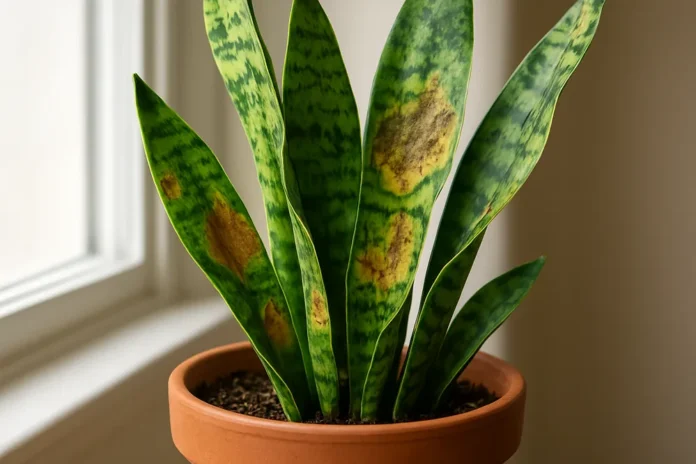
Snake plant leaves usually develop brown spots from overwatering, cold damage, harsh direct sun, pest feeding, or physical injury. In many cases, the spotting starts when stressed tissue begins to dry out or rot.
A snake plant is one of the easiest houseplants to keep alive, which is why brown spotting can feel especially confusing. When leaves develop dry patches, soft dark marks, or scattered tan speckles, the problem is usually tied to moisture, temperature, light, pests, or old leaf damage rather than a mystery disease that came out of nowhere.
I usually start by looking at what the spots actually look like. Brown spots on snake plant leaves can be crisp and sunburned, mushy and water-soaked, or small and rough from pest feeding. That pattern matters because a snake plant that is sitting too wet needs a very different fix from one that got chilled near a drafty window or scorched in strong afternoon sun.
The good news is that snake plants are resilient. If you identify the cause early and correct it, the plant often recovers well, even though the existing spots will not turn green again.
What the Spots Are Telling You
Brown spots are a symptom, not a diagnosis by themselves. On snake plants, the appearance and location of the damage give important clues. Spots near the base of the leaf often suggest excess moisture or rot. Bleached or tan patches on the side facing the window lean more toward sun scorch. Tiny brown scars with silvery streaking can point to thrips or other sap-sucking pests.
- Dry, papery, light brown patches usually mean sun scorch, underwatering stress, or old physical damage.
- Soft, dark brown, or blackened spots often mean overwatering, rot, or cold injury.
- Small speckles or rough scabby marks can come from pests, edema, or minor fungal leaf spotting.
- Brown edges or tips without random spotting are more often tied to watering inconsistency, salt buildup, or very dry air.
When I diagnose a snake plant, I do not judge the problem from one leaf alone. I compare older leaves, newer leaves, and the base of the plant because a single damaged leaf may only show an old bruise, while a whole pattern across the plant points to a cultural problem that is still happening.
Overwatering and Root Stress Are the Most Common Cause
If I had to bet on one cause of brown spotting in a snake plant, I would choose overwatering first. Snake plants store water in their leaves and rhizomes, so they tolerate dry soil far better than constantly wet roots. When the potting mix stays damp for too long, roots begin to suffocate and rot. That stress often shows up as soft brown patches, yellowing around the spot, collapsing leaf bases, or leaves that suddenly feel loose.
Overwatering is not only about how often you pour water. It can also happen when the pot is too large, the container lacks drainage, the soil is dense and peaty, or the plant sits in a low-light room where the mix dries slowly. Many snake plants are killed with kindness because they are watered on a schedule that makes sense for thirstier houseplants.
Signs the Roots Are Staying Too Wet
- Brown spots that feel soft instead of crisp
- Yellowing leaves along with spotting
- A mushy or wrinkled leaf base
- Soil that stays damp for a week or more
- A sour smell from the potting mix
- Roots that look black, mushy, or hollow when examined
If this sounds like your plant, let the soil dry thoroughly before watering again. If the potting mix is heavy or the roots smell rotten, repot into a fast-draining cactus or succulent mix amended with extra perlite or pumice. Trim off obviously rotted roots with clean scissors, and always use a pot with a drainage hole.
After correcting an overwatering problem, judge success by the condition of new growth and the firmness of the plant, not by the old spots. Existing damaged tissue stays damaged, so the real win is that the spotting stops spreading.
Underwatering Can Also Leave Brown Scars
Snake plants like to dry between waterings, but they still need a thorough drink once the mix is dry. If the plant stays bone dry for too long, especially in a very warm room or rootbound pot, the leaves can wrinkle and develop dry brown patches or crisp tips. These spots are usually flat, firm, and papery rather than mushy.
Underwatering damage often appears with other drought signs. Leaves may look thinner than usual, curl slightly inward, or crease along their length. Very dry potting mix can also become hydrophobic, which means water runs down the sides of the pot instead of soaking the root ball.
How to Correct Drought Stress
- Water deeply until excess drains out the bottom
- Let the pot drain fully and do not leave it standing in water
- Resume watering only after the mix is dry again
- If the root ball is badly shrunken, soak the pot briefly to rehydrate the mix evenly
A snake plant usually rebounds well from occasional dryness, but repeated severe drought weakens the leaves and makes them more prone to scarring.
Too Much Direct Sun Can Scorch the Leaves
Snake plants handle bright light well, but many indoor-grown plants are not prepared for sudden intense direct sun, especially hot afternoon exposure through a south- or west-facing window. Sun scorch often causes bleached, tan, or brown patches on the side of the leaf facing the light source. The tissue usually feels dry and flat, almost like it was singed.
This happens most often after a plant is moved from low light into a much brighter spot without a transition period. Outdoor summer moves can trigger it too. A leaf that formed in dim conditions has thinner, less protected tissue than a leaf that hardened off gradually in bright light.
- Spots are concentrated on the window-facing side
- Patches look bleached first, then turn tan or brown
- The damaged area is dry rather than mushy
- The rest of the plant may still feel healthy and firm
Move the plant slightly back from the glass or filter harsh afternoon sun with a sheer curtain. Bright indirect light is usually ideal. Once a leaf is scorched, the mark is permanent, but future leaves can remain clean if the lighting is adjusted.
Cold Damage and Temperature Swings Can Create Brown Patches
Snake plants are tougher than many houseplants, but they do not like cold drafts, chilly window glass, or sudden temperature drops. Exposure to cold can injure leaf cells and leave water-soaked patches that later turn brown, dark, or corky. In winter, I often see this on leaves touching a cold pane or sitting near an exterior door.
Cold injury can look a lot like overwatering at first because the affected tissue may soften before it dries. The difference is that the roots and soil may seem perfectly normal while the damage appears only on leaves exposed to the temperature problem.
- Damage appears after a cold night or draft
- Spots cluster on one side of the plant
- Leaves may have translucent or water-soaked areas first
- The potting mix is not necessarily staying wet
Keep snake plants away from HVAC vents, cold windowpanes, garages, and drafty entryways. They are happiest in typical indoor temperatures above about 55 degrees Fahrenheit, with steadier warmth preferred.
Pests Can Leave Tiny Brown Marks and Scarred Patches
While snake plants are not the first houseplant pests go after, they can still attract spider mites, thrips, scale, and mealybugs. These insects feed by piercing plant tissue and sucking sap, which may leave tiny brown spots, silvery streaks, stippling, or rough scarred patches. Heavy infestations can weaken the leaf enough that larger damaged areas develop later.
What Pest Damage Usually Looks Like
- Very small spots rather than large blotches
- Silvery or scraped-looking areas
- Sticky residue or black sooty mold in some cases
- Fine webbing with spider mites
- Cottony clusters with mealybugs
- Raised bumps along leaves with scale
Isolate the plant if you suspect pests. Wipe leaves carefully, inspect both sides, and treat with insecticidal soap or horticultural oil if needed. Repeat treatments according to the product label because eggs and hidden insects are easy to miss on the first pass.
Thrips damage on snake plants can be deceptively subtle at first. I look for a dull, sandblasted texture before I look for actual insects, because the bugs themselves are easy to overlook until the plant already shows scarring.
Leaf Spot Diseases and Rot Can Follow Poor Conditions
True fungal or bacterial leaf spot is less common than simple care issues, but it does happen, especially when leaves stay wet, air circulation is poor, or the plant has already been stressed by overwatering. These spots may start small and dark, sometimes with a yellow halo, and can enlarge or merge together if conditions remain favorable.
Bacterial problems often look water-soaked or greasy early on, while fungal spots may appear rounder, drier, or slightly sunken. In either case, the fix starts with the environment. Fungicides are not always necessary for a lightly affected houseplant if you remove the worst leaves and stop the conditions that encouraged the disease.
- Avoid splashing water onto the leaves
- Improve airflow around crowded houseplants
- Do not let the soil remain soggy
- Remove heavily affected leaves with a clean blade
- Sanitize cutting tools between cuts
If spots are spreading rapidly through multiple leaves despite good care correction, discard badly infected tissue and consider replacing the plant if the crown is affected. Crown and rhizome rot are much harder to reverse than isolated leaf spotting.
Physical Injury, Edema, and Mineral Buildup Can Mimic Disease
Not every brown mark is a major health issue. Snake plant leaves bruise when bent, bumped, or rubbed during moving and repotting. That injury may not show immediately, but the damaged cells later dry into a brown spot or crease. I often see this after a plant has been transported home in a car or squeezed into a decorative corner.
Edema is another possibility. This happens when roots take up water faster than leaves can use it, causing cells to burst and dry into corky spots. It is less common on snake plants than on thinner-leaved houseplants, but it can happen when watering is uneven and environmental conditions fluctuate.
Salt and mineral buildup from fertilizer or hard tap water can also stress the roots enough to show up as brown tips, edges, or patchy discoloration. If a white crust forms on the soil surface or pot rim, flush the pot thoroughly and back off fertilizer strength.
How to Fix a Snake Plant with Brown Spots
The right fix depends on the cause, but the basic approach is simple: stop the stress, stabilize the environment, and avoid doing too many corrective things at once. Snake plants prefer consistency more than dramatic rescue measures.
- Check the soil moisture before watering again.
- Inspect the base of the leaves and roots for mushiness or rot.
- Move the plant away from harsh direct sun or cold drafts if needed.
- Examine the leaves closely for pests, including the undersides and leaf creases.
- Trim off severely damaged leaves with a sterile blade if they are collapsing or infected.
- Repot only if the current mix is staying wet too long, smells sour, or the roots are clearly compromised.
You can leave small cosmetic spots alone if the problem has been corrected and the leaf is still firm. If a leaf is mostly damaged, cutting it off at the base usually improves the plant's appearance and lets you monitor whether new damage is still occurring.
I avoid fertilizing right after I spot damage unless the plant is obviously nutrient-starved, which is rare with snake plants. Extra fertilizer on a stressed root system often adds one more problem instead of solving the first one.
How to Prevent Brown Spots From Coming Back
Prevention is mostly about matching care to the plant's natural tolerance for dry, bright, stable conditions. Snake plants do best when the soil dries between waterings, the pot drains freely, and the leaves are not exposed to sudden extremes.
- Use a gritty, fast-draining potting mix
- Choose a pot with a drainage hole
- Water thoroughly, then wait until the mix is dry before watering again
- Give bright indirect light or gentle direct morning light
- Protect the plant from cold drafts and freezing windows
- Inspect leaves monthly for pests and hidden soft spots
- Fertilize lightly during active growth instead of feeding heavily year-round
One of the easiest ways to avoid repeat problems is to learn how heavy the pot feels when the soil is dry versus freshly watered. That habit is more reliable than watering by calendar, especially since snake plants use water much more slowly in winter.
FAQ
Should I Cut Off Snake Plant Leaves with Brown Spots?
If the spot is small and stable, you can leave the leaf in place. If the leaf is soft, spreading damage, badly scarred, or making the plant look messy, cut it off at the base with a clean blade.
Can Brown Spots on a Snake Plant Turn Green Again?
No. Damaged leaf tissue does not recover its original color. What you want to see is that new growth stays healthy and existing spots stop spreading.
Do Brown Spots Always Mean My Snake Plant Is Overwatered?
No. Overwatering is common, but brown spots can also come from sun scorch, cold injury, pests, disease, underwatering, or simple physical damage.
Can I Save a Snake Plant if the Base Is Brown and Mushy?
Sometimes, if the rot has not reached the entire crown or rhizome. Remove rotten roots and leaves, repot in dry fast-draining mix, and keep the plant on the dry side while it recovers. If the crown is fully mushy, recovery is much less likely.
Why Does My Snake Plant Have Brown Spots After Repotting?
Repotting can bruise or crease the leaves, and damaged tissue may turn brown later. If the new pot is too large or the fresh mix stays wet for too long, repotting can also trigger root stress that leads to spotting.
Is Tap Water Causing Brown Spots on My Snake Plant?
Tap water is more likely to cause brown tips or gradual mineral stress than random large spots. If your water is very hard and leaves a crust on the soil, flush the pot occasionally or use filtered water.
How Often Should I Water a Snake Plant to Prevent Brown Spots?
Water only when the potting mix is dry, not on a fixed weekly schedule. In many homes that means every couple of weeks in bright warm conditions and much less often in winter.
Need the right setup to stop rot and spotting for good? Read our guide to the best snake plant soils, pots, and watering tools so you can fix the cause and prevent it from coming back.
