

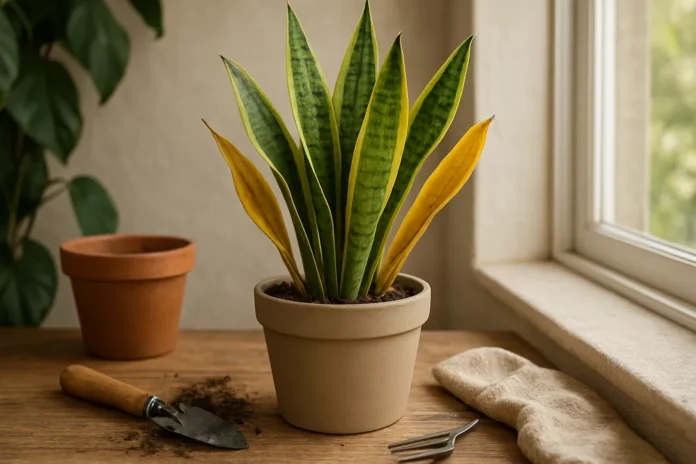
Snake plant leaves usually turn yellow because the roots are staying too wet, which leads to stress or rot. Yellowing can also come from low light, pest damage, temperature shock, or older leaves aging naturally.
A snake plant turning yellow is usually a sign that something in its care routine is off, and in most homes the biggest culprit is too much moisture around the roots. These plants are forgiving, but they do not like sitting in damp soil for long stretches.
I usually tell gardeners not to panic when they see one yellow leaf. A single older leaf near the outside of the plant can simply be aging out. But when several leaves start fading, softening, or yellowing at once, the plant is asking for help.
The good news is that yellow snake plant leaves are often fixable if you catch the problem early. The key is to match the yellowing pattern with the most likely cause, then correct that issue without piling on too many changes at once.
What Yellowing Looks Like on a Snake Plant
Yellowing is not always the same problem. A leaf that turns pale yellow and feels mushy points to a different issue than a leaf with crisp yellow edges or scattered yellow speckles. Before you treat the plant, slow down and look closely at where the color change starts, how fast it spread, and what the leaf texture feels like.
- A soft yellow leaf often suggests overwatering or root rot.
- A yellow leaf with brown, crispy edges can point to drought stress, salt buildup, or hot direct sun.
- Yellowing at the base of one older outer leaf is often normal aging.
- Yellow mottling or stippling can be linked to pests like spider mites or thrips.
- A whole plant that looks washed out and weak may be struggling with poor light or cold stress.
When I diagnose snake plants, I pay more attention to texture than color at first. If the yellow areas feel soft or the base looks translucent, I suspect root trouble before anything else.
Overwatering Is the Most Common Cause
If I had to bet on one cause of a snake plant turning yellow indoors, I would pick overwatering. Snake plants store moisture in their leaves and rhizomes, so they can go much longer between waterings than many houseplants. When the soil stays wet, the roots cannot breathe well and begin to decline. As root function drops, the leaves often lose color and turn yellow.
This often happens even when a gardener is not watering frequently. A pot that drains poorly, a dense soil mix, a cachepot that traps runoff, or a room with low light can keep the root zone wet for too long. In other words, overwatering is often about how long the soil stays wet, not just how often you pour water.
Signs That Too Much Water Is the Issue
- Yellow leaves that feel soft, limp, or swollen
- Mushy leaf bases
- Soil that stays damp for a week or more
- A musty smell from the pot
- Leaves collapsing from the bottom upward
If this sounds like your plant, let the soil dry thoroughly before watering again. If the potting mix is heavy and soggy, it is worth unpotting the plant to inspect the roots. Healthy roots are firm and light colored. Rotting roots are brown, soft, or hollow. Trim away damaged roots with clean scissors and repot into a fast-draining mix.
Poor Drainage and Root Rot Make Yellowing Worse
A snake plant can be watered correctly in theory and still turn yellow if the pot or soil keeps the roots waterlogged. Decorative containers without drainage holes are a common problem. So is standard potting soil that holds too much moisture around the rhizomes.
Root rot usually begins below the soil line before the leaves show obvious distress. By the time leaves turn yellow and start folding over, the plant may already have root loss. That is why catching it early matters.
How to Repot a Struggling Snake Plant
- Take the plant out of the pot and gently shake off wet soil.
- Cut away mushy, dark, or rotten roots and rhizomes.
- Let cut surfaces dry for several hours if rot was present.
- Repot into a container with a drainage hole.
- Use a gritty mix, such as cactus soil improved with perlite or pumice.
- Wait a few days before watering if you removed rotten tissue.
If a snake plant has lost a lot of roots, I resist the urge to water it right after repotting. Slightly dry conditions are much safer than wet ones while damaged roots recover.
Light Problems Can Wash Out Leaf Color
Snake plants tolerate low light better than many indoor plants, but tolerance is not the same as thriving. In very dim rooms, growth slows, soil dries much more slowly, and the plant may gradually weaken. Leaves can become pale green or yellowish, especially if wet soil is also part of the picture.
On the other side, a plant that is suddenly moved from a dim corner into strong direct sun can scorch. That kind of damage may show up as yellow patches that later turn tan, dry, or bleached.
What Better Light Looks Like
The best spot is usually bright, indirect light near a window. A little gentle morning sun is often fine, especially indoors, but harsh afternoon sun through hot glass can stress leaves that were not gradually acclimated. If your plant lives in a dark room, moving it closer to a bright window often improves color and helps the soil dry at a healthier pace.
Watering Too Little Can Also Cause Yellowing
Although overwatering is more common, underwatering can lead to yellowing too. This usually looks different. Leaves may wrinkle, curl, or feel thin before they turn yellow. The potting mix may pull away from the edge of the pot, and the plant may look shriveled rather than soft.
A long stretch of dryness, followed by a heavy soaking, can also stress the roots. Snake plants like to dry out between waterings, but they still benefit from deep, thorough watering when they are actually dry.
- Water only when the soil is dry several inches down, and often fully dry in the pot
- Water thoroughly until excess drains out
- Empty saucers or outer pots so roots are not sitting in runoff
- Adjust watering with the season because winter drying is much slower than summer drying
Temperature Shock and Drafts Can Trigger Yellow Leaves
Snake plants handle normal indoor conditions well, but they do not enjoy cold drafts, freezing windows, or sudden swings between hot and chilly air. Exposure to temperatures below about 50 degrees Fahrenheit can injure the leaves and roots. Yellowing may follow cold damage, sometimes with soft spots or collapsed tissue.
I see this most often when a plant sits too close to an exterior door in winter, against a cold windowpane, or under a blasting air conditioner vent. Heat vents can also dry the plant unevenly and stress the foliage.
Where to Place the Plant
Keep snake plants in a room that stays comfortably above 55 degrees Fahrenheit and away from repeated drafts. Stable conditions matter more than chasing the warmest or brightest microclimate in the house.
Pests Can Cause Yellow Speckling or Fading
Snake plants are tough, but they are not pest-proof. Spider mites, thrips, and mealybugs can all feed on the leaves and cause discoloration. Instead of a full leaf turning yellow evenly, you may notice stippling, blotches, silvery patches, or a tired-looking leaf surface.
Spider mites are especially sneaky because they thrive in dry indoor air and can be hard to spot at first. Mealybugs often hide where leaves meet the base. Thrips may leave scarring and irregular pale streaks.
What to Do if You Find Pests
- Isolate the plant from your other houseplants.
- Wipe the leaves and inspect both sides carefully.
- Rinse or shower the plant if practical.
- Treat with insecticidal soap or neem-based products labeled for houseplants.
- Repeat treatments as directed because one round rarely solves the problem.
If yellowing looks patchy and random instead of leaf-wide, I start hunting for pests right away. Uniform yellowing usually points me toward roots or watering, while speckled damage makes me inspect the leaf surfaces and creases.
Nutrient Issues and Salt Buildup Are Less Common but Possible
Snake plants are light feeders, so true nutrient deficiency is not the first thing I suspect. Still, a plant that has been in the same exhausted soil for years may show slow growth and pale foliage. Salt buildup from fertilizer or hard water can also stress roots and show up as yellowing or brown leaf tips.
If the plant has a white crust on the soil surface, fertilizer may be accumulating. If you fertilize often, back off. A balanced houseplant fertilizer at low strength during active growth is plenty. Many snake plants do well with little or no feeding for long stretches.
- Flush the soil occasionally with clean water if buildup is suspected
- Repot into fresh mix if the soil is old, compacted, or crusted
- Fertilize lightly only in spring and summer when the plant is actively growing
Sometimes Yellow Leaves Are Just Old Leaves
Not every yellow leaf means your care is wrong. Snake plants naturally shed older outer leaves from time to time. If one lower leaf yellows slowly while the rest of the plant looks firm and healthy, normal aging is the likely explanation.
You can leave the leaf in place until it is mostly dry, or cut it off cleanly near the base if it looks untidy. If the plant is producing new growth and only an occasional outer leaf fades, there is usually no deeper problem to solve.
How to Fix a Yellowing Snake Plant Without Making It Worse
When a plant declines, it is tempting to water, fertilize, move, prune, and repot all in the same afternoon. That often creates more stress and makes the original cause harder to identify. A better approach is to correct the most likely issue first.
A Simple Recovery Plan
- Check the soil moisture and root condition before doing anything else.
- If the mix is soggy, address drainage and possible rot first.
- Move the plant into bright, indirect light if it is in a dim spot.
- Remove fully yellow or mushy leaves with clean shears.
- Hold fertilizer until you see healthy new growth.
- Watch the newest leaves for improvement because old damage will not turn green again.
Recovery takes patience. A leaf that has turned yellow usually stays yellow. Success shows up in firm new growth, stable color on the remaining leaves, and soil that dries at a more appropriate pace.
How to Prevent Yellow Leaves in the Future
Preventing yellowing is mostly about giving snake plants the conditions they prefer and avoiding the common indoor habit of watering on a fixed schedule. These plants reward a little restraint.
- Use a pot with a drainage hole
- Choose a loose, fast-draining soil mix
- Water only after the soil has dried well
- Give the plant bright, indirect light when possible
- Keep it away from repeated cold drafts and temperature swings
- Inspect leaves occasionally for hidden pests
- Repot every few years if the soil has broken down or become compacted
If you remember only one thing, let it be this: snake plants are far more likely to forgive missed water than constant moisture. In most homes, keeping them a bit on the dry side prevents the majority of yellow-leaf problems.
FAQ
Should I Cut Off Yellow Snake Plant Leaves?
Yes, if a leaf is fully yellow, mushy, or damaged, you can remove it with clean scissors near the base. If it is only partly yellow, you can leave it while you correct the underlying problem, but that damaged area will not turn green again.
Can a Yellow Snake Plant Turn Green Again?
Usually no. Once a section of leaf has turned yellow, that tissue typically does not recover its color. Focus on stopping the spread and encouraging healthy new growth.
How Often Should I Water a Snake Plant to Prevent Yellowing?
There is no perfect calendar schedule because light, pot size, temperature, and soil all change drying time. In most homes, the safest approach is to water only when the soil is thoroughly dry or nearly so.
Do Yellow Leaves Always Mean Root Rot?
No. Root rot is common, but yellow leaves can also come from low light, pests, cold injury, underwatering, or normal leaf aging. Leaf texture, soil moisture, and the location of the yellowing help narrow it down.
Why Is Only One Leaf on My Snake Plant Turning Yellow?
If it is one older outer leaf and the rest of the plant looks healthy, it is often normal aging. If that one leaf is soft at the base or several more begin yellowing soon after, inspect for watering and root issues.
Can Too Much Sun Make a Snake Plant Yellow?
Yes. Sudden exposure to strong direct sun can bleach or scorch leaves, which may look yellow before turning tan or dry. Bright, indirect light is usually the safest long-term placement.
What Type of Soil Is Best for a Snake Plant with Yellow Leaves?
A fast-draining mix is best, especially if overwatering or rot is involved. Cactus or succulent mix amended with extra perlite or pumice works well because it reduces the chance of soggy roots.
Want the right fix fast? Read our guide to the best soils, pots, and root-rot treatments for snake plants so you can rescue a yellowing plant with confidence.
