

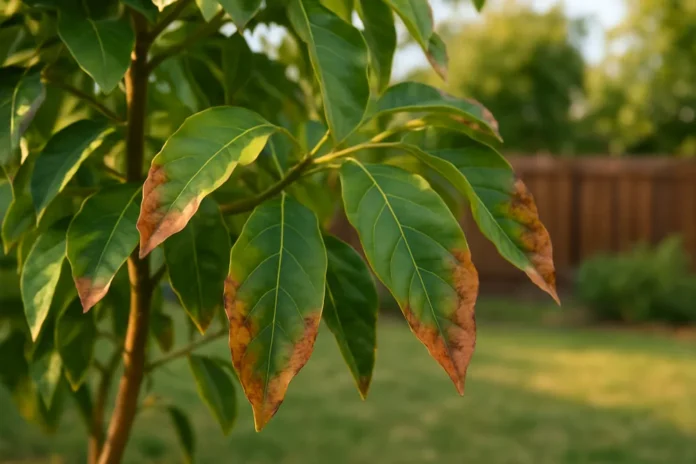
Avocado tree leaves usually turn brown because of watering stress, salt buildup, sun or cold damage, or root problems. Browning often starts at the tips and edges when the tree is struggling to move water properly.
Seeing avocado tree leaves turning brown can be frustrating, especially when the rest of the tree still looks green enough that the problem is hard to read at first. In my experience, browning leaves on avocado usually mean the tree is under stress rather than instantly dying, and the exact pattern on the leaf margins, tips, or whole leaves tells you a lot.
Avocados are a little particular compared with many backyard fruit trees. They dislike soggy roots, they react to salts in soil and irrigation water, and they can scorch in hot sun or get damaged by chilly nights. If you look closely at where the browning starts, how fast it spread, and whether new growth is still healthy, you can usually narrow the cause down pretty quickly.
The good news is that brown leaves do not always mean a lost tree. Sometimes you are simply looking at old damage from a watering swing or a heat event, while the real question is whether new avocado growth is coming in clean.
What the Browning Pattern Usually Means
Before changing anything, study the leaves themselves. Avocado problems often show up in patterns. Brown tips and crispy edges usually point to water stress or salt accumulation. Large tan or brown patches on the sunniest side often suggest sunburn or heat scorch. Entire leaves turning dull, limp, and then brown can signal severe root stress, cold injury, or transplant shock.
- Browning at the tips first often suggests salts, inconsistent watering, or dry conditions.
- Browning along the edges or margins commonly appears with underwatering, salt burn, or wind stress.
- Bleached, papery patches in the middle of the leaf are more consistent with sun damage.
- Dark, limp, or blackened tissue after a cold snap points toward frost injury.
- Leaves that brown and drop while soil stays wet can mean root rot or poor drainage.
When I diagnose avocado leaf browning, I look at both old and new leaves. If older leaves are damaged but fresh flushes look healthy, the tree often already moved past the original stress. If new leaves are browning as they expand, the problem is still active.
Watering Problems Are the Most Common Cause
Too Little Water
Avocados have shallow feeder roots, so they suffer when the root zone dries out too far. In hot weather, underwatering commonly shows up as crispy brown tips and edges, curling leaves, and a tired-looking canopy. Young trees are especially vulnerable because they do not yet have a broad root system.
If the soil is dry several inches down and the leaves feel dry and brittle rather than soft, lack of water is a strong suspect. Browning from drought often starts on older leaves first, though severe stress can affect the whole tree.
Too Much Water
Overwatering can look surprisingly similar at first. Leaves may yellow a bit, then brown, and they often hang limply rather than crisping right away. The soil may stay wet for days, and the tree can look wilted even though there is plenty of moisture present. That happens because waterlogged roots cannot breathe or function properly.
This is one reason avocado care confuses many gardeners. A thirsty tree and a drowning tree can both look stressed. The difference is in the soil. Dry soil points one way. Heavy, soggy, slow-draining soil points the other.
If you are unsure whether your avocado is too dry or too wet, do not guess from the leaves alone. I like to check moisture 4 to 6 inches down in a few spots under the canopy because the surface can dry quickly while the root zone is still saturated.
Salt Buildup Can Burn Avocado Leaves
Avocados are famously sensitive to salts. This is one of the most common reasons gardeners see brown leaf tips even when they think watering is otherwise fine. Salts can build up from fertilizer, hard water, reclaimed irrigation water, or simply from repeated watering without enough deep flushing.
Salt injury usually shows up as brown tips that expand into the margins. The damaged tissue becomes dry and crispy, while the inner part of the leaf often stays green for a while. Older leaves tend to show it first because they have had more time to accumulate salts.
- Frequent light fertilizing without deep watering afterward
- Using high-salt synthetic fertilizers too often
- Irrigating with mineral-heavy or softened water
- Growing in containers where salts concentrate faster
- Poor drainage that prevents salts from washing through the soil
If your avocado is in a pot, salt burn is even more likely. Container soil holds a limited volume, and salts accumulate faster than they do in open ground. White crust on the soil surface or around the pot rim is a common clue.
Sunburn, Heat, and Dry Wind Can Scorch Leaves
Avocados like bright conditions, but strong afternoon sun combined with high heat, reflected light, and dry wind can scorch leaves. This is especially common after a tree has been moved, pruned heavily, or suddenly exposed when neighboring plants were removed.
Heat damage often appears as larger brown or tan patches rather than just tip burn. You may notice the worst injury on the southwest or west side of the tree where the sun hits hardest. Leaves can feel papery, and tender new growth may droop or shrivel after extreme hot spells.
Dry winds make the problem worse because they pull moisture from the leaves faster than the roots can replace it. Avocados are not as tough about this as some citrus or established shade trees.
Cold Weather and Frost Can Cause Sudden Browning
If your avocado looked fine and then developed brown or blackened leaves right after a chilly night, cold damage is likely. Avocados vary by variety, age, and rootstock, but many suffer leaf injury when temperatures dip low enough, especially young trees and fresh growth.
Frost damage often looks sudden and dramatic. Leaves may turn dark, water-soaked, limp, and then dry brown. New shoots can blacken at the tips. Sometimes damage is limited to the outer canopy while protected inner leaves remain green.
- Young trees are less cold tolerant than mature ones.
- Fresh spring flush is easier to damage than hardened older leaves.
- Low spots in the yard trap colder air.
- Trees near masonry walls may be safer if the wall stores daytime heat.
- Cold injury can be worse after late fertilizing pushes tender growth.
Root Rot and Drainage Issues Are Serious Avocado Problems
Avocados strongly prefer well-drained soil. If roots stay wet too long, they are vulnerable to decline and root rot, including Phytophthora. This is one of the more serious causes of browning because the roots themselves lose the ability to take up water, so the canopy shows drought-like symptoms even in wet soil.
A tree with root trouble may have leaves that yellow, wilt, develop brown tips or margins, and drop early. Growth slows. Fruit may drop. The tree can look sparse and tired overall. In advanced cases, branches start dying back.
Heavy clay, planting too deep, watering too often, or placing avocado in a low area with poor drainage all raise the risk. Container trees can also run into root problems if drainage holes are blocked or the potting mix stays dense and soggy.
One pattern I take seriously is brown leaves combined with wet soil and stalled growth. When an avocado stays unhappy even after plenty of water, I start thinking less about the leaves and more about whether the roots are functioning at all.
Nutrient Issues Can Contribute, but They Are Not Always the Main Culprit
Nutrient deficiencies do not usually create the classic crispy brown tips that avocado owners notice first, but they can contribute to poor leaf quality and stress. Potassium issues may cause edge burn on older leaves. General nutrient imbalance can make the tree more vulnerable to heat, salt, and watering swings.
That said, many gardeners reach for fertilizer too quickly. If the real problem is salt buildup or root stress, extra feeding can make the browning worse. Avocados need steady, moderate nutrition rather than heavy doses.
- Pale leaves with weak growth suggest a broader fertility problem.
- Brown edges with otherwise dark green leaves more often point to salts or water stress.
- Container avocados can become nutrient imbalanced faster than in-ground trees.
- Excess fertilizer can mimic or intensify leaf burn.
Pests and Disease Are Possible, but Less Often the First Cause of Brown Tips
Certain pests can stress avocados enough to cause browning, especially if the infestation is heavy. Mites, lace bugs, or thrips may cause stippling, bronzing, or rough, damaged leaves that later dry out. You are more likely to see speckling, webbing, distorted new growth, or visible insects than simple clean tip burn.
Leaf spot diseases can also create brown lesions, but these usually show as distinct spots or blotches rather than uniform edge burn. If the brown areas are circular, surrounded by yellow halos, or spreading during humid weather, disease becomes more likely.
When pests or disease are involved, they are often secondary to stress. A healthy avocado tolerates minor pest pressure far better than one already struggling with poor drainage, drought, or salt accumulation.
Container Avocados Brown Faster than In-ground Trees
If your avocado is growing in a pot, leaf browning can happen faster and for more than one reason at once. Pots dry out quickly in summer, but they can also stay too wet if the mix is dense. Fertilizer salts concentrate more easily. Roots circle, fill the container, and lose buffering against temperature swings.
I often see potted avocados develop brown tips from a combination of inconsistent watering and salt buildup. A tree can look okay for months and then suddenly show damage once the root ball gets crowded or summer heat arrives.
- Use a fast-draining mix rather than heavy garden soil.
- Make sure the pot drains freely after every watering.
- Avoid letting the root ball swing from bone dry to saturated repeatedly.
- Repot when roots have clearly filled the container.
- Be cautious with fertilizer strength.
How to Narrow Down the Real Cause
When avocado leaves turn brown, the best clues come from the recent history of the tree. Think back over the last few weeks. Was there a heat wave, a cold snap, a missed watering, a period of daily irrigation, a heavy feeding, or a move from shade to sun? The timing matters as much as the symptom.
- Check whether the browning is mainly on old leaves, new leaves, or one side of the tree.
- Feel the damaged leaves. Crispy suggests drying or salts, while limp dark tissue suggests cold or root stress.
- Check soil moisture below the surface, not just on top.
- Look for standing water, compacted soil, or a sour smell that hints at drainage issues.
- Notice whether the newest growth is clean and green or still emerging damaged.
- Review fertilizer and water quality, especially if you use well water, softened water, or frequent feedings.
Try not to fix everything at once. If you change watering, fertilizer, soil, and sun exposure all in the same week, you will not know what actually helped, and avocado roots do better with steady conditions than constant correction.
What Recovery Usually Looks Like
Brown leaf tissue does not turn green again. Once a section of a leaf is dead, it stays dead. Recovery is measured by what happens next: stable leaves, healthy new flushes, fewer damaged tips, and improved vigor. A tree may keep some ugly leaves for a while even after the problem is corrected.
If only the tips are browned and the tree is otherwise growing, recovery can be fairly straightforward once moisture and salts are brought back into balance. If the tree has root rot, repeated severe drought, or frost injury to stems, recovery takes longer and may depend on how much live wood remains.
I generally avoid heavy pruning right after stress unless obviously dead twigs need removal. Damaged leaves still provide some shade to stems and fruit, and a stressed avocado does not need extra shock.
When Brown Leaves Are a Serious Warning Sign
Some browning is cosmetic. A few crisp tips after hot weather are not unusual. But widespread browning deserves faster attention when the tree is also dropping leaves, wilting in wet soil, losing branch tips, or failing to push new growth during the growing season.
- Most of the canopy is browning at once
- Leaves are dropping rapidly
- Soil stays wet and the tree still looks thirsty
- Twigs or branches are dying back
- The trunk shows damage after frost or sunburn
- A container tree has dense, circling roots and barely any fresh growth
Those signs suggest the issue goes beyond simple cosmetic burn and may involve the root system or structural damage.
FAQ
Should I Cut Off Brown Avocado Leaves?
You can remove leaves that are fully dead and unattractive, but do not strip the tree heavily. Partially damaged leaves still help shade the tree and support recovery.
Can Brown Avocado Leaves Turn Green Again?
No. Dead brown tissue will not recover. The goal is to stop the cause and watch for healthy new growth.
Do Brown Tips Always Mean My Avocado Needs More Water?
No. Brown tips can come from underwatering, overwatering, or salt buildup. The soil condition and overall tree vigor help separate those causes.
Is Epsom Salt a Good Fix for Brown Avocado Leaves?
Usually not as a first response. Brown avocado leaves are more often tied to watering, salts, heat, or root stress than a magnesium shortage.
Why Are Only the Leaves on One Side of My Avocado Turning Brown?
One-sided browning often points to sunburn, hot wind exposure, or localized cold damage. It is less typical of a general nutrient deficiency.
Can Hard Water Cause Avocado Leaf Burn?
Yes. Hard or mineral-heavy water can contribute to salt buildup over time, and avocados are especially sensitive to that kind of stress.
How Long Does It Take an Avocado Tree to Recover From Brown Leaves?
Mild stress may improve within a few weeks once conditions stabilize, but visible recovery is judged by healthy new leaves. Trees with root damage or severe cold injury can take much longer.
Want to fix the problem faster? Read our avocado tree care and fertilizer guide to choose the right watering routine, soil setup, and products for healthier new growth.
