

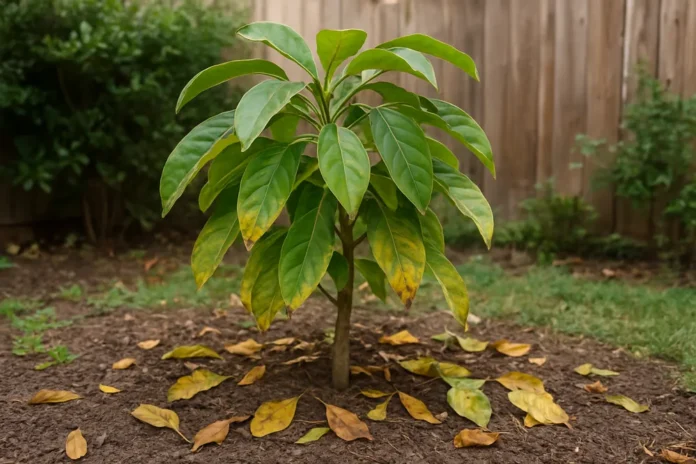
Avocado trees usually lose leaves because of watering stress, cold damage, transplant shock, root problems, or pest pressure. Some leaf drop is also normal as older leaves age out and new growth replaces them.
Seeing leaves fall off an avocado tree can be unsettling, especially if it seemed healthy just a week earlier. In my experience, avocado tree leaf drop is often tied to stress rather than a mystery disease. These trees react quickly to changes in moisture, temperature, root conditions, and light, so the leaf loss is usually a clue that something in the growing environment shifted.
The good news is that leaf drop does not always mean the tree is dying. Avocados can shed older leaves naturally, and even a stressed tree may recover well once the underlying problem is corrected. The key is learning how to read the pattern: whether leaves are yellowing first, turning brown at the edges, dropping while still green, or falling after a cold snap or repotting.
If your avocado tree is losing leaves, start by thinking about what changed recently. A change in watering, a move indoors or outdoors, soggy soil, hot dry wind, or a chilly night can all trigger the same symptom. Once you match the pattern to the cause, the fix gets much easier.
When Leaf Drop Is Normal and when It Is a Warning Sign
Avocados are evergreen, but that does not mean they keep every leaf forever. Older leaves naturally age, fade, and drop as the tree pushes new growth. A small amount of leaf loss, especially from the inner canopy or lower branches, is usually normal if the rest of the tree looks vigorous.
Leaf drop becomes more concerning when it is sudden, heavy, or paired with other symptoms. If many leaves fall in a short period, if branch tips are going bare, or if the remaining leaves look limp, spotted, scorched, curled, or pale, the tree is under stress. Fruit drop, blackened stems, sour-smelling soil, or soft roots also point to a bigger issue.
- Usually normal: a few older leaves dropping while new leaves emerge
- Usually a warning sign: many leaves dropping at once, especially green leaves
- More serious: leaf drop plus branch dieback, trunk damage, root rot odor, or no new growth
When I am diagnosing an avocado, I look at the leaves that fell as much as the leaves still attached. Green fallen leaves often suggest sudden stress like cold, overwatering, or root disturbance, while yellowing leaves usually point to a slower problem such as chronic watering issues or nutrient imbalance.
Watering Stress Is the Most Common Cause
Overwatering and Soggy Roots
Avocado trees dislike waterlogged soil. Their roots need oxygen, and when the soil stays wet too long, roots begin to suffocate and decline. One of the earliest signs is leaf drop. Leaves may first turn pale green or yellow, then hang limp and fall. In containers, overwatering is especially common when pots are too large, drainage holes are limited, or saucers stay full.
If wet soil is the issue, the potting mix may feel heavy for days, the surface may stay dark and cool, and the tree may stop putting on fresh growth. In the ground, poor drainage, compacted clay, or a low spot in the yard can create the same problem even if you are not watering frequently.
Underwatering and Drought Stress
Dry conditions can also make an avocado drop leaves. When the roots dry too much, the tree sheds foliage to reduce stress and conserve moisture. Leaves may curl, feel crisp, develop brown edges, or drop after becoming brittle. In hot weather, a container-grown avocado can go from fine to severely dry very quickly.
Repeated swings between bone dry and soaking wet are even harder on avocados than an occasional missed watering. That cycle weakens roots and often causes yellowing, tip burn, and leaf drop all at once.
- Signs of overwatering: yellow leaves, limp foliage, wet soil, slow growth, mushy roots
- Signs of underwatering: curled leaves, crispy edges, dry soil pulling from the pot, leaf drop after heat
- Signs of inconsistent watering: mixed yellow and brown leaves, sudden dropping after alternating dry and soggy periods
I have better results watering avocados deeply and then waiting until the upper soil begins to dry before watering again. Frequent light sips keep the surface damp but often leave the root zone uneven, which makes stress harder to read.
Cold Snaps, Heat, and Weather Shock Can Trigger Sudden Leaf Loss
Avocado trees are sensitive to temperature extremes, especially young trees and container plants. A chilly night, a dry cold wind, or a sudden heat spike can all cause leaves to fall. This often happens after the weather event, not during it, so the timing can be confusing if you are only looking at today's conditions.
Cold damage often shows up as limp leaves, blackened tips, dull bronze patches, or leaves dropping while still partly green. Heat and sun stress usually cause scorch first, especially on exposed leaves, followed by drop if the roots cannot keep up with moisture demand. Wind adds another layer by drying foliage and rocking the root ball.
- Cold stress: drooping, blackened, or water-soaked looking leaves after cool nights
- Heat stress: scorched patches, brown margins, curling, and leaf drop during hot spells
- Wind stress: torn leaves, dry edges, and sudden drop after gusty weather
Indoor-outdoor moves can also shock an avocado. A tree that grew in filtered indoor light may drop leaves after being moved abruptly into direct sun, while an outdoor tree brought indoors may react to lower light and dry indoor air. A gradual transition usually prevents this.
Root Problems Often Sit Underneath the Symptom
Root Rot
Root rot is one of the most serious reasons an avocado loses leaves. It is commonly tied to prolonged wet conditions and poor drainage. As roots decay, they cannot take up water properly, so the tree may look thirsty even when the soil is wet. That combination of wet soil and wilting foliage is a classic red flag.
Leaves may yellow, wilt, and fall. Growth stalls. In severe cases, small branches die back and the canopy thins from the inside out. If you gently inspect roots from a potted tree, healthy roots should be firm and light colored. Rotted roots are dark, soft, and may smell sour.
Root-bound Containers and Cramped Growing Space
A potted avocado that has outgrown its container can also shed leaves. When roots circle densely around the pot, the tree dries out too fast, absorbs nutrients less evenly, and becomes unstable during hot weather. You may notice roots at the drainage holes, very fast drying after watering, and reduced new growth.
Planting Depth and Trunk Stress
If an avocado is planted too deeply, the trunk base can stay too moist and roots may struggle. Mulch piled against the trunk creates similar stress. Avocados prefer a shallow root zone with good air movement near the crown, so buried trunks often show decline through yellowing leaves and drop.
When an avocado keeps dropping leaves despite reasonable watering, I stop focusing only on the top of the tree and think about the root zone. These trees often tell the real story below ground long before the trunk or branches make it obvious.
Transplant Shock and Sudden Environmental Changes
If your avocado started dropping leaves shortly after repotting, planting out, shipping, or moving to a new location, transplant shock is a strong possibility. Disturbed roots cannot support the same amount of foliage right away, so the tree sheds leaves while it readjusts.
This type of leaf drop often happens even when the tree was handled carefully. Avocados have sensitive roots, and they dislike being teased apart or sitting in heavy wet mix after transplanting. A recently repotted tree may pause growth, lose some lower leaves, and look dull for a few weeks before recovering.
- Leaf drop begins soon after repotting or planting
- Leaves may stay green but still fall
- Growth stalls temporarily while roots recover
- Stress is worse if the tree was overwatered right after transplanting
The same pattern can happen after a major light change. A tree moved from a nursery shade area into intense afternoon sun, or from outdoors into a dim room, may respond by dropping part of its canopy.
Pests and Disease Can Weaken the Canopy
Avocado leaf drop is often cultural, but pests and disease can play a role, especially when a tree is already stressed. Spider mites, thrips, scale, and occasionally aphids can damage leaves enough to make them yellow, speckle, curl, and fall. Mites are especially common in hot, dusty, dry conditions.
Look closely at the undersides of leaves and along stems. Fine stippling, webbing, sticky residue, or tiny raised bumps suggest pests. Disease symptoms may include dark lesions, unusual spotting, or dieback along with leaf loss, though many disease problems start when roots are already weakened by moisture issues.
- Spider mites: pale stippling, bronzing, fine webbing, leaf drop in hot dry weather
- Scale insects: bumps on stems or leaves, sticky honeydew, yellowing foliage
- Thrips: scarred or distorted leaves, silvery patches, weakened new growth
- Fungal or bacterial issues: spots, cankers, dieback, and decline after wet conditions
A healthy avocado can tolerate a little pest activity, but a stressed tree sheds leaves faster because it has fewer reserves. That is why pest outbreaks and watering problems often show up together.
Nutrient Problems and Salt Buildup May Be Part of the Issue
Avocados can lose leaves when nutrition is off, although nutrient issues are less often the only cause. Nitrogen deficiency may cause older leaves to pale and drop gradually. Other deficiencies can distort new growth or create interveinal yellowing, but they usually develop more slowly than weather or watering stress.
Salt buildup is another concern, especially in pots or where irrigation water is hard. Excess fertilizer salts can burn root tips and leaf edges, leading to browning and drop. If the margins of leaves are crispy and the soil has been fertilized heavily, salt stress belongs on the suspect list.
- Gradual pale leaves and slow growth can suggest low fertility
- Brown tips and margins can signal salt buildup or fertilizer burn
- Nutrient issues are often secondary to root stress or poor drainage
How to Narrow Down the Cause on Your Tree
The fastest way to diagnose avocado leaf drop is to match the leaf pattern with recent conditions. Start with timing. Did the problem begin after a cold night, a repotting, a watering change, or a heat wave? Then examine the leaves and soil together rather than separately.
- Notice whether the fallen leaves are green, yellow, spotted, or crispy.
- Check the soil several inches down to see whether it is soggy, evenly moist, or powder dry.
- Think back over the last two weeks for weather changes, moving the plant, fertilizing, or missed watering.
- Inspect the undersides of leaves and stems for mites, scale, webbing, or sticky residue.
- If the tree is potted, slide it partly from the pot if possible and look for circling roots, dark mushy roots, or a sour smell.
Do not assume every dropped leaf means the same thing. A tree with yellowing lower leaves in wet soil is a different case from a tree that drops green leaves two days after a cold front. The pattern matters more than the symptom by itself.
If several things changed at once, fix the most root-related issue first. In avocados, stable moisture and drainage usually matter more than adding fertilizer or spraying a product too early.
What Helps an Avocado Recover
Once you have a likely cause, recovery depends on reducing stress and giving the tree time to rebuild. Avocados do not always respond instantly. A tree may continue dropping damaged leaves for a short time even after conditions improve, but healthy new growth is the real sign that recovery has started.
- Correct watering so the root zone is moist but not constantly saturated.
- Improve drainage in pots or planting sites that stay wet too long.
- Protect the tree from cold nights, harsh afternoon sun, or drying wind while it rebounds.
- Hold off on heavy fertilizing when the tree is stressed, especially if roots may be compromised.
- Remove only clearly dead leaves or twigs and avoid excessive pruning during recovery.
- Treat pests if present, but use the least stressful effective option for the tree's condition.
For container trees, a fast-draining mix and a pot with generous drainage holes make a major difference. For in-ground trees, keeping mulch a few inches away from the trunk and avoiding constantly wet soil around the root crown can prevent repeat problems. If root rot is advanced, recovery may be slow and sometimes incomplete, but catching it early improves the odds.
Judge progress by what the new leaves do, not by whether old damaged leaves look perfect again. Once stressed leaves are compromised, they often remain marked until they eventually fall. Fresh, firm new growth is the better signal.
FAQ
Do Avocado Trees Naturally Lose Leaves?
Yes. Avocado trees regularly shed older leaves as part of normal growth, especially when pushing new flushes. It becomes a problem when the drop is heavy, sudden, or paired with yellowing, wilting, or branch dieback.
Why Is My Avocado Tree Dropping Green Leaves?
Green leaf drop often points to sudden stress rather than natural aging. Common triggers include cold exposure, transplant shock, overwatering, root disturbance, or abrupt changes in light and temperature.
Can Overwatering Make an Avocado Tree Lose Leaves?
Absolutely. Overwatering is one of the most common causes of avocado leaf drop because saturated soil deprives roots of oxygen. Yellowing leaves, limp growth, and wet soil that stays soggy are strong clues.
Will an Underwatered Avocado Tree Drop Leaves Too?
Yes. If the root ball gets too dry, the tree may shed leaves to reduce stress. You may also see curling, crispy edges, and leaves dropping after hot or windy weather.
How Do I Know if My Avocado Has Root Rot?
Root rot is likely when the soil stays wet but the tree still wilts, yellows, and drops leaves. In potted trees, affected roots are often dark, soft, and foul-smelling instead of firm and pale.
Should I Fertilize an Avocado Tree That Is Losing Leaves?
Not automatically. If the tree is dropping leaves from root stress, cold, or transplant shock, extra fertilizer can make matters worse. It is usually better to stabilize watering and growing conditions first.
Can a Potted Avocado Recover After Losing Many Leaves?
Often, yes. If the trunk and branches are still alive and the roots are not severely rotted, a potted avocado can regrow foliage once moisture, drainage, light, and temperature are corrected.
How Long Does It Take an Avocado Tree to Stop Dropping Leaves?
That depends on the cause, but improvement usually takes at least a couple of weeks. The clearest sign of recovery is healthy new growth, not the appearance of older damaged leaves.
Need help choosing the right potting mix, mulch, or pest treatment for a struggling avocado? Read our avocado care and problem-solving guides to pick the best fix before leaf drop gets worse.
