

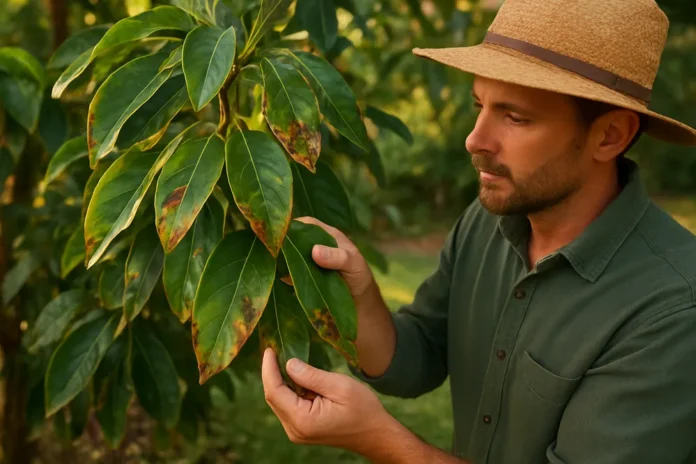
Avocado tree leaves usually develop brown spots because of watering stress, salt buildup, sunburn, fungal disease, pests, or root damage. The exact cause often shows up in the spot pattern, leaf edges, and overall condition of the tree.
Brown spotting on avocado tree leaves can look alarming, especially when a tree was healthy just a week or two ago. In my experience, those spots are rarely random. Avocados react quickly to stress, and their leaves often show the first clear warning that something below ground or in the growing conditions needs attention.
The tricky part is that brown spots on avocado leaves do not all mean the same thing. Some start at the tips and margins from watering or salt problems, some appear as scattered lesions from disease, and some show up after heat, wind, or intense sun. If you look closely at where the spots begin, how fast they spread, and whether new growth still looks healthy, you can usually narrow the cause down pretty quickly.
This guide will walk through the most common reasons avocado leaves develop brown spots, what each one looks like, and what to do next without making the problem worse.
What Brown Spots Usually Mean on Avocado Leaves
Avocado leaves are sensitive to changes in moisture, salts, temperature, and root health. Brown spots form when leaf tissue dies in small patches, but that damage can happen for very different reasons. The leaf pattern matters more than the color alone.
When spotting starts at the tip or edge and moves inward, I usually think first about watering issues, salt burn, or root stress. When the spots are rounder, more distinct, or surrounded by yellow halos, disease becomes more likely. When leaves on the sunniest side of the tree show tan to brown patches, sunburn is often the culprit.
- Brown tips and margins often suggest salt buildup, drought stress, or inconsistent watering.
- Scattered brown lesions can point to fungal or bacterial leaf spot.
- Bleached, papery patches on exposed leaves often indicate sunscald or heat damage.
- Spots plus wilting, leaf drop, or blackened roots suggest root problems or overwatering.
- Fine stippling that turns bronzed or brown may come from mites or sap-feeding pests.
When I diagnose avocado leaf damage, I do not start with the ugliest leaf. I compare older leaves, newer leaves, and the sunniest side of the canopy. That pattern usually tells me faster whether I am dealing with roots, weather, or disease.
Watering Problems Are One of the Most Common Causes
Underwatering and Dry Root Zones
Avocados do not like to dry out completely, especially in hot weather or in containers. If the soil gets too dry, leaves often develop brown tips or irregular brown areas that expand from the edges. You may also notice curling, crisp texture, and leaf drop on older foliage first.
This is especially common when watering is shallow and frequent. The surface looks damp, but the deeper root zone stays dry. In that case the tree can still show drought stress even though it seems to be watered regularly.
Overwatering and Oxygen-starved Roots
Too much water can create a very similar symptom. Avocado roots need air as much as moisture, and soggy soil quickly stresses them. Brown spotting from overwatering is often paired with limp leaves, yellowing, slow growth, or leaves that look dull before they develop dead brown patches.
If overwatering continues, root rot can follow. Once roots are damaged, the tree cannot move water properly, so leaves may look both wet-stressed and drought-stressed at the same time. That is why gardeners sometimes water even more, which makes the problem worse.
- Dry soil several inches down suggests underwatering.
- Sour-smelling, constantly wet soil suggests overwatering or poor drainage.
- Container avocados are especially prone to wet feet if the pot drains slowly.
- Heavy clay soil can hold too much water around roots after rain or irrigation.
If you suspect watering is the issue, judge the tree by new growth after you adjust care, not by the old spotted leaves. Damaged avocado leaves rarely turn green again, so improvement shows up in the next flush of foliage.
Salt Burn and Fertilizer Buildup Often Show Up as Brown Spotting
Avocados are sensitive to salts in both irrigation water and fertilizer. When salts accumulate in the soil, the leaf tips and edges often turn brown first, then the damage creeps inward. Sometimes it looks like spotting at first because the browning begins in patches before joining into a larger necrotic area.
This is a common problem in dry regions, with hard water, or when a tree is fertilized too often. Container-grown avocados are even more vulnerable because salts have nowhere to go unless water drains freely through the pot.
How Salt Damage Usually Looks
- Browning starts on older leaves first
- Tips and margins burn before the center of the leaf
- The damaged tissue looks dry and crisp rather than soft
- The tree may still put out some new growth, but leaves stay smaller than normal
Excess fertilizer can cause similar damage, especially products high in soluble salts. If brown spots appeared shortly after feeding, or after repeated use of liquid fertilizer, fertilizer burn should be high on your list.
Sunburn, Heat, and Wind Can Scar Avocado Leaves
Avocado leaves can develop brown spots after a sudden heat wave, intense afternoon sun, or hot dry wind. This is especially likely if the tree was recently moved, freshly pruned, or grown in partial shade and then exposed to stronger light.
Sunburn damage often begins as pale, bleached, or tan patches that later turn brown and papery. The spots are usually worse on the side of the tree facing the strongest sun. Wind injury may look more ragged, with torn or dried edges that become brown over time.
When Weather Damage Is Most Likely
- After temperatures spike suddenly in late spring or summer
- When a potted avocado is moved outdoors too quickly
- After nearby branches are removed and the canopy becomes exposed
- During hot, low-humidity periods with strong wind
Weather damage usually does not spread like disease. Once conditions improve, the existing spots stay put and new leaves may emerge normally.
Fungal and Bacterial Leaf Spot Can Also Be Responsible
If the spots are distinct, circular to irregular, and not concentrated just at the tips or margins, a leaf spot disease may be involved. Fungal and bacterial issues are more common when foliage stays wet for long periods, humidity is high, or air circulation is poor.
Disease spots often have sharper borders than watering injury. Some develop yellow halos. Others start small and multiply across the leaf surface. In severe cases, leaves yellow, drop early, or show spotting on both young and older foliage.
Clues That Point Toward Disease
- Many separate spots instead of one burned edge
- Yellow halos around brown centers
- Spots on newer leaves as well as older leaves
- Spread after rainy weather or overhead watering
- Leaf drop increases even when soil moisture is reasonable
Good sanitation and better airflow often make a big difference. Remove fallen infected leaves, avoid wetting the canopy when you water, and prune lightly if the tree is dense enough to stay damp for long stretches. If the problem keeps spreading aggressively, a local extension office or arborist can help confirm the disease before you treat.
I get cautious about spraying anything until I know whether the spots are actually spreading. Old sunburn, salt burn, and root stress can look dramatic, but they are not fixed with fungicide. If the newest leaves stay clean, the original cause may already be over.
Pests Can Create Tiny Spots That Turn Brown Later
Mites, thrips, lace bugs, and other sap-feeding pests can injure avocado leaves in a way that first looks speckled, then bronzed, then brown. Instead of one large patch, you may see many tiny dots, stippling, or roughened areas on the leaf surface.
Spider mites are a frequent issue in hot, dusty conditions. Their feeding can make leaves look dull or silvery before brown scarring develops. Thrips may distort tender new growth as well as cause spotting.
Signs the Problem May Be Pest-related
- Fine stippling or speckling before full brown spots appear
- Damage concentrated on leaf undersides or tender new growth
- Webbing, tiny moving dots, or black specks of frass
- Leaves look bronzed rather than simply burned at the edges
A strong blast of water, reduced dust, and protection of beneficial insects can help with mild infestations. Heavier problems may require horticultural oil or insecticidal soap, but timing matters because avocado leaves can be sensitive if sprayed during hot weather.
Root Rot and Poor Drainage Are Serious Causes to Rule Out
One of the most serious reasons for brown spots on avocado leaves is root rot, often tied to poor drainage and overwatering. Avocados are famously vulnerable to root diseases when their roots stay wet too long. The leaves may first show yellowing, dullness, and limp growth, then develop brown spots, scorched edges, or sudden drop.
Unlike a simple watering mistake, root rot keeps the tree from recovering normally even after the soil surface dries. Growth slows, branches may die back, and the canopy can thin noticeably. In containers, roots may appear dark, soft, or sparse instead of firm and pale.
- Soil stays wet for days after watering
- The planting hole sits in a low spot or heavy clay
- Mulch is piled against the trunk and traps moisture
- The pot lacks enough drainage holes
- Leaves wilt even though the soil is moist
If drainage is the issue, the fix is not simply watering less once. The root environment has to improve, whether that means repotting into a faster-draining mix, watering less often but more deeply, or correcting where water collects around an in-ground tree.
How to Tell Which Cause Is Most Likely
Brown spots become much easier to interpret when you look at the whole tree instead of a single leaf. Start by checking where the worst damage is, how the soil feels, and whether the newest growth is affected.
- Look at older versus newer leaves. Older-leaf damage often points to salts, watering stress, or natural leaf aging. New-leaf spotting may suggest pests, disease, or recent weather injury.
- Check tip-and-edge burn versus scattered lesions. Burned margins usually suggest water or salt issues. Separate spots across the blade suggest pests or disease.
- Notice which side of the tree is affected. Sun-facing damage leans toward heat or sunburn.
- Feel the soil several inches down. Bone-dry soil supports underwatering. Sticky, airless soil supports overwatering or poor drainage.
- Review recent changes. Fertilizing, moving a pot, a heat wave, or heavy rain often explains the timing.
Change one thing at a time if you are not completely sure of the cause. When gardeners increase water, add fertilizer, and spray for disease all in the same week, it becomes much harder to tell what actually helped and what made the tree more stressed.
What to Do Next Without Stressing the Tree Further
Once you have a likely cause, keep the response targeted and gentle. Avocados dislike abrupt swings in care, so a steady correction usually works better than an aggressive one.
If Watering Is the Issue
Water deeply enough to wet the root zone, then let the top layer begin to dry before watering again. For container trees, make sure excess water drains freely and never let the pot sit in a saucer of standing water.
If Salts or Fertilizer Burn Are Likely
Pause fertilizing for a while and flush the soil with enough water to carry salts downward if drainage is good. In containers, this means watering thoroughly until a generous amount drains out the bottom.
If Sun or Wind Caused the Damage
Protect the tree from the harshest afternoon exposure while it recovers. A gradual transition to stronger sun, temporary shade cloth, or shelter from drying wind can prevent more spotting on new leaves.
If Disease Seems Likely
Remove heavily infected fallen leaves, keep foliage dry when possible, and improve airflow around the canopy. Avoid heavy pruning during hot weather, but do thin crowded growth enough that leaves can dry after rain.
If Pests Are Present
Identify the pest before treating, because the wrong product can do more harm than good. Wash leaves first if the infestation is light, then use a gentle control such as horticultural oil only when temperatures are suitable.
If Root Rot Is Suspected
Improve drainage immediately and stop keeping the root zone constantly wet. In containers, repotting into a fast-draining mix may be necessary. In the ground, the focus is on correcting irrigation and reducing saturated conditions around the root area.
When Brown Spots Are Normal and when They Are a Warning Sign
Not every marked leaf means the tree is in serious trouble. Avocados naturally shed older leaves, and a few blemishes after weather swings are not unusual. If the canopy is full, new growth looks healthy, and the spots are limited to older leaves, the tree may simply be moving through minor stress.
Brown spots become more concerning when they spread quickly, affect many new leaves, come with wilting or branch dieback, or are paired with persistently wet soil. Those signs suggest a deeper root, pest, or disease issue that should not be ignored.
- Usually minor: a few older leaves with tip burn after heat or dry weather
- More concerning: spotting on tender new leaves across the canopy
- More concerning: ongoing leaf drop plus wet soil and weak growth
- More concerning: rapid spread after rain, humidity, or overhead watering
FAQ
Should I Cut Off Avocado Leaves with Brown Spots?
Usually no, unless the leaves are mostly dead or clearly diseased. Slightly damaged leaves still help the tree photosynthesize, and removing too many at once can add stress. Prune only heavily damaged or infected foliage and let the tree replace the rest naturally.
Can Brown Spots on Avocado Leaves Turn Green Again?
No. Brown tissue is dead and will not recover. What you want to watch for is healthy new growth after you correct the underlying problem.
Do Brown Spots Mean My Avocado Tree Has Root Rot?
Not always. Root rot is one possible cause, but watering inconsistency, salt burn, sun damage, pests, and leaf spot diseases can all create similar symptoms. Root rot becomes more likely when the soil stays wet, the tree wilts despite moisture, and growth declines.
Can Tap Water Cause Brown Spots on Avocado Leaves?
Yes, especially if your water is high in salts or minerals. Over time that buildup can burn leaf tips and edges, which may start as patchy brown spotting before becoming more obvious scorch.
Why Are Only the Older Avocado Leaves Getting Brown Spots?
Older leaves often show stress first from salt buildup, inconsistent watering, or normal aging. If new growth looks healthy, the problem may be mild or already improving.
Are Brown Spots From Sunburn Contagious to Other Leaves?
No. Sunburn and heat damage are not contagious. Once weather conditions improve, the existing damage stays but should not spread to shaded or newly protected leaves.
How Long Does It Take an Avocado Tree to Recover From Leaf Spotting?
It depends on the cause, but visible recovery usually shows in the next round of growth rather than on the damaged leaves themselves. Minor watering or weather stress may improve within a few weeks, while root problems can take much longer.
Need help choosing the right fix for a stressed avocado tree? Read our avocado care and treatment guides to find the best watering tools, fertilizers, and disease-control options before the damage spreads.
