

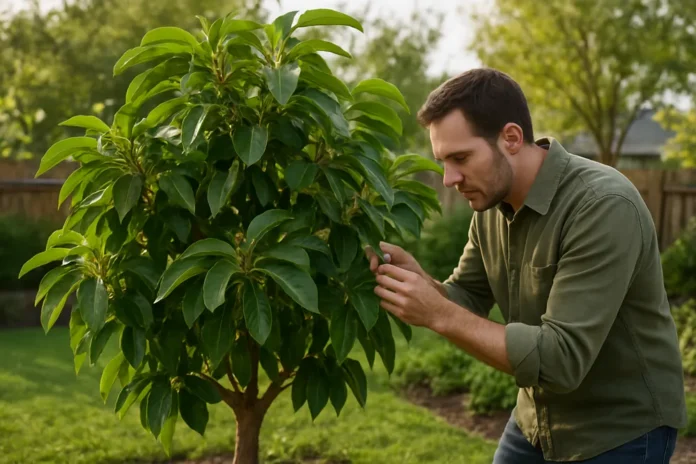
An avocado tree usually fails to flower because it is too young, not getting enough sun, or has been stressed by cold, heat, pruning, watering, or excess nitrogen. Some trees also bloom poorly when winter conditions are too warm or flowering wood was removed before spring.
If your avocado tree looks healthy enough to grow leaves but still refuses to bloom, the problem is often more about timing and growing conditions than anything dramatic. Avocados can be slow to mature, and they are pickier about flowering than many home gardeners expect.
In my experience, a non-blooming tree usually points to one of a handful of issues: youth, too much shade, weather that interrupted bud development, heavy pruning, or fertilizing in a way that pushes leafy growth instead of flowers. The good news is that once you identify the reason, flowering often improves with a season or two of better conditions.
Below, I will walk through the most common causes, how to tell which one fits your tree, and what usually helps an avocado start blooming again.
The Most Common Reason Is That the Tree Is Still Too Young
Avocado trees are not fast to reach flowering age, especially when grown from seed. A seed-grown tree may take anywhere from 7 to 15 years to bloom, and some take even longer. Grafted nursery trees usually flower much sooner, often in about 3 to 5 years under good conditions.
If you planted a pit from a grocery-store avocado, patience may be the entire answer. The tree may look vigorous, put on height every year, and still not be mature enough to bloom. That can be frustrating, but it is normal.
- Seed-grown avocado: often many years before first flowers
- Grafted avocado: typically flowers younger and more reliably
- Young trees often prioritize roots, trunk growth, and canopy development before reproduction
When I am troubleshooting a non-flowering avocado, the first thing I ask is whether it was grown from seed or purchased as a grafted tree. That one detail often explains more than watering or fertilizer ever will.
Too Little Sun Can Stop Flower Production
Avocado trees need abundant direct sun to build the energy required for flowering. A tree tucked near taller shade trees, buildings, fences, or the north side of a home may grow leaves well enough but fail to set flower buds.
For best blooming, aim for full sun, ideally at least 6 to 8 hours of direct light daily. In hot inland climates, some late-afternoon protection can reduce stress, but deep shade is still a problem. If only one side of the tree gets strong light, you may also notice sparse or uneven blooming.
- Leggy growth and wide spacing between leaves can suggest inadequate light
- Dense surrounding shrubs can gradually shade a tree more each year
- Trees planted too close to structures often lose morning or midday sun
Warm Winters or Weather Swings Can Interfere with Blooming
Avocados usually flower best after a cool period that helps trigger bloom development. In very warm winter climates, some trees stay vegetative longer and produce fewer flowers. On the other hand, sudden cold snaps can damage developing buds before you ever see them open.
Temperature stress works both ways. A late frost can burn flower buds, and unusual heat during the wrong stage can also disrupt bloom timing. This is especially common when winter and early spring weather swing sharply back and forth.
If your tree has bloomed in past years but skipped a season after odd winter weather, the issue may be temporary. Avocados are not always consistent year to year, especially outside their ideal climate.
If you garden near the edge of avocado-friendly conditions, judge the tree by a three-year pattern instead of one spring. A single bad bloom year after a rough winter does not always mean your routine is wrong.
Improper Pruning Can Remove Flowering Wood
One of the easiest ways to lose avocado flowers is to prune at the wrong time or too heavily. Avocados bloom on mature wood, so if you cut back branch tips and outer canopy growth shortly before the bloom season, you may remove the very sites where flowers would have formed.
This often happens when a tree is getting too tall and the owner gives it a hard shaping cut in winter or late fall. The tree then responds with a flush of leafy regrowth instead of flowers.
- Avoid heavy pruning right before expected bloom
- Limit cuts to dead, damaged, crossing, or badly placed branches when possible
- Use gradual size control over several seasons instead of one severe cutback
If you need to reduce size, it is usually better to do it thoughtfully and accept that flowering may be lighter for a season while the tree recovers.
Too Much Nitrogen Encourages Leaves Instead of Flowers
An avocado that gets frequent high-nitrogen feeding often grows lush, dark green foliage at the expense of flowering. This is common when lawn fertilizer reaches the root zone or when a tree is fertilized often with products meant for leafy growth.
Nitrogen is important, especially for young trees, but excess nitrogen can keep the plant in a growth mode that does not favor bloom production. If the canopy is thick and vigorous yet flowers never appear, fertilizer may be part of the problem.
- Very fast leafy growth can signal overfeeding
- Grass fertilizer applied nearby may affect the tree
- A balanced feeding program is usually better than repeated nitrogen-heavy applications
Mature avocado trees often need less aggressive feeding than gardeners assume. It is better to support steady health than to push nonstop growth.
Water Stress Can Reduce or Delay Blooming
Avocados dislike both drought stress and chronically soggy roots. Either extreme can disrupt flowering. A tree that dries out repeatedly may abort developing buds, while a tree in poorly drained soil may struggle to produce the energy needed for bloom.
These trees have shallow root systems, so they respond quickly to uneven watering. Long dry gaps followed by heavy soaking are not ideal. Neither is watering so often that the soil never gets proper oxygen.
Signs Watering May Be the Issue
- Leaf tip burn, curling, or drooping during warm weather
- Pale leaves and weak growth in waterlogged soil
- Mulch piled against the trunk and soggy ground that stays wet for days
- Flower buds that seem to form but do not develop further
I trust soil feel more than a calendar with avocados. If the top layer is dry but the root zone underneath stays wet and cool, watering more will not help flowering and may make root stress worse.
Root Problems and Poor Drainage Can Keep a Tree From Blooming
Avocados are especially sensitive to drainage problems. Heavy clay, compacted soil, low spots in the yard, or containers without excellent drainage can all lead to root stress. A tree with unhealthy roots will usually focus on survival, not reproduction.
Root rot can begin subtly. You may see slower growth, smaller leaves, a dull canopy, or branch dieback before you realize the roots are struggling. Flowering often drops off early in this process.
If your tree stands in wet soil after rain or irrigation, improving drainage is more important than adding more fertilizer. In some landscapes, building a mound or raised planting area is what finally turns an avocado around.
Cold Damage and Wind Exposure Can Affect Flower Buds
Even when an avocado survives winter, cold injury can still interfere with flowering. Buds are often more vulnerable than the larger branches and trunk. A tree may leaf out later and look alive, but the bloom was already lost to low temperatures.
Persistent wind can add another layer of stress. In exposed sites, wind dries foliage, cools the canopy, and physically damages tender growth. That kind of ongoing stress can reduce bloom quality and make the tree slower to rebound.
- Blackened tender tips after winter can indicate cold injury
- South-facing walls may provide a warmer microclimate in marginal areas
- Windbreaks can help if they do not create too much shade
Pests and Disease Can Weaken the Tree Before Bloom Season
A lightly infested avocado can still flower, but a tree under enough pest or disease pressure may not bloom well. Scale, mites, lace bugs, and root diseases can all reduce vigor. Sooty mold growing on honeydew from insects can also cut down the tree's ability to photosynthesize efficiently.
You do not need a perfect tree to get flowers, but you do need a reasonably healthy one. If the leaves are consistently spotted, bronzed, sticky, distorted, or dropping early, the bloom problem may be part of a bigger health issue.
Treat the underlying stress first. Flowering usually improves after the tree regains strength.
Container-grown Avocados Often Struggle to Reach Blooming Size
Avocados can be grown in containers for a while, but keeping them there long term often limits flowering. Roots circle, soil quality declines faster, watering becomes less forgiving, and the tree may never build enough size and stability to bloom well.
A potted avocado may look attractive and healthy enough, but still be under constant mild stress. This is especially true indoors or on shaded patios where light intensity is too low.
- Repot before the tree becomes severely root-bound
- Use a fast-draining mix rather than heavy garden soil
- Give the brightest possible outdoor light in suitable weather
- Expect much better bloom performance in the ground when climate allows
How to Tell Which Cause Is Most Likely
Because several issues can lead to the same symptom, it helps to read the whole tree instead of focusing only on the missing flowers. Start with the basics: age, sun exposure, pruning history, winter weather, watering pattern, and fertilizer routine.
Clues That Point to Specific Problems
- Healthy leafy tree, grown from seed, never flowered: immaturity is the likely reason
- Dense foliage with little bloom after frequent feeding: excess nitrogen is a strong suspect
- No flowers after a hard winter or late frost: weather injury is likely
- No flowers after a major trim: pruning probably removed bloom wood
- Weak growth, yellowing, or dieback with wet soil: root stress or drainage trouble is likely
- Tree in shade with lanky growth: inadequate sun is a likely factor
In many home landscapes, more than one factor is involved. For example, a slightly shaded tree that is overfed and pruned hard in winter has three separate reasons not to bloom.
What Helps an Avocado Tree Start Flowering Again
Once you have narrowed down the cause, the goal is to reduce stress and let the tree settle into a more natural bloom cycle. Flowering recovery is not always instant. Avocados often need one full season, and sometimes longer, to respond.
- Make sure the tree gets full sun or as much direct light as your site allows.
- Water deeply but not constantly, and let the soil drain well between waterings.
- Cut back on high-nitrogen feeding if the tree is already growing vigorously.
- Avoid heavy pruning near bloom season.
- Protect the tree from cold snaps when possible, especially while buds are developing.
- Improve drainage if water tends to sit around the roots.
If your tree is young, the best fix may simply be time combined with steady care. If it is mature enough to bloom and has missed multiple seasons, focus on correcting site and maintenance issues before trying any special products.
Change one major factor at a time if you can. When gardeners prune hard, change fertilizer, and alter watering all in the same month, it becomes much harder to tell what actually helped or hurt the next bloom cycle.
FAQ
How Old Does an Avocado Tree Need to Be Before It Flowers?
A grafted avocado may flower in about 3 to 5 years, while a seed-grown tree often takes 7 to 15 years or more. Seed-grown trees are much less predictable.
Can an Avocado Tree Be Healthy and Still Not Flower?
Yes. A tree can have plenty of leaves and still fail to bloom if it is too young, too shaded, overfertilized with nitrogen, or pruned at the wrong time.
Does an Avocado Tree Need Another Tree Nearby to Flower?
No. Another avocado tree is not required for flowering itself. A second tree may help with pollination and fruit set in some situations, but it does not usually determine whether flowers appear at all.
Will Coffee Grounds Help My Avocado Tree Bloom?
Not necessarily. Coffee grounds are not a reliable bloom booster, and overusing any soil amendment can create imbalance. Good light, proper watering, healthy roots, and balanced nutrition matter much more.
Should I Fertilize an Avocado Tree That Is Not Flowering?
Only if the tree actually needs it. If it is already growing strongly, more fertilizer, especially nitrogen, can reduce blooming. Mature trees often do better with moderate, balanced feeding rather than frequent fertilization.
Can Frost Stop an Avocado Tree From Blooming?
Yes. Frost can damage developing buds even if the tree survives overall. A tree may leaf out later and still skip flowers after cold injury.
Do Potted Avocado Trees Flower Well?
They can, but many struggle to bloom reliably in containers because of limited root space, inconsistent moisture, and lower light. In-ground trees usually flower better when climate permits.
Need the right fix for a stubborn avocado tree? Read our avocado care and feeding guide to choose the best fertilizer, mulch, watering routine, and cold protection for stronger blooms and better fruiting.
