

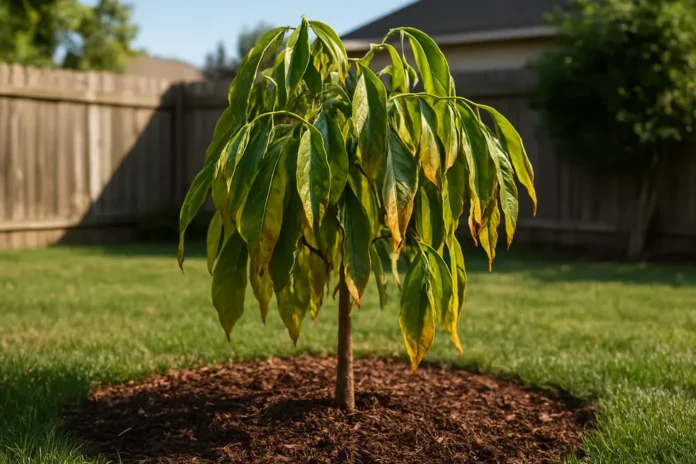
Avocado tree leaves usually droop because the roots are stressed, most often from too much water, too little water, heat, cold, or transplant shock. Drooping can also happen when roots are damaged by poor drainage, disease, or container problems.
When an avocado tree suddenly looks limp, the leaves often tell you before the rest of the plant does. Avocado tree leaves drooping is a common stress signal, but it does not always mean the same thing. Sometimes the tree is thirsty. Other times it is getting too much water, sitting in soggy soil, struggling after transplanting, or reacting to a stretch of hot or cold weather.
I usually start by looking at the whole pattern instead of a single leaf. Are the leaves drooping but still green and soft? Are they curling, yellowing, or developing brown tips? Is the soil dusty dry, evenly moist, or staying wet for days? Those details matter because avocados are especially sensitive to root stress, and the roots are often where the real problem begins.
The good news is that a droopy avocado tree can often recover if you catch the cause early. Below, I will walk through the most likely reasons, how to tell them apart, and what to do so your tree can start putting out healthy new growth again.
What Drooping Leaves Usually Mean on an Avocado Tree
Drooping is the tree's way of showing that it cannot keep normal leaf pressure and moisture balance. In plain terms, the leaves are not being supported the way they should be. That can happen when roots are not taking up water properly, when the plant is losing moisture faster than it can replace it, or when recent stress has interrupted normal growth.
On avocados, the most common causes are watering mistakes, poor drainage, root rot, weather extremes, transplant shock, and container stress. Less often, pests or nutrient issues contribute, especially if drooping is paired with yellowing, spotting, or distorted new leaves.
- Leaves drooping with dry soil often points to underwatering or roots that have become too dry to function well.
- Leaves drooping with wet soil often suggests overwatering, poor drainage, or root disease.
- Leaves drooping after planting or repotting often signals transplant shock.
- Leaves drooping in extreme afternoon heat may be temporary stress, especially if the tree perks up later.
- Leaves drooping with blackened, mushy, or yellowing foliage raises concern about root damage.
When I diagnose a droopy avocado, I pay more attention to the soil condition and timing than to the droop itself. A tree that collapsed right after a heat spike is a very different case from one that has looked heavier and duller for two weeks in constantly wet soil.
Underwatering and Drought Stress
A thirsty avocado tree often droops because it cannot move enough water up to the canopy. The leaves may look limp, slightly folded, or less glossy than usual. In hotter weather, the whole tree can look tired by afternoon.
This happens most often with young trees, container-grown avocados, and newly planted trees whose roots have not spread into surrounding soil yet. Sandy soil and windy sites also dry out faster than many gardeners expect.
Signs Underwatering Is the Cause
- Soil feels dry several inches down
- Leaves droop and may curl inward slightly
- Leaf edges or tips may turn brown and crisp
- Fruit may drop early on stressed mature trees
- The tree improves noticeably after a deep watering
How to Help a Dry Avocado Recover
Water deeply enough to moisten the full root zone rather than giving a light daily sprinkle. For in-ground trees, that usually means a slower, longer soak so water penetrates beyond the surface. For potted trees, water until excess drains from the bottom, then let the upper soil dry slightly before watering again.
Mulch can help a lot. A layer of wood chips or shredded bark around the root area slows evaporation and moderates soil temperature, but keep mulch a few inches away from the trunk.
Overwatering, Soggy Soil, and Root Suffocation
Many drooping avocado trees are not too dry at all. They are too wet. Avocado roots need oxygen, and when the soil stays saturated, the roots cannot breathe properly. The result can look surprisingly similar to thirst because damaged roots also fail to deliver water to the leaves.
This is especially common in heavy clay soil, low spots in the yard, containers without enough drainage, or situations where the tree is watered on a fixed schedule without checking soil moisture first.
Clues That Too Much Water Is the Problem
- Soil stays wet for days after watering
- Leaves droop but may also yellow
- New growth looks weak or stalls
- Lower leaves may drop
- The trunk area or soil surface may smell sour or stagnant in severe cases
If you suspect overwatering, do not keep adding water because the leaves look wilted. Let the soil begin drying to a healthier level and improve drainage if needed. For container trees, make sure the pot has drainage holes and never let it sit in a saucer full of water.
If you are unsure whether your avocado is too wet or too dry, dig a small test hole near the root zone or use your hand instead of guessing from the surface. I have seen plenty of trees watered again and again because the top inch looked dry while the soil below was still soggy.
Root Rot and Other Root Problems
Avocados are notoriously vulnerable to root trouble, especially in poorly drained soil. Root rot often starts after chronic overwatering or drainage problems and can quickly lead to leaf droop, yellowing, decline, and dieback. The roots lose their ability to support the canopy, so the tree looks wilted even when the soil is wet.
Phytophthora root rot is one of the best known avocado diseases, but home gardeners do not always need a lab diagnosis to recognize that the roots are in distress. A tree that never really dries out, keeps drooping, and gradually declines is waving a red flag.
Symptoms That Point Toward Root Disease
- Persistent drooping despite moist soil
- Yellowing or pale leaves
- Leaf drop and sparse canopy
- Poor growth over time
- Dark, decayed, or brittle roots if examined during repotting
If root rot has begun, the main goal is to stop making conditions worse. Reduce watering frequency, improve drainage, and avoid piling mulch or soil against the trunk. In severe cases, recovery can be difficult, but mild to moderate stress can sometimes be reversed if the roots regain access to air.
For container trees, repotting into a very well-draining mix may help if done before the damage is extensive. Remove only clearly dead, mushy roots and avoid overhandling the root ball.
Transplant Shock and Recent Planting Stress
If your avocado started drooping shortly after being planted or repotted, transplant shock is high on the list. Avocados can be touchy about root disturbance. Even when you do everything right, a tree may droop for a while as it adjusts to new soil, new light, wind exposure, and interrupted roots.
Newly planted trees are especially prone to water stress because their roots are still confined to the original root ball. The surrounding soil may be moist, but if the root ball itself dried out or stayed too wet, the leaves can still droop.
Common Transplant-related Triggers
- Planting during hot weather
- Breaking apart or damaging roots
- Allowing the root ball to dry before or after planting
- Planting too deep
- Moving a tree abruptly from shade to strong sun
Give a newly planted avocado consistent moisture, but not constant saturation. Temporary shade cloth can help if heat and sun are intense. Avoid fertilizing right away, since stressed roots are easily burned and extra nutrients will not solve shock.
After transplanting, I judge recovery by the next flush of growth, not by whether every old leaf stands back up perfectly. Some older leaves may stay tired-looking for a while even as the tree begins to reestablish itself.
Heat, Sun Stress, and Dry Wind
Avocado leaves can droop in hot, bright, or windy weather because the tree loses water faster than the roots can replace it. This may be temporary midday wilt, or it may become more serious if the stress continues for several days.
Young trees are the most vulnerable, especially when reflected heat from walls, patios, or driveways raises the temperature around them. Containers also heat up fast, and roots in black nursery pots can get stressed quickly.
How Heat Stress Usually Looks
- Leaves droop more in the afternoon than in the morning
- Leaf edges may scorch or brown
- The soil dries faster than normal
- The tree may improve overnight if the stress is temporary
During hot spells, deep watering in the morning is usually more helpful than frequent shallow watering. Mulch, wind protection, and temporary afternoon shade for young trees can prevent repeated stress. For potted avocados, moving the container out of harsh reflected heat can make a noticeable difference.
Cold Damage and Sudden Weather Swings
Avocado trees also droop when cold weather damages leaf tissue or shocks the roots. A chilly night, cold wind, or a sudden temperature drop can leave foliage hanging limp the next day. Tender young trees and fresh growth are hit first.
Cold stress often brings other symptoms besides drooping. Leaves may darken, develop water-soaked patches, or later turn brown and dry. Severe cold can also injure stems and reduce the tree's ability to move water normally.
When Cold Is the Likely Cause
- Drooping appears after a cold snap
- Leaf tissue looks dark, limp, or later scorched
- Tender new growth is damaged first
- The tree was exposed to frost, cold wind, or an unprotected open site
Do not rush to prune right away unless tissue is clearly broken. Sometimes damaged leaves still provide shade to stems while the tree recovers. Wait until warmer weather and then remove dead material once you can clearly see what survived.
Container Stress and Rootbound Avocado Trees
Potted avocados often droop for reasons that in-ground trees never face. Their soil volume is limited, so they swing from wet to dry more quickly. Over time, roots can fill the container so densely that water either rushes through without soaking in or stays unevenly distributed around a tight root mass.
A rootbound avocado may droop even when you water regularly because the roots no longer have enough room, oxygen, or consistent access to moisture.
Signs a Container Is Part of the Problem
- Roots circling inside the pot
- Soil drying extremely fast
- Water running down the sides without soaking in
- Stunted growth and frequent wilting
- A pot that is clearly too small for the canopy
Repot into a container only a bit larger, not dramatically oversized, and use a fast-draining mix. Oversized pots can stay wet too long, which creates a different problem. After repotting, give the tree a little time to settle rather than feeding heavily right away.
Pests, Nutrient Issues, and Less Common Causes
Drooping on its own is usually more about water and roots than nutrients, but pests and deficiencies can add to the stress. Spider mites, thrips, and some sap-feeding insects can weaken leaves, especially in hot, dry conditions. Nutrient imbalances are more likely to cause chlorosis, poor color, or weak growth than dramatic wilting by themselves.
If your avocado is drooping and also showing stippling, webbing, distorted new leaves, or unusual spotting, inspect both sides of the leaves closely. If the leaves are pale but the soil and roots seem fine, a soil test or a careful fertilizer review may be useful.
Problems That Can Accompany Drooping
- Spider mites in hot, dusty conditions
- Salt buildup from fertilizer or poor-quality irrigation water
- Nutrient deficiencies causing pale or yellow leaves
- Mechanical root damage from digging or cultivation
Avoid assuming fertilizer is the cure for a droopy tree. If roots are stressed, extra fertilizer can make matters worse. Fix watering and drainage first, then address feeding once the tree is actively growing again.
How to Tell Which Cause Is Most Likely
A simple process can help you sort through the possibilities without guessing. Look at the soil, the weather, and the timing of the symptoms first. Then compare the leaves and overall growth pattern.
- Check soil moisture several inches down, not just at the surface.
- Think about recent changes such as repotting, planting, heat waves, or cold nights.
- Look for yellowing, browning, scorch, leaf drop, or pest signs that narrow the diagnosis.
- Consider whether the problem is worst in the afternoon, constant all day, or getting progressively worse over weeks.
- Review drainage, pot size, irrigation frequency, and whether water is penetrating the root zone properly.
In many cases, the combination of wet soil plus droop is the biggest warning sign. Dry soil plus droop is usually more straightforward. A recent transplant or weather event can also explain symptoms that appear suddenly.
What to Do Right Now for a Drooping Avocado Tree
The best immediate response depends on what you find, but the goal is always to reduce stress rather than piling on more changes. Avocados respond better to a calm correction than to a series of desperate fixes.
- If the soil is dry, water deeply and evenly.
- If the soil is soggy, pause watering and improve drainage.
- If the tree was just transplanted, keep moisture steady and protect it from extreme sun and wind.
- If heat is intense, mulch the root zone and provide temporary afternoon shade for young trees.
- If cold damage is suspected, wait before pruning and protect the tree during the next cold event.
- If the tree is rootbound, plan a careful repot into a well-draining mix.
Then watch the newest leaves and shoots over the next couple of weeks. Recovery is often gradual. Old damaged leaves may not return to normal, but the tree should stop declining and begin producing firmer, healthier new growth if the root environment improves.
FAQ
Will Drooping Avocado Leaves Recover?
Often, yes. If the cause is caught early and the roots are still healthy enough to support the tree, leaves may perk up or at least stabilize. Severely damaged older leaves may not look normal again, so watch for healthy new growth as the better sign of recovery.
Can an Avocado Tree Droop From Too Much Water?
Yes. Overwatering is one of the most common reasons avocado leaves droop because waterlogged soil deprives roots of oxygen. The tree can look wilted even though the soil is wet.
How Often Should I Water a Drooping Avocado Tree?
There is no single schedule that fits every tree. Water based on soil moisture, weather, soil type, and whether the tree is in the ground or in a container. Avocados do best with deep watering followed by some drying near the surface, not constant saturation.
Should I Fertilize My Avocado Tree if the Leaves Are Drooping?
Usually not right away. If drooping is caused by root stress, overwatering, or transplant shock, fertilizer will not fix the real issue and may worsen it. Correct moisture and drainage first.
Why Are My Avocado Leaves Drooping After Repotting?
Repotting can trigger transplant shock, root disturbance, and sudden moisture changes. Avocados are sensitive to their roots being handled, so some drooping after repotting is common if the tree is otherwise stable.
Do Avocado Leaves Droop in Hot Weather Even if the Tree Is Healthy?
They can. In intense afternoon heat, some temporary drooping can happen because the leaves lose water quickly. If the tree recovers by evening or morning and the soil moisture is appropriate, the stress may be short-lived rather than a major problem.
How Do I Know if My Avocado Tree Has Root Rot?
Persistent drooping in wet soil, yellowing leaves, canopy thinning, and slow decline are common warning signs. Root rot is more likely when the tree has been growing in poorly drained soil or has been watered too frequently for a long period.
Need help choosing the right soil, mulch, or treatment for a stressed avocado tree? Read our avocado care and problem-solving guides to find the best fixes before root damage gets worse.
