

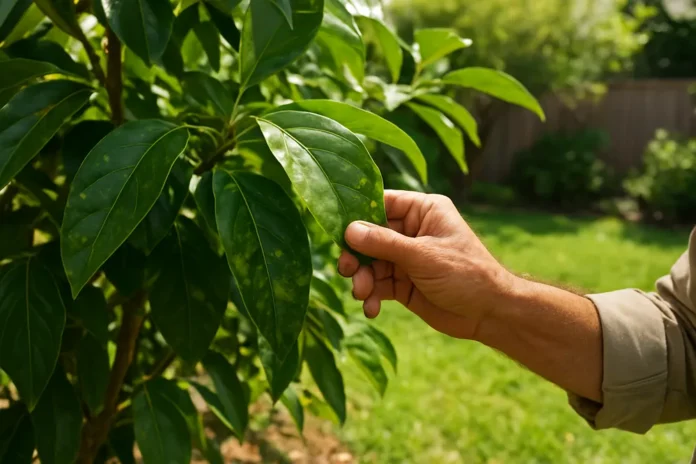
Avocado tree leaves usually develop yellow spots because of watering stress, mite feeding, nutrient imbalance, salt buildup, or fungal disease. The exact cause depends on where the spots appear, how they spread, and whether the leaves also curl, brown, or drop.
Seeing avocado tree leaves with yellow spots can be frustrating, especially when the rest of the tree looked fine just a week or two earlier. Avocados are vigorous trees when conditions suit them, but they are also quick to show stress through their foliage. Those spots are the tree's way of signaling that something is off, and the pattern of the damage often tells you a lot.
In my experience, yellow spotting on avocado leaves is most often tied to moisture problems, tiny sap-sucking pests, nutrient issues, or salt accumulation in the soil. Less often, it is a disease problem. The key is to look beyond the color alone and pay attention to whether the spots are tiny or large, scattered or along the edges, and whether newer or older leaves are most affected.
If your avocado leaves have yellow spots, do not assume the tree needs fertilizer right away. A yellow-spotted leaf can come from several different problems, and the wrong fix can make things worse. Once you match the symptoms to the cause, the right treatment is usually straightforward.
What Yellow Spots Are Telling You
Yellow spots are not a single diagnosis. On avocado trees, they are a symptom that can come from disrupted root function, pest feeding, nutrient uptake problems, or infection in leaf tissue. The same tree can even have more than one issue at once, especially if it is already stressed by poor drainage or inconsistent watering.
Start by noticing the overall pattern. Tiny pale speckles across the leaf surface often suggest mite feeding. Larger blotches between veins can point toward nutrient problems or root stress. Yellow patches that later turn brown along the edges often connect to salt buildup or irregular watering. Spots with a defined dark border can lean more toward fungal disease.
- Old leaves showing spots first often suggest a mobile nutrient issue such as magnesium deficiency or general root stress.
- New leaves with pale spotting can point to micronutrient issues, mite damage, or environmental stress.
- Leaves with yellow spotting plus crispy brown tips often indicate salt burn or watering inconsistency.
- Leaves with yellow spots plus webbing or dusty undersides commonly indicate mites.
- Leaves with round lesions that enlarge after humid weather are more suspicious for disease.
When I diagnose avocado leaf problems, I rarely judge from a single leaf. I compare several leaves from different parts of the canopy because pest damage, nutrient issues, and root stress each tend to create a different distribution pattern across the tree.
Watering Stress and Root Problems Are Common Causes
Overwatering and Poor Drainage
Avocado trees hate staying waterlogged. Their roots need air as much as they need moisture, and soggy soil interferes with oxygen uptake. When roots sit in wet ground too long, leaves can develop yellow spotting, dull color, drooping, and eventual leaf drop. In heavy clay soils or containers without excellent drainage, this is one of the first issues I suspect.
Yellow spots from excess moisture often appear along with a general tired look. The leaves may not be crisp at first. Instead, they can look limp, slightly pale, and blotchy. If the roots remain stressed, the spots expand, and edges may turn brown.
Underwatering and Uneven Moisture
Dry spells can also trigger yellow spotting. Avocado trees are sensitive to sudden swings from very dry soil to very wet soil. When that happens, the roots struggle to regulate water evenly, and the leaves often respond with yellow mottling, tip burn, or patchy discoloration.
This is especially common in hot weather, in young trees with shallow root systems, and in container-grown avocados. If the soil dries hard between waterings and then gets drenched, the foliage often shows the stress before the branches do.
- Soil staying wet for days after watering suggests drainage trouble.
- Wilting in wet soil points more toward root damage than thirst.
- Leaves that perk up briefly after watering but keep developing spots often indicate inconsistent moisture.
- A sour smell in container soil can signal root stress from excess water.
Root Rot Concerns
If yellow spotting is spreading and the tree is declining overall, root rot may be involved. Avocados are vulnerable to root diseases when planted too deeply, grown in compacted soil, or watered heavily in poorly drained sites. Root rot does not always begin with dramatic collapse. It can start with subtle yellow spotting, reduced vigor, and leaves that look smaller than normal.
If you suspect watering stress, change only the watering pattern first and give the tree time to respond through new growth. Damaged leaves usually will not turn green again, so I judge progress by whether fresh leaves emerge clean and healthy.
Pests That Leave Yellow Stippling and Spots
Spider Mites and Persea Mites
Tiny mites are a very common reason avocado leaves develop yellow speckles or spots. These pests feed by piercing leaf tissue and sucking out contents, leaving behind a stippled, faded appearance. On avocados, persea mites are especially notorious in some regions, and spider mites can also cause similar damage in hot, dry conditions.
At first, mite damage may look like faint yellow dusting or peppered spots on the upper leaf surface. If the infestation grows, leaves may bronze, dry out, and drop. Some mites gather mostly on the undersides of leaves, sometimes with webbing or clustered colonies along veins.
Thrips and Other Sap-feeding Insects
Thrips can also scar avocado foliage and leave pale yellow or silvery mottling. Aphids, whiteflies, and scale insects are less likely to create classic tiny spotting, but they can weaken the tree and contribute to general yellowing or blotched foliage, especially on tender new growth.
- Fine speckling spread across many leaves strongly suggests mites.
- Most damage on leaf undersides with visible colonies points toward persea mites.
- Silvery streaks or scarring on younger leaves can fit thrips.
- Sticky residue or sooty mold suggests honeydew-producing pests such as aphids, whiteflies, or scale.
Pest pressure is often worse on trees that are heat-stressed or dusty. A healthy, well-watered avocado can still get mites, but stressed trees tend to show more severe spotting and leaf drop.
Nutrient Deficiencies and Salt Buildup Can Mimic Disease
Magnesium, Iron, and Other Nutrient Issues
Not every yellow spot means a pest or pathogen. Avocado trees can show yellow mottling or patchy discoloration when nutrients are out of balance. Magnesium deficiency often appears on older leaves first, sometimes as yellowing between veins while some green color remains along the midrib or margins. Iron deficiency tends to show more strongly on newer leaves, which may turn pale yellow with greener veins.
Nutrient deficiencies are not always caused by a lack of fertilizer. Soil pH, cold soil, root damage, overwatering, and compacted ground can all interfere with nutrient uptake. That means adding more fertilizer without understanding the cause can sometimes stress the tree further.
Salt Injury From Fertilizer or Irrigation Water
Avocado trees are notably sensitive to salts. When too much fertilizer is applied, or when irrigation water carries a high salt load, leaves often show yellowing that progresses to brown tip burn and marginal scorch. At first, the symptoms can look like scattered yellow spots or pale blotches, especially on older leaves.
I see this often in container avocados and in landscapes where soluble fertilizers are used too often. Salt buildup can also happen when the tree is watered lightly and frequently, since salts are not flushed below the root zone.
- Older leaves affected first can suggest magnesium deficiency or salt stress.
- New leaves paling first often fits iron or micronutrient uptake problems.
- Yellow spotting followed by brown tips strongly suggests salt accumulation.
- Heavy recent feeding raises suspicion of fertilizer burn rather than deficiency.
A lot of gardeners reach for fertilizer when avocado leaves yellow, but I have found that root-zone conditions are often the real trigger. If the soil is staying too wet, too alkaline, or too salty, the tree may be unable to use nutrients that are already present.
Fungal and Bacterial Diseases to Watch For
Leaf Spot Diseases
Several fungal diseases can cause yellow spotting on avocado leaves, especially during humid or rainy periods. Early symptoms may begin as small yellow areas that later develop brown or dark centers. Unlike mite stippling, disease spots are often more distinct in shape and may have a visible border.
If leaves stay wet for long periods, fungal spores can spread more easily. Dense canopies, poor airflow, overhead watering, and debris left beneath the tree all increase the odds. Disease problems are more common when the tree is already weakened by root stress or nutrient imbalance.
Anthracnose and Related Problems
Anthracnose is often discussed for avocado fruit, but fungal issues can also show up on leaves and tender growth. Spots may expand during wet weather and can be accompanied by lesions on stems or fruit if the infection is more widespread.
When Disease Is Less Likely
If the yellow spots are extremely fine, evenly speckled, and most obvious on sun-exposed leaves during hot dry weather, pests or moisture stress are more likely than fungal disease. Disease tends to create more defined lesions than simple stippling.
- Round or irregular spots with dark centers lean toward leaf spot disease.
- Spots increasing after rainy or humid weather raise disease suspicion.
- A mix of leaf spots and fruit lesions can point toward anthracnose or another fungal issue.
- Very fine yellow stippling with no defined lesion is usually not classic fungal spotting.
How to Figure Out the Real Cause and Help the Tree Recover
Check the Watering and Soil First
Before treating anything else, evaluate the root zone. Dig a few inches down outside the trunk flare and feel the soil. It should be moist but not swampy, and it should not be bone dry for long stretches. If the soil stays saturated, improve drainage and reduce watering frequency. If it dries too quickly, water more deeply and evenly.
Inspect the Undersides of Leaves
Turn leaves over and use a hand lens if you have one. Mites, eggs, webbing, and feeding colonies are much easier to spot underneath. If you find pests, wash foliage with a firm spray of water where appropriate, prune badly infested leaves if practical, and consider horticultural oil or insecticidal soap labeled for the pest and plant.
Review Fertilizer Habits and Water Quality
Think about what has been applied recently. If the tree was fed heavily, especially in a container, salt stress may be the problem. In that case, pause fertilizing and flush the soil thoroughly if drainage is good. If your irrigation water is known to be hard or salty, that can contribute over time.
Prune and Sanitize when Disease Is Suspected
Remove heavily spotted fallen leaves from beneath the tree and thin crowded interior growth if airflow is poor. Avoid overhead irrigation that keeps leaves wet. If disease appears to be spreading rapidly, a fungicide labeled for avocado and the specific disease may be warranted, but cultural improvements matter just as much.
Watch the New Growth
Recovery is measured by what the tree does next, not by old leaves turning perfect again. Once the main problem is corrected, healthy new leaves should emerge with little or no spotting. Older damaged leaves may stay marked until the tree sheds them naturally.
- Assess soil moisture and drainage before adding any treatment.
- Inspect leaf undersides for mites or other pests.
- Pause unnecessary fertilizing until the cause is clearer.
- Clean up leaf litter and improve airflow around the canopy.
- Track new growth over the next several weeks for improvement.
How to Prevent Yellow Spotting in the Future
Prevention comes down to keeping the avocado tree as unstressed as possible. Trees growing in fast-draining soil with consistent deep watering, moderate feeding, and good airflow are far less likely to develop chronic yellow spotting. Most recurring leaf problems start below the canopy, in the root zone or watering routine.
- Plant avocados in well-drained soil or on a mound if drainage is poor.
- Water deeply but let the upper soil dry slightly before watering again.
- Use fertilizer lightly and according to avocado needs rather than on a rigid schedule.
- Rinse dusty foliage during dry periods if mites are a recurring issue.
- Avoid piling mulch against the trunk, but keep a mulch layer over the root zone.
- Prune lightly to maintain airflow without overexposing the tree to sun stress.
- Remove fallen diseased leaves and fruit promptly.
A steady care routine usually prevents most yellow spotting from becoming serious. Avocado trees can bounce back well when the underlying stress is corrected early, especially if the canopy still has plenty of healthy green growth.
FAQ
Will Yellow Spots on Avocado Leaves Go Away on Their Own?
The existing spots usually do not disappear, but the tree can recover once the cause is fixed. What matters most is whether new leaves emerge clean and healthy.
Can Too Much Sun Cause Yellow Spots on Avocado Leaves?
Strong sun can stress avocado leaves, especially after sudden exposure from pruning or heat waves, but pure sun damage usually causes bleaching or scorch more than fine yellow spotting. Sun stress can still worsen mite problems and water stress.
Should I Remove Leaves with Yellow Spots?
Remove them only if they are heavily damaged, diseased, or covered in pests. If many leaves are only lightly spotted, leave them in place so the tree can keep as much energy-producing foliage as possible.
Are Yellow Spots on Avocado Leaves a Sign of Overwatering?
They can be. Overwatering often causes blotchy yellowing, drooping, and poor vigor, especially if the soil drains slowly or stays wet for days.
What Deficiency Causes Yellow Spots on Avocado Leaves?
Magnesium and iron problems are common nutrient-related causes of yellow mottling or patchy chlorosis. However, uptake issues from wet soil, alkaline soil, or root damage are often involved too.
Can Mites Kill an Avocado Tree?
A light infestation usually will not kill a healthy tree, but severe or repeated mite pressure can cause heavy leaf drop and weaken the tree. Young or already stressed avocados are more vulnerable.
Is Epsom Salt Good for Avocado Trees with Yellow Spots?
Only if magnesium deficiency is actually the problem. Using Epsom salt without a clear reason can add unnecessary salts and may not help at all.
When Should I Worry About Avocado Leaf Spots?
Worry more if the spotting spreads quickly, new growth is affected, leaves are dropping heavily, or the tree also shows dieback, wilting, or fruit damage. Those signs suggest a more serious root, pest, or disease issue.
Need the right fix fast? Read our avocado tree care and treatment guides to compare the best mite controls, fertilizers, and watering tools before your tree loses more leaves.
