

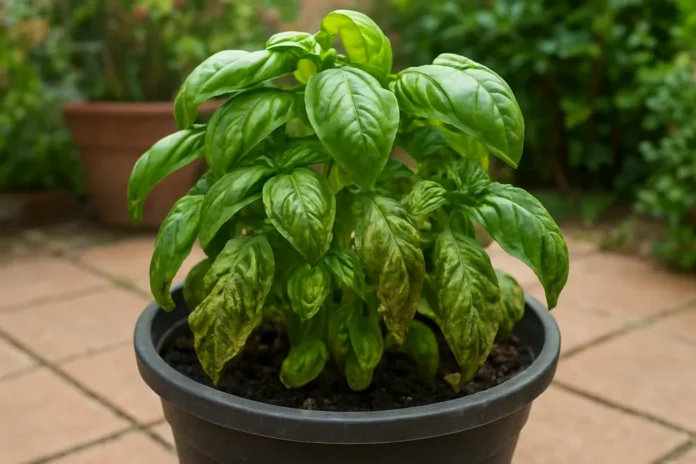
Basil leaves usually curl because the plant is stressed by uneven watering, heat, cold, pests, or disease. Sometimes the cause is simple physical stress, and sometimes it is a sign the plant is struggling in its growing conditions.
Few herbs react to stress as quickly as basil with curling leaves. One week it looks lush and tender, and the next the leaves start cupping, twisting, folding inward, or puckering around the edges. That change is your plant's way of telling you something in its environment is off.
In my garden, basil usually curls for one of two reasons: root stress or damaged new growth. Root stress comes from watering problems, poor drainage, crowding, or sudden weather swings. Damaged new growth is more often tied to pests, disease, or chemical exposure. The good news is that basil often rebounds well when you correct the issue early.
If your basil leaves are curling, do not focus on the leaf shape alone. Look at the whole plant: soil moisture, recent weather, container size, leaf color, spots, insects, and whether the oldest or newest leaves are affected first. Those clues usually narrow the problem down fast.
What Curling Leaves Usually Look Like on Basil
Leaf curl is not always one single pattern. Basil leaves may curl down like a claw, cup upward at the edges, twist around the midrib, stay small and puckered, or emerge misshapen from the center of the plant. Each pattern points a little differently, especially when you pair it with color changes or stem symptoms.
- Leaves curling down with limp stems often suggest watering stress or root trouble.
- Edges curling upward during hot afternoons often point to heat stress or temporary moisture loss.
- New leaves that are twisted, bunched, or distorted often suggest pests feeding on tender growth.
- Curled leaves with yellowing, spotting, or fuzzy growth can indicate disease.
- Curled leaves after spraying anything nearby may be from chemical drift or leaf burn.
When I diagnose basil, I pay closest attention to which leaves changed first. Older leaves usually tell me the roots or watering are under stress, while distorted new leaves push me toward aphids, mites, thrips, or disease.
Watering Problems Are the Most Common Cause
Underwatering and Dry Root Zones
Basil likes consistently moist soil, but not soggy soil. When it dries too far between waterings, the plant loses turgor pressure and the leaves may curl inward to reduce water loss. In hot weather, containers can dry out much faster than gardeners expect, especially terracotta pots and small nursery containers.
Dry-stressed basil often looks soft or droopy in the afternoon, with leaves that feel thin rather than firm. The leaf edges may fold or cup, and severe dryness can lead to crispy tips or a dull, gray-green cast.
Overwatering and Poor Drainage
Too much water can cause curling too. If roots sit in wet soil for long periods, they struggle to take up oxygen. That root stress can make leaves curl, droop, yellow, or feel oddly soft even when the soil is wet. Gardeners often mistake this for thirst and water again, which makes the problem worse.
- Underwatered basil usually has dry soil, limp leaves, and quick recovery after watering.
- Overwatered basil often has wet or heavy soil, persistent droop, yellowing, and slower decline.
- Compacted potting mix or containers without enough drainage holes can create overwatering symptoms even if you are not watering often.
I like to lift the pot before watering. Dry basil containers feel surprisingly light, while waterlogged ones stay heavy for days. That quick check is often more reliable than watering on a schedule.
Heat, Cold, and Weather Swings Can Curl Basil Fast
Basil is a warm-season herb, but extreme conditions in either direction can distort leaves. Hot sun, reflected heat from patios, and drying winds can cause leaves to curl upward or inward as the plant tries to conserve moisture. In very hot spells, basil may look stressed even when the soil is not completely dry.
Cold nights are just as important. Basil hates chilly weather. Temperatures below about 50 degrees Fahrenheit can shock the plant and lead to curling, darkened foliage, slowed growth, or an overall limp look. A single cold snap can set basil back for days.
- Afternoon-only curl often points to heat stress.
- Sudden curling after a cool night can be cold shock.
- Plants near brick walls, black planters, or concrete may overheat faster than basil in the ground.
- Wind exposure can dry leaves and roots faster, especially on balconies and raised beds.
Pests That Distort Basil Leaves
Aphids
Aphids cluster on tender tips and the undersides of leaves, sucking sap from soft new growth. That feeding can make leaves curl, pucker, or grow in twisted shapes. You may also notice sticky honeydew or ants moving around the plant.
Spider Mites
Spider mites are tiny and easy to miss, but basil in hot, dry conditions can attract them. Their feeding causes stippling, a faded or dusty look, and sometimes curled or bronzed leaves. Fine webbing may appear when infestations become heavier.
Thrips and Whiteflies
Thrips rasp leaf tissue and can distort fresh growth. Whiteflies feed similarly and also weaken plants over time. Both can lead to curled, pale, or misshapen leaves, especially near the top of the plant where new growth is softest.
- Check leaf undersides with bright light.
- Inspect the newest leaves and growing tips first.
- Look for sticky residue, stippling, webbing, or tiny moving insects.
- Pest damage is more likely when curl is paired with distorted new growth rather than whole-plant wilt.
If basil starts curling at the center while older outer leaves still look fairly normal, I almost always suspect feeding damage before I blame fertilizer. Tender new leaves show pest distortion long before the whole plant looks weak.
Diseases That Can Make Basil Leaves Curl
Downy Mildew
Downy mildew is one of the most serious basil problems, especially in humid weather. Early symptoms can include yellowing between veins, leaf curling, and a general loss of vigor. As it advances, gray to purplish fuzzy growth may appear on the undersides of leaves.
Fungal and Bacterial Leaf Issues
Leaf spots, damping conditions, and bacterial problems can also cause leaves to curl as tissues become damaged. These issues are more likely when basil is crowded, watered overhead late in the day, or grown where airflow is poor.
Virus-like Symptoms
Although less common for home gardeners than watering or pests, viruses can cause curled, stunted, mottled, or deformed leaves. Plants affected this way usually do not recover into normal growth, even if care improves.
- Disease-related curl is often paired with yellowing, spotting, fuzzy growth, or patchy discoloration.
- Symptoms may spread from leaf to leaf rather than improving after watering.
- Poor airflow and wet leaves raise disease pressure quickly in basil.
Container Stress, Crowding, and Root Restriction
Basil grows fast, and a plant that looked fine a couple of weeks ago may now be rootbound. When roots circle densely inside a small pot, the soil dries unevenly and nutrients become harder to access consistently. The plant may respond with smaller leaves, curling, slower growth, or frequent wilting between waterings.
Crowding can create similar stress. Basil planted too close to other herbs or packed tightly in a container competes for light, water, and air movement. Humidity rises around the foliage, which increases disease risk while also reducing vigorous growth.
- Roots circling the bottom or emerging from drainage holes suggest the plant needs more room.
- Crowded basil may have stretched stems, damp inner foliage, and uneven leaf size.
- Very small pots can swing from soggy to bone dry in a short time, which promotes repeated curl.
Nutrient Imbalances and Fertilizer Stress
Basil is not especially fussy, but it does respond to both low fertility and excess fertilizer. When nutrients are lacking, the plant may produce pale, undersized foliage that curls slightly as growth slows. When fertilizer is too strong, especially in containers, salts can burn roots and trigger curling, browning tips, or sudden wilt despite moist soil.
High-nitrogen feeding can also create overly soft, lush growth that attracts pests and becomes more vulnerable to stress. If curling appeared shortly after fertilizing, the product concentration or frequency may be part of the problem.
- Pale overall growth may point to low fertility.
- Brown edges after feeding may indicate fertilizer burn.
- Container basil is more sensitive to overfertilizing than basil in garden beds.
- Healthy basil usually needs steady but moderate feeding, not constant heavy doses.
Chemical Exposure and Physical Damage
Sometimes curled leaves are not caused by care at all but by something that touched the plant. Herbicides drifting from lawn treatments, weed sprays used nearby, strong insecticidal soaps mixed too heavily, and even some homemade foliar sprays can twist or cup basil leaves. Tender herbs react quickly to residues and overspray.
Physical damage can also distort growth. Hail, rough handling during transplanting, repeated harvesting from one point, or leaves rubbing in wind can make new foliage emerge irregularly for a short time. This kind of curl is often localized rather than affecting every leaf evenly.
- Curl that appears suddenly after spraying nearby plants suggests chemical injury.
- One-sided or patchy distortion may point to physical damage.
- Herbicide injury often includes twisting, cupping, and narrow or strap-like new growth.
How to Tell Which Cause Is Most Likely
Because several basil problems look similar at first, it helps to use a simple pattern-based approach. Start with the soil, then weather, then pest and disease clues. In most home gardens, that order catches the real issue quickly.
- Feel the soil a couple of inches down. Very dry or constantly wet soil strongly suggests root stress.
- Think about recent weather. Heat spikes, cold nights, and wind can trigger sudden curling.
- Examine the newest leaves and undersides. Distorted tips, sticky residue, or tiny insects suggest pests.
- Look for yellowing between veins, spots, or fuzzy undersides. Those signs raise concern for disease.
- Consider recent fertilizer or spray use. Sudden widespread distortion after treatment may be chemical injury.
- Check the roots and pot size if the plant dries out too fast or stalls even with decent care.
How to Fix Curling Basil Leaves
Correct the Watering Pattern
Water deeply when the top layer begins to dry, then let excess water drain freely. Do not keep basil in constantly soggy soil, and do not let container plants wilt hard day after day. Aim for even moisture rather than sharp wet-dry swings.
Improve Growing Conditions
Give basil warm temperatures, strong light, and decent airflow. In extreme heat, afternoon shade can reduce stress. In cool weather, protect container basil or move it indoors if nights are dropping too low.
Manage Pests Early
Rinse aphids from stems, prune heavily infested tips, and use gentle controls labeled for edible herbs if needed. For mites or thrips, consistent follow-up matters more than one treatment. Always spray during cooler parts of the day and avoid stressing the plant further.
Reduce Disease Pressure
Remove badly affected leaves, avoid wetting foliage late in the day, and space plants so air can move through them. If downy mildew is advanced, replacement is often more practical than trying to nurse the plant along.
Repot or Thin Crowded Plants
Move rootbound basil into a larger container with fresh, well-draining potting mix. Thin seedlings or separate overcrowded nursery starts so each plant has enough room to grow and dry properly after watering.
Go Easy on Fertilizer
If overfeeding is likely, flush the pot with plain water and pause fertilizer for a bit. When feeding is needed, use a modest rate rather than pushing fast, weak growth.
Make one major change at a time and judge success by the new leaves, not the curled ones already formed. Damaged basil leaves rarely flatten back out perfectly, but healthy new growth tells you the plant is recovering.
When Curling Basil Is Still Safe to Eat
Basil with mild curling from heat, watering, or temporary stress is usually still edible if the leaves are otherwise clean and healthy. Flavor may be a little stronger or tougher if the plant has been stressed, but the leaves are often still usable.
Avoid eating leaves that are heavily diseased, moldy, chemically exposed, or coated with pest residue. If you suspect herbicide drift or a spray not labeled for edible plants, it is better to discard that growth and wait for clean new leaves or replace the plant.
How to Prevent Basil Leaf Curl Next Time
Prevention is mostly about stability. Basil grows best when moisture, temperature, airflow, and root space stay fairly consistent. Once a plant is repeatedly stressed, it tends to invite bigger problems like mites, mildew, or stunted growth.
- Use a container large enough to buffer moisture swings.
- Water before severe wilting starts, but do not keep the soil saturated.
- Give plants full sun with some afternoon relief in punishing summer heat.
- Space basil for airflow, especially in humid areas.
- Inspect tender new growth often for aphids, mites, and thrips.
- Avoid spraying herbicides anywhere near edible herbs.
- Harvest regularly to encourage branching, but do not strip the plant all at once.
FAQ
Can Basil Recover After Leaves Curl?
Yes, basil often recovers if the cause is caught early and corrected. The curled leaves may stay misshapen, but healthy new growth is a good sign the plant is bouncing back.
Why Are Only My Basil's Top Leaves Curling?
Curling focused on the top usually points to stress affecting new growth, such as aphids, thrips, mites, chemical exposure, or disease. Tender center leaves show damage sooner than older outer leaves.
Should I Prune Curled Basil Leaves Off?
You can remove badly damaged or diseased leaves, especially if they are crowding the plant or harboring pests. If the leaves are only mildly curled, leaving some in place can still help the plant photosynthesize while it recovers.
Do Curled Basil Leaves Mean I Am Overwatering?
Not always. Curling can come from both overwatering and underwatering, so check the soil before assuming. Wet soil with yellowing suggests overwatering, while dry soil with limp leaves suggests thirst.
Can Too Much Sun Make Basil Leaves Curl?
Yes, intense heat and sun can make basil leaves cup or curl, especially in containers and during hot afternoons. The effect is stronger when heat is combined with dry soil or wind.
Why Are My Indoor Basil Leaves Curling?
Indoor basil often curls from inconsistent watering, low humidity, crowded roots, cool drafts, or pests like aphids and spider mites. Windowsill plants also struggle if they do not get enough strong light.
Is Curled Basil Caused by a Nutrient Deficiency?
Sometimes, but nutrient issues are less common than watering stress, weather, or pests. A deficiency is more likely if the plant is pale, slow-growing, and not showing clear signs of insects or disease.
Need the right fix fast? Explore our basil care and treatment guides to compare pest controls, potting mixes, and pruning tools that help stressed basil recover quicker.
