

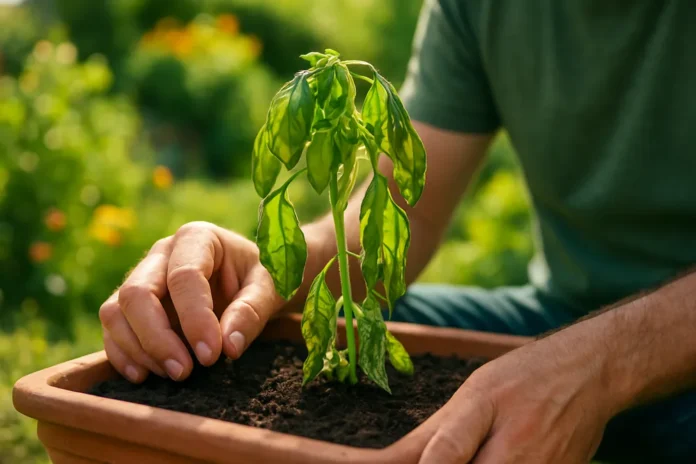
Basil usually wilts because it is too dry, too wet, too hot, too cold, or struggling with root or disease problems. In many cases, sudden wilting comes from watering stress or temperature shock.
A basil plant wilting can look dramatic fast. One day the leaves are upright and lush, and the next they are limp, soft, and hanging over the edge of the pot. The good news is that basil often tells you quite a bit by how it wilts, when it wilts, and whether it recovers by evening or after watering.
In my garden, basil is one of the quickest herbs to complain when something is off. It reacts strongly to dry soil, soggy roots, cold nights, scorching afternoon sun, and a few diseases that can take hold in warm weather. If you look closely at the leaves, stems, soil, and timing, you can usually separate a simple care issue from a more serious problem.
What Basil Wilting Usually Means
Wilting happens when the plant cannot keep enough water pressure in its cells to hold leaves and stems upright. That does not always mean the plant needs more water. A basil plant can wilt because it is bone dry, but it can also wilt because damaged roots are sitting in overly wet soil and cannot move water upward.
The most common causes are watering stress, heat stress, cold exposure, root crowding, transplant shock, and disease. Basil is tender and fast growing, so it responds quickly to changes in its environment. A sudden full-plant droop often points to moisture or temperature issues, while persistent wilting with yellowing, dark stems, or spotted leaves can suggest root rot or disease.
- Wilts mostly in midday but looks better by evening: often heat stress or slightly dry soil
- Wilts and the soil feels dry several inches down: underwatering
- Wilts even though the soil is wet: overwatering, root rot, or poor drainage
- Wilts after a cool night: cold shock
- Wilts with blackened stems, yellow leaves, or mushy roots: serious root trouble
- Wilts branch by branch or despite proper care: possible fungal disease
When I diagnose wilting basil, I do not start with the leaves. I start with the soil and the stem base. Basil leaves droop for lots of reasons, but the condition of the roots and lower stem usually tells me whether the problem is temporary stress or something more destructive.
Underwatering Is One of the Most Common Causes
Basil uses water quickly, especially in warm weather and containers. A potted basil plant can go from fine to limp in a single sunny afternoon if the pot is small or rootbound. When the soil gets too dry, the roots cannot pull enough moisture to support the leaves, and the whole plant collapses into that familiar floppy look.
Underwatered basil usually has dry, lightweight soil that may pull away from the edges of the pot. The leaves often feel thin or soft rather than swollen, and the stems may bend but still look green. If drought stress continues, leaf edges can crisp, lower leaves may yellow, and growth slows down.
Signs the Plant Is Too Dry
- Soil is dry 1 to 2 inches below the surface
- Pot feels noticeably light when lifted
- Leaves droop evenly across the plant
- Plant perks up within hours after a deep watering
- Leaf edges may look dry or slightly curled
Container basil needs more frequent watering than basil planted in the ground because pots heat up and dry out faster. Clay pots dry even faster than plastic, and a crowded root system uses moisture quickly. During summer, I often find basil in small nursery pots needs daily attention, while larger containers stay evenly moist longer.
Overwatering Can Look Almost the Same at First
Many gardeners see wilted basil and add more water, but that can make the problem worse. Basil roots need oxygen as much as they need moisture. If the soil stays saturated, air pockets disappear, roots begin to decline, and the plant wilts because the damaged roots can no longer function properly.
Overwatered basil often sits in soil that feels wet or dense for long periods. Leaves may droop but also start turning pale yellow. Growth becomes weak, stems can soften near the base, and the plant may not recover after watering because water was never the real shortage. In severe cases, roots turn brown, mushy, or smell sour.
Clues That Excess Water Is the Problem
- Soil is wet hours or days after watering
- Container has poor drainage or no drainage holes
- Leaves droop and yellow at the same time
- Stem base looks dark, soft, or pinched
- Roots appear brown instead of white and firm
If basil is wilting in wet soil, do not keep watering on a schedule out of habit. Let the root zone tell you what to do. I would rather water a day late than keep suffocating roots that are already stressed.
Heat Stress Can Make Basil Droop Even when Soil Is Moist
Basil loves warmth, but there is a limit. In intense summer sun, especially with reflected heat from patios, walls, or dark containers, the plant can lose moisture through its leaves faster than the roots can replace it. That creates temporary wilting, particularly in the hottest part of the day.
This type of wilting often improves in the evening as temperatures drop. The plant may look fairly normal in the morning, droop at midday, then recover once the sun eases. If the stress repeats day after day, leaves can scorch, become dull, or develop dry margins.
When Heat Is the Likely Cause
- Wilting is worst in late afternoon
- The plant recovers at night
- Soil is not extremely dry or waterlogged
- The plant sits in full blazing sun or near a heat-reflective surface
- Leaves may feel warm, limp, and slightly thin
Basil usually performs best with plenty of sun, but in very hot regions or during extreme heat waves, some afternoon protection helps. A plant that thrived in June can struggle in August if temperatures stay high and the pot is small.
Cold Temperatures and Sudden Weather Changes Can Shock Basil
Basil is a warm-season herb and dislikes cold more than many gardeners expect. Even temperatures in the 40s can cause leaf droop, dark patches, or a tired, collapsed look by the next day. A chilly night, cool wind, or a sudden move from indoors to a breezy patio can trigger wilting without any watering issue at all.
Cold-damaged basil often looks limp and slightly water-soaked. The leaves may darken, become blotchy, or turn black after the initial droop. Unlike simple thirst, cold stress does not always resolve quickly once the plant warms up, especially if tissues were actually damaged.
- Wilting appears after a cool night or temperature drop
- Leaves develop dark, grayish, or black patches
- Plant was recently moved outdoors too early
- Wind exposure is strong, especially after transplanting
This is why basil should not be rushed outside in spring. If nighttime temperatures are still dipping, the plant may stall or collapse even if daytime weather feels pleasant.
Rootbound Plants and Transplant Shock Can Cause Sudden Wilt
Basil grows fast, and nursery plants are often sold in containers that become crowded quickly. When roots circle tightly around the pot, they dry out fast and struggle to absorb water evenly. The result is frequent wilting, especially a few hours after watering or during warm weather.
Transplant shock can look similar. If roots were disturbed, torn, or planted into soil with very different moisture levels, the top growth may droop while the roots recover. This is common after dividing grocery store basil, moving seedlings outdoors, or repotting in the heat of the day.
How to Recognize Root Stress
- Roots circle densely along the pot walls or bottom
- Water runs through quickly without soaking in well
- Plant wilts soon after transplanting
- Leaves droop but remain mostly green
- Growth pauses for several days after repotting
With store-bought basil, I often find the real issue is crowding rather than watering alone. Those pots can hold many seedlings packed together. They look lush at first, but the root mass dries unevenly and the plants begin competing hard for water and space.
Diseases That Make Basil Wilt
If your basil keeps wilting despite reasonable watering and decent weather, disease moves higher on the list. Several fungal and water mold problems can cause chronic droopiness by attacking roots, stems, or the plant's internal water movement. Once disease is involved, the plant often fails to rebound normally.
Root Rot
Root rot is often triggered by overly wet soil and poor drainage. The roots turn brown and mushy, the plant wilts in wet soil, and lower leaves yellow or fall off. A sour smell in the potting mix is another clue.
Fusarium Wilt
Fusarium wilt is a serious fungal disease in basil. It can cause downward curling, yellowing, stunted growth, brown streaking in stems, and eventual wilting. Sometimes only part of the plant looks affected at first. This disease is more likely to persist even when care improves.
Damping Off in Seedlings
Young basil seedlings may suddenly wilt and fall over if damping off fungi attack the stem near the soil line. The stem looks pinched, thin, or water-soaked. This tends to happen in overly wet, crowded seed trays with poor airflow.
Downy Mildew Complications
Downy mildew is better known for yellow leaves and fuzzy gray growth on leaf undersides, but severe infections can weaken the plant enough to create an overall limp appearance. It is not the classic cause of immediate wilting, though it can make the plant look tired and collapse over time.
Pests and Stem Damage Can Also Lead to Wilting
Basil is not the most pest-prone herb, but sap-feeding insects and physical stem damage can contribute to wilt. Aphids, spider mites, and whiteflies weaken plants by feeding on tender growth. Usually they do not cause dramatic sudden wilting on their own, but a heavy infestation can make basil look limp, distorted, and stressed.
Broken stems are easier to miss than you might think. A stem can crease during harvesting, get bent by wind, or be damaged at the base by handling. If water flow is interrupted, one branch or the whole plant may wilt while the soil still looks fine.
- Check the undersides of leaves for clusters of insects
- Look for fine webbing, sticky residue, or distorted new growth
- Inspect stems for cracks, pinched spots, or chewing damage
- Notice whether wilting is confined to one stem or side of the plant
How to Tell Which Cause Is Most Likely
The fastest way to narrow down wilting basil is to combine timing with physical clues. Do not rely on the leaf droop alone. Soil feel, pot weight, leaf color, stem condition, and recent weather usually point you in the right direction.
Questions to Ask Yourself
- Did the plant wilt after missing water, or is the soil still wet?
- Is the wilting worst during the hottest part of the day, then better later?
- Did a cold night or sudden weather shift happen recently?
- Was the basil just transplanted, divided, or moved to a new location?
- Are there yellow leaves, dark stems, spots, or mushy roots that suggest disease?
- Is the plant crowded in a tiny pot or rootbound?
A healthy basil plant with dry soil and quick recovery after watering likely had a simple moisture shortage. A basil plant that stays limp in wet soil, yellows, or has stem discoloration deserves closer attention because root damage may already be underway.
How to Prevent Basil From Wilting Again
Prevention comes down to steady moisture, good drainage, warm conditions, and enough room for roots. Basil does best when the soil stays evenly moist but never soggy. That balance matters more than following a fixed watering calendar.
- Use containers with drainage holes and a loose potting mix
- Water deeply, then wait until the top inch begins to dry before watering again
- Move basil into a larger pot before it becomes tightly rootbound
- Give morning sun and, in very hot areas, some afternoon relief
- Protect basil from chilly nights and cold wind
- Avoid overcrowding plants so air can move freely
- Harvest regularly to encourage sturdy, balanced growth
- Do not leave saucers full of standing water under pots
I like to judge basil watering by both finger test and pot weight. The soil surface can fool you, especially in hot weather. A light pot with slight droop means water soon, while a heavy wet pot tells me the issue is probably elsewhere.
If you grow basil indoors, give it bright light and avoid cold drafts from air conditioning vents or windows. Indoor basil often wilts from a combination of low light, uneven watering, and crowded roots rather than outdoor heat.
FAQ
Can Basil Recover After Wilting?
Yes, basil often recovers if wilting was caused by temporary dryness, midday heat, or mild transplant stress. Recovery is less likely when the roots are rotting, the stems are badly damaged, or disease has already spread through the plant.
Why Is My Basil Wilting Even Though I Water It Every Day?
Daily watering can actually cause wilting if the soil stays too wet and the roots lose oxygen. It can also happen in a rootbound pot where water runs through unevenly instead of soaking the root ball well.
Should Basil Be in Full Sun if It Keeps Wilting?
Basil generally likes full sun, but intense afternoon heat can cause temporary drooping, especially in containers. In very hot climates, morning sun with lighter afternoon exposure often keeps plants more stable.
Why Did My Basil Wilt Overnight?
Overnight wilting often points to severe dryness, root problems, or cold exposure. If the weather turned cool or the plant sat outside during a chilly night, temperature shock is a common cause.
Does Basil Wilt After Transplanting?
Yes, basil can wilt for a short time after transplanting because the roots were disturbed and the plant is adjusting to a new environment. This is more common when transplanting during heat, wind, or strong sun.
How Often Should I Water Potted Basil?
There is no single schedule because pot size, weather, and soil type all matter. Water when the top inch of soil starts to dry, and check more often during hot weather or when plants are in small containers.
Can Overwatering Basil Cause Yellow Leaves and Wilting at the Same Time?
Yes, that combination is very common with overwatering. Wet soil can damage roots, and once roots decline, the plant may wilt even though there is plenty of water in the pot.
Need help choosing the best potting mix, fertilizer, or disease treatment for basil? Read our basil care and problem-solving guides to keep plants leafy, fragrant, and harvest-ready.
