

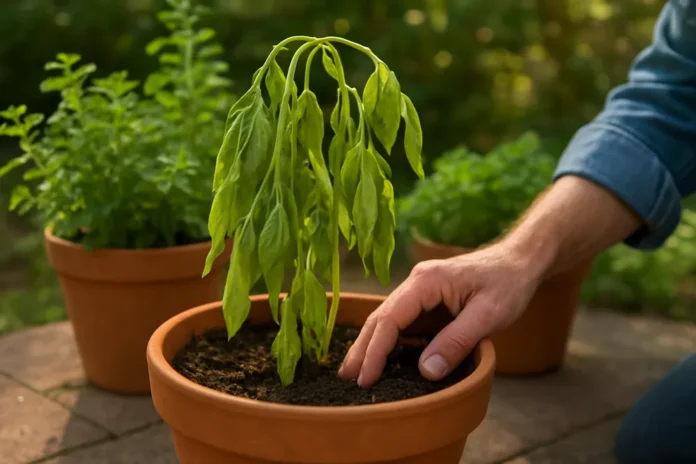
A basil plant usually droops because it is too dry, too wet, too hot, or dealing with root stress. Basil can also wilt from transplant shock, cold damage, pests, or disease.
Few herbs look as dramatic as basil with drooping leaves. One day it is full, upright, and lush, and the next it looks limp and tired. The good news is that basil often gives clear clues about what went wrong, and in many cases it bounces back quickly once you correct the cause.
When I diagnose a wilted basil plant, I do not start by guessing. I look at the soil moisture, the temperature, how fast the plant collapsed, and whether the stems still feel firm. Basil droops for several different reasons, but the pattern of wilting usually tells you whether you are dealing with a simple watering issue or something more serious like root rot or disease.
Below, I will walk through the most common reasons basil flops over, how to tell them apart, and what usually works to get the plant growing strongly again.
What Drooping Basil Usually Means
Drooping is basil's way of showing that water movement inside the plant has been interrupted. Sometimes that means the plant does not have enough water. Sometimes it means the roots are sitting in too much water and can no longer take oxygen in properly. Heat, root disturbance, and disease can create the same limp look because all of them interfere with normal moisture flow.
A healthy basil plant should hold its leaves up, especially in the morning and evening. If your plant is limp all day, the leaves feel soft, or stems begin bending, look closely at the growing conditions before you assume it needs more water.
- Drooping with dry soil usually points to underwatering or heat stress.
- Drooping with soggy soil often points to overwatering or root rot.
- Drooping right after planting or moving often means transplant shock.
- Drooping with spots, stem darkening, or yellowing can suggest disease or root problems.
- Drooping during hot afternoon sun but recovery by evening may simply be temporary heat wilt.
When I am deciding whether basil is too dry or too wet, I pay more attention to the stems than the leaves. Dry plants often have limp leaves but fairly clean, green stems. Overwatered basil often looks duller overall, and the stems near the soil line may feel softer or look slightly darkened.
Underwatering and Dry Soil
How Lack of Water Makes Basil Collapse
Basil has tender stems and broad leaves that lose moisture quickly, especially in warm weather. If the potting mix or garden soil dries too much, the roots cannot supply enough water to support the foliage. The whole plant can go limp surprisingly fast.
Container basil is especially prone to this because pots heat up and dry out much faster than in-ground beds. Small nursery pots, terra cotta containers, and plants sitting in strong afternoon sun can all need water more often than gardeners expect.
Signs Your Basil Is Too Dry
- Soil feels dry at least an inch below the surface
- Leaves look limp but still mostly green
- Plant perks up within hours after watering
- Pot feels very light when lifted
- Leaf edges may begin crisping if dryness has gone on too long
What to Do
Water deeply enough to moisten the full root zone. In containers, water until excess drains out the bottom. In the garden, water slowly so the moisture sinks in rather than running off the surface. If the potting mix has become so dry that water runs down the sides, soak the pot thoroughly until the root ball rehydrates.
After that, aim for evenly moist soil rather than a cycle of complete drying and flooding. Basil likes consistent moisture, but not swampy conditions.
Overwatering and Root Suffocation
Why Too Much Water Causes Wilting
One of the most confusing things about basil is that it droops when overwatered too. Roots need oxygen as much as they need moisture. When soil stays waterlogged, roots struggle to breathe and begin to fail. Once that happens, the plant cannot move water upward properly, so the leaves wilt even though the soil is wet.
Signs Your Basil Is Staying Too Wet
- Soil feels damp or soggy for days
- Leaves droop and may also yellow
- Growth slows or stops
- Lower leaves drop off
- Stem bases may soften or darken
- Pot has poor drainage or sits in a saucer of water
Overwatering is especially common when basil is planted in heavy soil, oversized containers, or decorative pots without drainage holes. It also happens when gardeners water on a fixed schedule without checking whether the soil actually needs it.
If basil is drooping and the soil is wet, do not immediately add fertilizer or more water. I usually let the top inch of soil dry, improve airflow, and make sure the pot can drain freely before I do anything else.
What to Do
Pause watering until the top layer begins to dry. Empty any saucer under the pot after watering. If the container drains poorly, repot into a loose potting mix with good drainage holes. In the garden, improve drainage with compost and avoid watering again until the soil is only lightly moist, not saturated.
Heat Stress and Intense Sun
Basil loves warmth, but there is a difference between warm growing weather and brutal afternoon heat. In hot conditions, especially when temperatures push into the 90s, basil can wilt because it is losing water from its leaves faster than the roots can replace it.
This kind of droop often shows up in the hottest part of the day and improves when temperatures ease. If the plant is in a black pot, against a reflective wall, or on a patio that traps heat, the roots can overheat as well.
How to Recognize Heat Wilt
- Drooping is worst in late afternoon
- Plant recovers in the evening or early morning
- Soil may still be slightly moist
- Leaves can feel thin and soft rather than dry and crisp
- The plant sits in strong sun with reflected heat nearby
If this sounds like your situation, give basil steady moisture and consider light afternoon shade during heat waves. Mulch helps garden basil hold moisture, and moving potted basil away from harsh reflected heat can make a big difference.
Transplant Shock and Root Disturbance
Basil often droops soon after being transplanted from a nursery pot, divided from a crowded bunch, or moved from indoors to direct outdoor sun. The roots may have been disturbed, broken, or suddenly exposed to brighter light and wind than they were used to.
Store-bought supermarket basil is especially sensitive. Those pots are usually packed with many seedlings in a small amount of soil. Once separated or repotted, they can sulk for a few days while the roots adjust.
Common Signs of Transplant Shock
- Drooping starts within a day of transplanting
- Leaves stay green but look limp
- Soil moisture seems normal
- Plant was recently moved into stronger sun, wind, or different temperatures
- Recovery begins gradually over several days
Keep the soil evenly moist, protect the plant from harsh midday sun for a few days, and avoid heavy pruning until it starts growing again. Most mildly shocked basil recovers if the roots remain healthy.
Cold Damage and Sudden Temperature Swings
Basil is a warm-season herb that dislikes cold nights. If temperatures dip much below 50 degrees Fahrenheit, basil can droop, stall, and develop a dull or blackened look. Even a brief chill can stress it enough to make the leaves hang limp.
This often happens in spring when basil is planted too early, or in fall when nights cool off before gardeners bring containers inside. Cold wind can make the problem worse.
Signs Cold Is the Culprit
- Drooping follows a cool night or cold snap
- Leaves may darken, turn gray-green, or develop black patches
- New growth looks weak after the temperature drop
- The plant does not perk up quickly after watering
Move potted basil to a warmer, sheltered spot and protect outdoor plants if cool nights are expected. Once cold damage is severe, affected leaves may not recover, but healthy new growth can still appear if the roots remain alive.
Root Rot and Fungal Disease
If drooping basil does not improve after correcting watering, root or stem disease becomes more likely. Basil is vulnerable to root rot in wet soil, and some fungal problems can cause wilt-like symptoms even when the plant is not dry.
Clues That Point Beyond Simple Watering Issues
- Persistent wilting despite moist but not dry soil
- Yellowing leaves along with droop
- Brown, mushy, or foul-smelling roots
- Dark lesions near the base of stems
- Parts of the plant collapsing while nearby basil looks fine
Healthy basil roots should be pale and firm. If you slide a container plant out and find brown, slimy, or rotting roots, the problem is likely advanced overwatering or disease. At that stage, recovery depends on how much healthy root tissue is left.
When basil has true root rot, watering less does not create a quick rebound the way it does with an overwatered but still healthy plant. If the wilt stays constant and the roots smell sour, I stop expecting a full recovery and focus on salvaging any healthy stems or starting fresh.
For lightly affected plants, trim away badly rotted roots, repot into fresh, fast-draining mix, and reduce watering frequency. If the stem base is collapsing or most roots are damaged, replacing the plant is often the more practical option.
Pests That Can Make Basil Wilt
Pests are not the most common reason basil droops, but they can contribute, especially when infestations are heavy. Sap-sucking insects like aphids, whiteflies, spider mites, and thrips weaken foliage by feeding on plant juices.
A few insects usually will not collapse the whole plant, but a severe infestation can cause curling, yellowing, and limp growth. Basil grown indoors or in dry, sheltered spots is more likely to develop pest pressure.
Pest Signs to Check For
- Tiny insects clustered on stems or leaf undersides
- Sticky residue on leaves
- Fine webbing from spider mites
- Distorted or puckered new growth
- Speckled or stippled leaves
Rinse the plant with water, remove heavily infested leaves, and repeat with insecticidal soap if needed. Since basil is edible, use only treatments labeled for herbs and follow harvest intervals carefully.
How to Tell Which Cause Is Most Likely
Because drooping can look similar from one problem to the next, it helps to compare the symptom pattern rather than focusing on the wilt alone. The fastest way to narrow it down is to combine timing, soil feel, and leaf condition.
- Feel the soil 1 to 2 inches down. Dry suggests underwatering or heat. Wet suggests overwatering or root trouble.
- Notice when drooping happens. Afternoon-only wilt points toward heat stress. All-day wilt points to a deeper issue.
- Look at leaf color. Green but limp often means temporary stress. Yellowing or blackening suggests roots, cold, or disease.
- Inspect the stem base and roots if the plant is in a pot. Soft, dark, or mushy tissue is a warning sign.
- Think about recent changes. Transplanting, weather swings, and moving plants into sun often explain sudden droop.
This kind of symptom matching prevents one of the most common mistakes with basil, which is watering a drooping plant again and again even when excess moisture is the actual problem.
How to Help Drooping Basil Recover
Recovery depends on fixing the cause, not just treating the symptom. Basil rebounds well when stress is caught early, but badly damaged roots or cold injury can limit how much it recovers.
Best Recovery Steps
- Water deeply if the soil is truly dry
- Hold off watering if the soil is already wet
- Move potted basil out of extreme afternoon heat if needed
- Provide temporary shade after transplanting
- Repot plants stuck in soggy, compacted mix
- Remove rotted roots or badly damaged leaves when necessary
- Keep basil warm and protected from cold nights
Do not rush to fertilize a stressed basil plant. Fertilizer does not fix wilt, and it can add stress if the roots are already struggling. Wait until you see fresh, healthy growth before feeding lightly.
I prefer to judge basil recovery by new growth, not by the oldest damaged leaves. A plant may keep a few limp or scarred leaves for a while, but if the center starts pushing upright new shoots, it is usually on the right track.
How to Prevent Basil From Drooping Again
Prevention comes down to stable growing conditions. Basil is not difficult, but it does best when moisture, warmth, and drainage all stay in balance.
- Use containers with drainage holes
- Grow basil in loose, well-draining soil
- Water when the top inch of soil begins to dry, not on a rigid schedule
- Give plants morning sun and some afternoon protection in very hot climates
- Harden off seedlings before moving them outdoors full time
- Avoid planting outside until nights are reliably warm
- Space plants for airflow so leaves dry quickly and disease pressure stays lower
- Harvest regularly to encourage sturdy, bushy growth
If you grow basil in pots, check them often during summer. Container herbs can go from perfect to wilted in a single hot day, especially if they are rootbound or growing in a very small pot.
FAQ
Can Basil Recover After Drooping?
Yes, basil often recovers if the cause is temporary stress like dryness, heat, or mild transplant shock. Recovery is less likely if the roots are badly rotted or the plant has severe cold damage.
How Often Should I Water Drooping Basil?
There is no fixed schedule that works in every situation. Water when the top inch of soil starts to dry, and always check the soil first so you do not mistake overwatering for thirst.
Why Is My Basil Drooping Even Though the Soil Is Wet?
Wet-soil drooping often means the roots are stressed from too much water, poor drainage, or early root rot. The plant wilts because damaged roots cannot move moisture properly.
Does Basil Droop in Full Sun?
Yes, basil can droop in intense afternoon sun, especially during very hot weather or when grown in containers. If it perks back up later in the day, heat stress is the likely reason.
Should I Prune Drooping Basil?
Avoid heavy pruning while the plant is stressed. Remove only clearly dead or rotting parts at first, then resume regular pinching once the basil starts growing strongly again.
Why Did My Basil Droop After Repotting?
That is usually transplant shock. Root disturbance, brighter light, wind, and a sudden change in moisture can all make basil wilt for a few days after repotting.
Can Cold Weather Make Basil Wilt?
Yes, basil is very sensitive to cold. Cool nights and temperature swings can make leaves droop, darken, and stop growing well.
Need the right setup to keep basil healthy and upright? Check out our guide to the best pots, soils, and watering tools for herbs so you can prevent droop before it starts.
