

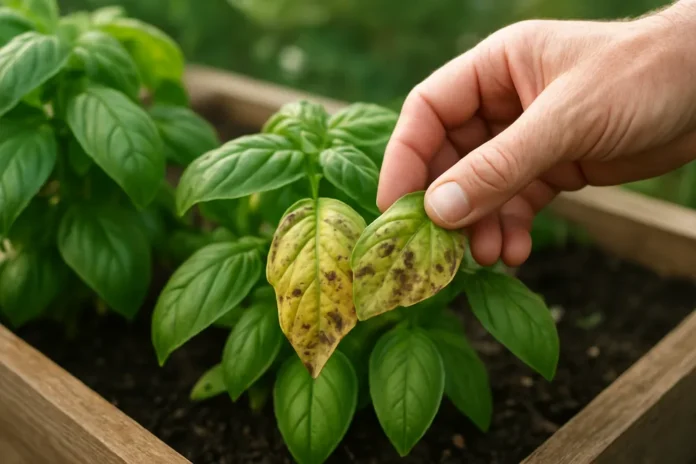
Basil leaves usually develop brown spots from leaf disease, wet foliage, cold stress, sunscald, or irregular watering. In many cases, the spotting starts when basil stays damp too long or gets stressed by sudden weather changes.
Few herbs look as lush and productive as basil with healthy green leaves, so brown spotting can feel especially frustrating. Sometimes the damage is mostly cosmetic. Other times it is the plant's first warning sign that something in its environment has gone off track.
When I diagnose basil leaves with brown spots, I pay close attention to the shape, color, and location of the damage before I blame any one cause. Tiny dark specks, tan papery patches, blackened edges, or blotches with yellow halos do not all mean the same thing, and basil reacts quickly to stress from water, weather, and disease.
The good news is that basil often recovers well if you catch the problem early and focus on protecting new growth. Older spotted leaves usually do not turn green again, but you can often stop the spread and get the plant producing usable leaves again.
What the Spotting Pattern Can Tell You
Brown spots are a symptom, not a diagnosis. Start by looking at whether the spots are small and round, large and irregular, dry and papery, or soft and water-soaked. Also notice whether they show up mostly on older leaves, only on exposed upper leaves, or throughout the whole plant.
- Small dark spots with a yellow edge often suggest fungal or bacterial leaf spot.
- Tan or bleached patches on the topmost leaves can point to sunscald or sudden heat exposure.
- Brown or black patches after a cool night often indicate cold injury.
- Scattered spots plus yellowing, fuzzy undersides, or leaf drop can signal downy mildew.
- Brown edges or patchy scorch on many leaves at once may come from watering stress or fertilizer burn.
I rarely judge basil by one damaged leaf. I compare several leaves from different parts of the plant, because disease usually forms a repeating pattern while weather or handling damage often shows up only where the leaf was most exposed.
Leaf Spot Diseases Are One of the Most Common Causes
Fungal Leaf Spot
Fungal leaf spot on basil often begins as tiny brown, black, or purplish specks that slowly enlarge. Some spots stay fairly round, while others merge into irregular blotches. Warm temperatures, crowded growth, and leaves that stay wet for hours create ideal conditions for these diseases to spread.
If your basil is planted tightly in a bed, watered overhead in the evening, or growing in a humid spot with poor airflow, fungal problems rise quickly. The damage usually starts on older or lower leaves first, then moves upward if conditions stay favorable.
Bacterial Leaf Spot
Bacterial spotting can look similar at first, but the spots often appear more water-soaked before turning dark brown or black. You may notice angular lesions limited by leaf veins, or blotches surrounded by yellow tissue. Splashed water, contaminated tools, and infected transplants can all spread bacteria from leaf to leaf.
Bacterial problems tend to move fast in warm, wet weather. If the leaves stay consistently damp, lesions may enlarge and the foliage can start looking ragged or scorched.
- Remove badly spotted leaves and discard them, rather than composting if disease is active.
- Water at soil level so the foliage dries quickly.
- Thin nearby plants or prune lightly for better airflow.
- Sanitize pruners or scissors before moving to another plant.
- Avoid harvesting or handling basil when the leaves are wet.
Downy Mildew Can Start as Spotting Before the Plant Collapses
Downy mildew is one of the more serious basil problems, especially in humid regions. It does not always start with obvious brown spots. Early on, the top of the leaf may show pale yellow areas between veins, then those areas darken to brown as the tissue dies.
If you flip affected leaves over, you may see a grayish or purplish fuzzy growth underneath, especially in the morning or during humid weather. The plant can decline fast once the disease takes hold, and leaves often curl, yellow, and drop.
- Yellowing that follows the vein pattern before browning
- Gray or purplish fuzz on leaf undersides
- Rapid spread through much of the plant
- Worse symptoms during humid spells and crowded growth
Because downy mildew spreads readily and is hard to reverse once severe, heavily infected plants are often best removed. If only a few leaves show symptoms and you catch it very early, improving airflow and removing affected foliage may buy some time, but recovery is often limited.
Weather Stress Can Leave Brown Patches That Mimic Disease
Cold Nights and Temperature Swings
Basil is a warm-season herb that sulks fast in cool weather. Night temperatures below about 50 degrees Fahrenheit can trigger dark or brown patches, limp growth, and a generally sad, dull look. A chilly wind, a cold rain, or even a few cool nights in a row can mark the leaves without involving any pathogen.
Cold damage often shows up suddenly across several leaves at once. Instead of neat circular spots, you may see blotchy blackened areas, edge damage, or bronzed patches, especially after a temperature dip.
Sunscald and Heat Exposure
Basil loves sun, but tender plants can still scorch when moved abruptly from shade or a protected nursery bench into intense afternoon sun. Sunscald usually creates pale, tan, or brown papery patches on the most exposed leaves. These spots tend to be broad and irregular rather than tiny and speckled.
If a newly purchased basil plant spots up right after transplanting, I think about recent weather before disease. Sudden full sun, wind, and a dry root ball can damage leaves in just a day or two.
Heat stress can also make basil lose moisture faster than the roots can replace it. When that stress repeats, leaves may develop dry brown patches or scorched margins, especially in containers that heat up and dry out quickly.
Watering Problems and Soggy Roots Can Show Up as Spotted Leaves
Not every brown spot starts on the leaf surface. Sometimes the roots are the real problem. Basil wants evenly moist, well-drained soil. If it swings between bone dry and soggy, the plant becomes more vulnerable to leaf damage, yellowing, edge burn, and disease.
Overwatered basil often looks limp even when the soil is wet. Leaves may yellow first, then develop brown blotches as roots struggle to function in oxygen-poor soil. Underwatered basil usually wilts hard, and repeated drought stress can leave crisp brown patches after the leaf tissue dries out.
- Soil that stays saturated for days can encourage root stress and secondary disease.
- Containers without enough drainage often trigger brown spotting and leaf drop.
- Extreme drying between waterings can leave crispy tips, edges, or papery spots.
- Inconsistent watering weakens basil and makes other problems worse.
When basil is in a pot, check whether excess water actually drains out and whether the potting mix has compacted. Garden basil can also struggle in heavy soil that stays wet after rain.
Fertilizer Burn, Salts, and Minor Nutrient Stress
Basil does not need heavy feeding, especially in rich garden soil. Too much fertilizer, particularly strong liquid feed or repeated synthetic applications, can burn roots and lead to brown leaf edges, dry spots, or patchy scorch. Salt buildup is more common in containers, where minerals accumulate if you feed often and rarely flush the pot thoroughly.
True nutrient deficiencies usually cause yellowing, pale leaves, or slow growth before they cause distinct brown spotting. That means sharp brown lesions are less often a nutrient issue by themselves. Still, a stressed, underfed plant is less resilient overall and may show damage faster.
- Browning that starts along tips or margins can suggest fertilizer excess.
- White crust on the soil surface or pot rim may indicate salt buildup.
- Recently fed plants deserve a fertilizer review before you assume disease.
What to Do Right Now to Help Basil Recover
The main goal is to stop the cause and protect fresh growth. Spotted leaves rarely heal, so judge improvement by whether new leaves emerge clean and healthy over the next week or two.
- Trim off the worst affected leaves, especially if they are heavily spotted, mushy, or fuzzy underneath.
- Water the soil directly and keep the foliage as dry as possible.
- Give the plant better airflow by spacing, thinning, or moving containers apart.
- Keep basil warm and protect it from cool nights if temperatures dip.
- Check drainage and correct soggy potting mix or standing water problems.
- Pause fertilizer if you recently fed heavily and suspect salt stress.
When basil is struggling, I change one thing at a time if possible. If you prune, repot, fertilize, and move the plant all at once, it becomes much harder to tell what actually helped and what added more stress.
If a disease seems likely, do not crowd healthy basil next to the affected plant. Good sanitation matters more than most gardeners think with herbs that are harvested often and handled frequently.
How to Prevent Brown Spots on Future Basil Growth
Prevention is usually easier than cure with basil. Most spot-causing problems thrive when plants are crowded, stressed, or kept wet on the leaf surface for long stretches.
- Plant basil where it gets sun, warmth, and steady airflow.
- Water in the morning so splashed leaves dry quickly.
- Avoid overhead watering whenever possible.
- Space plants generously, especially in humid climates.
- Harvest regularly to keep plants open and productive.
- Use clean scissors or pruners when cutting basil.
- Do not let container basil sit in saucers full of water.
- Choose resistant or downy mildew tolerant varieties if that disease is common in your area.
I also try not to baby basil with constant misting. Many gardeners assume herbs enjoy extra humidity, but basil is often healthier when the leaves stay dry and the roots get consistent, moderate moisture.
Can You Still Eat Basil with Brown Spots?
Mildly damaged basil is not always automatically unusable, but quality matters. Leaves with small dry spots from sun or cold may still be safe if the rest of the leaf looks sound, though flavor can be reduced. Diseased leaves, slimy tissue, or leaves with active fuzzy growth are better discarded.
If you are harvesting for pesto, salads, or garnish, use only clean, healthy leaves. Once basil starts collapsing from downy mildew or bacterial issues, I stop trying to salvage questionable foliage and focus on restarting with a fresh plant in better conditions.
FAQ
Will Brown Spots on Basil Leaves Go Away?
No. Damaged leaf tissue does not turn green again. The real sign of recovery is healthy new growth that comes in without spotting.
Should I Remove Basil Leaves with Brown Spots?
Yes, if the spotting is significant, spreading, or clearly diseased. Removing the worst leaves improves airflow and can slow the spread of fungal or bacterial problems.
Can Overwatering Cause Brown Spots on Basil?
Yes. Overwatering can stress or damage roots, which may lead to yellowing, brown blotches, and greater susceptibility to leaf disease.
Do Brown Spots on Basil Mean It Has Downy Mildew?
Not always. Downy mildew is one possible cause, but cold injury, leaf spot diseases, sunscald, and watering stress can also create brown patches. Downy mildew is more likely when yellowing appears first and the leaf undersides develop gray or purple fuzz.
Can Basil Get Brown Spots From Too Much Sun?
Yes, especially if it was moved suddenly from shade or indoor conditions into strong direct sun. Sunscald usually causes larger tan or brown papery patches on exposed leaves.
Is It Safe to Eat Basil with a Few Brown Spots?
If the spots are dry and minor from weather stress, the leaf may still be usable, though quality may be lower. Avoid eating leaves that are slimy, heavily diseased, or covered with fuzzy growth.
How Often Should I Water Basil to Prevent Spotting?
Water when the top layer of soil starts to dry, but before the plant wilts hard. The exact schedule depends on heat, pot size, and soil type, but the goal is even moisture without constant sogginess.
Need the next step for saving stressed herbs? Check out our guide to the best basil care fixes and disease-resistant varieties so you can get back to harvesting clean, flavorful leaves.
